
1155711
Beschreibung

Mindmap von Kristi Brogden, aktualisiert more than 1 year ago

|
Erstellt von Kristi Brogden
vor mehr als 11 Jahre
|
|
RNA synthesis
- RNA types
- 3 main types of RNAs:
- mRNA: messenger RNA, codes
for proteins.
- 3-5% total RNA.
- 3-5% total RNA.
- tRNA: transfer RNA,
participates to translation.
- rRNA: ribosomal RNA,
major constituent of
ribosomes.
- There are 4 main rRNAs.
- There are 4 main rRNAs.
- Noncoding RNAs
serve structural and
enzymatic functions
- mRNA: messenger RNA, codes
for proteins.
- 3 main types of RNAs:
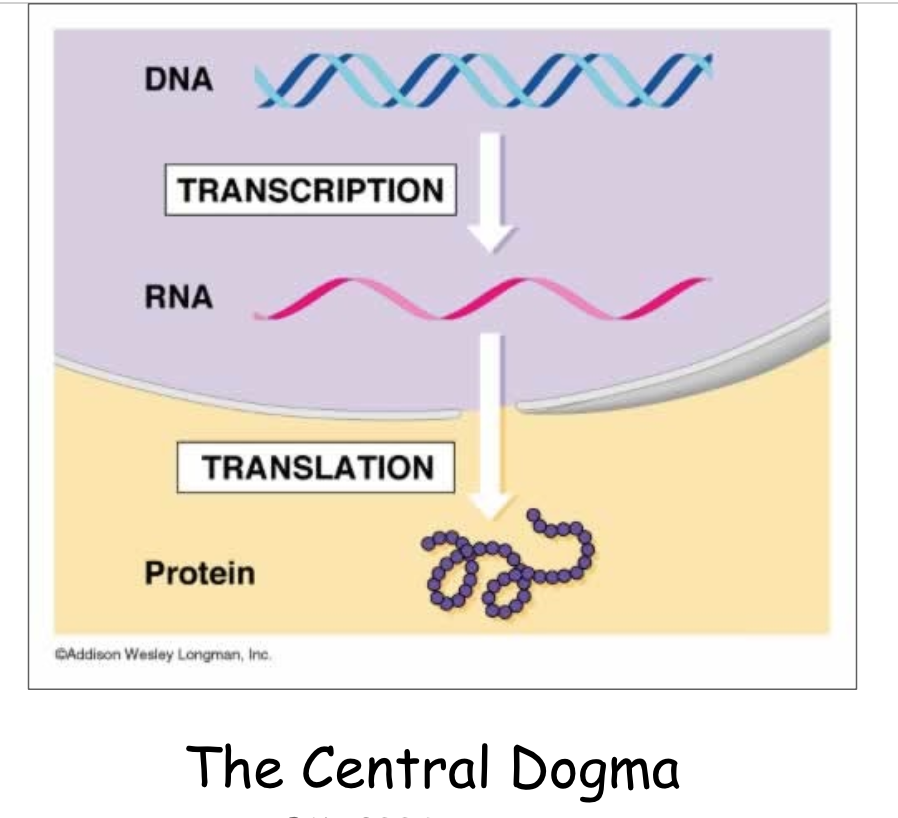
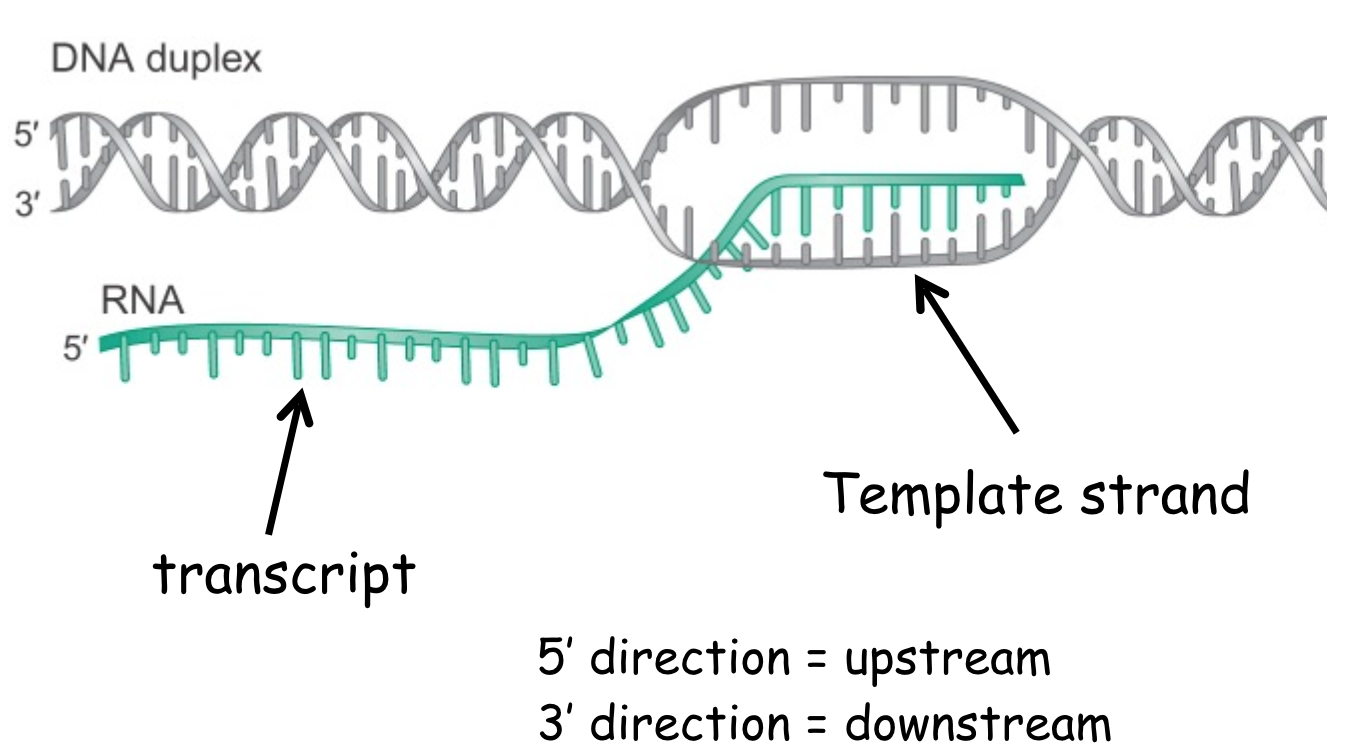
- Transcription
- the process of RNA synthesis
from a DNA template.
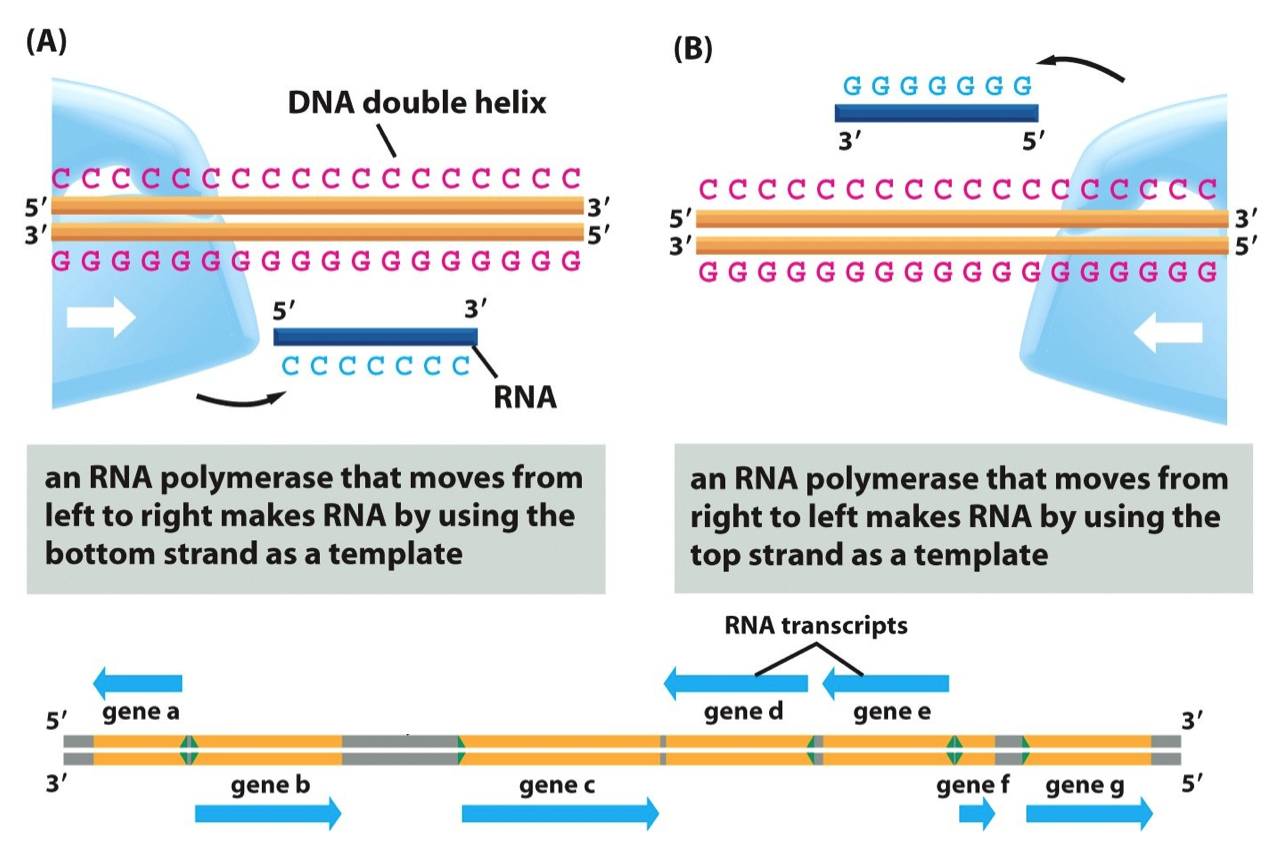
- Genes can be on either strand of the DNA
- But rarely overlap
- But rarely overlap
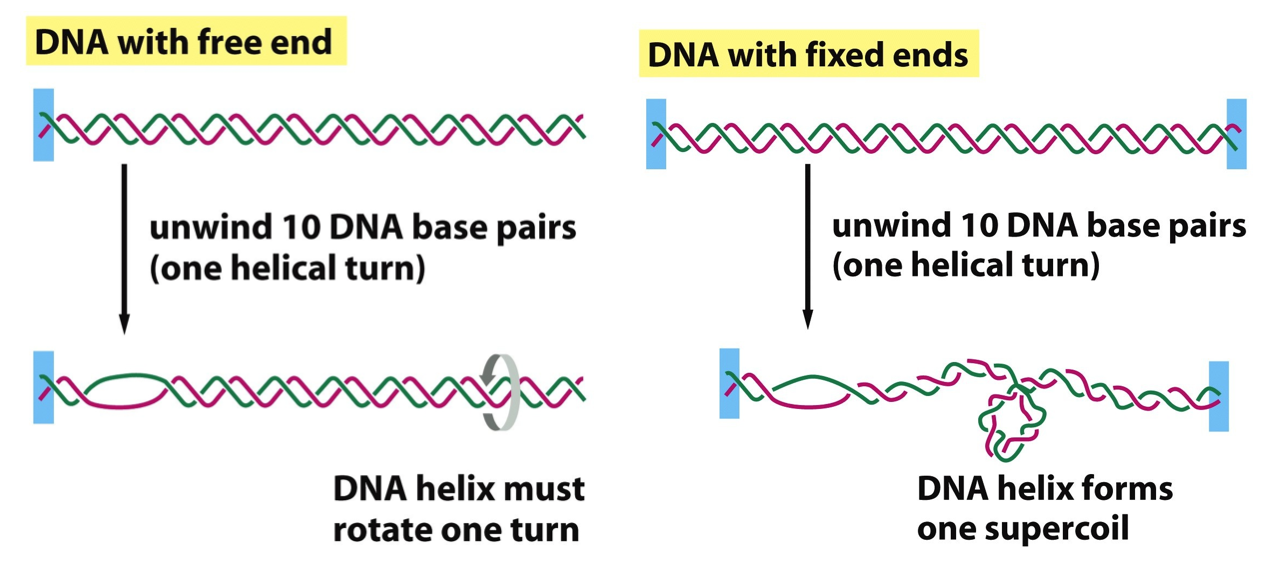
- Transcription creates supercoiling
- Topoisomerases release supercoils to allow progression
- Topoisomerases release supercoils to allow progression
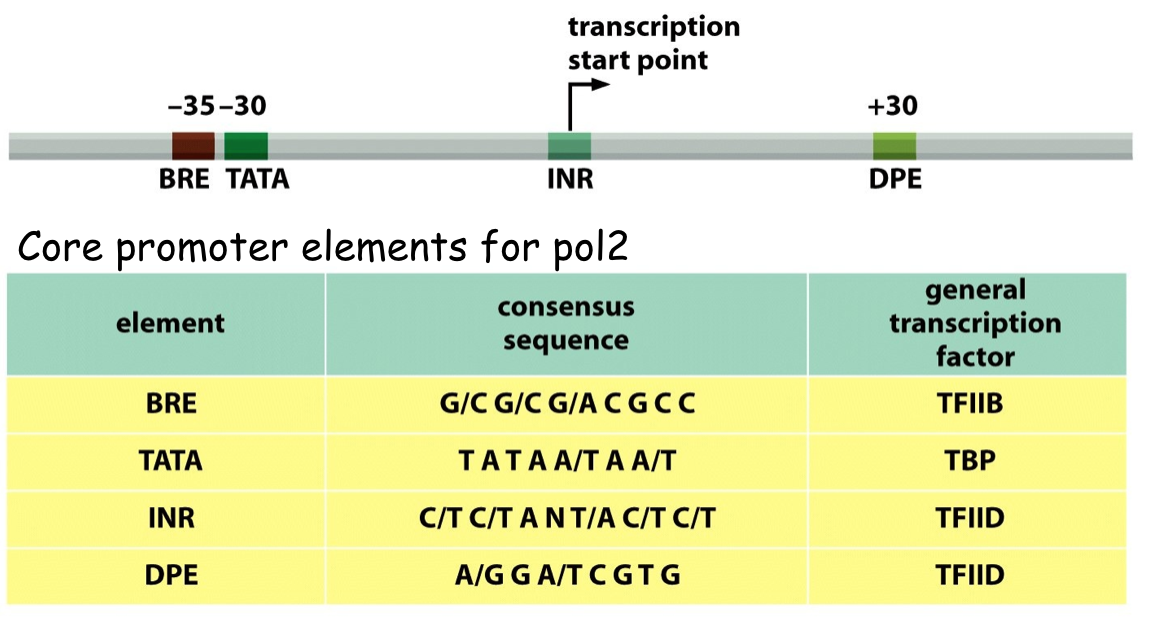
- Transcription for a gene starts at its promoter
- Sequences in the DNA tell RNA
polymerases where to start
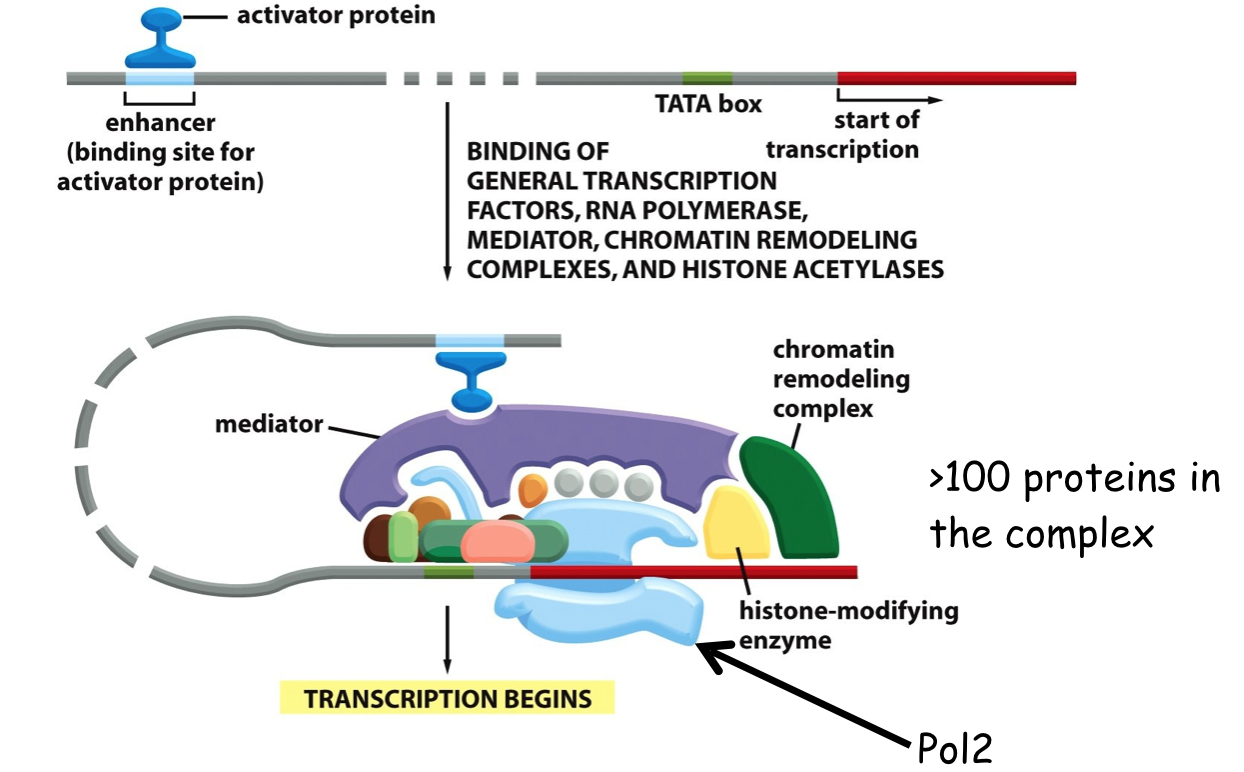
- Activators are also required to initiate transcription
- General transcription factors
versus regulatory transcription
factors
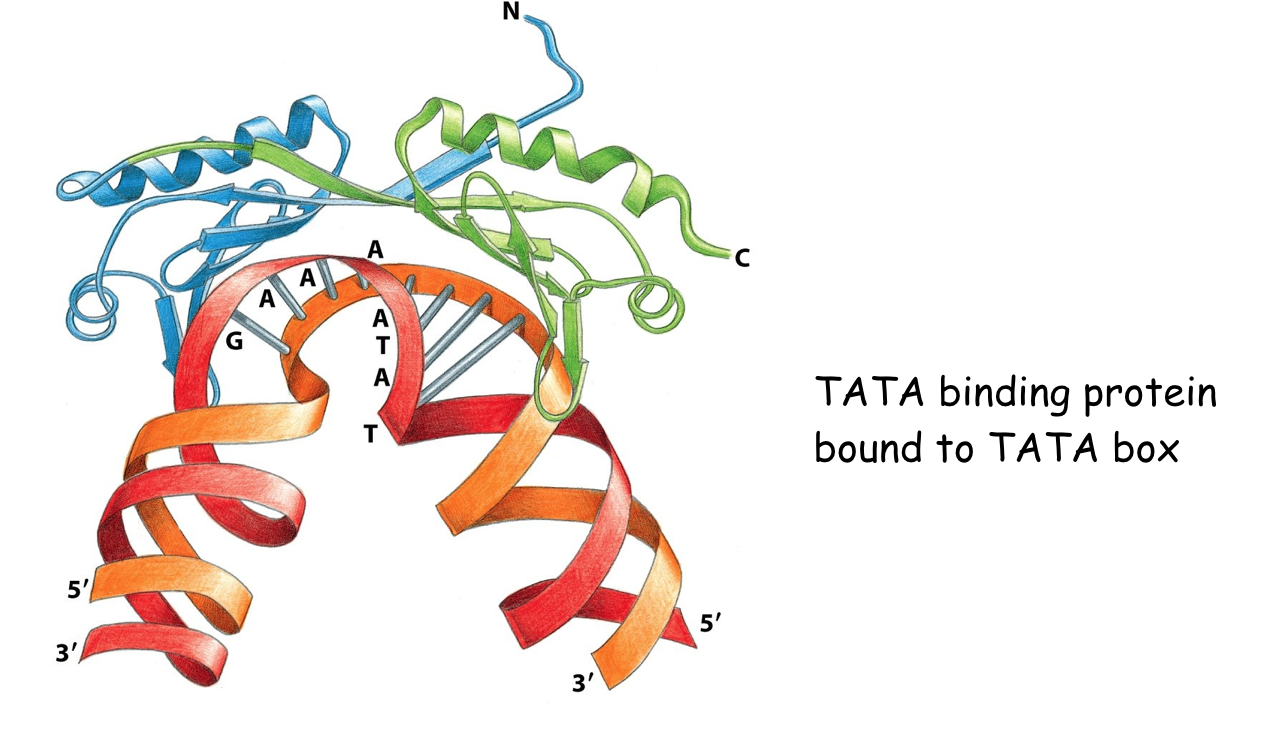
- Many of these proteins
bind directly to the DNA
- General transcription factors
versus regulatory transcription
factors
- Sequences in the DNA tell RNA
polymerases where to start
- the process of RNA synthesis
from a DNA template.
- RNA structure
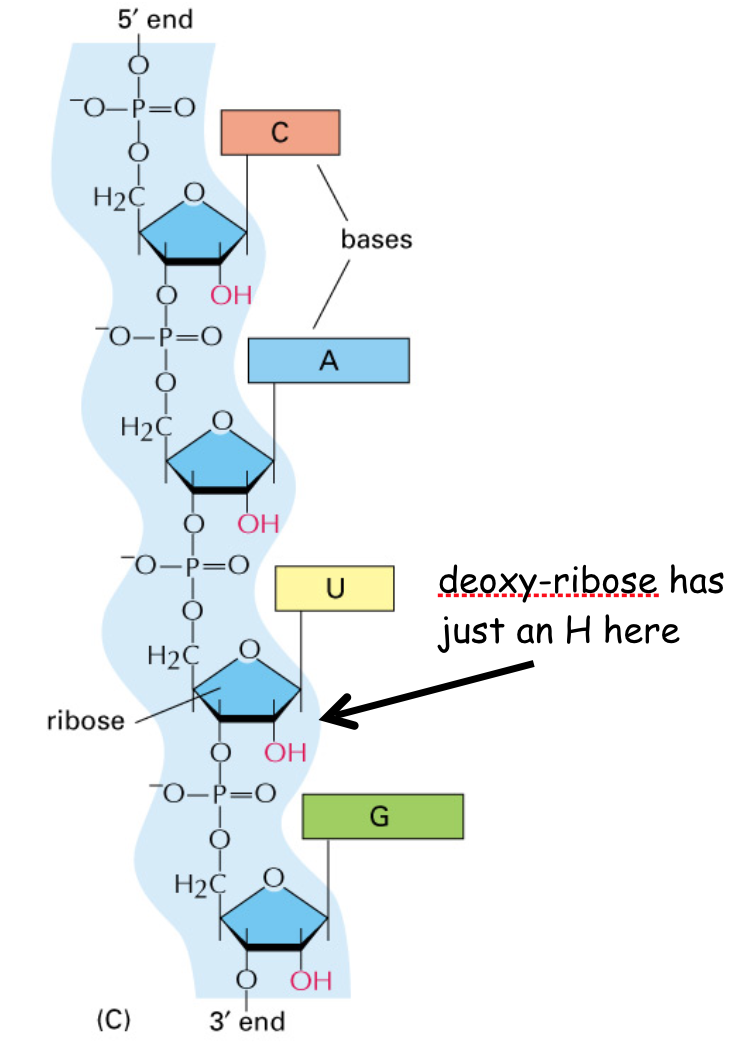
- Primary structure of RNA
- RNA = Ribonucleic Acid
- 4 major differences
between DNA and
RNA:
- Contains ribose
(instead of
deoxy-ribose)
- Contains U instead of T
- RNA is unstable
- Synthesized as
a single strand
- Contains ribose
(instead of
deoxy-ribose)
- RNA = Ribonucleic Acid
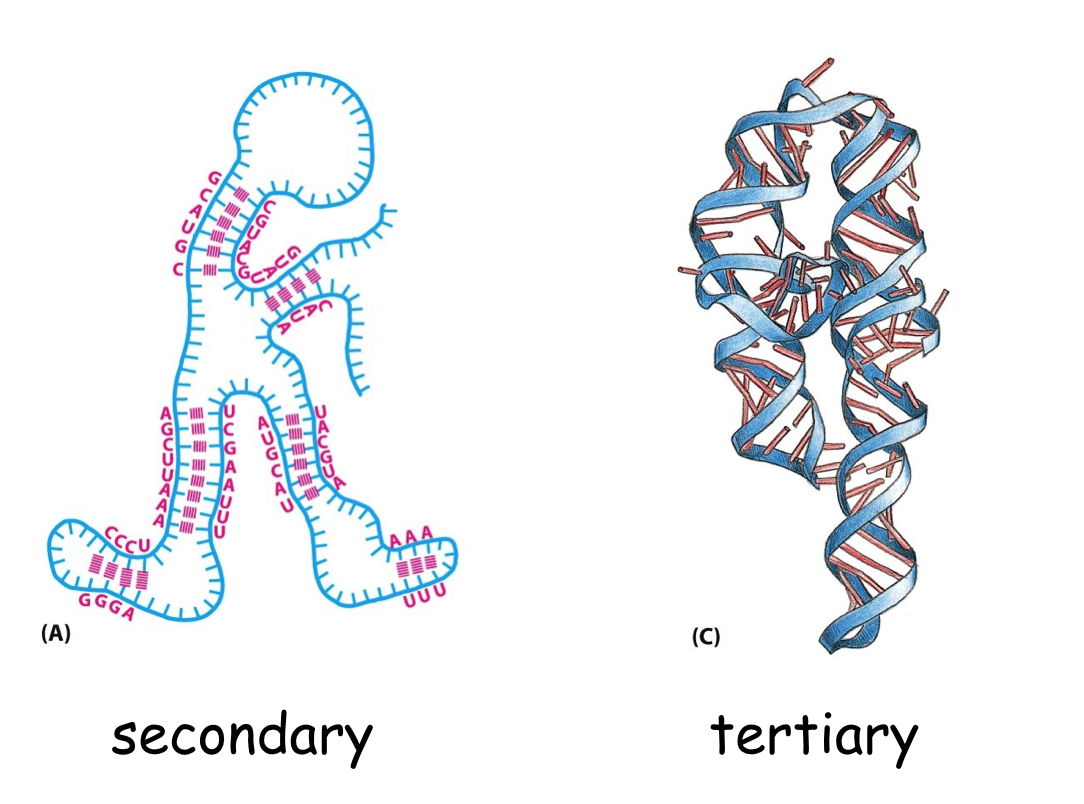
- Secondary structure of RNA
- Pairing between
bases: A = U, G = C
- Also can rarely have non
Watson-Crick pairing,
such as G = U.
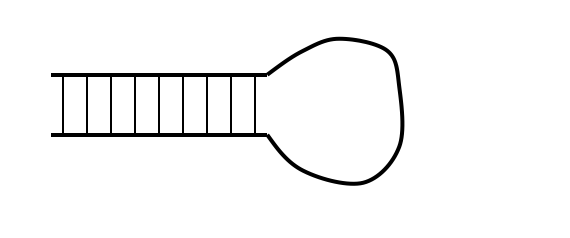
- Formation of stem-loop
secondary structures by
intramolecular base pairing
- Pairing between
bases: A = U, G = C
- Secondary
and tertiary
structure of
RNA
- Tertiary structure is the folding of a
molecule in three dimensions.
- Tertiary structure is the folding of a
molecule in three dimensions.
- Primary structure of RNA
- Transcription
enzymes:RNA
polymerases
- RNA polymerases are enzymes
performing RNA synthesis. There are 3
types of RNA polymerases in eukaryotes:
- RNA polymerase I
- ribosomal RNA
- ribosomal RNA
- RNA polymerase II
- protein-encoding genes
- protein-encoding genes
- RNA polymerase III
- tRNA, small nuclear RNA, and 5S rRNA
- tRNA, small nuclear RNA, and 5S rRNA
- RNA polymerase I
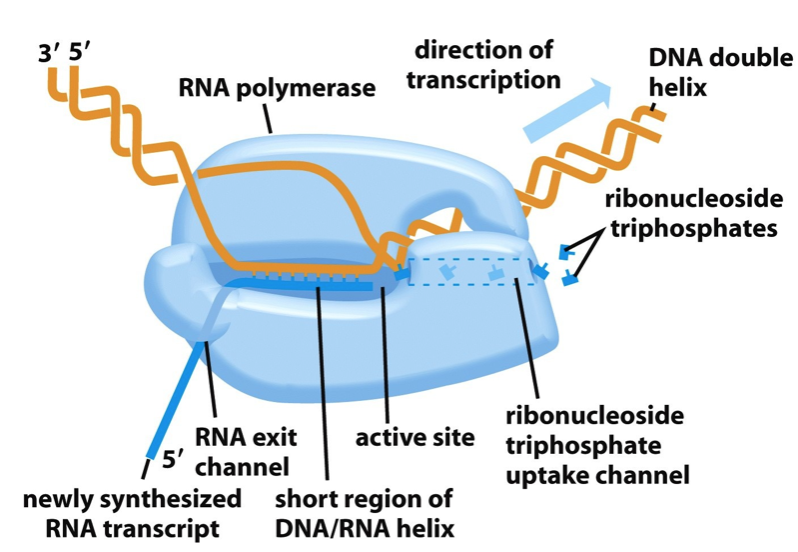
- Transcription requires RNA polymerase
- Different from DNA synthesis:
- No primer needed to get started
- Only one strand of DNA is used as the template
- Transcript does not remain bound to template
- Higher error rate
- Multiple RNA Pol bind on the same gene
- No primer needed to get started
- Different from DNA synthesis:
- RNA polymerases are enzymes
performing RNA synthesis. There are 3
types of RNA polymerases in eukaryotes:
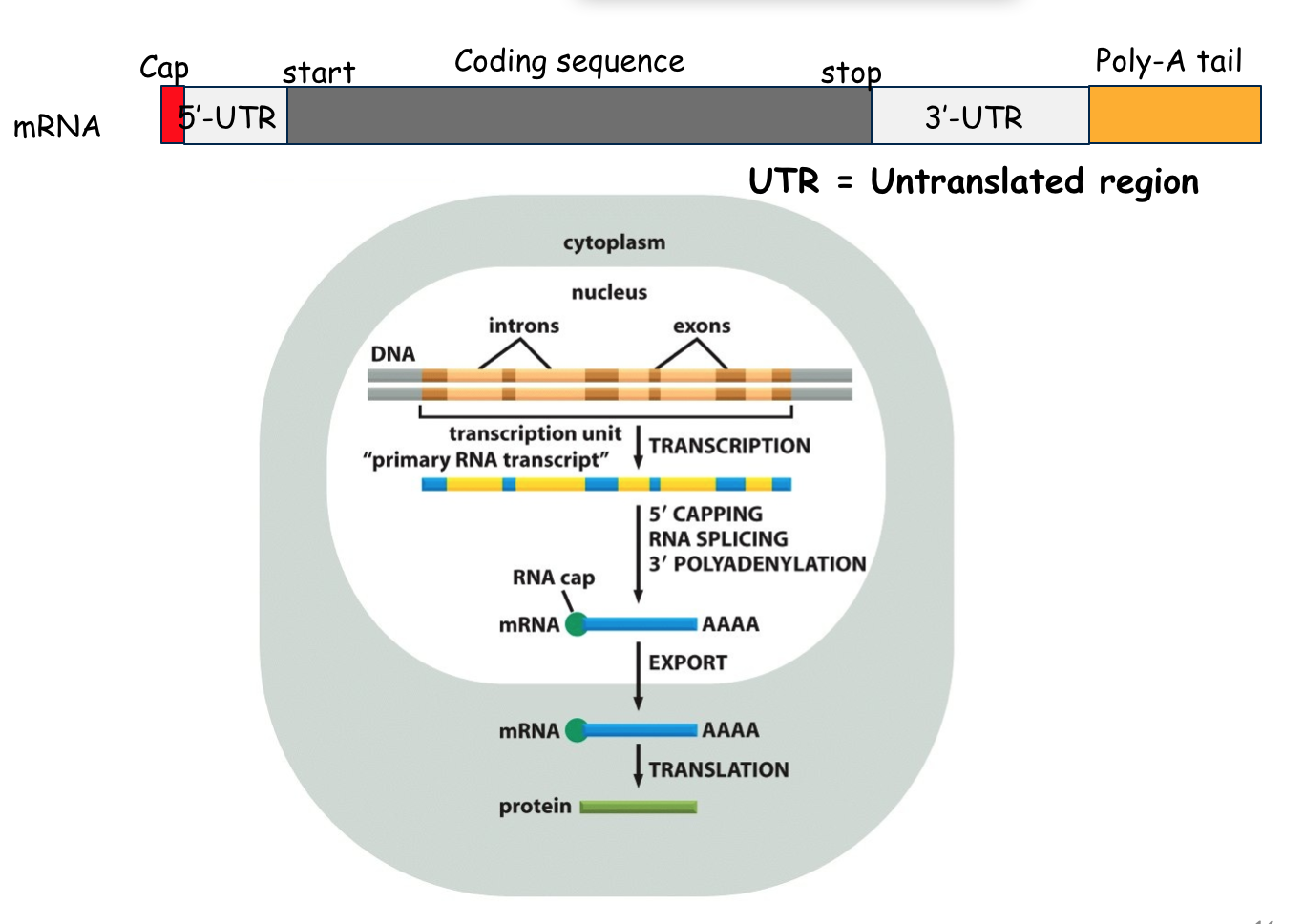
- RNA processing
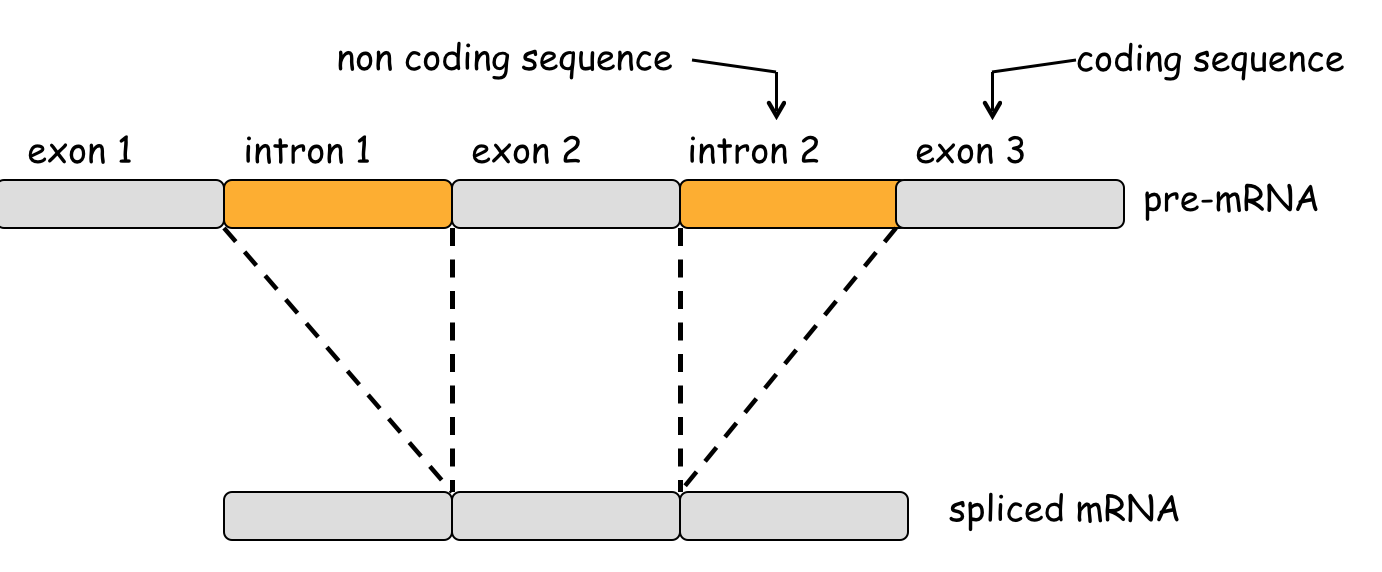
- splicing of introns
- eliminates non coding regions
of mRNAs to generate mature
mRNA for protein synthesis.
- eliminates non coding regions
of mRNAs to generate mature
mRNA for protein synthesis.
- capping of 5’ end
- necessary for stability, binding
of mRNA to ribosomes and
initiation of translation.
- necessary for stability, binding
of mRNA to ribosomes and
initiation of translation.
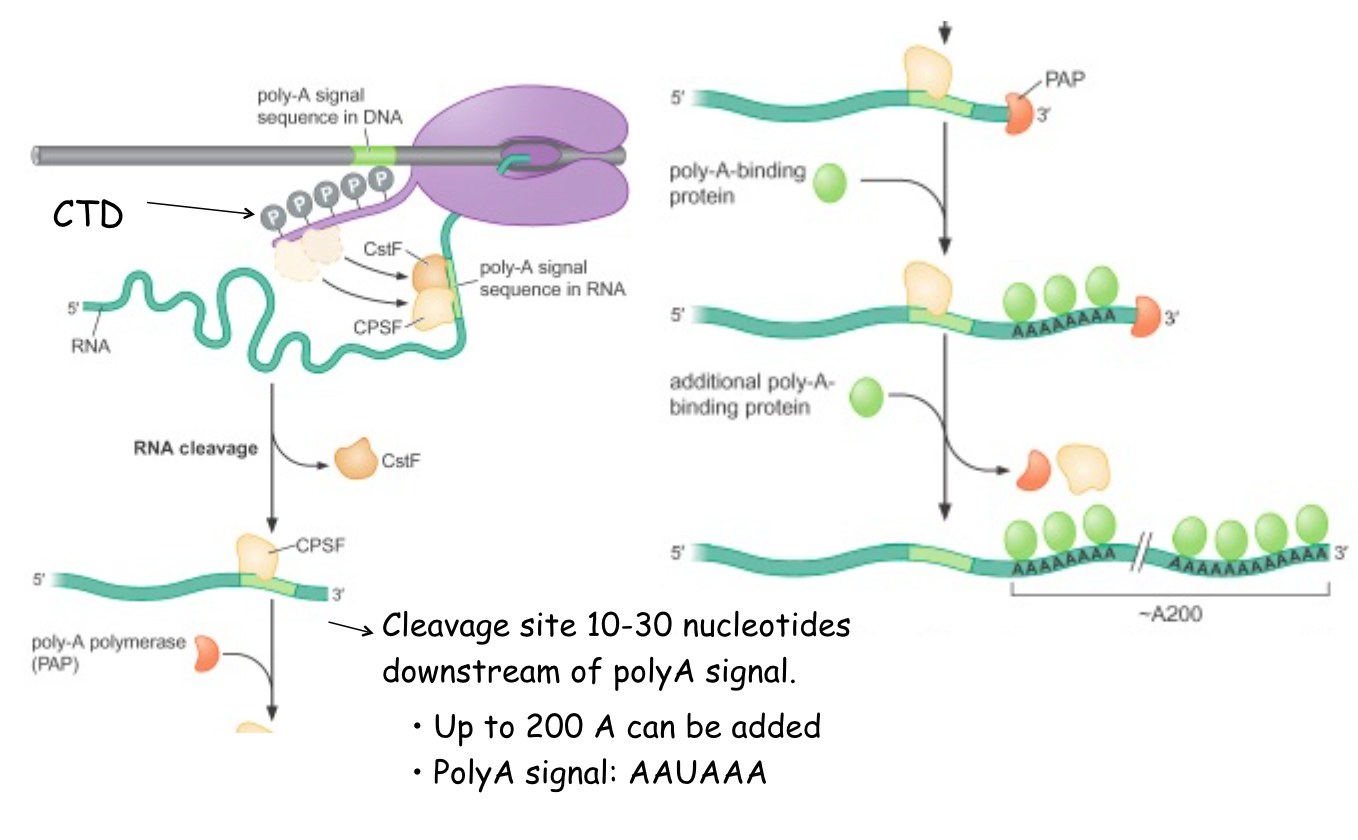
- polyadenylation of 3’ end
- part of the termination process (addition of
poly-A tail). Determine mRNA stability,
helps mRNA nuclear export and translation.
- part of the termination process (addition of
poly-A tail). Determine mRNA stability,
helps mRNA nuclear export and translation.
- Splicing
- Specific to
eukaryotes
transcription.
- Introns are present in
the DNA and
pre-mRNA, not in
mRNA
- Some mRNA can be
spliced in more than one
way
- alternative splicing
- alternative splicing
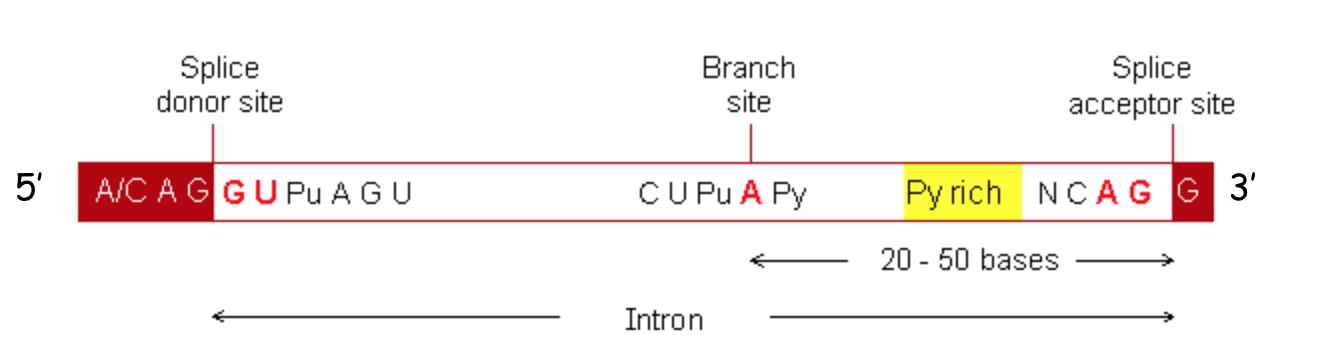
- Splice donor and
acceptor sites
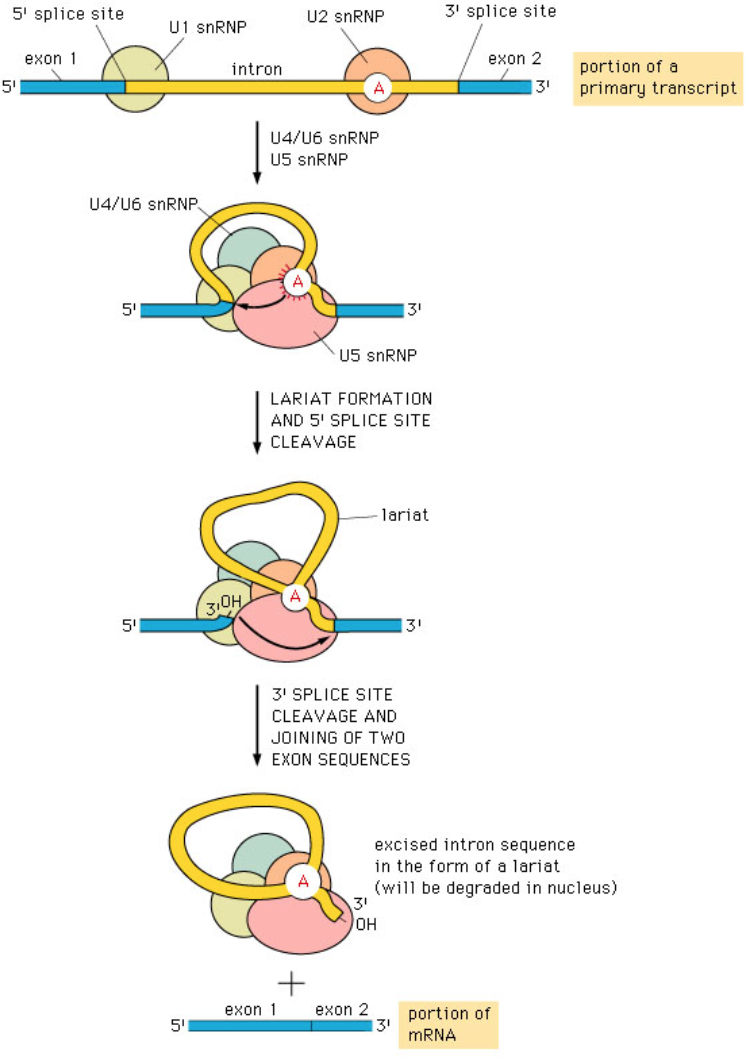
- 2’ OH of branch site A attacks
phosphodiester bond on donor site G.
- Cleavage at the donor
site. Formation of lariat.
- 3’ OH of donor site G attacks
phosphodiester bond on acceptor
site G freeing the lariat.
- Lariat is degraded
- Lariat is degraded
- 3’ OH of donor site G attacks
phosphodiester bond on acceptor
site G freeing the lariat.
- Cleavage at the donor
site. Formation of lariat.
- 2’ OH of branch site A attacks
phosphodiester bond on donor site G.
- mRNA splicing is performed
by the spliceosome
- Spliceosome: nuclear
complex made of about 150
proteins + 5 RNAs.
- Three functions
- recognize 5’ donor and
branch sites
- bring sites
together
- catalyzes RNA cleavage
- recognize 5’ donor and
branch sites
- Three functions
- SnRNP = SnRNA + proteins
- snRNAs are
small nuclear
RNA: U1, U2,
U4, U5 and
U6.
- snRNAs are
small nuclear
RNA: U1, U2,
U4, U5 and
U6.
- Spliceosome: nuclear
complex made of about 150
proteins + 5 RNAs.
- Specific to
eukaryotes
transcription.
- Polyadenylation
- CstF: Cleavage stimulating factor
- CTD: Pol II C-terminal domain
- CPSF: Cleavage and Polyadenylation specific factor
- PAP: polyadenylate polymerase
- CstF: Cleavage stimulating factor
- splicing of introns
Medienanhänge
Möchten Sie kostenlos Ihre eigenen Mindmaps mit GoConqr erstellen? Mehr erfahren.