
1569239
Beschreibung

Mindmap von Kristi Brogden, aktualisiert more than 1 year ago

|
Erstellt von Kristi Brogden
vor etwa 11 Jahre
|
|
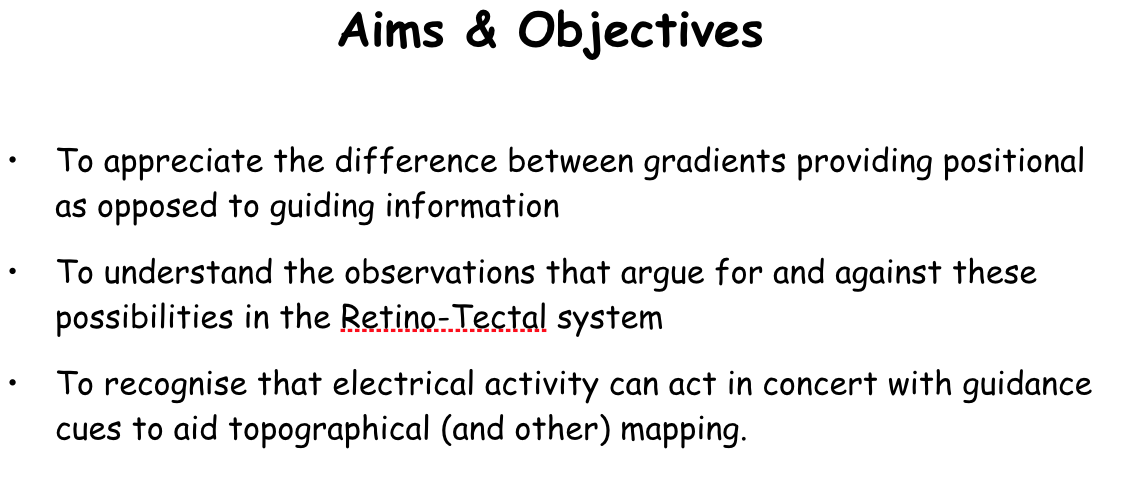
Map formation
- What’s really happening
in the R-T system?
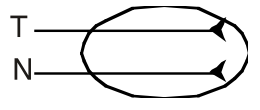
- Note that, as Sperry predicted, the
retina expresses a counter gradient of
the receptor (EphA3). Why is this?
- Although we have considered this gradient to
be guiding, it is possible to conceive that the
Eph-Ephrin system is only providing positional
information (Sperry’s “Latitude and
Longitude”), not guiding information.
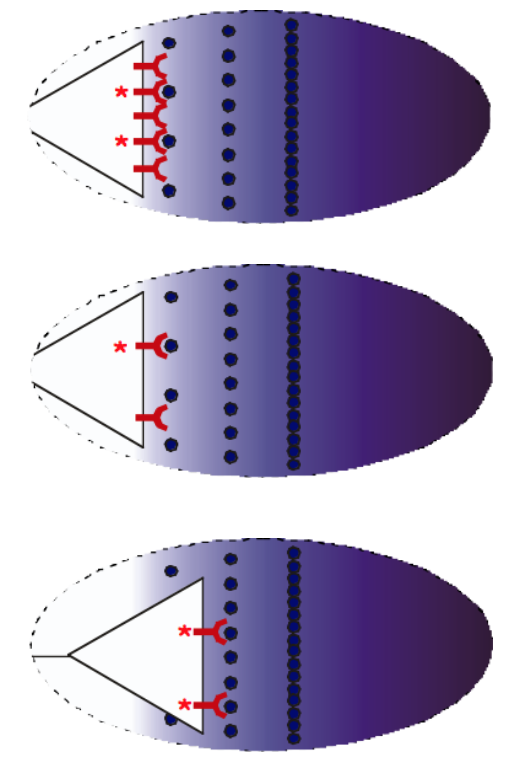
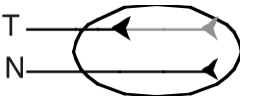
- For example, growth cones may grow into
the tectum randomly and continue to grow
until they hit a specific ‘Stop’ signal.
- This signal might be a
specific level of Eph
receptor activation….
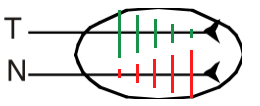
- High density of receptor on
temporal growth cones ensures
enough signal to stop even when
ligand at low density:
- However, for more nasal growth
cones, the lower density of receptor on
their surface means that only when the
ligand density is higher will enough
signal be generated:
- However
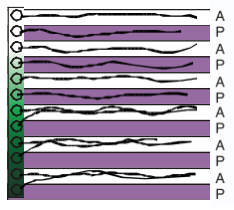
- The stripe assay suggests
an all or nothing, not
graded response
- And, in vitro assays suggest
ephrins repel axons, not
merely stop them….
- The stripe assay suggests
an all or nothing, not
graded response
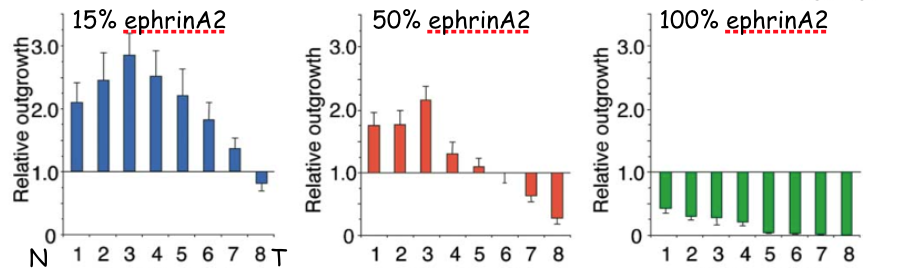
- A graded transition
from growth
promotion to inhibition
- Relative outgrowth
compared to growth on no
(0%) ephrinA2
- Clearly indicates that Ephrins are growth
promoting at lower and inhibitory at
higher ephrin concentrations
- Final position is where
inhibition = promotion
- Varies according to
position of origin in retina
- Varies according to
position of origin in retina
- Final position is where
inhibition = promotion
- Clearly indicates that Ephrins are growth
promoting at lower and inhibitory at
higher ephrin concentrations
- See ppt for more detail
- Relative outgrowth
compared to growth on no
(0%) ephrinA2
- High density of receptor on
temporal growth cones ensures
enough signal to stop even when
ligand at low density:
- Positional info from ‘Stop’ signal?
- This signal might be a
specific level of Eph
receptor activation….
- For example, growth cones may grow into
the tectum randomly and continue to grow
until they hit a specific ‘Stop’ signal.
- Although we have considered this gradient to
be guiding, it is possible to conceive that the
Eph-Ephrin system is only providing positional
information (Sperry’s “Latitude and
Longitude”), not guiding information.
- Note that, as Sperry predicted, the
retina expresses a counter gradient of
the receptor (EphA3). Why is this?
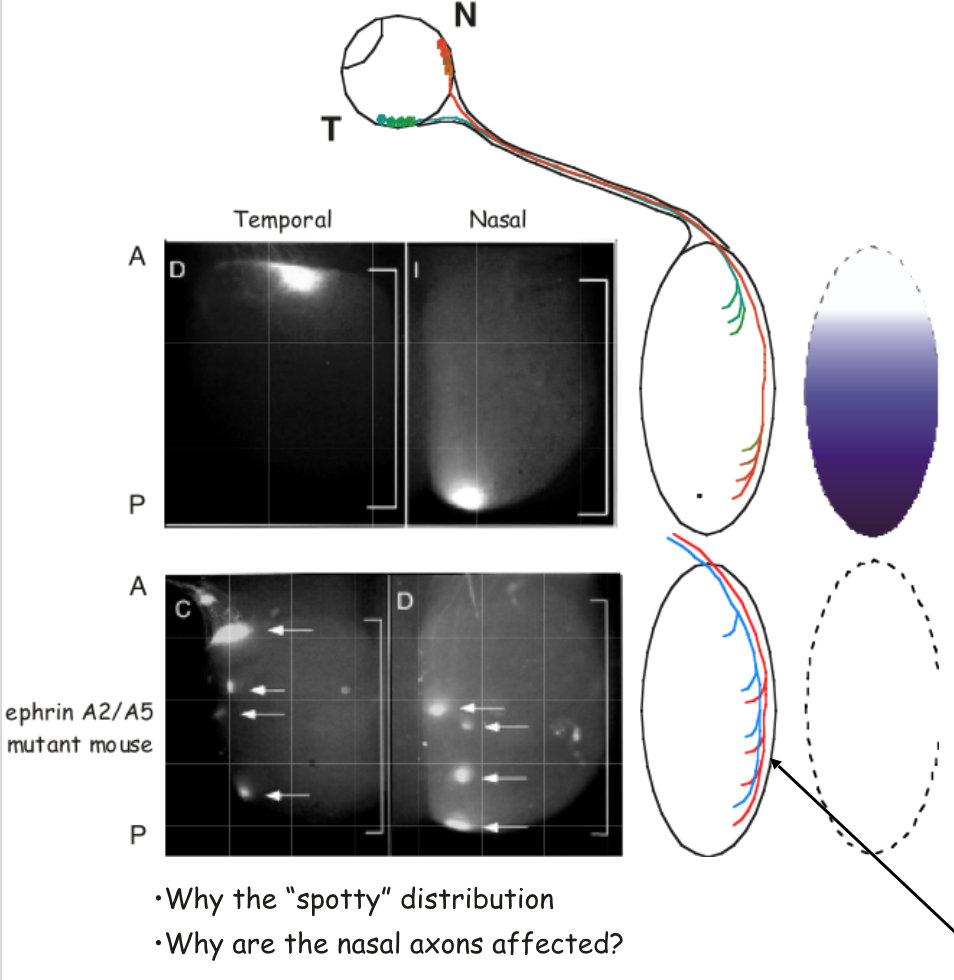
- Ephrin A2/A5 double
mutant mice fail to
make topographic maps
- In rodents (mammals):
- Initial growth of all fibres
extends throughout the
tectum
- Subsequently, axon branching and
synaptogenesis occur. It is this that is
sensitive to the ephrin gradient.
- There appears to be competition between
the axons for synaptic partners - involving
electrical activity - so that weaker synapses
(and their axons) get eliminated.
- However, if T axons have no competitive
disadvantage (ie when ephrins are
missing), then they can compete
throughout the tectum for synapses
- Initial growth of all fibres
extends throughout the
tectum
- Electrical activity can
modulate
responses to
guidance cues
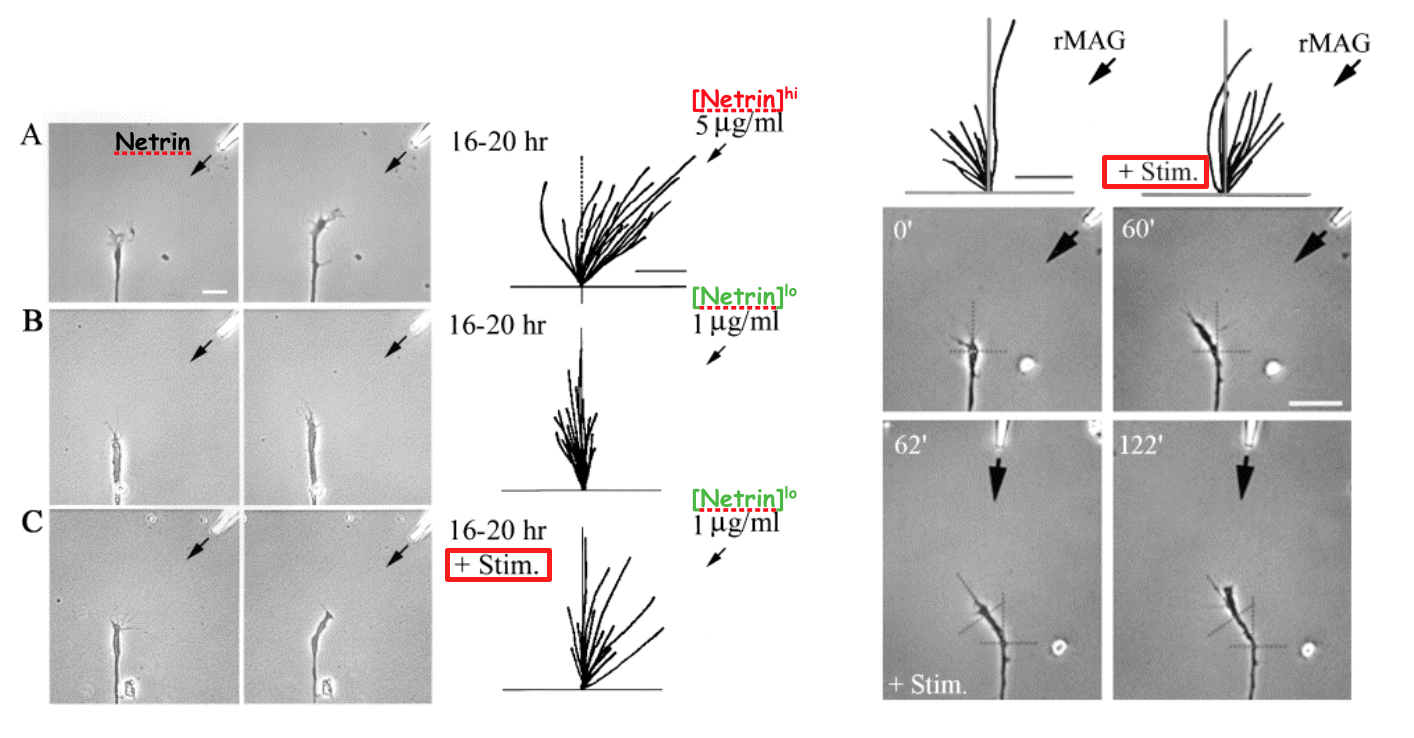
- Ming et al (2001. Neuron 29: 441-52)
demonstrate that electrical stimulation
can enhance (in the case of netrin) or
reverse (in the case of MAG) the
response to guidance cues
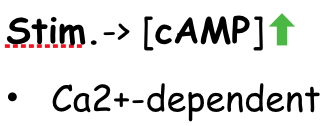
- Electrical activity
modulates Ca2+ & cAMP
- cGMP also
involved
- See paper and ppt
for more detail
- See paper and ppt
for more detail
- cGMP also
involved
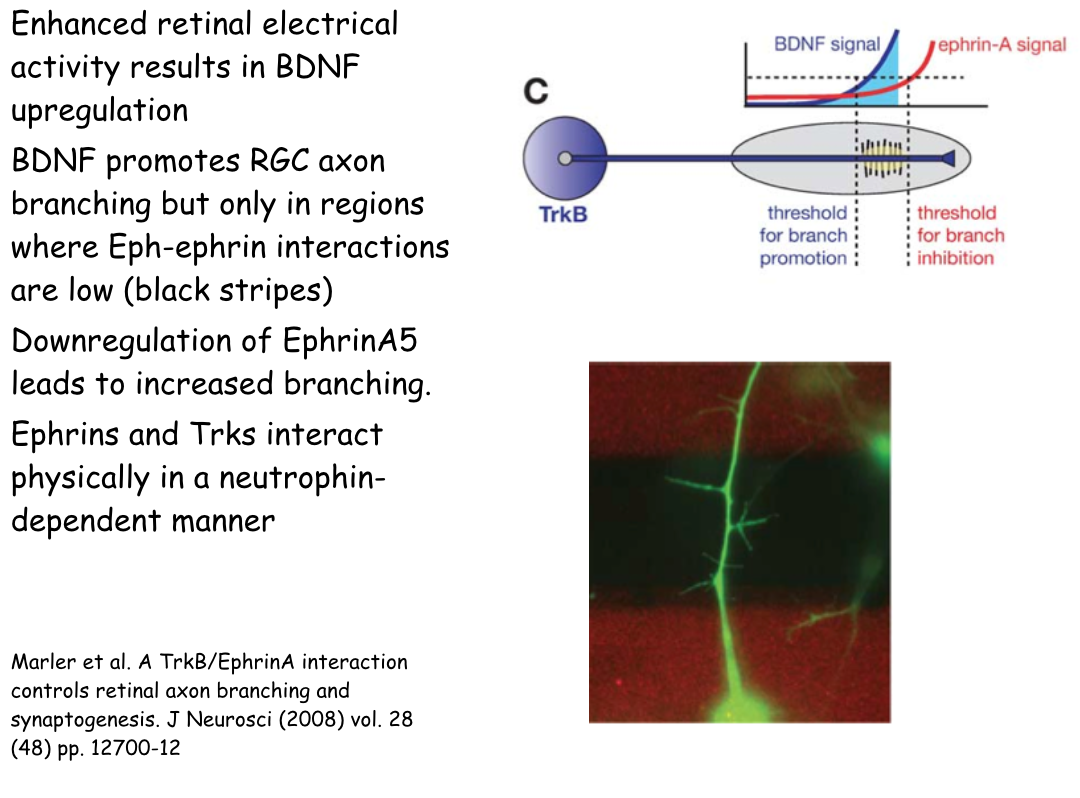
- Electric activity acts in part
through neurotrophins
- Ming et al (2001. Neuron 29: 441-52)
demonstrate that electrical stimulation
can enhance (in the case of netrin) or
reverse (in the case of MAG) the
response to guidance cues
- In rodents (mammals):
- Refinement of connections is
activity dependent
(or Weiss
was kinda right after all!)
- Even in “lower” vertebrates (chick/frog) where
the initial map in the tectum is topographic, it is
still rather coarse-grained and axons from
neighbouring cells make contacts over large,
overlapping areas of the tectum.
- At later stages find that some of these
contacts are lost and the map becomes more
precise.
- This refinement depends on activity
and on competition between axons.
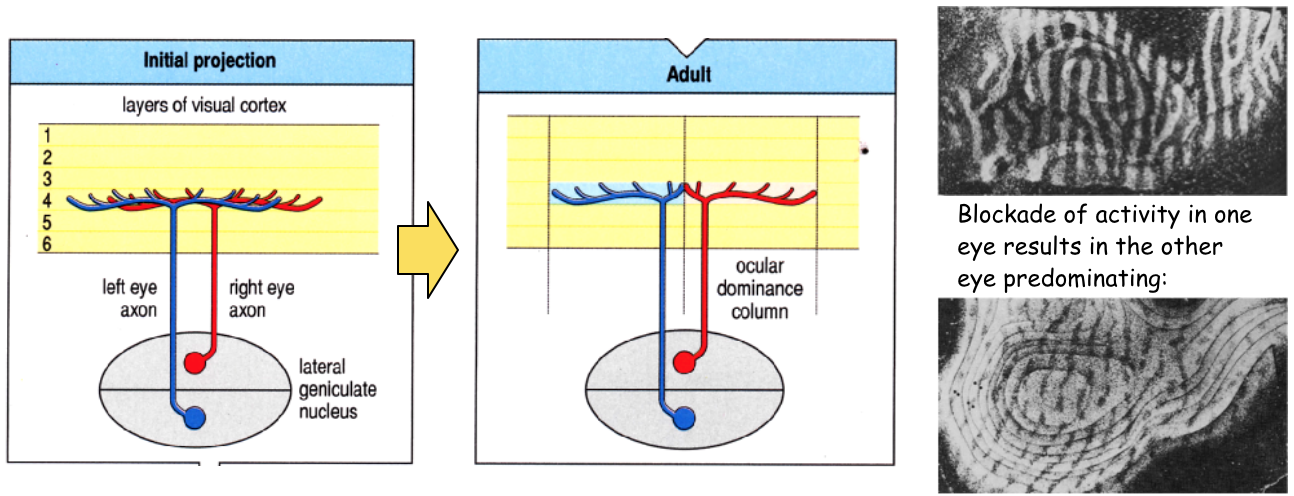
- You have seen this before in your
lectures on the formation of ocular
dominance columns in the visual cortex:
- You have seen this before in your
lectures on the formation of ocular
dominance columns in the visual cortex:
- This refinement depends on activity
and on competition between axons.
- At later stages find that some of these
contacts are lost and the map becomes more
precise.
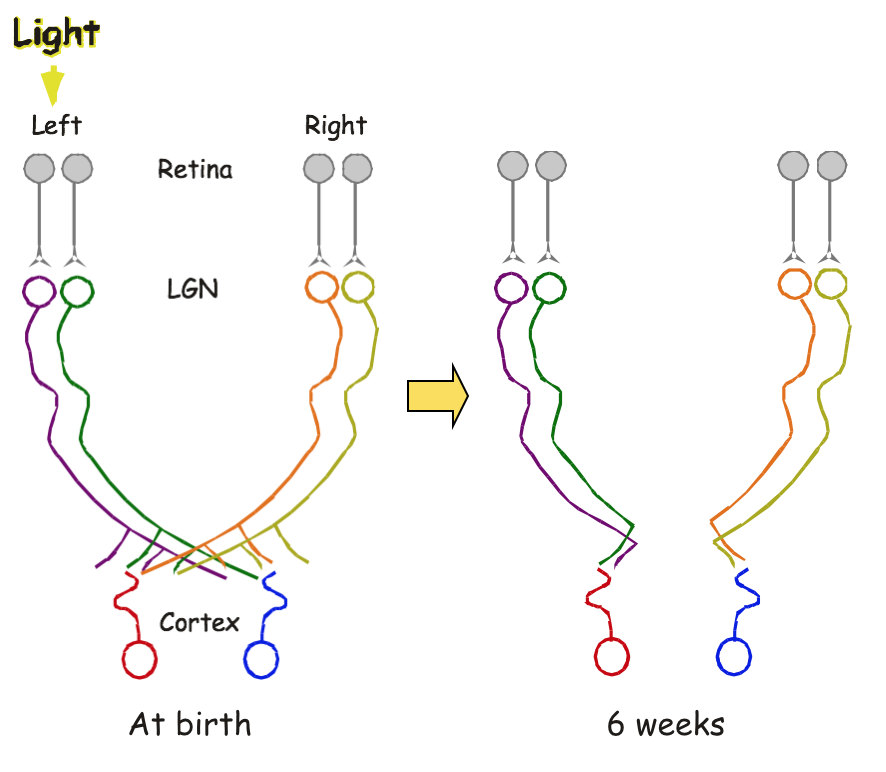
- Cells that fire together, wire together
- The mechanism of synapse elimination
involves the localised release of
neurotrophic factors which is thought to be
enhanced when two cells fire at the same
time
- But what is happening in the embryonic tectum
(superior colliculus) where mapping takes place
before the animal encounters any light?
- Embryonic retina is
spontaneously active
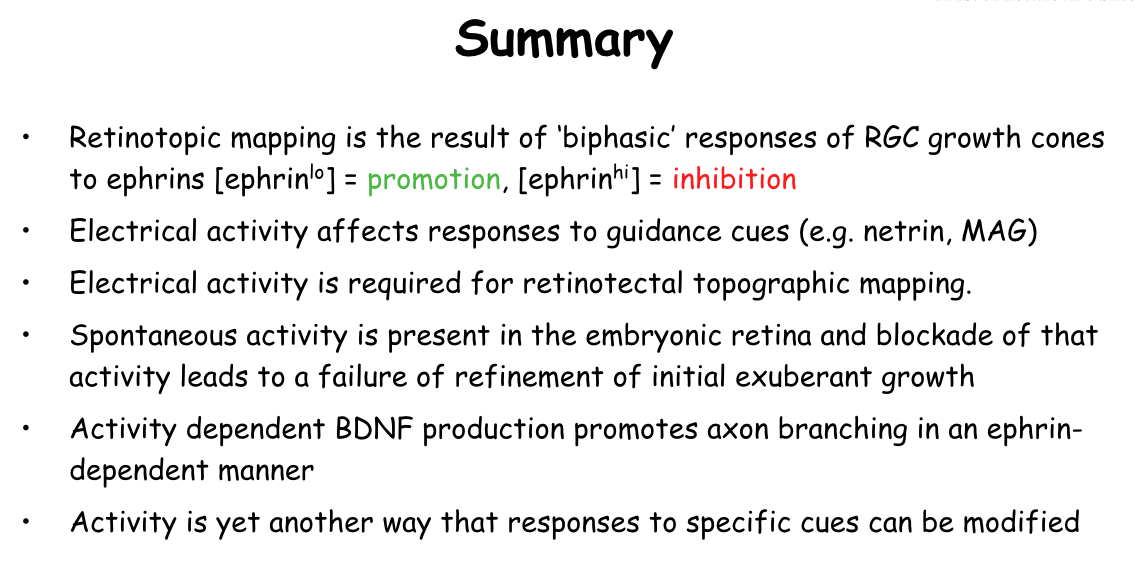
- In mammals ephrins work
together with electrical activity
(and other survival factors) to
create the topographic map
- Tectal mapping occurs
before birth in mammals,
so where does the
electrical activity come
from? (No light?!)
- Interestingly, the retina
becomes spontaneously active
as axons reach the tectum
- See video on ppt - transient
increases in intracellular calcium
- Therefore, could be that Hebbian
principles are already operating (as in
ocular dominance columns)
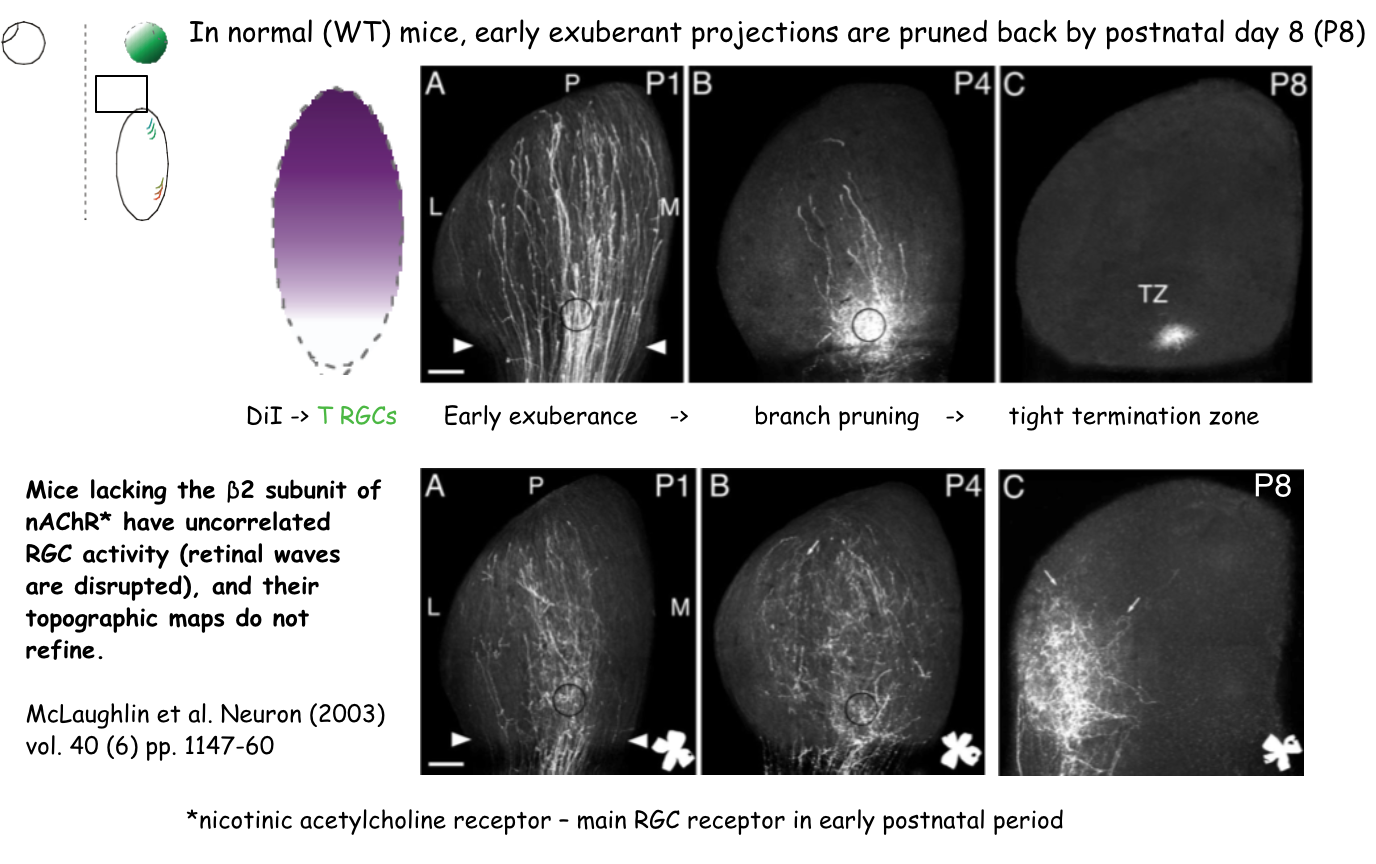
- Consistent with this, treatment with the sodium
channel blocker, tetrodotoxin (TTX), which blocks
action potentials, blocks map refinement
- Can show this also by blocking
nAChRs genetically….
- Can show this also by blocking
nAChRs genetically….
- Consistent with this, treatment with the sodium
channel blocker, tetrodotoxin (TTX), which blocks
action potentials, blocks map refinement
- See video on ppt - transient
increases in intracellular calcium
- Tectal mapping occurs
before birth in mammals,
so where does the
electrical activity come
from? (No light?!)
- In mammals ephrins work
together with electrical activity
(and other survival factors) to
create the topographic map
- Embryonic retina is
spontaneously active
- But what is happening in the embryonic tectum
(superior colliculus) where mapping takes place
before the animal encounters any light?
- The mechanism of synapse elimination
involves the localised release of
neurotrophic factors which is thought to be
enhanced when two cells fire at the same
time
- Even in “lower” vertebrates (chick/frog) where
the initial map in the tectum is topographic, it is
still rather coarse-grained and axons from
neighbouring cells make contacts over large,
overlapping areas of the tectum.
Medienanhänge

Möchten Sie kostenlos Ihre eigenen Mindmaps mit GoConqr erstellen? Mehr erfahren.