
1599824


ASEAN
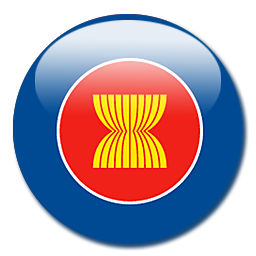
- What does the ASEAN logo symbolise?
- The colours of the logo -- blue, red, white and yellow -- represent the main colours
of the crests of all the ASEAN member states.
- The blue represents peace and stability.
- Red depicts courage and dynamism
- White shows purity
- Yellow symbolises prosperity
- The blue represents peace and stability.
- The colours of the logo -- blue, red, white and yellow -- represent the main colours
of the crests of all the ASEAN member states.
- Some Organisations of
ASEAN
- ACCORD
- ASEAN Committee
on Disaster
Management
- ASEAN Connect
- ASEAN
Food Safety
Network
- ACCORD
- Countries Involved in ASEAN
- Singapore
- Brunei
Darussalam
- Cambodia
- Indonesia
- Lao PDR
- Malaysia
- Myanmar
- Phillippines
- Thailand
- Vietnam
- Singapore
- How does Singapore benefit from ASEAN
- ASEAN Free Trade Area (AFTA)
- Products sold between ASEAN
countries are free from import tax,
making goods cheaper
- More demand for goods
- Economic growth -> Prosperity
- More demand for goods
- Products sold between ASEAN
countries are free from import tax,
making goods cheaper
- Educational and Professional exchange
- Help other ASEAN
nations improve Education
- Goodwill through
helping each other
- Peace & Stability
- Economic growth
- Example: SCP (Singapore
cooperation program) where
Singapore offers training and
scholarships to people from other
ASEAN nations.
- Goodwill through
helping each other
- Help other ASEAN
nations improve Education
- Environmental
collaboration
- Help solve each other regional
environmental problems
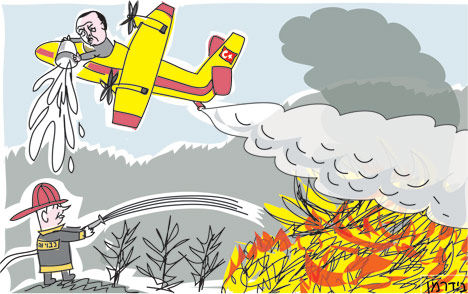
- 1997 Indonesian forest fires that resulted
in haze
- Singapore helped monitor
forest fires through
satellite images
- Singapore helped monitor
forest fires through
satellite images
- 1997 Indonesian forest fires that resulted
in haze
- Help solve each other regional
environmental problems
- ASEAN Regional Forum
- A platform for dialogue and
discussion within ASEAN and
between ASEAN and other
Asia-pacific nations such as
China, India, Korea and
Australia and other powerful
nations like USA.
- Peace & Stability
- Economic growth
- Peace & Stability
- A platform for dialogue and
discussion within ASEAN and
between ASEAN and other
Asia-pacific nations such as
China, India, Korea and
Australia and other powerful
nations like USA.
- ASEAN Free Trade Area (AFTA)
- Failure of ASEAN
- South-east Asian countries failure to reach an
agreement on how to deal with China's claims on
disputed territory in the South China Sea.
- The Philippines, Vietnam, Malaysia and Brunei
contested parts of the resource-rich South China
Sea area with China.
- ASEAN foreign ministers and their regional
counterparts from 16 countries, including China, met
in Cambodia's capital Phnom Penh for a regional
forum.
- China and the Philippines had a
maritime stand-off in the Scaborough
Shoal in April, with China denying
reports it was preparing for war at
the height of tensions in May. Both
sides accused the other of
trespassing on territorial waters.
- Vietnam was also angered by a recent call from China for oil exploration in a
disputed territory.
- ASEAN ended the meeting in Cambodia without issuing a
joint statement for the first time in its 45-year history.
- The Philippines, Vietnam, Malaysia and Brunei
contested parts of the resource-rich South China
Sea area with China.
- South-east Asian countries failure to reach an
agreement on how to deal with China's claims on
disputed territory in the South China Sea.
- Success of ASEAN
- ASEAN has been successful in reducing the level of tariffs
operating in the region and, as part of the 2020 ASEAN Vision,
the countries of the organisation committed themselves to
creating an ASEAN Economic Community, which will by the year
2020 be a single, economic market
- Free movement of goods and services will take place
- Economic integration will be accelerated, including air
travel, e-commerce, textiles and apparel among others
- Free movement of goods and services will take place
- ASEAN has been successful in reducing the level of tariffs
operating in the region and, as part of the 2020 ASEAN Vision,
the countries of the organisation committed themselves to
creating an ASEAN Economic Community, which will by the year
2020 be a single, economic market
- Why was ASEAN formed?
- The Southeast Asian region was
going through economic, political and
security challenges within and outside
their borders
- SG and MY separation
- Indonesia experienced
internal unrest after
President Sukarno
was replaced by
General Suharto
- Vietnam War
- SG and MY separation
- SEA leaders saw the need for a
regional organisation to maintain stability
and build trust. (In face with these
challenges)
- The Southeast Asian region was
going through economic, political and
security challenges within and outside
their borders
- ASEAN initiatives
- Narrowing the Development Gap
- Narrowing the Development Gap in
ASEAN refers to reducing various
forms of disparities among and within
Member States where some pockets
of underdevelopment persist.
- Narrowing the Development Gap in
ASEAN refers to reducing various
forms of disparities among and within
Member States where some pockets
of underdevelopment persist.
- Initiative for ASEAN Integration
- IAI Work Plans
- IAI Development Cooperation Forum (IDCF)
- IAI Task Force
- ASEAN Secretariat - IAI and NDG Division
- IAI Work Plans
- Same as the things that benefitted SG
- Narrowing the Development Gap
- Aims
- Promote economic, social and cultural development of the region
- Protect the peace and stability of the region
- Provide opportunities for member countries to discuss and resolve differences peacefully
- Promote economic, social and cultural development of the region
Medienanhänge





Möchten Sie kostenlos Ihre eigenen Mindmaps mit GoConqr erstellen? Mehr erfahren.