
25223520
Beschreibung

Mindmap von Miguel Hernández, aktualisiert more than 1 year ago

|
Erstellt von Miguel Hernández
vor mehr als 5 Jahre
|
|
Software Development Lifecycle Models
- It covers all stages
of the software.
- Since its inception with requirements
and definition, to the field and
maintenance.
- Categories according to use
- Category 1
- Category 2
- Category 3
- Front-end.
Application that
is a graphical
user interface
(GUI).
- Front-end.
Application that
is a graphical
user interface
(GUI).
- End user
(software that
encapsulates
logic, being more
understandable
to the end user)
- Category 3
- Back-end
(provides a
service to other
applications)
- Category 2
- Category 1
- They can be
classified into three
broad groups:
- Linear
- Iterative
- ombination of
linear and
iterative models
- Recognize that
the development
process may
stop at a certain
stage.
- Recognize that
the development
process may
stop at a certain
stage.
- Ensures that all
stages of the
model are
reviewed in the
future.
- ombination of
linear and
iterative models
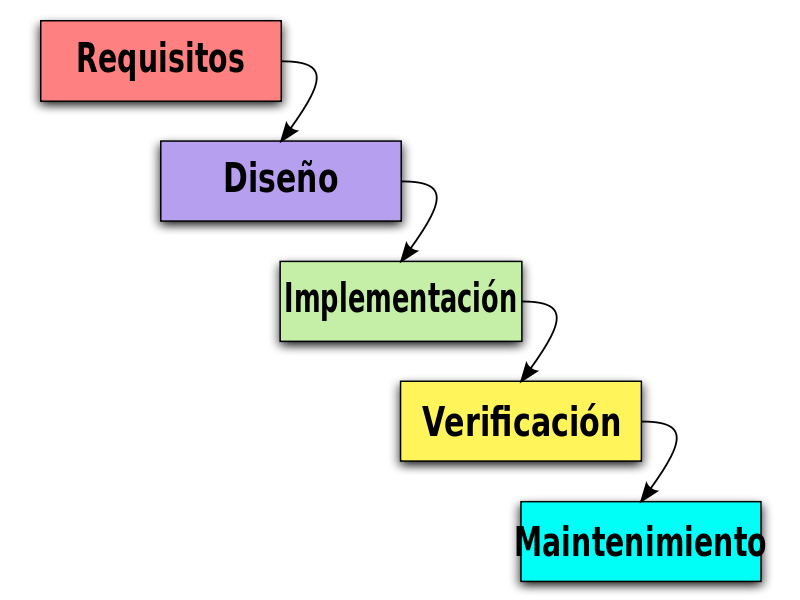
- The stage, once
completed, leads
to the start of the
next stage.
- Iterative
- Linear
- Types of models
- Waterfall Model
- B-Model
- Incremental Model
- V-Model
- The model is a
variation of the
waterfall.
- Spiral Model
- Several iterations
that spiral out from
small beginnings.
- Wheel-and-spoke Model
- The wheel-and-spoke model is
based on the spiral model and is
designed to work with smaller
teams initially, which then scale
up to build value faster
- The wheel-and-spoke model is
based on the spiral model and is
designed to work with smaller
teams initially, which then scale
up to build value faster
- Several iterations
that spiral out from
small beginnings.
- The model is a
variation of the
waterfall.
- Represent the number of
iterations that would be
made in order to improve
the functionality of the end
product incrementally.
- V-Model
- denoted as the
maintenance
cycle
- Incremental Model
- Recommended for
software that is
developed in stages
- B-Model
- Rapid Application Development
- Development (RAD) is a
methodology that uses
prototypes as a
mechanism, for iterative
development.
- Agile
- Joint Application Development (JAD)
- Lean Development (LD)
- Scrum
- Development takes
place over a series of
short iterations, or
sprints, and progress is
measured daily
- Development takes
place over a series of
short iterations, or
sprints, and progress is
measured daily
- Lean Development
attempts to deliver a
project early with a
minimal functionality.
- Scrum
- Collaborative
development with the
end user or client
involved
- Lean Development (LD)
- Development occurs in short
intervals and software releases
are made to capture small
incremental changes.
- Joint Application Development (JAD)
- Extreme Programming (XP)
- Development takes place incrementally and on the fly with a business
champion acting as a conduit for user-driven requirements and functionality;
there is not an initial design stage.
- Advantage
- Provides ease and speed.
- Highly organized programming
- The error rate is very minimal
- Promotes programmer satisfaction.
- Saves a lot of time and money
- Communication between clients and developers.
- It can be applied to any programming language.
- It can be applied to any programming language.
- Communication between clients and developers.
- Saves a lot of time and money
- Promotes programmer satisfaction.
- The error rate is very minimal
- Highly organized programming
- Provides ease and speed.
- Disadvantages
- It is advisable to use it only in short-term projects.
- Requires version control.
- Requires self-discipline in application
- It requires a greater work effort.
- It requires a greater work effort.
- Requires self-discipline in application
- Requires version control.
- It is advisable to use it only in short-term projects.
- Advantage
- Development takes place incrementally and on the fly with a business
champion acting as a conduit for user-driven requirements and functionality;
there is not an initial design stage.
- Agile
- Development (RAD) is a
methodology that uses
prototypes as a
mechanism, for iterative
development.
- Waterfall Model
- Presentado por: Miguel Oswaldo Hernández Sáenz
Medienanhänge








Möchten Sie kostenlos Ihre eigenen Mindmaps mit GoConqr erstellen? Mehr erfahren.