
36967172
Beschreibung

Mindmap von Artur Assis, aktualisiert more than 1 year ago

|
Erstellt von Artur Assis
vor mehr als 3 Jahre
|
|
Main Memory
- Background
- A program must be loaded into memory to be executed
- CPU have direct access only to registers and main memory
- What does memory unit see?
- Stream of
- Address + read request
- Address + write request
- Address + read request
- Stream of
- Time to access
- Registers
- ~1 clock cycle
- ~1 clock cycle
- Main Memory
- Multiple clock cycles
- May generate stalls
- May generate stalls
- Multiple clock cycles
- Registers
- Cache
- Managed by hardware
- Memory between CPU and main memory
- Faster than main memory, slower than registers
- Managed by hardware
- Protection of memory
- It ensures that
each program only
accesses segments
of main memory
that are allowed to
them.
- It ensures that
each program only
accesses segments
of main memory
that are allowed to
them.
- A program must be loaded into memory to be executed
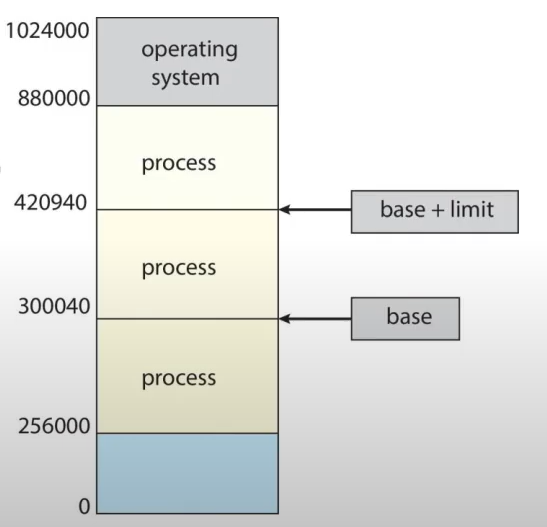
- Memory Protection
- Mechanism to make sure
that each process will
access only the segments
of memory to which they
are allowed
- Pair of registers that
define the logical address
space of a process: BASE
and LIMIT
- Pair of registers that
define the logical address
space of a process: BASE
and LIMIT
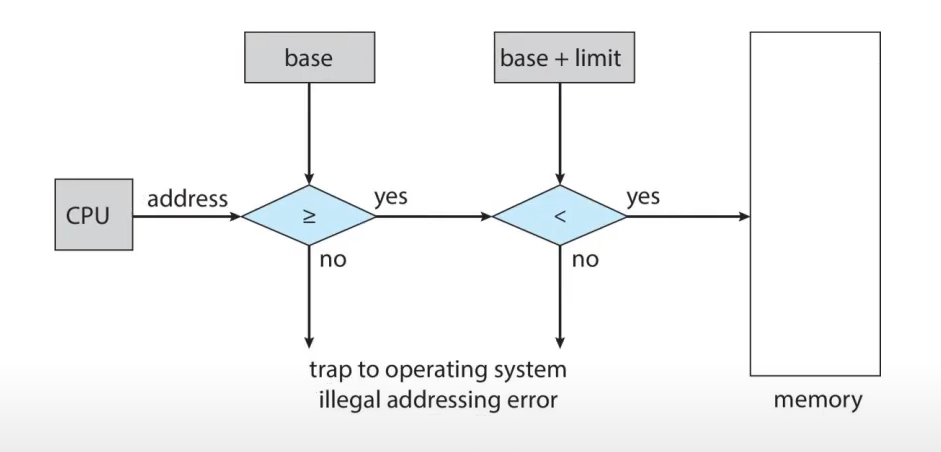
- Algorithm
- OBS.: loading base
and limit register
requires high
privilege
- CPU checks if the memory access generated in user space is valid.
- OBS.: loading base
and limit register
requires high
privilege
- Mechanism to make sure
that each process will
access only the segments
of memory to which they
are allowed
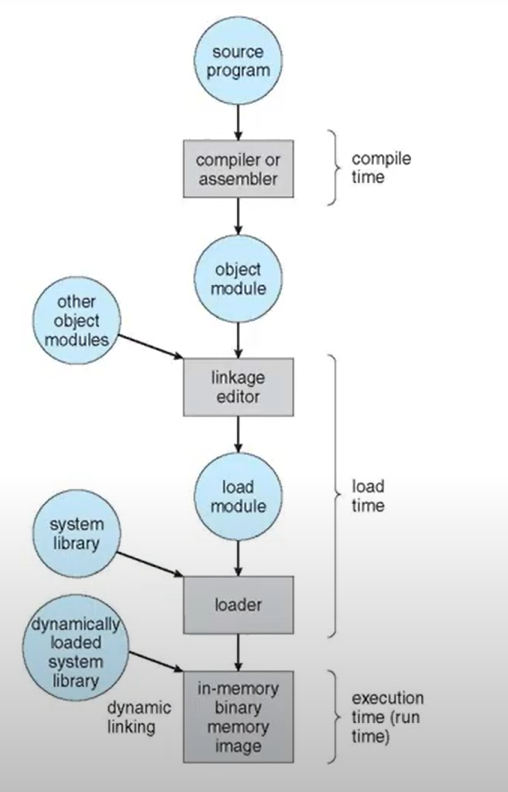
- Address binding
- Source code
- Define symbols
- Ex.: name of a variable , name of a function
- Ex.: name of a variable , name of a function
- Accessible at compile time
- Define symbols
- Compiled code
- Bind symbols from source code to Relocatable addresses
- Ex.: N bytes from the beginning of this module
- Ex.: N bytes from the beginning of this module
- Accessible at load time
- Bind symbols from source code to Relocatable addresses
- Linked and loaded code
- Bind relocatable addresses to absolute logical (?) addresses
- Ex. : <base_address> + N
- Ex. : <base_address> + N
- Accessible at execution time
- Bind relocatable addresses to absolute logical (?) addresses
- Source code
- Address
space
- Physical
- Seen by the memory
unit
- Seen by the memory
unit
- Logical (virtual
address)
- Seen by the
CPU
- Seen by the
CPU
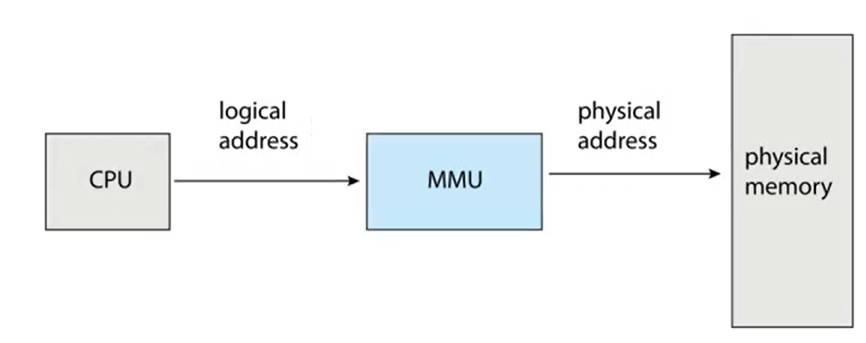
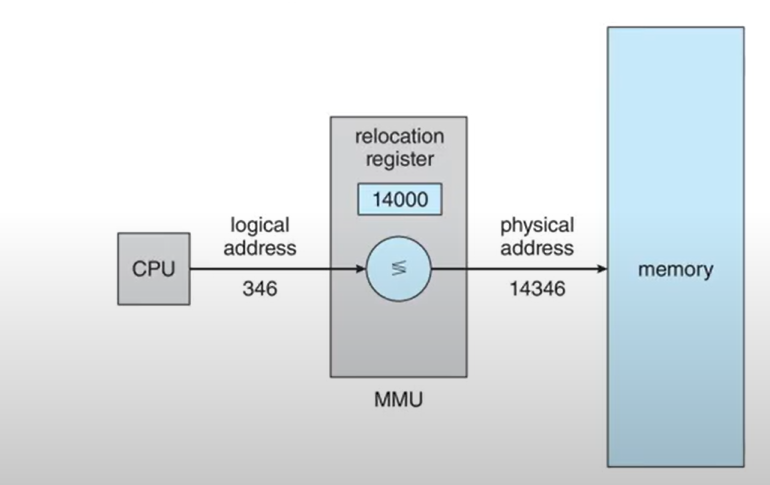
- Memory Management
Unit
- Translates logical address, from
CPU, to physical address for the
physical memory
- Ex.
- Not all systems have MMU.
Less complex systems, like
embedded systems, do
not have MMU.
- Translates logical address, from
CPU, to physical address for the
physical memory
- Physical
- Dynamic
Loading
- Load the routines of the
program only when they are
called
- Routines on disk in relocatable load
format
- Load the routines of the
program only when they are
called
- Linking
- Dynamic
- Linking happens in execution time
- Stub
- Small piece of code used to
locate the appropriate
memory-resident library
routine. It replaces itself
with the address of the
routine and executes the
routine.
- Small piece of code used to
locate the appropriate
memory-resident library
routine. It replaces itself
with the address of the
routine and executes the
routine.
- Stub
- Linking happens in execution time
- Static
- system libs + program code = binary program image
- system libs + program code = binary program image
- Dynamic
- Partitions
- Operating Systems
maintain information
about: (a) - allocated
partitions and (b) -
free partitions.
- Dynamic Storage-allocation problem: satisty
a request of size N from a list of free holes
- First-fit
- Allocate the first hole that is big enough
- Allocate the first hole that is big enough
- Best-fit
- Allocate the smallest hole the is big enough
- Allocate the smallest hole the is big enough
- Worst-fit
- Allocate the largest hole.
- Allocate the largest hole.
- The first-fit and
best-fit strategies
are usually better
in terms of speed
and storage than
worst-fit
- First-fit
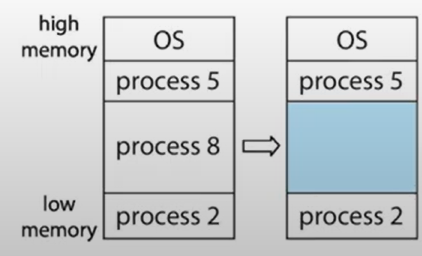
- Fragmentation
- External
- Total memory is sufficient
to satisfy a request but it is
not contiguous.
- Total memory is sufficient
to satisfy a request but it is
not contiguous.
- Internal
- Allocated memory is
larger than what is
actually used.
- Allocated memory is
larger than what is
actually used.
- External
- Operating Systems
maintain information
about: (a) - allocated
partitions and (b) -
free partitions.
- Paging
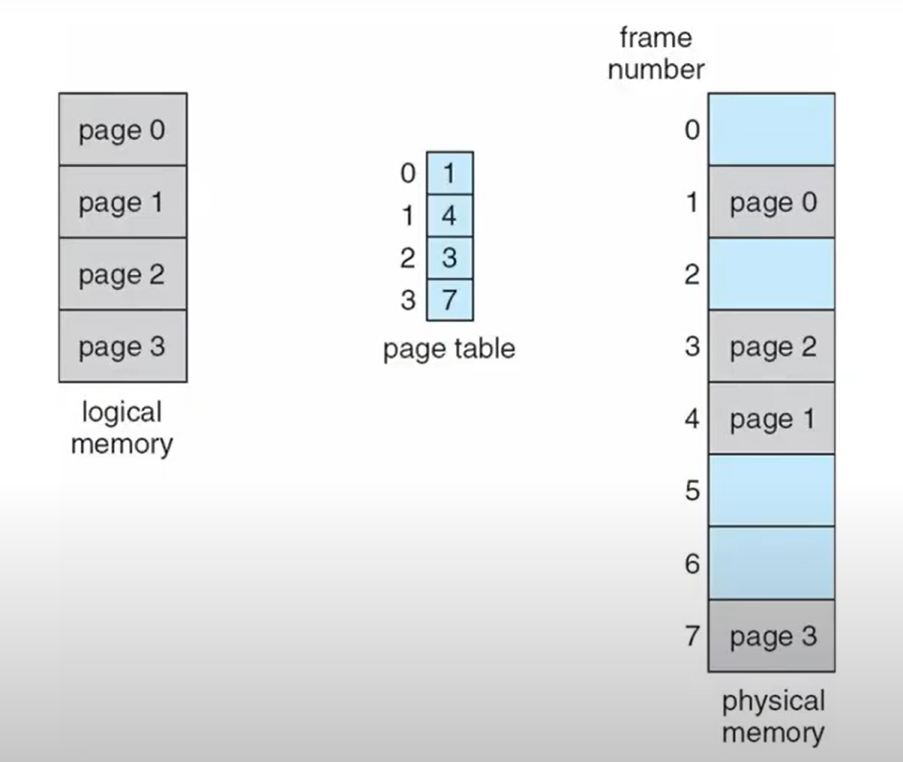
- It is a technique in which the physical
memory is divided into fixed-size blocks
(frames) of 512 B to 2 MB and logical memory
into fixed-size blocks (pages).
- Make it possible for
the program to be
loaded even if no
contiguous physical
memory space is
available but the total
space is available.
- Ex. A program of size N pages needs N free frames to be loaded.
- Ex. A program of size N pages needs N free frames to be loaded.
- Make it possible for
the program to be
loaded even if no
contiguous physical
memory space is
available but the total
space is available.
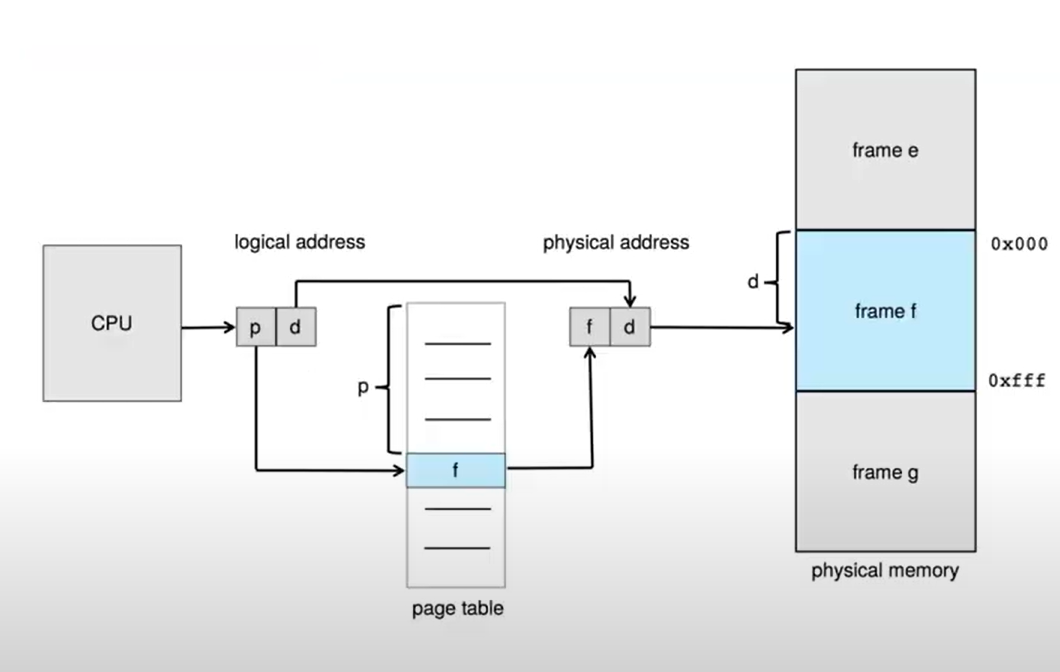
- Address Translation
- Page Table
- Translates logical addresses to physical
addresses.
- It may is stored in main
memory, but it is inefficient.
It is better to be assisted by
a cache (TLB).
- Each process will have its own page
table
- It allows using random
addresses to make it
harder to find the final
physical address,
something good for
security.
- It allows using random
addresses to make it
harder to find the final
physical address,
something good for
security.
- Implementation
- Registers
- Page-table Base
Register
- Points to the
table
- Points to the
table
- Page-table length
register
- Size of the
table
- Size of the
table
- Page-table Base
Register
- Cache
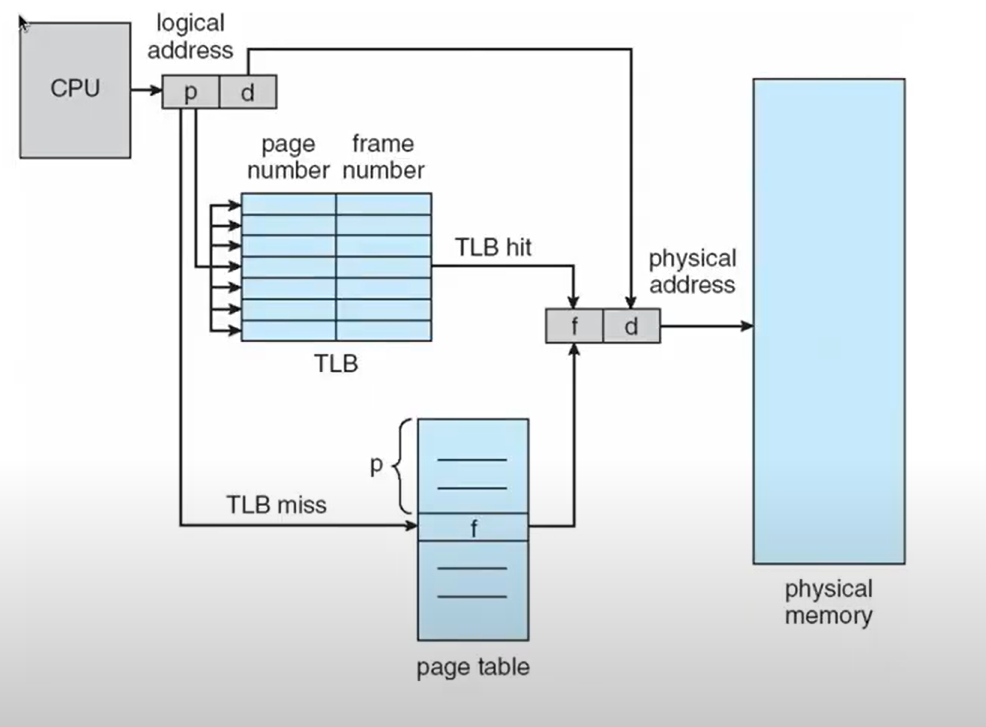
- Translation Look-aside buffer (TLB) or (Associative
Memory)
- TLB
entry
- Uniquely identify each
process to provide
address space
protection to that
process
- Uniquely identify each
process to provide
address space
protection to that
process
- Greater TLBs are better because they avoid miss.
- TLB
entry
- Translation Look-aside buffer (TLB) or (Associative
Memory)
- Registers
- Structure
- Strategies
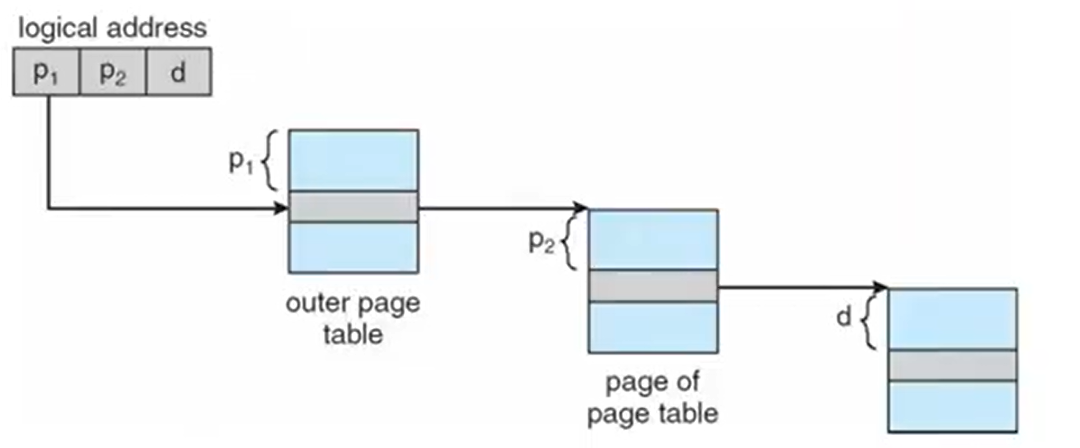
- Hierarchical Paging
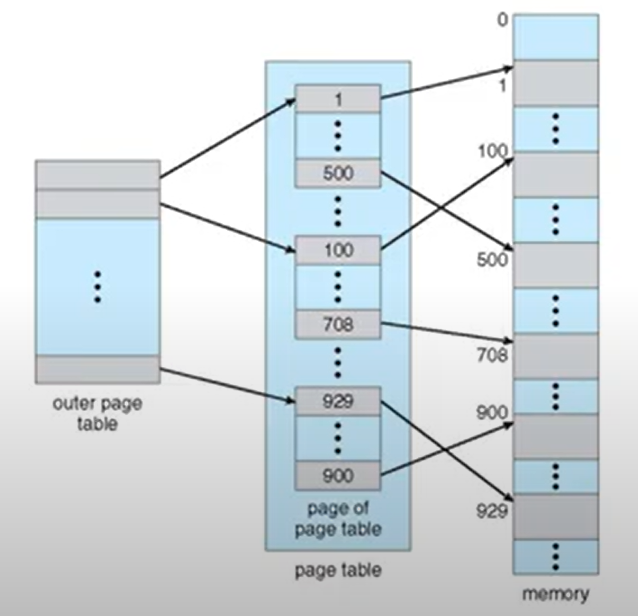
- The idea consists of
using multiple levels of
page table.
- OBS.: Caches
should be used to
avoid multiple
main memory
accesses
- OBS.: Caches
should be used to
avoid multiple
main memory
accesses
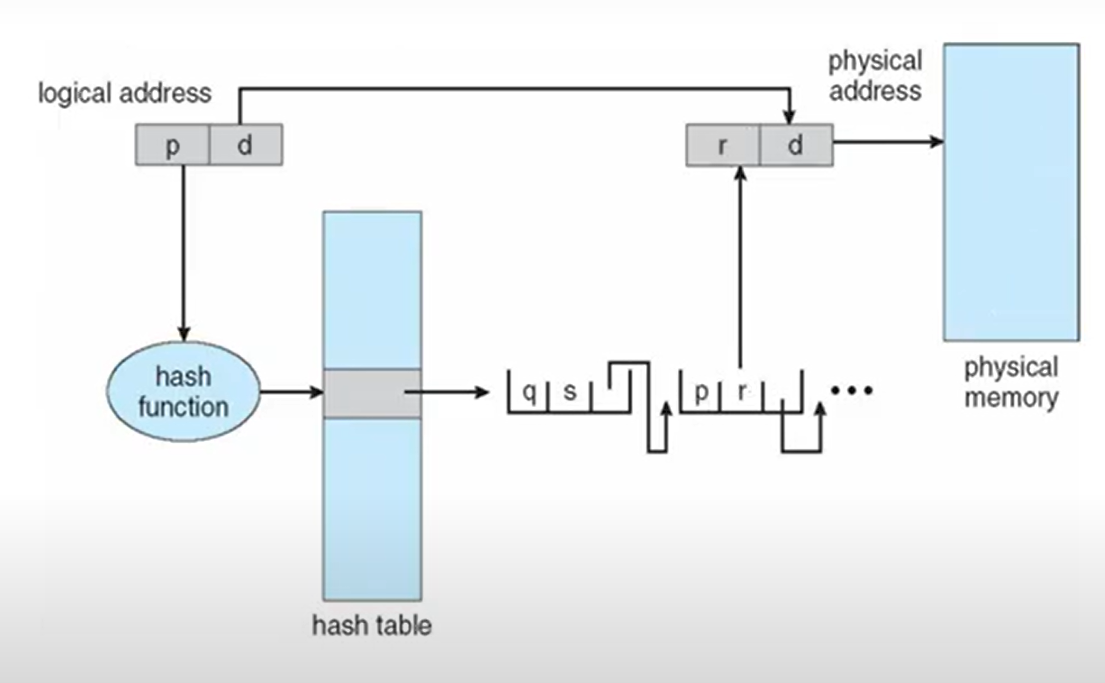
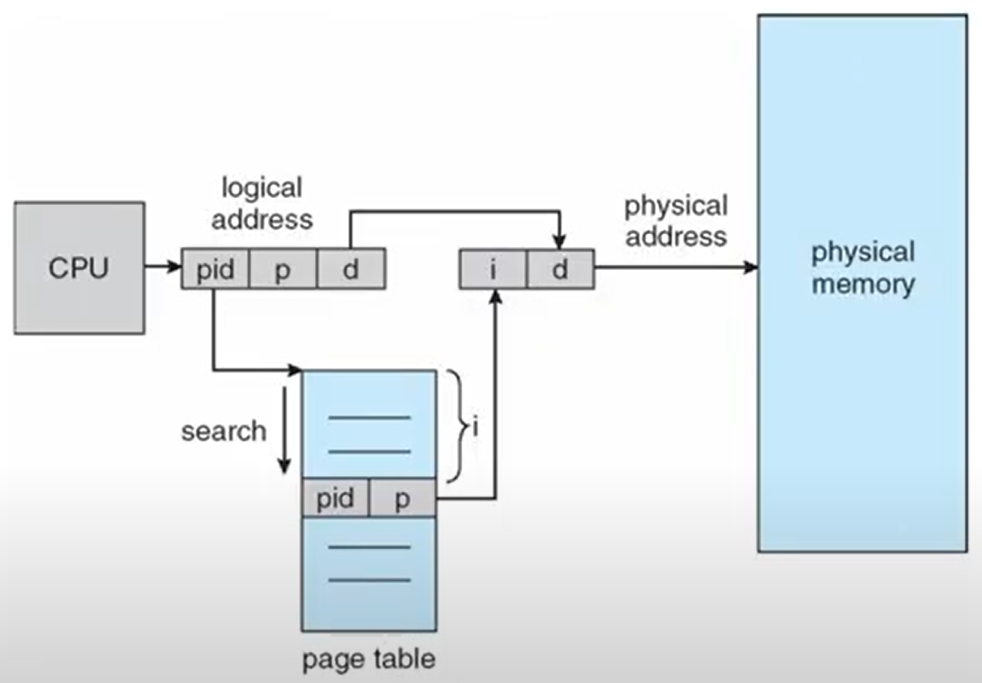
- Ex. 1
- Ex. 2:
- Ex. 2:
- The idea consists of
using multiple levels of
page table.
- Hashed Page Table
- Inverted Page Tables
- Hierarchical Paging
- Strategies
- Translates logical addresses to physical
addresses.
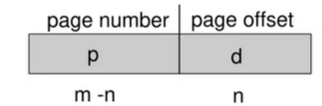
- Logical Address
- Page Number
- It is an index for a
base physical address
of each page in page
table.
- It is an index for a
base physical address
of each page in page
table.
- Page Offset
- With the base
address, it defines
the physical
memory
- With the base
address, it defines
the physical
memory
- Page Number
- Ex. 1
- Ex. 2
- Ex. 3 (with TLB)
- Ex. 3 (with TLB)
- Ex. 2
- Page Table
- It is a technique in which the physical
memory is divided into fixed-size blocks
(frames) of 512 B to 2 MB and logical memory
into fixed-size blocks (pages).
- Effective Access Time
(EAT)
- Hit
Ration
- % of times that a page
number was found in
TLB.
- % of times that a page
number was found in
TLB.
- ETA = <Hit Ratio> x <Mean time to access memory> + <Miss Ratio> x 2 x <Mean time to access memory>
- OBS.: When a miss happens, it is necessary to
access the memory twice. One to get
information from page table and other to
read/write from the memory
- OBS.: When a miss happens, it is necessary to
access the memory twice. One to get
information from page table and other to
read/write from the memory
- Hit
Ration
- Protection
- A protection bit is associated with
each frame, indicating read/write
or other kind of operation is
allowed. A violation results in a
trap to the kernel.
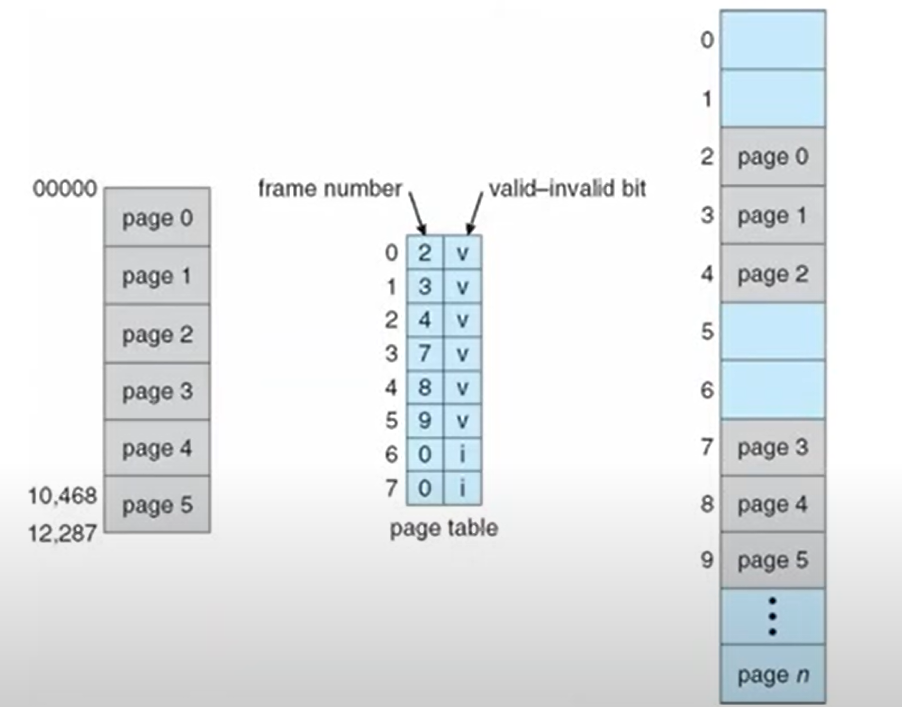
- Valid-invalid bit
- VALID: Indicate that the associated page is in the process' logical address space
- INVALID: indicate that the associated page is not in the process' logical address space
- VALID: Indicate that the associated page is in the process' logical address space
- A protection bit is associated with
each frame, indicating read/write
or other kind of operation is
allowed. A violation results in a
trap to the kernel.
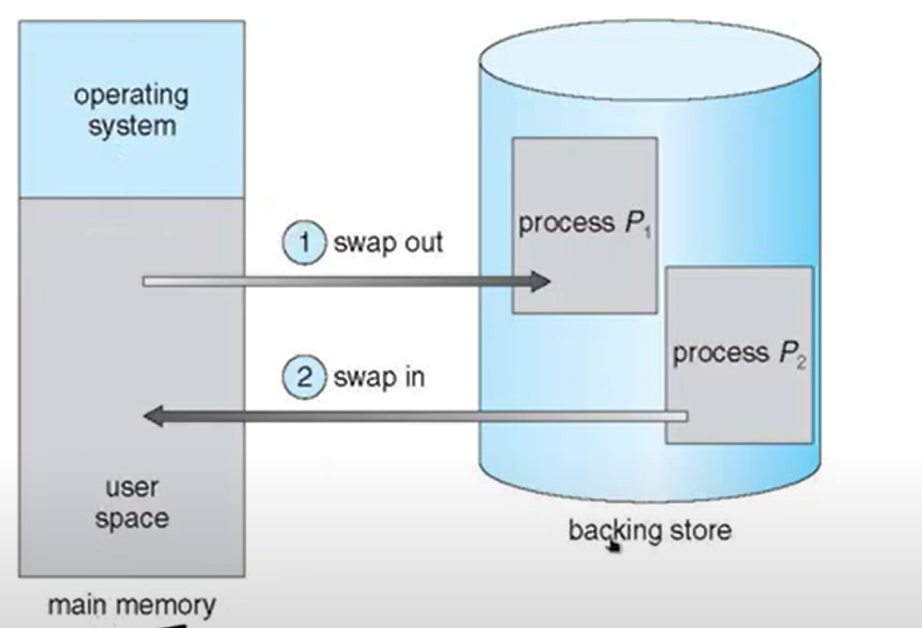
- Swapping
- It is the process to move a
process/page from main memory to a
secondary memory temporarily.
- Ex. of process swapping:
- It is the process to move a
process/page from main memory to a
secondary memory temporarily.
Medienanhänge
Möchten Sie kostenlos Ihre eigenen Mindmaps mit GoConqr erstellen? Mehr erfahren.