
4083750
Beschreibung

Mindmap von Nancy Rodriguez Parra, aktualisiert more than 1 year ago

|
Erstellt von Nancy Rodriguez Parra
vor fast 11 Jahre
|
|
Present Perfect vs Simple Past
- Present Perfect
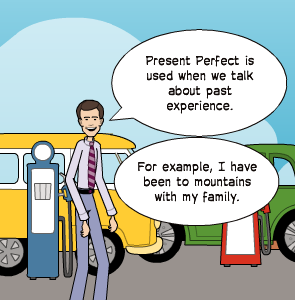
- The present perfect is formed by combining
the auxiliary verb "has" or "have" with the
past participle.
- Structure
- Positive
- Subject + Auxiliary have + past participle+ Complement
- Subject + Auxiliary have + past participle+ Complement
- Negative
- Subject + Auxiliary have + not + verb participle + Complement
- Subject + Auxiliary have + not + verb participle + Complement
- Interrogative
- Have + Subject + Verb participle + Complement
- Have + Subject + Verb participle + Complement
- Positive
- Time
Expressions
- Since
- For
- Already
- Just
- Since
- Examples
- I've been reading
- It hasn't been snowing
- Have you seen that movie many times?
- I've been reading
- The present perfect is formed by combining
the auxiliary verb "has" or "have" with the
past participle.
- Simple Past
- Structure
- Negative
- subject + didn't + verb infinitive + complement
- subject + didn't + verb infinitive + complement
- Interrogative
- Did + subject + verb infinitive + complement?
- Did + subject + verb infinitive + complement?
- Positive
- subject + verb ending -ed + complement
- subject + verb ending -ed + complement
- Negative
- Time Expressions
- Yesterday
- Last day
- Ago
- Yesterday
- Examples
- Did he go to the cinema last night?
- We did'nt work yesterday
- I went to school
- Did he go to the cinema last night?
- Use the Simple Past to express the
idea that an action started and
finished at a specific time in the past.
- Structure
Medienanhänge

Möchten Sie kostenlos Ihre eigenen Mindmaps mit GoConqr erstellen? Mehr erfahren.