
4667932
Beschreibung

Mindmap von Camilo Anturi, aktualisiert more than 1 year ago
|
|
Erstellt von Camilo Anturi
vor mehr als 10 Jahre
|
|
THE FOURTH SKILLS (Harmer, J. 2007)
- PRODUCTIVE SKILLS
- SPEAKING
- CONNECTED SPEECH
- Activities to prove students real life's situations
(DISCUSISONS AND QUESTIONARIES)
- TEACHER AS A PROMPTER (Suggest
things to make them be able to
communicate)
- TEACHER ALWAYS MUST BE A
FEEDBACK PROVIDER WITH
DISCRETE CHANGES TO HELP
STUDENTS TO IMPROVE
THEMSELVES
- TEACHER ALWAYS MUST BE A
FEEDBACK PROVIDER WITH
DISCRETE CHANGES TO HELP
STUDENTS TO IMPROVE
THEMSELVES
- TEACHER AS A PROMPTER (Suggest
things to make them be able to
communicate)
- Activities to prove students real life's situations
(DISCUSISONS AND QUESTIONARIES)
- EXPRESSIVE DEVICES
- Activities which include non-verbal language
and specific treats of language as stress...
(ROLE PLAYS, READING ALOUD, ACTING FROM
A SCRIPT)
- Activities which include non-verbal language
and specific treats of language as stress...
(ROLE PLAYS, READING ALOUD, ACTING FROM
A SCRIPT)
- LEXIS AND GRAMMAR
- Activities to give students specific
vocabulary to communicate
(PREPARED TALKS, ACTING FROM A
SCRIPT)
- TEACHER AS A PARTICIPANT
(Animates and gives
examples to encourage
students)
- TEACHER AS A PARTICIPANT
(Animates and gives
examples to encourage
students)
- Activities to give students specific
vocabulary to communicate
(PREPARED TALKS, ACTING FROM A
SCRIPT)
- NEGOTIATION LANGUAGE
- Activities to make them learn new
words and different ways to say
things (COMMUNICATION GAMES AS
FLASHCARDS TO MEAN THEM)
- Activities to make them learn new
words and different ways to say
things (COMMUNICATION GAMES AS
FLASHCARDS TO MEAN THEM)
- CONNECTED SPEECH
- WRITING
- WRITING CONVENTIONS
- Writing includes conventions as grammar,
vocabulary, issues of letter, word and text
information, expressed in hardwriting,
spelleing, layout and punctuation
- HARDWRITING
- Personal issue, which influence the reader against
the writer a problem which is solve by practicing
- SPELLING
- It does not affect the
understanding of a written
message, but if it is not good
developed by students is an
evidence of lack in education
- It does not affect the
understandong of a text but it
shows an evident lack on education
- It does not affect the
understanding of a written
message, but if it is not good
developed by students is an
evidence of lack in education
- LAYOUT AND PUNCTUATION
- those conventions
around how to write
letters, reports, publicity
etc. These are
frequently
non-transferable from a
language to other
- Conventions around how to write
letters, reports, publicity etc. These
are frequently non-tranferable from
a language to other
- those conventions
around how to write
letters, reports, publicity
etc. These are
frequently
non-transferable from a
language to other
- HARDWRITING
- Writing includes conventions as grammar,
vocabulary, issues of letter, word and text
information, expressed in hardwriting,
spelleing, layout and punctuation
- APPROACHES TO STUDENT WRITING
- As an important act from us as
teachers is give different roles to
the writing activities, shows the
different steps and vatierty
around writing skill
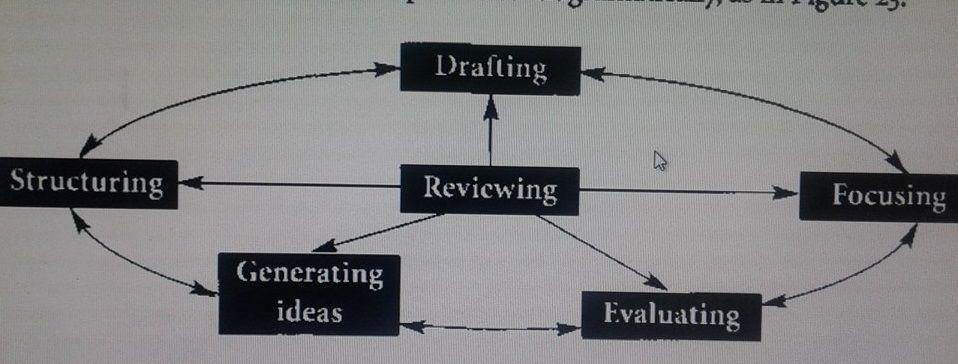
- PROCESS AND PRODUCT
- What are we going to focus on?
- Process: -Pre-writing, editing, redrafting,
publishing
- To Ron White and Valerie Arndt the model was:
- To Ron White and Valerie Arndt the model was:
- Process: -Pre-writing, editing, redrafting,
publishing
- What are we going to focus on?
- WRITING AND GENRE
- Examples are necessary to them understand how a busness or a
scientific text is written, teach them how to cronstruct and use
specific language (pre-writing), all this with specific communicative
purposes: Knowledge, conventions, style, genre, context.
- Examples are necessary to them understand how a busness or a
scientific text is written, teach them how to cronstruct and use
specific language (pre-writing), all this with specific communicative
purposes: Knowledge, conventions, style, genre, context.
- CREATIVE WRITING
- Imaginative tasks is a
motivational approach where
students felt a "kind of
achievement". Activities of
self-discovery with effective
larning giving a lear input and
output,
- Imaginative tasks is a
motivational approach where
students felt a "kind of
achievement". Activities of
self-discovery with effective
larning giving a lear input and
output,
- WRITING AS A
COOPERATIVE ACTIVITY
- Gives a more detail and constructive
feedback, a biggest genereation of ideas. We
do not only have our subjective perspective of
what are we writing. "two brains work better
than one": Better research, discussion, peer
evaluation, group accomplishment
- Gives a more detail and constructive
feedback, a biggest genereation of ideas. We
do not only have our subjective perspective of
what are we writing. "two brains work better
than one": Better research, discussion, peer
evaluation, group accomplishment
- USING THE COMPUTER
- Using it we will not see
hardwriting issues, useful to
work faster and easier, it can
correct poor spelling, and is
easier visually to appresiate
the text. And of course the
opportunity to communicate
with wherever person in
wherever place
- Using it we will not see
hardwriting issues, useful to
work faster and easier, it can
correct poor spelling, and is
easier visually to appresiate
the text. And of course the
opportunity to communicate
with wherever person in
wherever place
- THE ROLE OF THE TEACHER
- MOTIVATOR: Invite to create, sugest a biggest effor.
- RESOURSE: Supply information, follow their progress, affering advice.
- FEEDBACK PROVIDER: Special care and respond positively.
- MOTIVATOR: Invite to create, sugest a biggest effor.
- PROCESS AND PRODUCT
- As an important act from us as
teachers is give different roles to
the writing activities, shows the
different steps and vatierty
around writing skill
- WRITING LESSON SEQUENCE
- Is important be aware of student's level, needs, context, resources etc. where activities must have a
specific goal and will follow a sequence, going from the easier part to the hardest. Following a
process where they will learn step by step how to write, how to connect previous knowlege, create
loger and more complete texts, until be able to manage different styles, genres etc.
- WRITING CONVENTIONS
- SPEAKING
- RECEPTIVE SKILLS
- READING
- Extensive
- Complete programme
with materials,
guidance, tasks and
facilities with libraries
- Complete programme
with materials,
guidance, tasks and
facilities with libraries
- Intensive
- Teacher's
roles
- Organiser
- Reading purposes
with clear
instructions
- Reading purposes
with clear
instructions
- Observer
- Let students
read in their own
- Let students
read in their own
- Feedback
organiser
- Feedback sessions to
make students
understand the reading
- Feedback sessions to
make students
understand the reading
- Prompter
- Make students notice
language features
- Make students notice
language features
- Organiser
- Teacher's
roles
- Vocabulary
question
- Time limit
- Specific time for
vocabulary
enquiry
- Specific time for
vocabulary
enquiry
- Word/ phrase limit
- Specific amount of
words or phrases to
answer
- Specific amount of
words or phrases to
answer
- Meaning
consensus
- Cooperative
learning to find new
words' meanings
- Cooperative
learning to find new
words' meanings
- Time limit
- Reading
sequences
- Different kind of activities
to stimulate student's
intentions to read, with
different ways to test
reading comprehension
- Different kind of activities
to stimulate student's
intentions to read, with
different ways to test
reading comprehension
- Extensive
- LISTENING
- Process
- Bottom- up
- Infer meaning
- Context
- Prior
Knowledge
- Context
- Infer meaning
- Top Down
- Knowledge
about the
language
- Non verbal
behavior
- Lexical
- Pauses / Stress
- Non verbal
behavior
- Knowledge
about the
language
- Bottom- up
- Language
input
- Extensive
- Teacher encourages
students to make their
own choices
- Significant effect
- Cds / Cassette
- Audiobooks
- Websides /
MP3
- Films / videos
- Calm down students
- Music
- Significant effect
- Teacher encourages
students to make their
own choices
- Intensive
- Material desinged
by
- Teacher'
- Organiser
- Clear instructions
- Clear instructions
- Machine
operator
- test, take decisions and know the audio
- test, take decisions and know the audio
- Feedback
provider
- Prompter
- Provoke awarness of language
- Provoke awarness of language
- Organiser
- +
- Unknown voices
in real situations
- Cheap
- Unknown voices
in real situations
- -
- Poor
acustic,
speed, lack
of
interactuion
- LEIDY BEJARANO ARENAS - FERNANDA MORALES TORRES -
LAURA ESPINOSA CIFUENTES - CAMILO ANTURI MURCIA -
VICTOR ALFONSO SANDOVAL
- LEIDY BEJARANO ARENAS - FERNANDA MORALES TORRES -
LAURA ESPINOSA CIFUENTES - CAMILO ANTURI MURCIA -
VICTOR ALFONSO SANDOVAL
- Poor
acustic,
speed, lack
of
interactuion
- Teacher'
- Material desinged
by
- Lessons
sequences
- Live listening
- Reading aloud
- Sttory-telling
- Conversations
- Interviews
- Reading aloud
- Getting
events
- Taking
messanges
- Jigsam
listening
- Live listening
- Extensive
- Process
- READING
Medienanhänge
Möchten Sie kostenlos Ihre eigenen Mindmaps mit GoConqr erstellen? Mehr erfahren.