
4946969


Flipped
Classroom
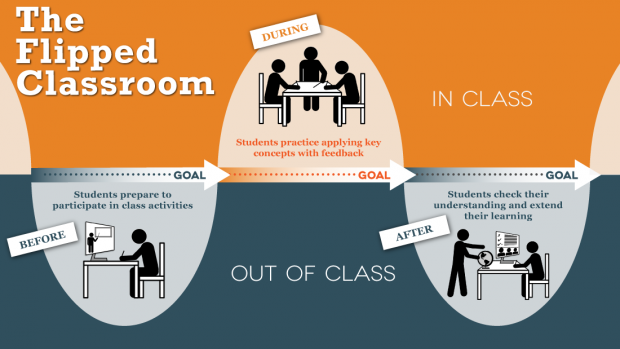
- instructional strategy by
delivering instructional
content, often online,
outside of the classroom
- students watch online lectures,
collaborate in online discussions,
or carry out research at home
and engage in concepts in the
classroom
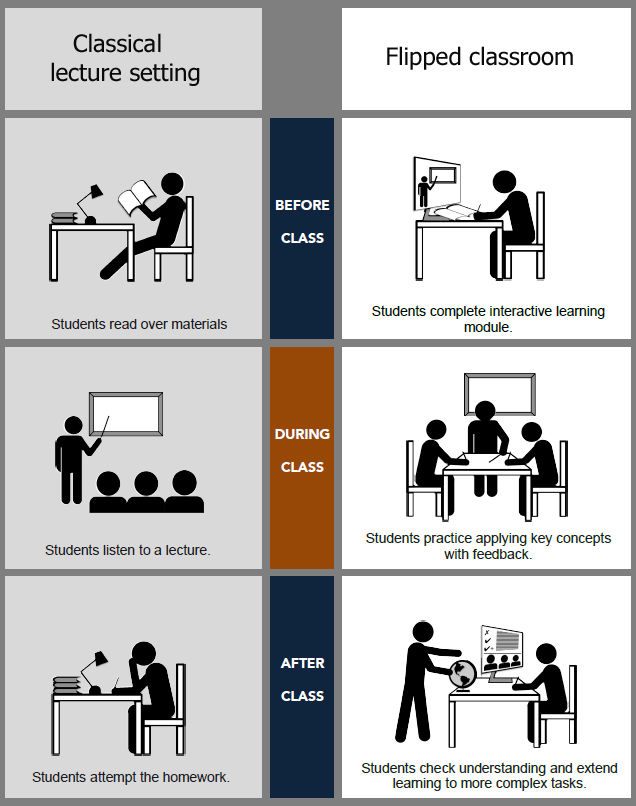
- Traditional vs flipped teaching
- Traditional
- central focus of a lesson and the
primary disseminator of information
during the class period.
- limited to activities
- Class discussions
- reading from a textbook or
practicing a concept
- central focus of a lesson and the
primary disseminator of information
during the class period.
- flipped teaching
- shifts instruction to a
learner-centered model
- content delivery may take a variety of forms
- video lessons prepared by the
teacher or third parties are
used to deliver content,
- online collaborative
discussions
- digital research
- text readings
- redefine in-class activities
- allow for highly differentiated instruction
- more time can be spent in class
- shifts instruction to a
learner-centered model
- Traditional
- Flipped
mastery
- apply a mastery learning model
- students view each lecture and work on
each exercise or project when they have
mastered the precursors.
- eliminates two other out-of-class routines
- daily lesson planning
- grading papers
- daily lesson planning
- apply a mastery learning model
- Limitations and
criticisms
- they attempt to gain access to
videos outside of school hours
- keep on-task with
independent learning
- Additional funding
- procure training for teachers to navigate
computer technologies involved in the
successful implementation the inverted
model
- procure training for teachers to navigate
computer technologies involved in the
successful implementation the inverted
model
- they attempt to gain access to
videos outside of school hours
Medienanhänge
Möchten Sie kostenlos Ihre eigenen Mindmaps mit GoConqr erstellen? Mehr erfahren.