
577412
Beschreibung

Mindmap von Jatin Arora, aktualisiert more than 1 year ago

|
Erstellt von Jatin Arora
vor fast 12 Jahre
|
|
Kinematics
- Vectors (a quantity which
describes direction as well as
magnitude
- Examples of Vectors:
Position,
displacement,
acceleration etc..
- Vectors are
represented with arrows
- The length of the
arrow indicates the
size or magnitude of
the quantity
- The arrow points
in the direction of
the quantity
- The arrow points
in the direction of
the quantity
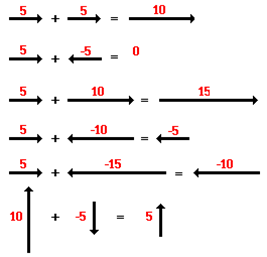
- Vector Addition 1-D
- Vectors of
the same
quantity can
be added
- The sum of
the vectors is
called the
resultant
vector
- The sum of
the vectors is
called the
resultant
vector
- Graphically
- Tip-to tail method
- Vectors can be
drawn out and
used to create
graphs
- Vectors can be
drawn out and
used to create
graphs
- Tip-to tail method
- Algebrically
- 1. Assign a direction. 2.
Apply +/- to vectors 3. Add
algebraically.
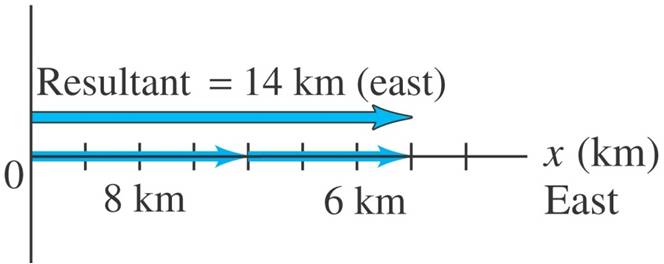
- Example: east is +
(+8) + (+6) = +14
14 km [E]
- Example: east is +
(+8) + (+6) = +14
14 km [E]
- 1. Assign a direction. 2.
Apply +/- to vectors 3. Add
algebraically.
- Vectors of
the same
quantity can
be added
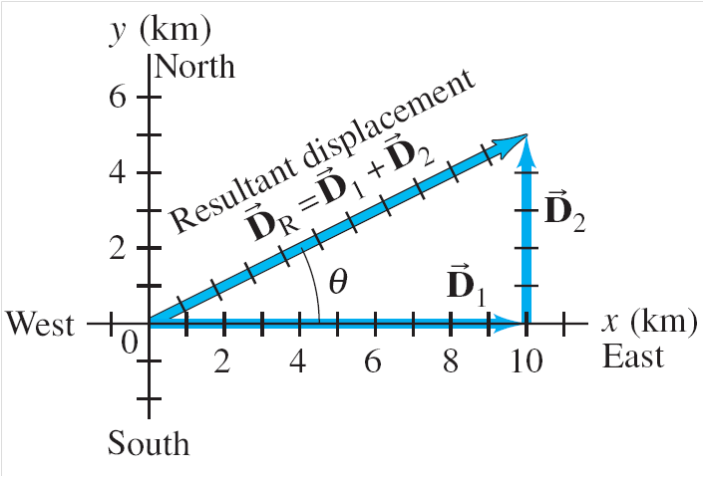
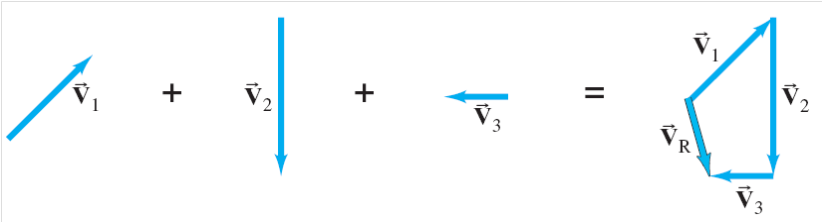
- Vector Addition 2-D
- Graphically
- use tip-to-tail method for
NON-COLINEAR vectors. Then
measure the resultant vector by using a ruler
- use tip-to-tail method for
NON-COLINEAR vectors. Then
measure the resultant vector by using a ruler
- Algebrically
- YOU CANNOT
JUST ADD
VECTORS LIKE WE
DID IN 1-D
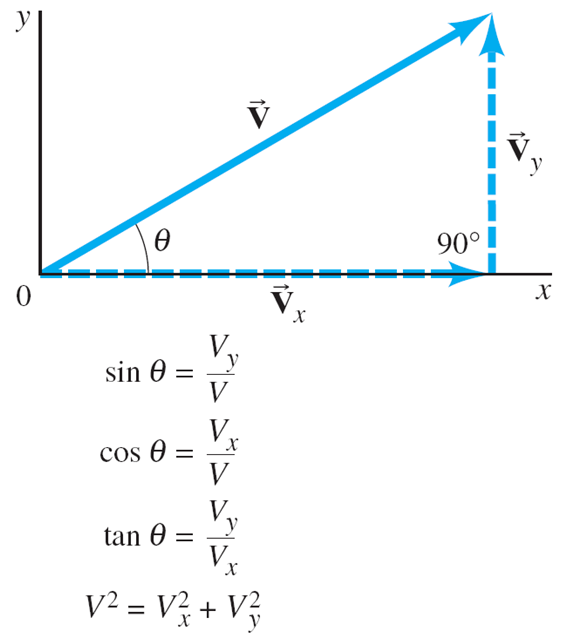
- 1.Use the Pythagorean theorem to find
magnitude
- 2: trigonometric methods to find direction
- SOH CAH TOA
- SOH CAH TOA
- 2: trigonometric methods to find direction
- 1.Use the Pythagorean theorem to find
magnitude
- YOU CANNOT
JUST ADD
VECTORS LIKE WE
DID IN 1-D
- Graphically
- Examples of Vectors:
Position,
displacement,
acceleration etc..
- Graphing
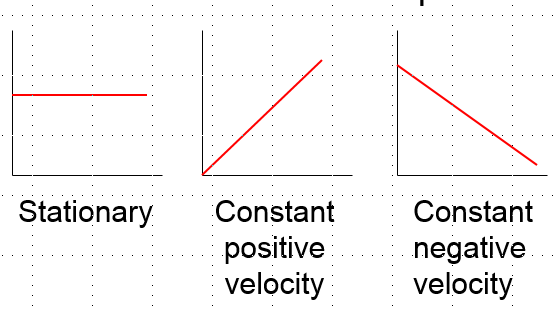
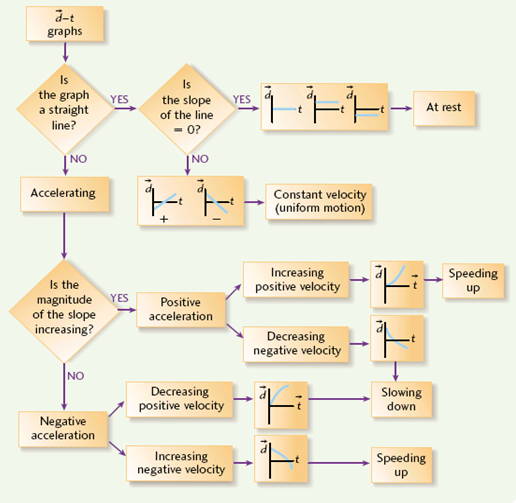
- Position-Time Graph
- Slope=Velocity
- Slope = Δd / Δt
- Slope = Δd / Δt
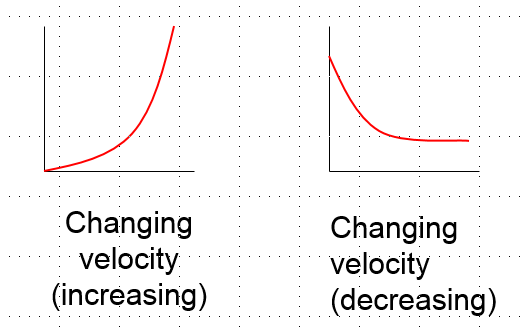
- If slope is 0, velocity is 0. If
slope is positive, velocity is
constant. If slope is negative,
velocity is constant in the
opposite direction. If slope is
changing, velocity is changing.
- Can be straight, a curve, or a
horizontal line. A horizontal line
represents a period of rest A curve
represents a change in acceleration A
straight diagonal line represents
uniform motion (no change in speed
or direction)
- Slope=Velocity
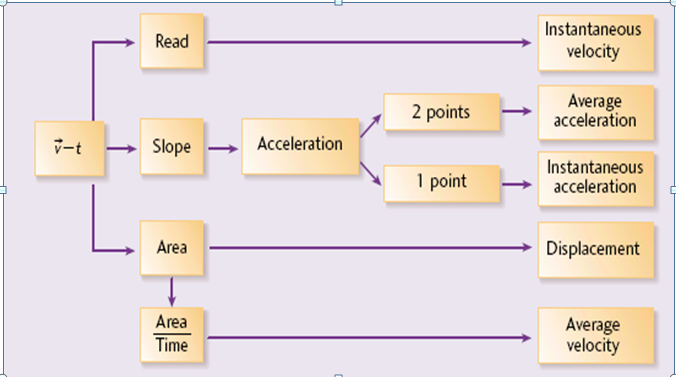
- Velocity-Time Graph
- Never curved; either
horizontally straight or a
diagonal line. A horizontal line
represents no movement and
no acceleration A diagonal line
represents a change in
acceleration. This line can either
have a positive slope or a
negative slope and is found in
the positive quadrant and
negative quadrant
- Never curved; either
horizontally straight or a
diagonal line. A horizontal line
represents no movement and
no acceleration A diagonal line
represents a change in
acceleration. This line can either
have a positive slope or a
negative slope and is found in
the positive quadrant and
negative quadrant
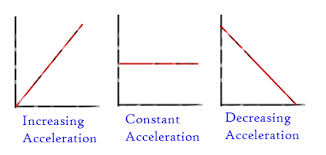
- Acceleration Vs Time Graph
- Always a straight line,either
in negative or positive
quadrant. Acceleration is
found by change of velocity
divided by change of time
- Always a straight line,either
in negative or positive
quadrant. Acceleration is
found by change of velocity
divided by change of time
- Relationships and Trends
- Average speed=distance/time
- Average Velocity=Displacement/time
- Average acceleration=velocity/time
- Average speed=distance/time
- Position-Time Graph
- Scalars
- quantities which are fully
described by a magnitude
- Examples :Distance (m),
Speed (m/s), Time (s) ,Mass
(kg) etc..
- Examples :Distance (m),
Speed (m/s), Time (s) ,Mass
(kg) etc..
- quantities which are fully
described by a magnitude
Medienanhänge
Möchten Sie kostenlos Ihre eigenen Mindmaps mit GoConqr erstellen? Mehr erfahren.