
721227
Beschreibung

Mindmap von shahad suliman, aktualisiert more than 1 year ago

|
Erstellt von shahad suliman
vor fast 12 Jahre
|
|
Rubber Dam
- Advantages
- a dry, clean operating field
- protects the patient from swallowing or inhaling instruments
- protects the dentist from infection from the patien
- High patient acceptance – Allow to Relax
- improved access and visibility
- operating efficiency.
- potentially improved properties of dental materials
- a dry, clean operating field
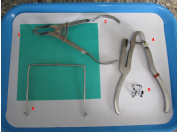
- Instruments Used for Rubber Dam placement
- RD Sheet.
- RD Frame
- RD Clamp.
- RD Punches.
- RD clamp Forceps.
- Dental floss.
- , wooden wedges
- Lubricant (petroleum jelly).
- RD napkins
- RD Sheet.
- Disadvantages
- Time consumption
- Patient’s objection
- Conditions where rubber dam not used:
- partially erupted teeth
- Some third molars
- Extremely malpositioned teeth
- Asthma patients
- Psychological reasons
- Latex allergy
- partially erupted teeth
- Time consumption
- Materials
- Latex
- non Latex
- Latex
- Sizes
- 5 × 5 inch (12.5 × 12.5 cm) sheet
- 6 × 6 inch (15 × 15 cm) sheets
- 5 × 5 inch (12.5 × 12.5 cm) sheet
- Thickness
- Thin 0.15mm
- Medium 0.2mm
- Heavy 0.25mm
- Special heavy 0.35mm
- Thin 0.15mm
- Placement of rubber dam
- Dam first technique
- Clamp first technique
- Clamp and dam together technique
- Dam first technique
- Errors in Application and Removal
- Off-Center Arch Form
- Inappropriate Distance between the Holes
- Incorrect Arch Form of Holes
- Inappropriate Retainer
- Retainer-Pinched Tissue
- Shredded or Torn Dam
- Incorrect Technique
- Off-Center Arch Form
- Reference
- Sturdevant's Art and Science of Operative Dentistry
- Sturdevant's Art and Science of Operative Dentistry
Medienanhänge
Möchten Sie kostenlos Ihre eigenen Mindmaps mit GoConqr erstellen? Mehr erfahren.