
773639
Beschreibung

Mindmap von jayyam7465, aktualisiert more than 1 year ago

|
Erstellt von jayyam7465
vor fast 12 Jahre
|
|
GASTRITIS
- EPIDEMIOLOGY
- Gastritis affects all age groups
- The incidence of H pylori
infection increases with age.
- No sexual predilection exists.
- Autoimmune gastritis
is a relatively rare
disease
- Gastritis affects all age groups
- PATHOPHYSIOLOGY
- certain drugs; alcohol; bile;
ischemia; bacterial, viral, and fungal
infections; acute stress (shock);
radiation; allergy and food poisoning;
and direct trauma.
- The common mechanism of injury is
an imbalance between the
aggressive and the defensive factors
that maintain the integrity of the
gastric lining (mucosa).
- the major mechanism of
injury is the reduction in
prostaglandin synthesis.
- Bacterial infection is another
cause of acute gastritis. The
corkscrew-shaped bacterium
called H pylori is the most
common cause of gastritis
- H pylori gastritis typically starts as
an acute gastritis in the antrum,
causing intense inflammation, and
over time, it may extend to involve
the entire gastric mucosa resulting
in chronic gastritis
- Antigen-presenting cells
activate lymphocytes and
other mononuclear cells
that lead to chronic
superficial gastritis
- H pylori produces
inflammation via the
production of a number of
toxins and enzymes
- Ulcero-hemorrhagic gastritis is
most commonly seen in patients
who are critically ill.
Ulcero-hemorrhagic gastritis is
believed to be secondary to
ischemia related to hypotension
and shock
- certain drugs; alcohol; bile;
ischemia; bacterial, viral, and fungal
infections; acute stress (shock);
radiation; allergy and food poisoning;
and direct trauma.
- CLINICAL PRESENTATION
- Gnawing or burning epigastric
distress, occasionally accompanied
by nausea and/or vomiting. The pain
may improve or worsen with eating
- The physical examination
findings are often normal with
occasional mild epigastric
tenderness
- Gnawing or burning epigastric
distress, occasionally accompanied
by nausea and/or vomiting. The pain
may improve or worsen with eating
- DIAGNOSIS
- CBC count to assess
for anemia, as acute
gastritis can cause
gastrointestinal
bleeding
- Stool for blood
- A number of H
pylori tests are
available
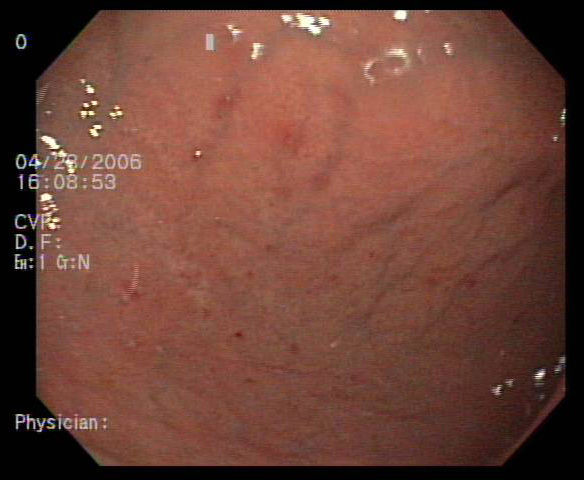
- Endoscopy may reveal a thickened, edematous,
nonpliable wall with erosions and reddened
gastric folds.
- CBC count to assess
for anemia, as acute
gastritis can cause
gastrointestinal
bleeding
- TREATMENT
- Administer medical therapy
as needed, depending on
the cause and the
pathological findings
- In patients with persistent H pylori infection
despite appropriate initial treatment, a proton
pump inhibitor (PPI), levofloxacin, and
amoxicillin for 10 days appear to be more
effective and better tolerated than a PPI,
bismuth, tetracycline, and metronidazole
- Administer fluids and
electrolytes as required,
particularly if the patient is
vomiting
- Discontinue the
use of drugs known
to cause gastritis
- Administer medical therapy
as needed, depending on
the cause and the
pathological findings
Medienanhänge
Möchten Sie kostenlos Ihre eigenen Mindmaps mit GoConqr erstellen? Mehr erfahren.