
9284817
Beschreibung

Erzeugt von Emma Cooper

|
Erstellt von Emma Cooper
vor mehr als 9 Jahre
|
|
Frage 1
Frage
Which of the following is a FALSE statement?
Antworten
-
Rotating anode tubes are a complete vacuum, whereas earlier Crooke's tubes were a partial vacuum
-
Rotating anode tubes are stationary
-
Despite the focal spot size remaining constant, rotating anode tubes increase the area of the anode exposed to the beam
Frage 2
Frage
FID stands for [blank_start]Focalspot[blank_end] to [blank_start]Image[blank_end] [blank_start]Distance[blank_end]
Antworten
-
focal spot
-
Image
-
Distance
Frage 3
Frage
FOD stands for [blank_start]Focal spot[blank_end] to [blank_start]Object[blank_end] [blank_start]Distance[blank_end]
Antworten
-
Focal spot
-
Object
-
Distance
Frage 4
Frage
OID stands for [blank_start]Object[blank_end] to [blank_start]Image[blank_end] [blank_start]Distance[blank_end]
Antworten
-
Object
-
Image
-
Distance
Frage 5
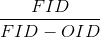
Antworten
-
Magnification Factor
-
Maximum mAs setting
-
Collimation threshold
Frage 6
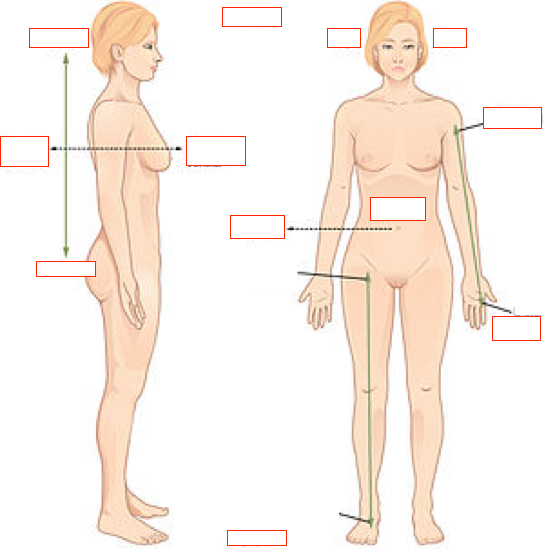
Antworten
-
Cranial
-
Inferior
-
Caudal
-
Distal
-
Proximal
-
Left
-
Right
-
Anterior
-
Posterior
-
Superior
-
Medial
-
Lateral
Frage 7
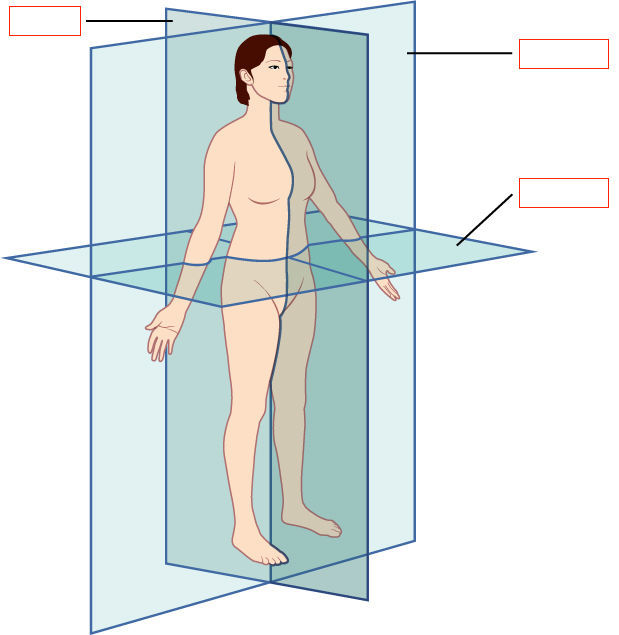
Antworten
-
Sagittal
-
Transverse
-
Coronal
Frage 8
Frage
Fill in the following body positions:
[blank_start]erect[blank_end] standing or sitting
[blank_start]decubitus[blank_end] lying down
[blank_start]supine[blank_end] lying on back
[blank_start]prone[blank_end] lying facedown
[blank_start]lateral decubitus[blank_end] lying on one side
[blank_start]right lateral[blank_end] right side touches the image plate
[blank_start]left lateral[blank_end] left side touches the image plate
Antworten
-
erect
-
decubitus
-
supine
-
prone
-
lateral decubitus
-
right lateral
-
left lateral
Frage 9
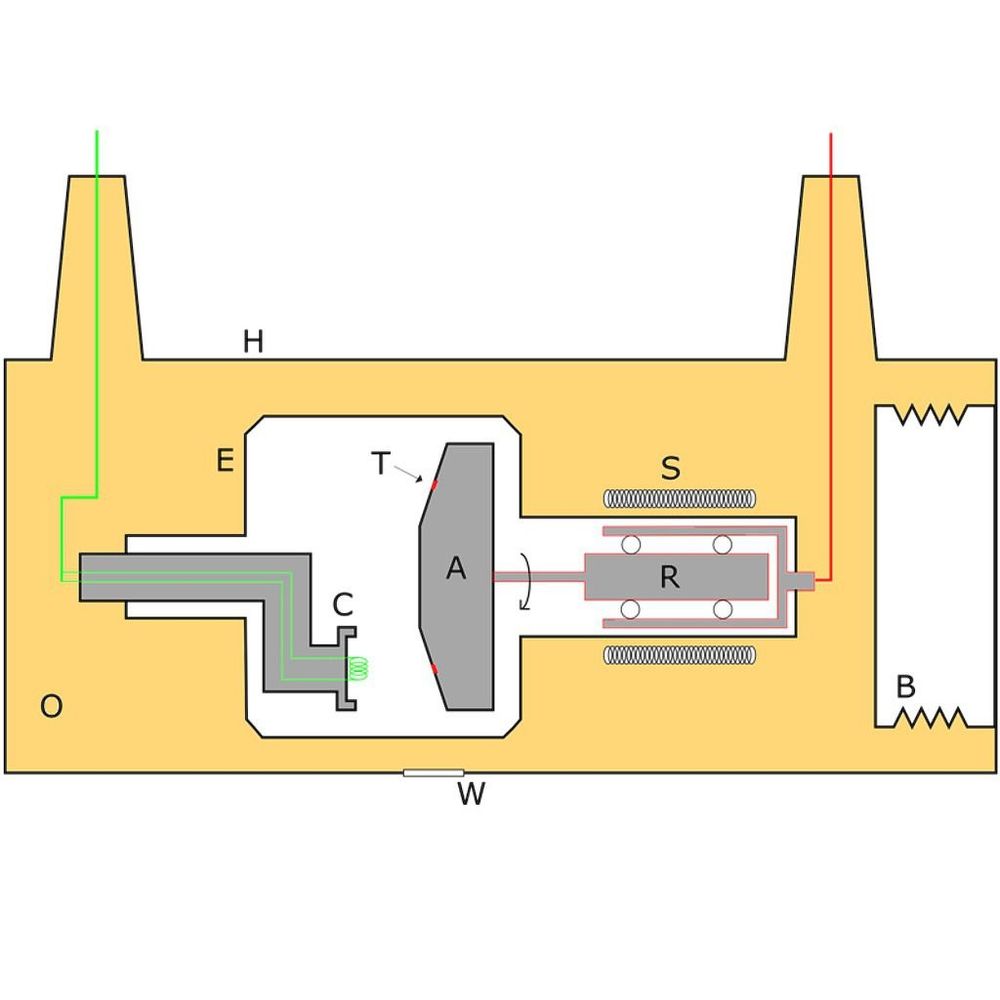
Antworten
-
Anode
-
Cathode
-
Window
-
Anode target
-
Rotor
-
Evacuated glass envelope
-
Housing
-
Stator coils
Frage 10
Frage
Fill in the blanks with the appropriate terms:
The [blank_start]anode[blank_end] disc has a target track made of 90% [blank_start]tungsten[blank_end] and 10% [blank_start]rhenium[blank_end]. Tungsten has a high [blank_start]melting point[blank_end] and high atomic number giving it a high [blank_start]thermal capacity[blank_end]. The addition of rhenium produces less [blank_start]roughening[blank_end].
The anode disk base is made of a [blank_start]molybdenum graphite alloy[blank_end] making it [blank_start]lightweight[blank_end] with [blank_start]good heat dissipation[blank_end].
The rotor is made of [blank_start]copper and iron[blank_end] giving it a high thermal capacity and [blank_start]conductivity[blank_end].
Antworten
-
anode
-
tungsten
-
rhenium
-
melting point
-
thermal capacity
-
roughening
-
molybdenum graphite alloy
-
lightweight
-
good heat dissipation
-
conductivity
-
copper and iron
Frage 11
Frage
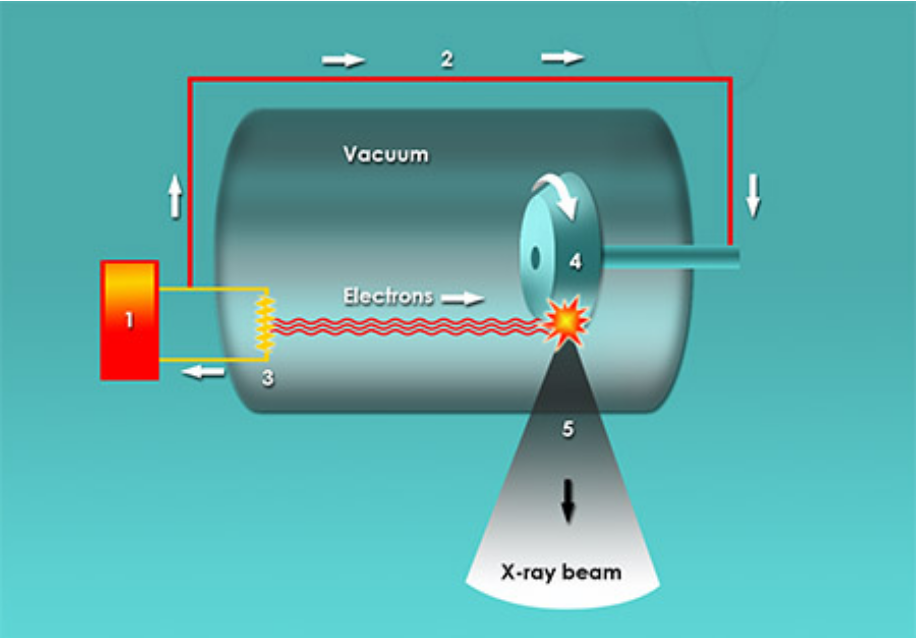
X-rays are produced by [blank_start]high voltage[blank_end] acceleration of electrons from a [blank_start]tungsten filament[blank_end] [blank_start]negative cathode[blank_end] (3) within a [blank_start]vacuum[blank_end], towards a [blank_start]tungsten target[blank_end] on a [blank_start]positive anode[blank_end] (4). This anode [blank_start]rotates[blank_end] to dissipate heat generated. [blank_start]Photons[blank_end] are generated through [blank_start]atom interaction[blank_end] in the anode and an [blank_start]x-ray beam[blank_end] (5) is directed towards the [blank_start]patient[blank_end].
Antworten
-
high voltage
-
tungsten filament
-
negative cathode
-
vacuum
-
tungsten target
-
positive anode
-
rotates
-
Photons
-
atom interaction
-
x-ray beam
-
patient
Frage 12
Frage
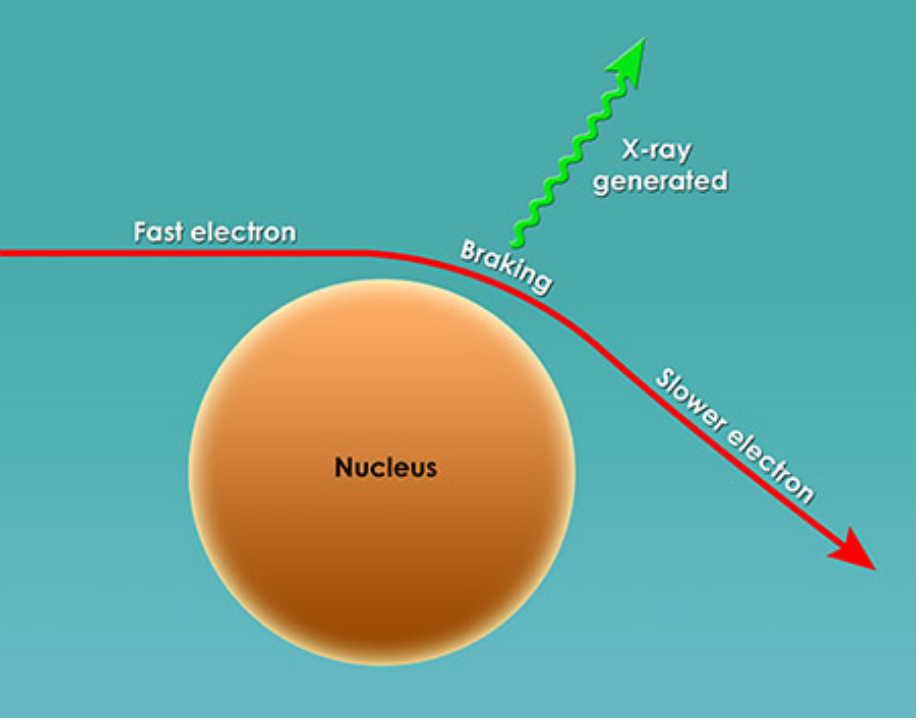
[blank_start]Bremsstrahlung[blank_end] x-rays occur when an [blank_start]electron[blank_end] passes very near the [blank_start]nucleus[blank_end] of an atom and is slowed and deviated from the resulting [blank_start]electromagnetic interaction[blank_end]. In this process, the electron loses [blank_start]energy[blank_end] and a [blank_start]photon[blank_end] (x-ray) is emitted.
Antworten
-
Bremsstrahlung
-
electron
-
nucleus
-
electromagnetic interaction
-
energy
-
photon
Frage 13
Frage
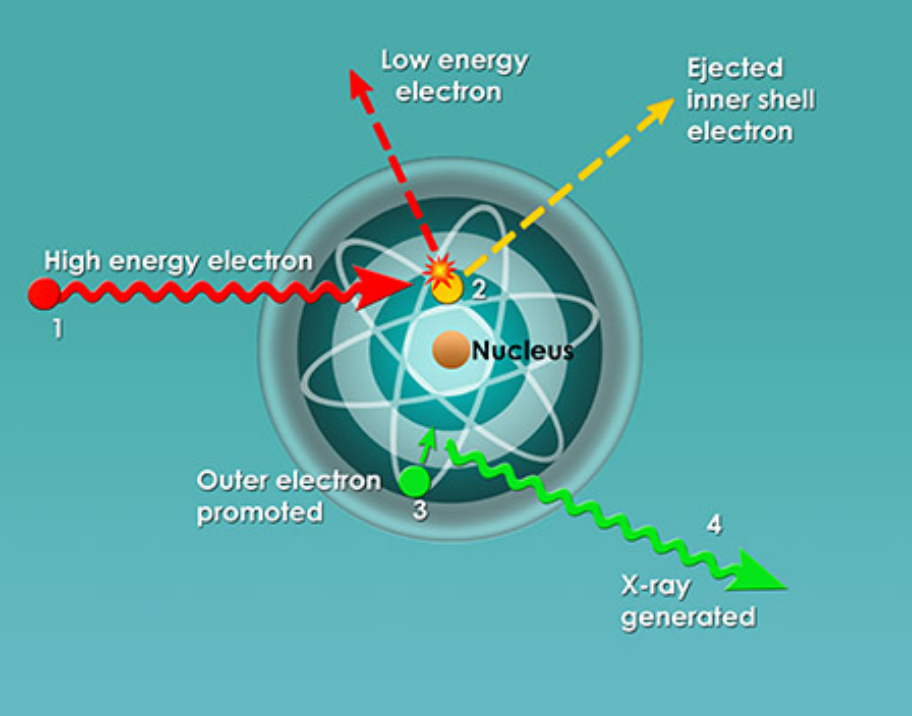
A [blank_start]characteristic[blank_end] x-ray is when a [blank_start]high energy[blank_end] electron (1) collides with an [blank_start]inner shell[blank_end] electron (2) in a tungsten [blank_start]atom[blank_end]. Both are ejected from the atom leaving a [blank_start]vacancy[blank_end] in the inner shell. This is filled by an [blank_start]outer shell[blank_end] electron (3) with a loss of energy emitted as an [blank_start]x-ray photon[blank_end] (4).
Antworten
-
characteristic
-
high energy
-
inner shell
-
atom
-
vacancy
-
outer shell
-
x-ray photon
Frage 14
Frage
Ionising radiation is radiation that has enough enery to free an electron from an atom, creating an ion.
Antworten
- True
- False
Frage 15
Frage
Match the keyword with the correct definition:
[blank_start]kVp[blank_end] measure of the maximum voltage potential across an x-ray tube, responsible for acceleration of the electrons from the cathode to the anode
[blank_start]mA[blank_end] determines current through filament, a measure of the total number of electrons flowing from cathode to anode
[blank_start]time[blank_end] controls duration of electron flow being subjected to the voltage differential, determines duration of bombardment of anode by electrons
[blank_start]mAs[blank_end] product of exposure time and x-ray tube current, becomes the Total Radiation Output
Antworten
-
kVp
-
mA
-
mAs
-
time
-
mA
-
kVp
-
mAs
-
time
-
time
-
mA
-
mAs
-
kVp
-
mAs
-
mA
-
time
-
kVp
Frage 16
Frage
What is meant by the term resolution in medical imaging?
Antworten
-
The ability to image two different objects and visually distinguish them from one another
-
The scale of contrast on an image
-
The product of kVp and mAs
Frage 17
Frage
A lower spatial frequency (line pairs per millimetre) indicates better spatial resolution.
Antworten
- True
- False
Frage 18
Frage
When an image is produced with [blank_start]few[blank_end] x-rays (i.e. [blank_start]low mAs[blank_end]) the quantum mottle will be [blank_start]higher[blank_end] than if the image was produced with [blank_start]many[blank_end] x-rays (i.e. [blank_start]high mAs[blank_end]).
Antworten
-
few
-
many
-
low mAs
-
high mAs
-
higher
-
lower
-
many
-
few
-
high mAs
-
low mAs
Frage 19
Frage
The following can all be used to reduce scatter radiation: collimation, compression band, grid, air gap technique.
Antworten
- True
- False
Möchten Sie mit GoConqr kostenlos Ihre eigenen Quiz erstellen? eigenen Mehr erfahren.