
3401296


| Frage | Antworten |
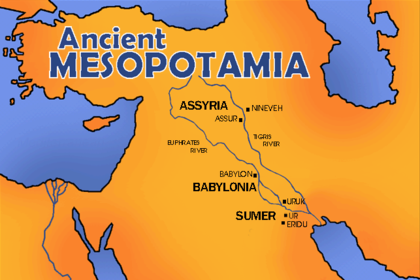
| Mesopotamia~The land between the rivers | |
| Sumerians | The creators of the first Mesopotamian civilization |
| Polytheistic | Beliefs in many gods |
| Ziggurats | A temple people was often built atop a massive stepped tower |
| Theocracy | A government by divine athority |
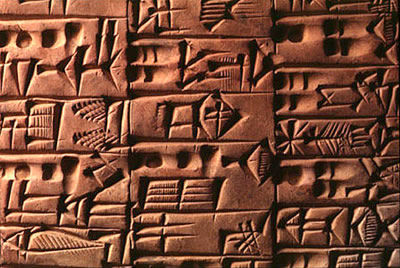
| Cuneiform~Around 3000 B.C the Sumerians created cuneiform | |
| Patriarchal | This is when man dominated the society |
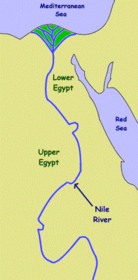
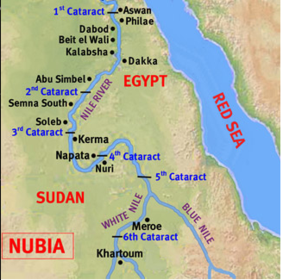
| Nile River | Nile River~Begins in the heart of Africa and courses northward for more than 4,000 miles. |
| Inundation | Annual flooding of the Nile River |
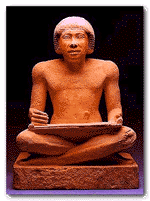
| ~Scribe~ | Scribe means A person who copies out documents. |
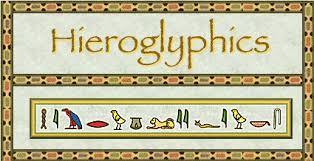
| ~Hieraglyphics~ | This is to describe decorative characters carved on Egyptian monuments. |
| ~Cataracts~ | Waterfalls along the Nile River |
| Silt | Rich black mud left behind from the flooding of the Nile river. |
| King Menes | King who united lower & upper Egypt around 3100 BC |
| Dynasty | Means "great house of"; A family of rulers |
| Pharoah | name of Egyptian King |
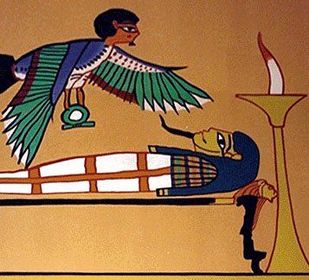
| "Ba" | The Ba was the part of the soul that embarked on a journey to follow the gods;the symbol of the Ba is often shown as a bird with a human head and wings |
| Mummification | It was very important to ancient Egyptian religious beliefs that the human body was preserved.Their method of preserving the body was called mummification. The process lasted up to 70 days |
| Canopic jars | Containers used to hold the internal organs (lungs,stomach,intestines,liver) of the decreased that was going to be mummified; the jars had lids shaped as the heads of the 4 sons of horus |
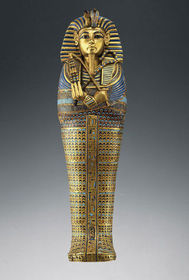
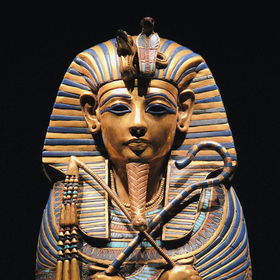
| Sarcophagus | a sarcophagus formed the outer layer of protection for the royal mummy , with several layers of coffins nested within, and was often carved out of alabaster. |
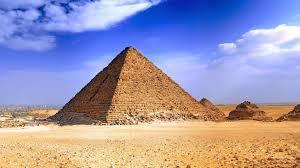
| The great pyramid | Largest of the 3 pyramids at Giza; built by king khufu; the only monument of the 7 wonders of the ancient world to survive |
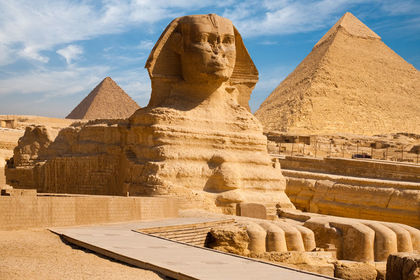
| Great Sphinx | one of the largest and oldest statues in the world. Archeologists believe that it was carved around 2500 BC and that the heads |
| Hieroglyphics | Egyptians picture writing |
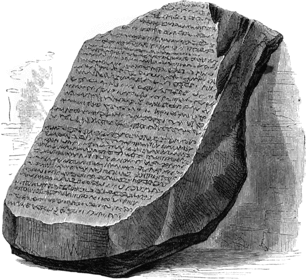
| The Rosetta Stone | A stone with writing on it in two languages (Egyptians and Greek), using three scripts (Hieroglyphic, demotic and Greek) |
| Hyksos | invaded Egypt; and ruled for 200 years; introduced the horse drawn chariot |
| Ramses II | Ramses the Great reigned 67 years ; fathered over 100 children; defeated the Hittites, the other superpower of ancient times; he declared himself a living god |
| Fertile Crescent | The region in the middle east which curves like a quarter-moon shape known as the cradle of civilization |
| Polytheistic ( aka polytheism) | Beliefs in many gods; Ancient Sumerians believed in over 3,000 gods |
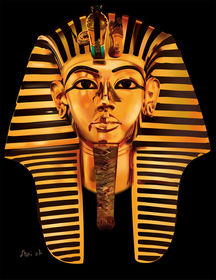
| King tut | 17 year old boy Pharaoh whose tomb survived untouched by grave robbers more than 3,000 artifacts discovered in his tomb |
| Cultural diffusion | The spreading of ideas from one culture to another culture |
| Papyrus | reed like plant that grows on the Nile river Ancient Egyptians used to write on |
| Ka | Ancient Egyptians thought when someone died the ka or the life force |
| Hatshepsut | First great women ruler in history |
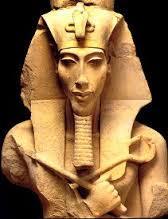
| Akhenaten | Rejected the traditional religion in favor of worshiping the aten or sun disc after whom he renamed himself |
Möchten Sie mit GoConqr kostenlos Ihre eigenen Karteikarten erstellen? Mehr erfahren.