
25513275
Description

Flowchart by NATIVIDAD CORDOVA ROSAS, updated more than 1 year ago

|
Created by NATIVIDAD CORDOVA ROSAS
about 6 years ago
|
|
Flowchart nodes
- A COGNITIVE THEORY OF LEARNING
- Anderson´s Information Processing Model
- Cognitive Theory Applied to Second Language Acquisiton
- Shortcomings of Anderson´s Cognitive Theory
- Language is a complex cognitive skill that can be describe in the context of how people acquire and store knowledge in general.
- SLA interaction between language and cognition in the storage of information in memory in the acquisiton of new information.
- Comprehensive model for examining language learning from a cognitive perspective. (O´Malley and Chamot 1990)

- Concepts that give the theory generality
- It covers a broad range of behaviour other than theories
- Distinguishes between factual knowledge and procedural skills.
- It incorporates strategic processing
- Continually updated, expanded and revised.
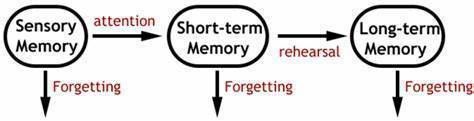
- The framework suggests information is stored in 2 distinct ways Short Term Memory (STM) and Long Term Memory (LTM)
- STM refers to that part of the memory where information which is received is stored for short periods of time while is being analysed and interpreted.
- Long Term Memory: once the STM has made sense of new information, it is then passed into the LTM where, it is again eventually forgotten.
- Repetition and practice is necessary to ensure something is remembered.
- Rehearsal is needed to move items to LTM
- New information is acquired through a four stage encoding process involving selection, acquisition, construction and integration. (Weinstein and Mayer 1986)
- Selection: focus on specific information of interest in the environment and transfer that information into working memory
- Acquisition: learners transfer information from working memory into long term memory for permanent storage.
- Construction: Learners build internal connections between ideas contained in working memory.
- Integration: The learner searches for prior knowledge in Long Term Memory and transfers this knowledge to working memory.


- Conscious Awareness
- Stages of Skill Acquisition
- A unitary process for learning complex skills
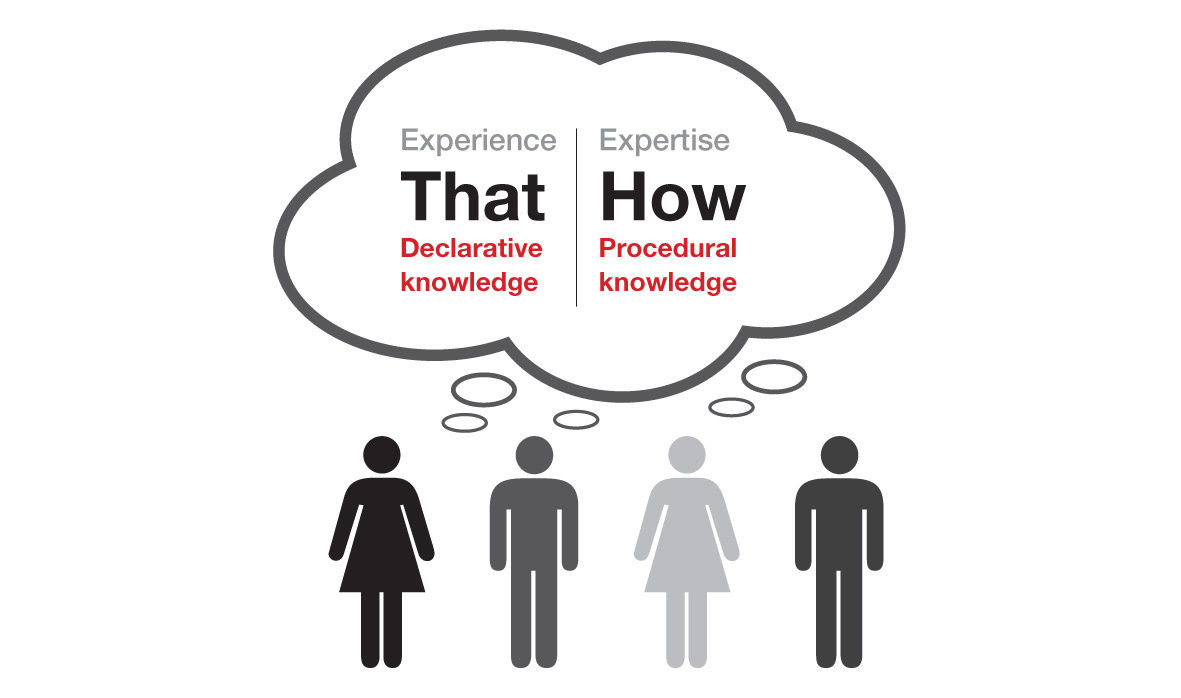
- Interlanguage as declarative knowledge
- Efficiency in the instructional approach
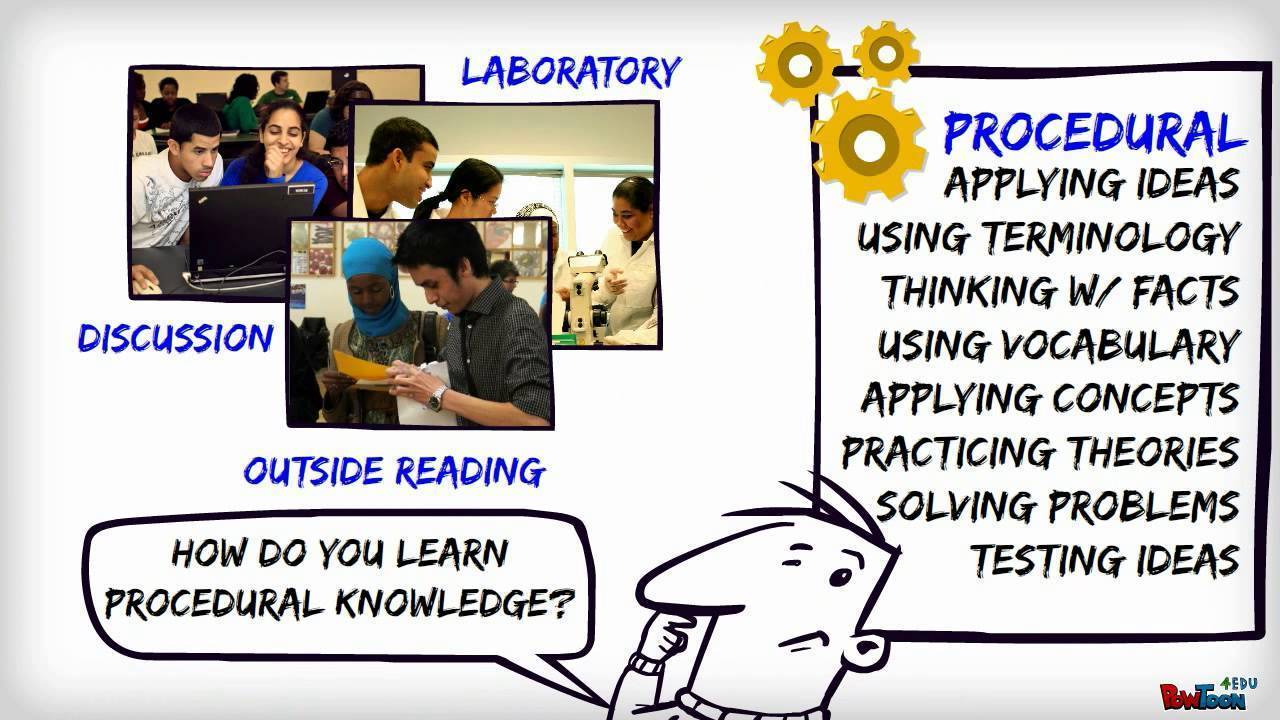
- Procedural knowledge is divided into 5 separate components (Faers and Kasper)
- Reception procedures
- Production procedures
- Conversational procedures
- Communication strategies
- Learning procedures
- The learner is consciously aware of the formal rules of the L2 during the early stages of the SLA
- Learning a language, involves the development of procedures that transform declarative knowledge into a form that makes for easy and efficiente performance (procedural knowledge)
- Cognitive stage : O´Malley and Chamot suggest that during the cognitive stage the L2 learner engages in conscious and intensive mental activity in order to make sense of the language. Concentrated attention paid to the new language forms in order to find meaning.
- Associative stage : Learner begins to use their previously acquired knowledge procedurally. L2 is used for communicative purposes, learner continoes having difficulty in using new L2 information.
- Autonomous stage : Performance in the L2 closely resembles that of a native speaker. Learner uses L2 fluently. Language processing has become autonomous (or automised). Acquisition of the skill has been accomplished.
- The learning of a complex cognitive skill may entail other processes like: The three stages of Rumelhart and Norman
- Restructuring: Development of novel structures for interpreting new information and for reorganizing exiting knowledge.
- Accretion: Gradual accumulation of new information by watching new data to existing schemata.
- Tuning: Acts to refine existing knowledge by modifying available knowledge structures.
- Individual rules which learners produce as a result of their own learning experiences which reflect the imperfect and temporary form of their interlanguage.
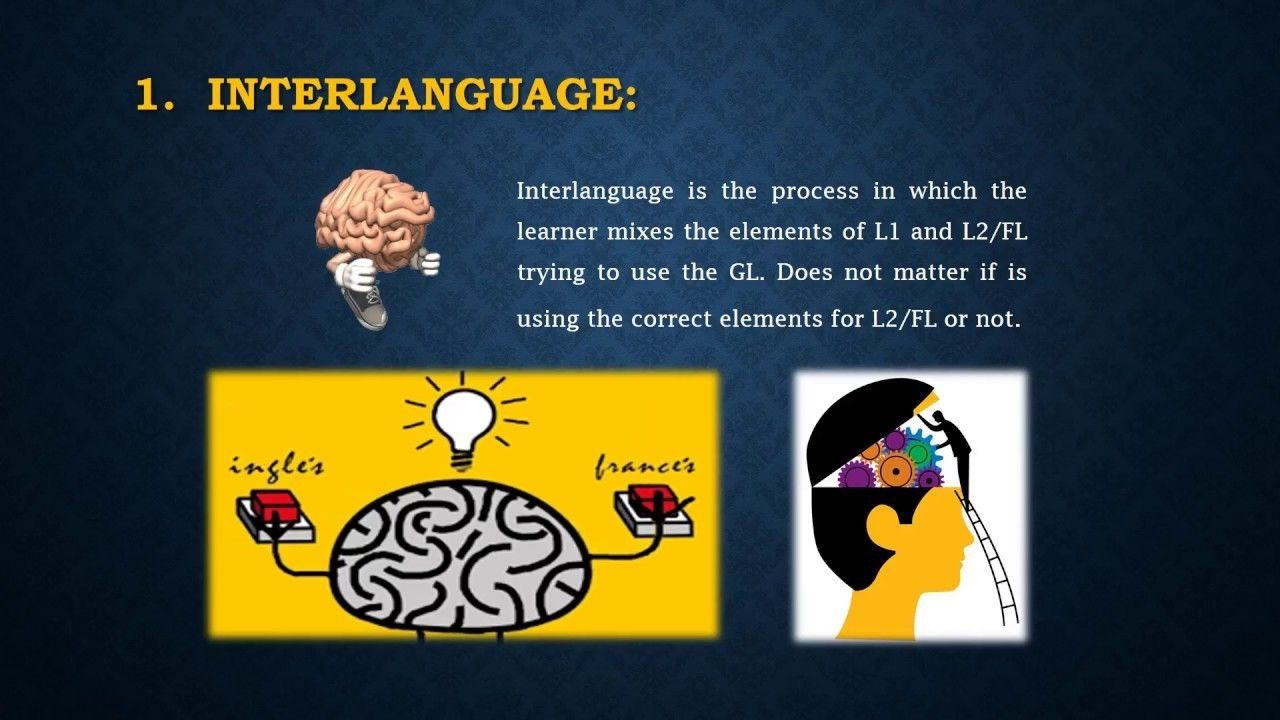
- Interlanguage: Is the type of language produced by second and foreign language learners who are in the process of learning a language. Term coined by the american linguistic Larry Slinker. **
- REFERENCES: Hockly, N. Madrid, D. Learning strategies IEXPRO anthology Mexico, Chiapas, 2010 ** Richards, Jack C. et.al. 1992 Dictionary of language teaching and applied linguistics. Second edition. Essex Longman Group UK Limited p. 186 ** Ellis, R. (1985) Understanding Second Language Acquisition. Oxford: Oxford University Press.
- Involves some form of reflection of insight. (Metacognition)
- Often represents automatic behavior that is not available to reflection. (Learning procedures)

- In the acquisition of a L2, learners frequently prefer to become actively involved in performing the skill as early as possible in the learner process.
- A classroom approach focused only on learning grammatical rules before allowing the learner to attempt to perform the skill would soon prove frustrating.
- A more effective method for learning a complex skill would be to model the performance required by the learner while providing opportunities for practicing the components of the skill until they become automatic.
- Faerch and Kaspar proposed learning through imitation as one of basic processes in the acquisition and automatization of a second language.
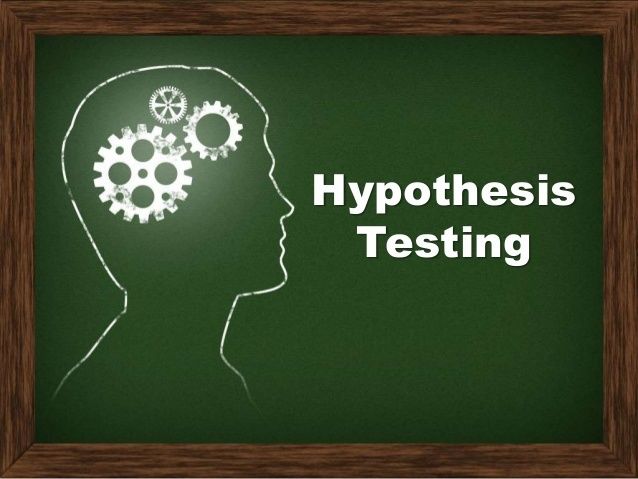
- Second process by Faerch and Kaspar´s involves hypothesis formation and testing: : Learners form hypotheses based on their previous L1 or L2 knowledge and test them out in comparison with L2 input acquired receptively, productively, metalingually or interactionally.
- Productively: Using the hypothesis to generate language and assessing the feedback.
- Receptively: Comparing hypotheses with L2 data
- Metalingually: Consulting teachers, natives or text.
- Interactionally: Making an intentional error to elicit a repair from a native speaker.
- Hypothesis Testing
- Hypothesis Formation
- Simplification Attemps by the learner to control the range of hypotheses he atempts to build. Ellis 1985
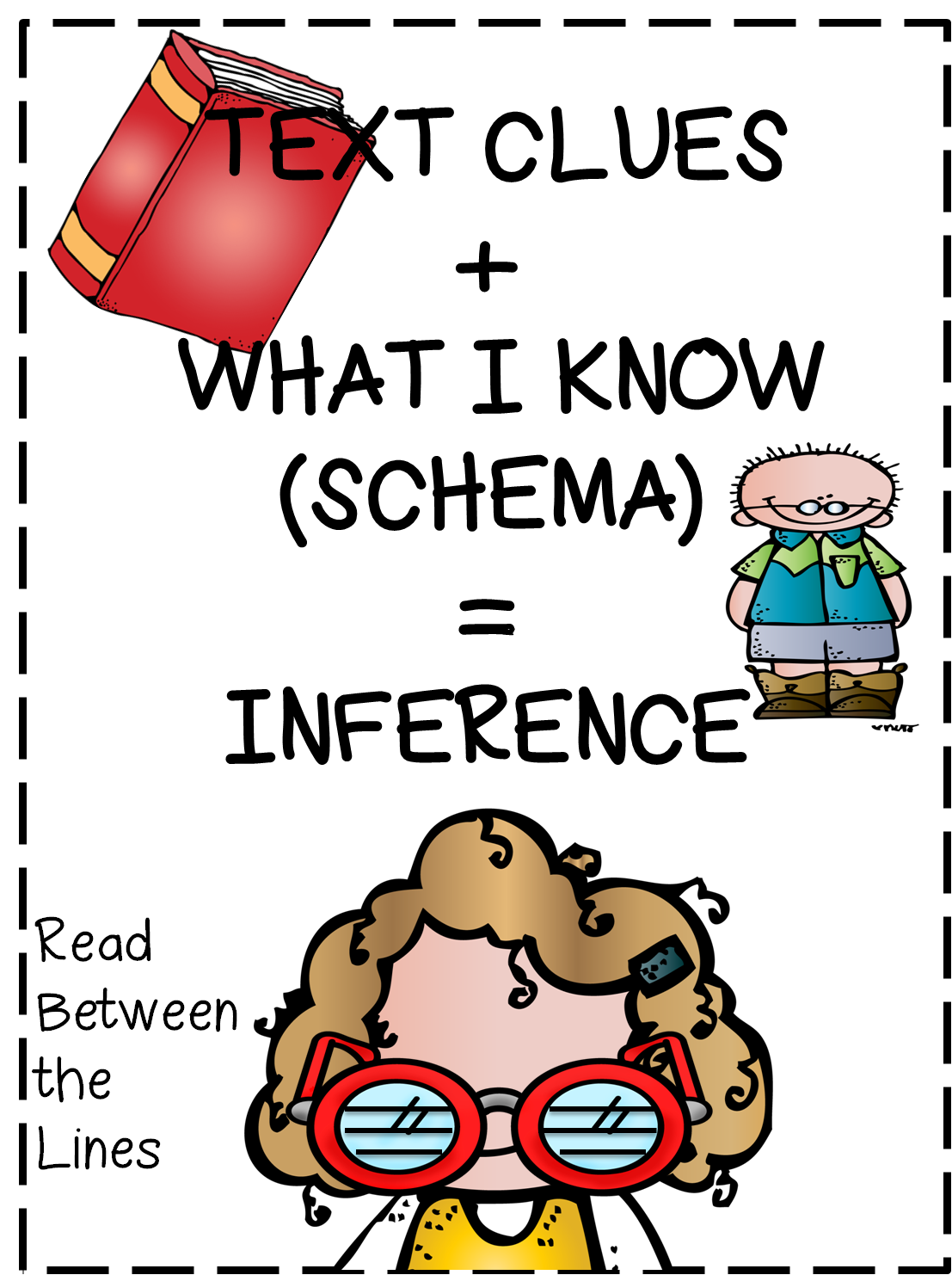
- Inferencing: Learners attempt to "induce the rule from the input" Ellis 1985
- Overgeneralization
- Transfer
- Intralingual
- Extralingual
- NATIVIDAD CÓRDOVA ROSAS
Want to create your own Flowcharts for free with GoConqr? Learn more.