
3358746
Description

Quiz by Sebastian Nizo, updated more than 1 year ago
|
|
Created by Sebastian Nizo
about 11 years ago
|
|
Question 1
Question
What type of materials are possible to create through materials development?

Answer
-
Booklets, guides, exercises, evaluation and diagnoses.
-
Informatives, instructionals, experientials, elicitings and exploratories.
-
Books, portfolios, literature, journals and illustrations.
-
Informatives, instructionals, illustratives, evaluators and exploratories.




Question 2
Question
Who provided a very detailed checklist of evaluation criteria ‘for evaluating teaching material’?

Answer
-
Candlin & Breen (1980).
-
Breen & Candlin (1987).
-
Rivers (1981).
-
Cunningsworth (1984).




Question 3
Question
the introduction to [blank_start]English Access Teacher’s Resource 1[blank_end]says that the pedagogic framework ‘begins with the [blank_start]receptive skills[blank_end] to tap students’ prior knowledge and to trigger connections with their world view. The teacher then supports and provides [blank_start]scaffolding[blank_end] for the students to put their [blank_start]productive skills[blank_end] to use, working slowly in groups towards independent work’
Answer
-
English Access Teacher’s Resource 1
-
receptive skills
-
scaffolding
-
productive skills
Question 4
Question
There have also been a number of studies of [blank_start]teacher attitudes[blank_end] towards their coursebooks which suggest that how they use their [blank_start]coursebook[blank_end] depends both on their experience and their view of the coursebook’s value in their [blank_start]teaching context[blank_end].

Answer
-
teacher attitudes
-
coursebook
-
teaching context
Question 5
Question
Tomlinson in 2003 differentiates between universal and local criteria, the former being those that can be used to evaluate materials for any learner anywhere.

Answer
- True
- False
Question 6
Question
Tomlinson & Nunan in 2004 aimed ‘to help teachers to follow learning approaches upon their colleagues' practices and identify mistakes and problems for materials adaptation'

Answer
- True
- False
Question 7
Question
[blank_start]Teachers[blank_end] also seem to be more constructively critical of their coursebooks and to be more willing, confident and able to localise and personalise their [blank_start]coursebooks[blank_end] for their learners. This is especially so in regions where teachers have been trained as materials developers, either on teacher [blank_start]development[blank_end] courses or on national or institutional materials development [blank_start]projects[blank_end].

Answer
-
Teachers
-
coursebooks
-
development
-
projects
Question 8
Question
[blank_start]Tomlinson[blank_end] said the following quotte: "What I know is that teachers will continue to develop [blank_start]positively[blank_end] as a result of their involvement in materials development, whether as course [blank_start]participants[blank_end], members of project teams or adapters of materials in their [blank_start]classrooms[blank_end]."

Answer
-
Tomlinson
-
positively
-
participants
-
classrooms
Question 9
Question
For this question, please select the two correct answers:
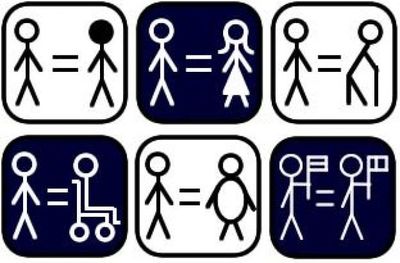
Most publishers are understandably anxious to avoid giving offence and often supply their authors with lists of taboo topics, as well as guidelines on how to avoid:
Answer
-
Sexism.
-
Feminism.
-
Racism.
-
Nationalism.




Question 10
Question
For this question, please select the two correct answers:
What is the ‘Angloglobalisation’ about, according to Gray?

Answer
-
Discussing ways in which materials can help to ‘develop counter-hegemonic discourses’ by encouraging critical engagement with issues relating to globalisation.
-
Identifying what he sees as a positive connection between the British Empire, English and globalisation.
-
Pointing out how English has become ‘a form of linguistic capital, capable of bringing a profit of distinction to those speakers with the ability to acces it.
-
Answering it as an increasingly commodified dimensions of labour-power.




Want to create your own Quizzes for free with GoConqr? Learn more.