
3380551


Question 1
Question
Lung Volumes
Answer
-
Tidal volume is the amount of air inhaled with a normal breath from the resting level - about 500 ml
-
IRV - The max amount of additional air that can be inhaled beyond the tidal volume
-
ERV - the max amount of air that can be exhaled following a normal exhalation from the resting level
-
Residual volume - the amount of air that remains after a normal expiration
-
1,2,3 are correct
-
all are correct
Question 2
Question
Lung Capacities which of the following is not true
Answer
-
TLC and FRC are 2 capacities with RV as part of the capacities
-
VC and IC are 2 capacities without RV
-
TLC = VC + RV
-
FRC = IRV + RV
Question 3
Question
Elastic recoil of chest wall and lungs determines FRC
Answer
- True
- False
Question 4
Question
Regarding FRC all are true except
Answer
-
Is what remains after a normal breath
-
FRC can be measured by spirometry
-
FRC increases with age
-
FRC decreases with lying down
Question 5
Question
With age all of the following are true except?
Answer
-
Increased RV
-
Increased FRC
-
Increased VC
-
None of the above
Question 6
Question
Lying down decreases FRC, VC is unchanged because of increased IRV
Answer
- True
- False
Question 7
Question
In pregnancy all of the following changes are true except?
Answer
-
Decreased ERV
-
Decreased RV
-
decreased FRC
-
decreased Tidal volume
Question 8
Question
Which of the following is the most reliable spirometry measurement
Answer
-
FVC
-
FEV1
-
FEF 25-75
-
all of the above
Question 9
Question
Highest airway resistance is seen in the mid sized bronchi
Answer
- True
- False
Question 10
Question
Men have greater lung capacity and volume than women, but both sexes have equal tidal volumes
Answer
- True
- False
Question 11
Question
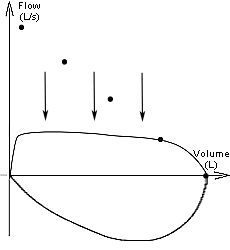
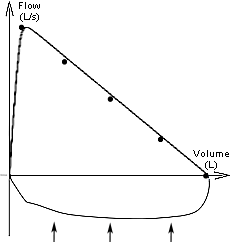
all of the following are correctly matched except
Answer
-
normal spirogram
-
COPD
-
Restrictive lung disease
-
Tracheal stenosis (fixed large airway)
-
Variable intrathoracic obstruction
-
Variable extrathoracic obstruction
-
None of the above
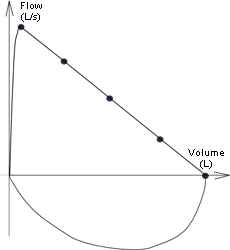
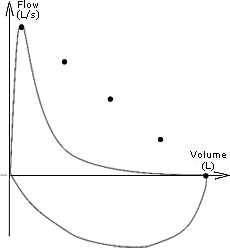
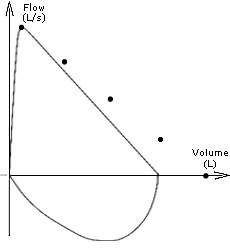
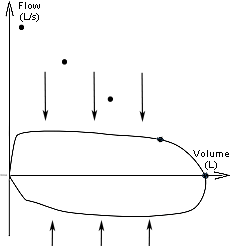
Question 12
Question
In Obstructive lung disease all are true except?
Answer
-
FEV1 is decreased
-
FVC is decreased
-
FEV1/FVC is increased
Question 13
Question
In restrictive lung disease all are true except
Answer
-
FEV1 is decreased
-
FVC is increased
-
FEV1/FVC is increased
Question 14
Question
Methacholine challenge test differentiates between bronchial asthma and the other obstructive lung diseases like chronic bronchitis and emphysema
Answer
- True
- False
Question 15
Question
All of the following are restrictive lung diseases except?
Answer
-
Intrinsic lung diseases like interstitial fibrosis of lung or pneumonia
-
Extrinsic lung diseases that mechanically compress the lungs and limit their expansion
-
Neuromuscular diseases of the respiratory muscles
-
none of the above
Question 16
Question
TLC
Answer
-
Can be measured by Gas dilution method
-
Or by body plethysmography
-
Gas dilution method under estimates trapped gas
-
if TLC pleth/TLC gas dilution is > 1,2 trapped gas is present
-
all of the above are correct
Question 17
Question
Diffusing capacity (Dl CO)
Answer
-
Decreased in emphysema (obstructive lung disease)
-
decreased in interstitial lung disease (restrictive lung disease)
-
Increased in asthma (obstructive lung disease) - due to increased blood flow to lung
-
used to distinguish between intrinsic lung disease from extrinsic lung disease
-
all of the above are correct
Want to create your own Quizzes for free with GoConqr? Learn more.