
14289015
Descripción

Test por Robyn Babbage, actualizado hace más de 1 año

|
Creado por Robyn Babbage
hace más de 7 años
|
|
Pregunta 1
Pregunta
Which factors contribute to humans making mistakes that can lead to faulty software? (K2)
I. Setting aggressive schedule
II. Integrating complex systems
III. Allocating adequate resources
IV. Failing to control changes
Respuesta
-
I and II are true; III and IV are false
-
II and IV are true; I and III are false
-
I, II and IV are true; III is false
-
I, II, and III are true; IV is false
Pregunta 2
Pregunta
How can software defects in future projects be prevented from reoccurring? (K1)
Respuesta
-
Creating documentation procedures and allocating resource contingencies
-
Asking programmers to perform a thorough and independent testing
-
Combining levels of testing and mandating inspections of all documents
-
Documenting lessons learned and determining the root cause of problems
Pregunta 3
Pregunta
Which of the following are USUALLY stated as testing objectives? (K2)
I. Finding defects in the software
II. Reducing maintenance costs
III. Confirming that the system works
IV. Assessing the quality of the software
V. Meeting schedule milestones.
Respuesta
-
I and II
-
I, III, and IV
-
II, IV, and V
-
III and IV
Pregunta 4
Pregunta
Which test approach uses all combinations of input values and preconditions? (K1)
Respuesta
-
Component testing
-
Error guessing
-
Keyword driven testing
-
Exhaustive testing
Pregunta 5
Pregunta
Which of the following is a KEY test control task? (K1)
Respuesta
-
Initiating corrective actions
-
Determining the scope
-
Implementing the test policy
-
Scheduling test implementation
Pregunta 6
Pregunta
Which of the following is a MAJOR task when evaluating the exit criteria? (K!)
Respuesta
-
Creating test suites and cases for efficient execution
-
Writing a test summary report for stakeholders
-
Handing the testware to the maintenance organisation
-
Identifying any required infrastructure and tools
Pregunta 7
Pregunta
What principles do 'avoiding author bias' and 'communicating problem constructively' represent? (K2)
Respuesta
-
Preventive testing and reactive testing
-
experience-based testing and interoperability testing
-
Independent testing and good interpersonal skills
-
Criticism avoidance and effective relationships
Pregunta 8
Pregunta
Which test may OPTIONALLY be included in the common type of the V-Model? (K1)
Respuesta
-
Component (unit) testing
-
Acceptance testing
-
System integration testing
-
Validation and verification
Pregunta 9
Pregunta
What is the difference between component testing and integration testing? (K2)
Respuesta
-
Component testing tests interfaces, integration testing searches for defects
-
Component testing searches for defects, integration testing tests interfaces
-
Developers perform component testing; testers perform integration testing
-
Testers perform component testing; users perform integration testing
Pregunta 10
Pregunta
Which test investigates both functional and non-functional system requirements? (K1)
Respuesta
-
Alpha testing
-
System testing
-
Acceptance testing
-
Confirmation testing
Pregunta 11
Pregunta
Which of the following can be tested as part of operational testing? (K1)
Respuesta
-
Component interaction
-
Probe effect
-
State transition
-
Disaster recovery
Pregunta 12
Pregunta
What is the KEY difference between black-box and white-box testing? (K2)
Respuesta
-
Black-box is functional; White box is structural
-
Black-box is functional; White-box in non-functional
-
Black-box has a wider statement coverage than White-box
-
Black-box can be performed only after White-box
Pregunta 13
Pregunta
Which test is usually run many times and generally evolve slowly? (K1)
Respuesta
-
Performance testing
-
Stress testing
-
Reliability testing
-
Regression testing
Pregunta 14
Pregunta
Which defects are OFTEN much cheaper to remove? (K1)
Respuesta
-
Usability defects found by customers
-
Defects in infrequently used functionality
-
Defects that were detected early
-
Minor defects that were found by users
Pregunta 15
Pregunta
Which statements correctly describe certain phases of a formal review? (K2)
Respuesta
-
Looking for defects occurs during the kick-off phase Fixing defects found happens during the rework phase
-
Personnel selection occurs during the planning phase Gathering metrics happens during the review meeting phase
-
Distributing documents occurs during the planning phase Personal review happens during the individual preparation phase
-
Personnel selection occurs during the planning phase Fixing defects found happens during the rework phase
Pregunta 16
Pregunta
Which defect can typically be discarded using a static analysis tool? (K1)
Respuesta
-
Inconsistencies in numerical calculations
-
Programming standards violations
-
Problems related to system usability
-
Internal and external system reliability
Pregunta 17
Pregunta
What consists of a set of input values, execution preconditions and expected results? (K1)
Respuesta
-
Test script
-
Test procedure specification
-
Test case
-
Test data
Pregunta 18
Pregunta
Which documents specify features to be tested, approach, and pass/fail criteria? (K2)
Respuesta
-
Test Plan and test design specification
-
Test plan and test case specification
-
Test procedure specification and test design specification
-
Test case specification and test procedure specification
Pregunta 19
Pregunta
Which technique is appropriate to test changes on old and undocumented functionalities of a system? (K3)
Respuesta
-
Specification-based technique
-
Black-box technique
-
White-box technique
-
Data driven testing technique
Pregunta 20
Pregunta
Which test design technique relies heavily on prior thorough knowledge of the system? (K1)
Respuesta
-
Data driven testing technique
-
Experience-based technique
-
White-box technique
-
Structure-based technique
Pregunta 21
Pregunta
Which set of test data demonstrates equivalence partitioning to check whether a customer is a teenager or not? (K3)
Respuesta
-
10, 15, and 19 years
-
13, 19, and 25 years
-
13, 16, and 19 years
-
12, 13, and 20 years
Pregunta 22
Pregunta
What technique would be MOST appropriate to check status changes based on certain events? (K1)
Respuesta
-
State transition
-
Equivalence partitioning
-
Boundary value analysis
-
Decision table
Pregunta 23
Pregunta
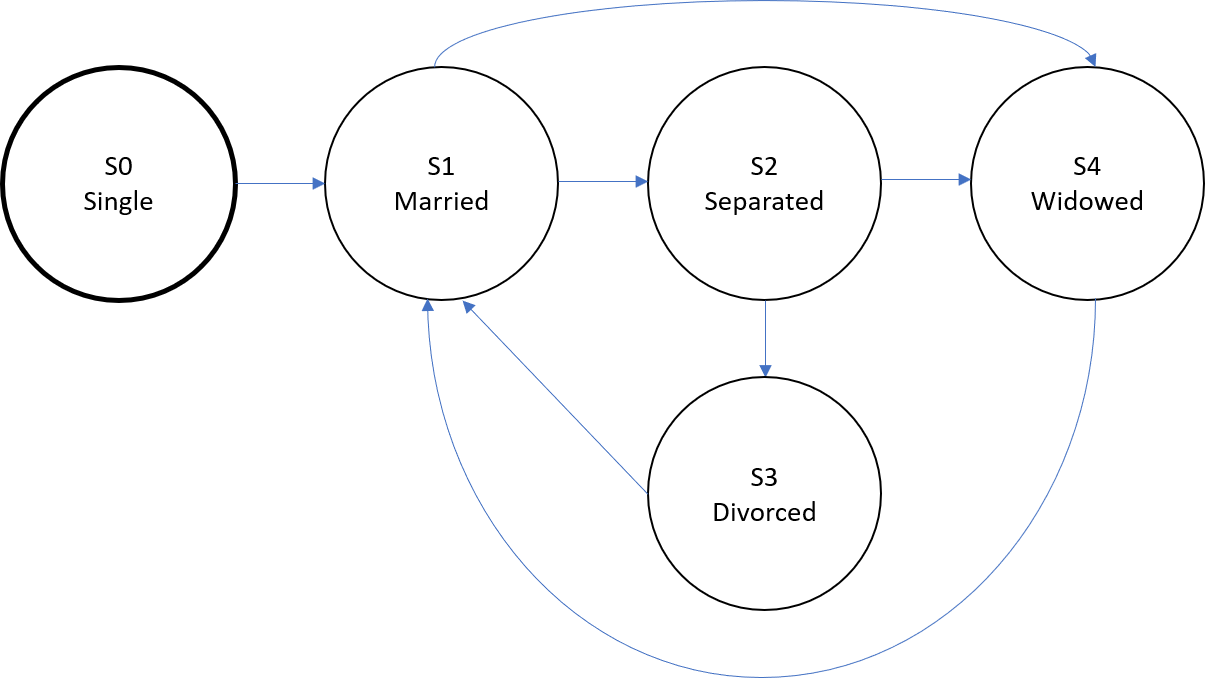
Using the diagram, which test suite will check for ALL valid state transitions using the LEAST effort? (K3)
Respuesta
-
S0 - S1- S2 - S4 - S1 - S4 - S1 - S2 - S3 - S1
-
S0 - S1 - S2 - S4 - S1 - S2 - S3 - S1
-
S0 - S1 - S4 - S1 - S2 - S3 - S1
-
S0 - S1 - S2 - S4 - S1 - S4 - S1 - S2 - S3
Pregunta 24
Pregunta
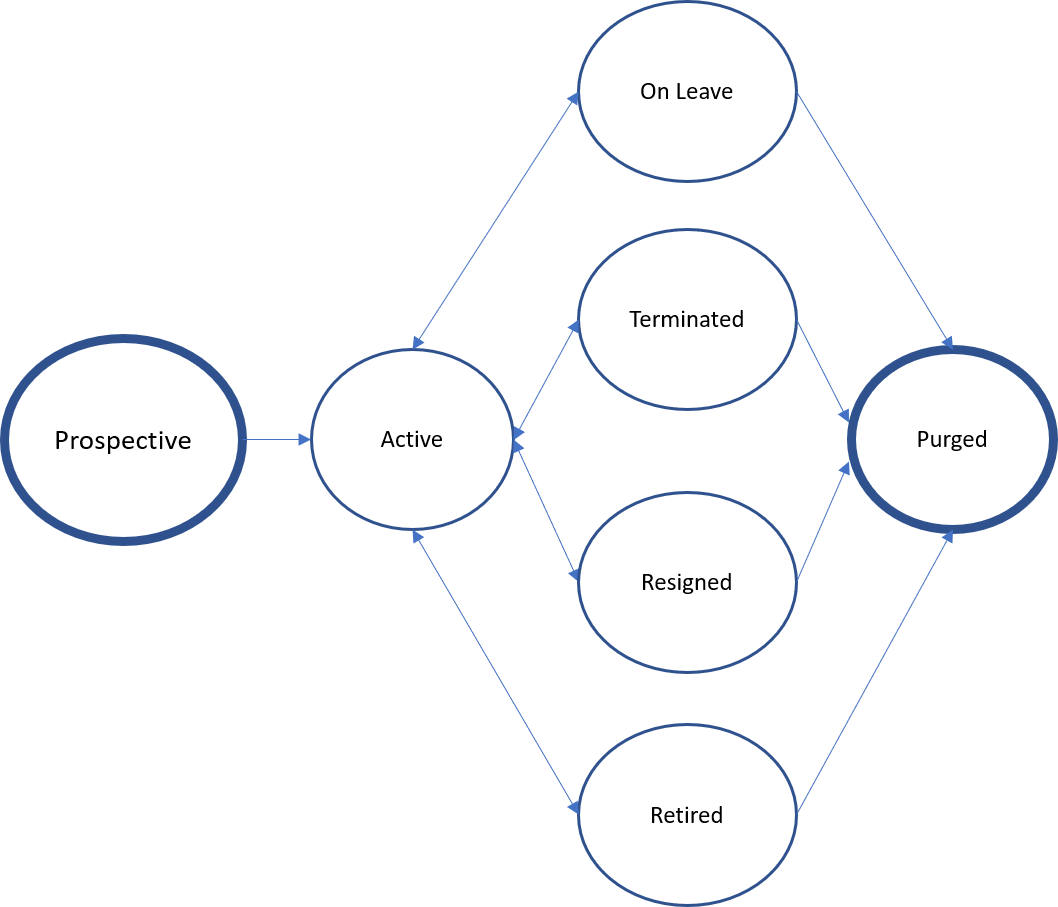
Using the diagram, which test suite will uncover invalid state transitions for employee status reporting software? (K3)
Respuesta
-
Prospective - Active - Resigned - Active - Terminated - Purged
-
Prospective - Active - On leave - Active - Resigned - Retired
-
Prospective - Active - Retired - Active - On leave - Purged
-
Prospective - Active - On leave - Active - Retired - Active
Pregunta 25
Pregunta
Which of the following assertions about code coverage are correct? (K2)
Respuesta
-
Statement coverage usually requires more test case suites
-
100% statement coverage guarantees 100% decision coverage
-
100% decision coverage implies 100% statement coverage
-
Decision tables cannot be used to list statement coverage values
Pregunta 26
Pregunta
How many test cases are needed to achieve 100% statement coverage? (k3)
if ( (temperature < 0 ) or
(temperature > 100) ) {
alert ("DANGER") ;
if ( (speed > 100 ) and ( load <= 50 ) ) {
speed = 50 ;
}
} else {
check = false ;
}
Respuesta
-
5
-
4
-
2
-
3
Pregunta 27
Pregunta
Using an error guessing test design technique to convert temperature (Celsius to Fahrenheit and Fahrenheit to Celsius), experienced testers will MOST LIKELY use which set of test data? (K3)
Respuesta
-
-1, 0, 89.6, and 212
-
-40, 37.78, and 100
-
-1, 0, 1, and 37.78
-
-40, 0, 32, and 100
Pregunta 28
Pregunta
By creating future tests based on the results of previous tests, a tester is demonstrating what type of informal test design technique? (K1)
Respuesta
-
Security testing
-
Non-functional testing
-
Exploratory testing
-
Interoperability testing
Pregunta 29
Pregunta
Which of the following are potential drawbacks of independence in testing? (K2)
01. Independent testers may feel they are not part of the development team
02. Developers may lose a sense of personal responsibility for quality
03. Project managers will not have as much control over the project
04. Customers may end up requesting features that are technically impossible
Respuesta
-
01 and 02
-
01, 02 and 03
-
03 and 04
-
01, 02, 03 and 04
Pregunta 30
Pregunta
Which tasks are performed by a test leader versus a tester? (K3)
S. Writing a project test strategy
T. Selecting tools to support testing
U. Preparing and acquiring data
V. Scheduling tests
Respuesta
-
Test leader: S and V; Tester: T and U
-
Test leader: S, T and V; Tester: U
-
Test leader: S, U and V; Tester: T
-
Test leader: S; Tester: T, U and V
Pregunta 31
Pregunta
Which document specifies the sequence of test execution? (K1)
Respuesta
-
Test procedure specification
-
Test design
-
Test case specification
-
Test plan
Pregunta 32
Pregunta
Stochastic testing is an example of which test approach or strategy? (K1)
Respuesta
-
Model-based
-
Analytical
-
Methodical
-
Heuristic
Pregunta 33
Pregunta
Which sections are included as part of the test summary report? (K2)
W. Variances
X. Comprehensive assessment
Y. Evaluation
Z. Summary of activities
Respuesta
-
W, X and Y
-
W, X, Y and Z
-
W and X
-
W, x and Z
Pregunta 34
Pregunta
Which is a potential product risk factor? (K3)
Respuesta
-
Failure of third party vendor
-
Training issues
-
Problems requirements definition
-
Poor software functionality
Pregunta 35
Pregunta
Based on the IEEE standard for software test documentation (IEEE std 829-1998), in which sections of the test incident report should the following items be recorded? (K2)
Sections
a) Test incident report identifier
b) Summary
c) Incident description
d) Impact
Items
1. Impact on test plans
2. Unique identifier
3. Anomalies
4. Procedure step
5. Environment
6. References to other relevant documents
Respuesta
-
a: 2; b: 4; c: 1,3 and 5; d: 6
-
a: 2; b: 3; c: 4,5 and 6; d: 1
-
a: 2; b: 6; c: 3,4 and 5; d: 1
-
a: 2; b: 1; c: 3, 4 and 5; d: 6
Pregunta 36
Pregunta
Based on the IEEE Standard for software test documentation (IEEE Std 829-1998), which of the following sections are part of the test summary report? (K1)
a) Test summary and report identifier
b) Comprehensive assessment
c) Summary of results
d) Evaluation
e) Observers
f) Approvals
Respuesta
-
a, b, c, d and e
-
a, b, c, e and f
-
a, c, d, e, and f
-
a, b, c, d and f
Pregunta 37
Pregunta
What is the name of a temporary software component that is used to call another component for testing purposes? (K1)
Respuesta
-
Domain
-
Use case
-
Stub
-
Driver
Pregunta 38
Pregunta
Which of the following is a potential risk in using test support tools? (K1)
Respuesta
-
Underestimating the effort needed to maintain the test assets
-
Losing access to important testing information when needed
-
Relying too much on qualitative and quantitative assessments
-
Lowering the morale of the test team because of repetition
Pregunta 39
Pregunta
How are (a) static analysis tools and (b) performance testing tools different? (K2)
Respuesta
-
A = helps in enforcing coding standards B = tests system performance
-
A = analyse security vulnerabilities B = measures the effectiveness of test cases
-
A = prepares codes prior to testing B = prepares code prior to stress testing
-
A = highlights unreachable conditions B = improves system performance
Pregunta 40
Pregunta
Which of the following is a potential pilot project objective when introducing a test support tool in to an organisation? K1)
Respuesta
-
Measuring the satisfaction of management for staying within scope
-
Assessing whether the benefits will be achieved at reasonable cost
-
Receiving compliments from the users on the aesthetic aspects of the tool
-
Reducing the amount of overtime need to finish the project on time
¿Quieres crear tus propios Tests gratis con GoConqr? Más información.