
14998221
Descripción

Test por Jeffrey Piggott, actualizado hace más de 1 año

|
Creado por Jeffrey Piggott
hace alrededor de 8 años
|
|
Pregunta 1
Pregunta
What happens when a bond is formed between a green gaseous element and a soft metallic element?
Respuesta
-
A The gas atoms gain an electron.
-
B The gas atoms lose an electron.
-
C The metal atoms gain an electron.
-
D The two elements share a pair of electrons.
Pregunta 2
Pregunta
Solder is an alloy of lead and tin. It is used for joining pieces of metal.
Which statement about solder is correct?
Respuesta
-
A It can be represented by a chemical formula.
-
B It contains a mixture of lead and tin.
-
C It contains lead and tin chemically combined.
-
D It has a higher melting point than lead or tin
Pregunta 3
Pregunta
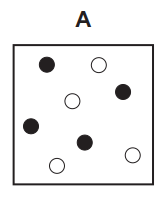
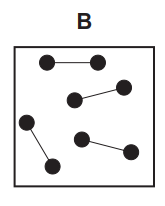
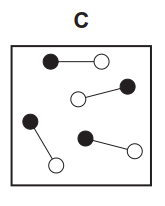
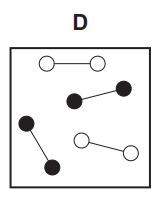
Two DIFFERENT elements form a compound.
Which diagram shows molecules of the compound?
Respuesta
Pregunta 4
Pregunta
Which name is given to mixtures of metals?
Respuesta
-
A alloys
-
B compounds
-
C ores
-
D salts
Pregunta 5
Pregunta
Potassium, K, forms a compound with fluorine, F.
Which statements about this compound are correct?
1 The compound is ionic.
2. The formula of the compound is KF.
3. The compound is soluble in water.
Respuesta
-
A 1, 2 and 3
-
B 1 and 2 only
-
C 1 and 3 only
-
D 2 and 3 only
Pregunta 6
Pregunta
Potassium, K, forms a compound with fluorine, F.
Which statements about this compound are correct?
1 The compound is ionic.
2 The formula of the compound is KF.
3 The compound is soluble in water.
Respuesta
-
A 1, 2 and 3
-
B 1 and 2 only
-
C 1 and 3 only
-
D 2 and 3 only
Pregunta 7
Pregunta
Sodium chloride is an ionic solid.
Which statement is not correct?
Respuesta
-
A Ions are formed when atoms lose or gain electrons.
-
B Ions in sodium chloride are strongly held together.
-
C Ions with the same charge attract each other.
-
D Sodium chloride solution can conduct electricity.
Pregunta 8
Pregunta
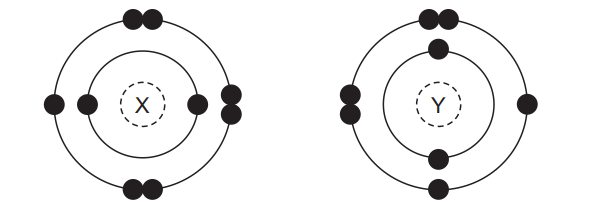
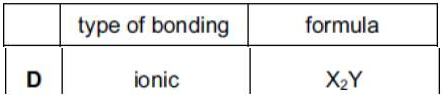
The electronic structures of two atoms, X and Y, are shown.
X and Y combine together to form a compound.
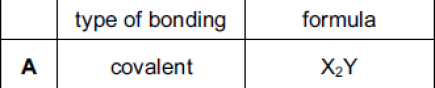
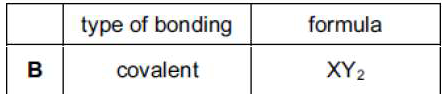
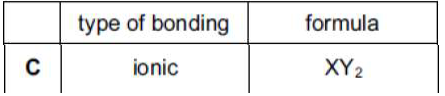
What is the type of bonding in the compound and what is the formula of the compound?
Image:
Q8 (binary/octet-stream)
Respuesta
-
Image:Q9a (binary/octet-stream)
-
Image:Q9b (binary/octet-stream)
-
Image:Q9c (binary/octet-stream)
-
Image:Q9d (binary/octet-stream)
Pregunta 9
Pregunta
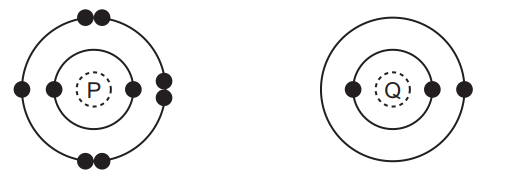
The electronic structures of atoms P and Q are shown.
P and Q react to form an ionic compound.
What is the formula of the compound?
Image:
Q11 (binary/octet-stream)
Respuesta
-
A Q7P
-
B QP
-
C QP3
-
D QP7
Pregunta 10
Respuesta
-
A
-
B
-
C
-
D
Pregunta 11
Pregunta
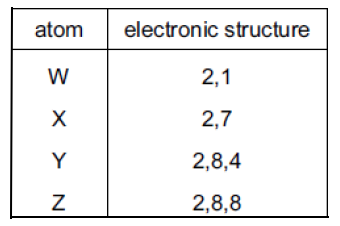
The table shows the electronic structures of four atoms.
Which two atoms combine to form an ionic compound?
Image:
Q13 (binary/octet-stream)
Respuesta
-
A W and X
-
B W and Y
-
C X and Y
-
D X and Z
Pregunta 12
Pregunta
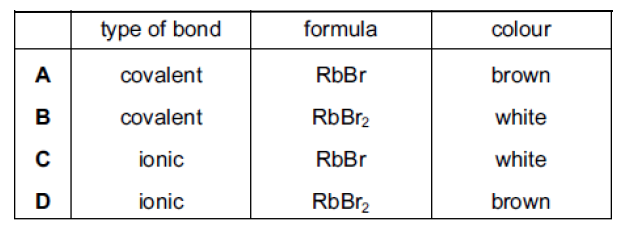
The element rubidium, Rb, is immediately below potassium in the Periodic Table.
It reacts with bromine to form the compound rubidium bromide.
Which descriptions of this compound are correct?
Image:
Q14 (binary/octet-stream)
Respuesta
-
A
-
B
-
C
-
D
Pregunta 13
Pregunta
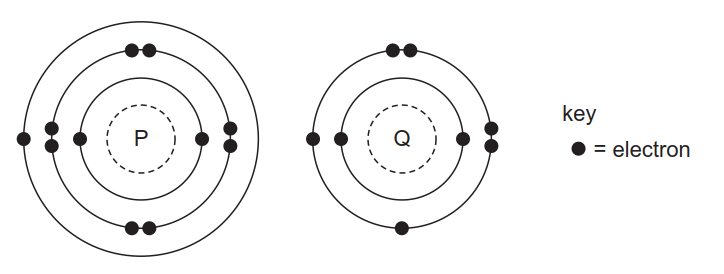
The electronic structures of atoms P and Q are shown in the diagram at the left.
P and Q react to form an ionic compound.
What is the formula of this compound?
Image:
Q15 (binary/octet-stream)
Respuesta
-
A PQ2
-
B P2Q
-
C P2Q6
-
D P6Q2
Pregunta 14
Pregunta
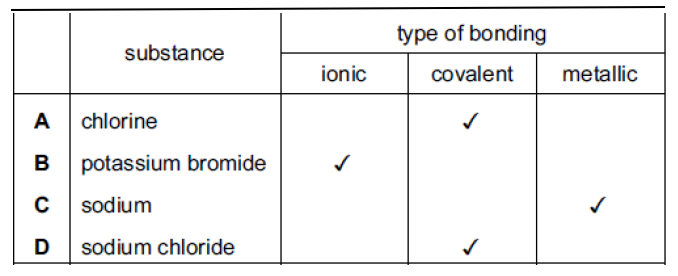
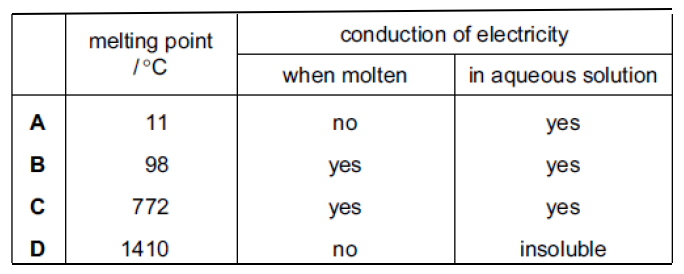
The table contains information about four substances.
Which substance is potassium chloride?
Image:
Q16 (binary/octet-stream)
Respuesta
-
A
-
B
-
C
-
D
Pregunta 15
Pregunta
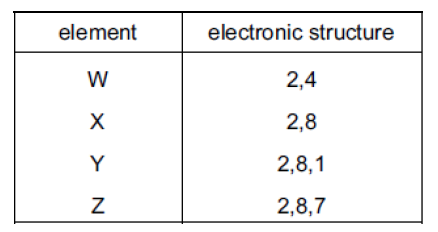
Which two elements react together to form an ionic compound?
Image:
Q17 (binary/octet-stream)
Respuesta
-
A W and X
-
B X and Y
-
C Y and Z
-
D Z and W
Pregunta 16
Pregunta
Which change to an atom occurs when it forms a positive ion?
Respuesta
-
A It gains electrons.
-
B It gains protons.
-
C It loses electrons.
-
D It loses protons.
Pregunta 17
Pregunta
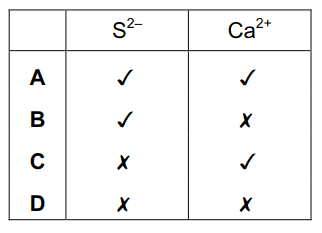
The electronic configuration of an ion is 2.8.8.
What could this ion be?
Image:
Q19 (binary/octet-stream)
Respuesta
-
A
-
B
-
C
-
D
Pregunta 18
Pregunta
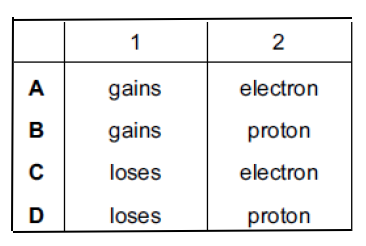
When sodium chloride is formed from its elements, each chlorine atom ……1…… one ……2…….
Which words correctly complete gaps 1 and 2?
Image:
Q20 (binary/octet-stream)
Respuesta
-
A
-
B
-
C
-
D
¿Quieres crear tus propios Tests gratis con GoConqr? Más información.