
19952888
Descripción

Test por Elizabeth S, actualizado hace más de 1 año

|
Creado por Elizabeth S
hace alrededor de 7 años
|
|
Pregunta 1
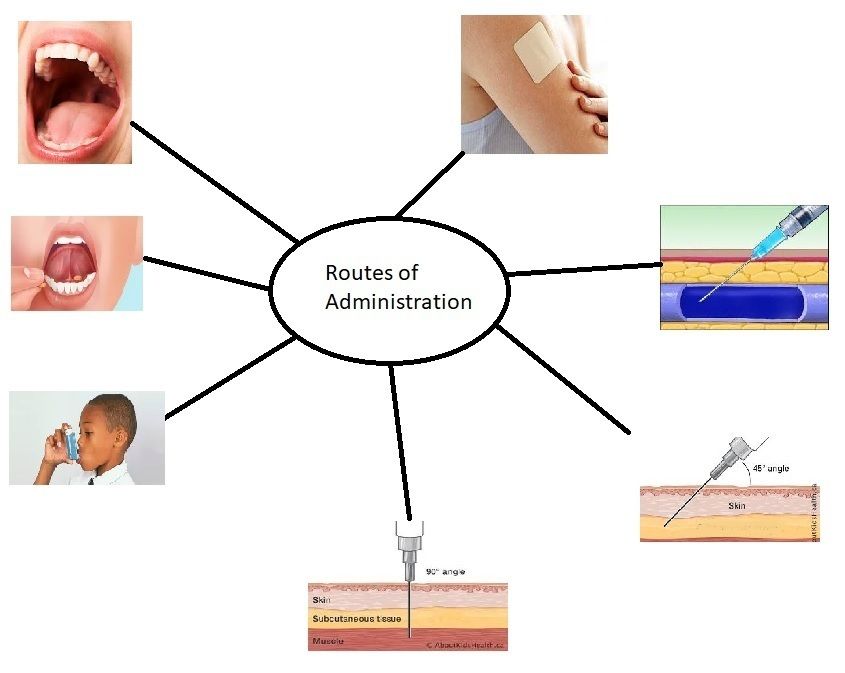
Respuesta
-
oral
-
Sublingual
-
Inhalation
-
Transdermal
-
Intramuscular
-
Subcutaneous
-
Intravenous
Pregunta 2
Pregunta
Which of the following routes of administration produces the most immediate effect of the drug administered?
Respuesta
-
Intravenous.
-
Oral.
-
Subcutaneous.
-
Intramuscular.
Pregunta 3
Pregunta
Administration of a drug to the skin means that there will be no systemic effects.
Respuesta
- True
- False
Pregunta 4
Pregunta
Once a drug has been absorbed into the general circulation it may enter any organ in the body.
Respuesta
- True
- False
Pregunta 5
Pregunta
Drugs given sublingually:
Respuesta
-
Act faster than those administered intravenously.
-
Are not subject to first-pass hepatic metabolism.
-
Are not bound to plasma proteins.
Pregunta 6
Pregunta
Insulin is absorbed well after oral administration
Respuesta
- True
- False
Pregunta 7
Pregunta
When a drug is administered sublingually, it is placed under the tongue but not swallowed.
Respuesta
- True
- False
Pregunta 8
Pregunta
Oral administration is always the best way to administer a drug as side effects are usually minimal.
Respuesta
- True
- False
Pregunta 9
Pregunta
Inhaling Salbutamol delivers it to its site of action, the lungs, directly.
Respuesta
- True
- False
Pregunta 10
Pregunta
Aspirin can survive the digestive tract and liver in sufficient amounts to be effective when swallowed as a tablet.
Respuesta
- True
- False
Pregunta 11
Pregunta
Glyceryl trinitrate is safe in oily solutions and useful for dilating blood vessels when treating angina pectoris.
Respuesta
- True
- False
Pregunta 12
Pregunta
Which of the following is not effective when administered orally due to extensive first pass metabolism?
Respuesta
-
Glyceryl trinitrate
-
Salbutamol
-
Aspirin
-
Insulin
Pregunta 13
Pregunta
First pass metabolism occurs when a drug administered orally is absorbed from the GIT and metabolised in the
Respuesta
-
liver
-
stomach
-
kidney
-
small intestine
Pregunta 14
Pregunta
Glyceryl trinitrate is not destroyed by digestive enzymes in the stomach but is metabolised by enzymes in the liver
Respuesta
- True
- False
Pregunta 15
Pregunta
The oily nature of glyceryl trinitrate means it can be given by injection
Respuesta
- True
- False
Pregunta 16
Pregunta
Absorption from the skin is much more rapid than from the mouth
Respuesta
- True
- False
Pregunta 17
Pregunta
The transdermal method is useful as a preventive measure.
Respuesta
- True
- False
Pregunta 18
Pregunta
Choosing the correct route of administration is based on:
I. Administering drugs, where possible, directly to their site of action to reduce side effects and provide rapid action.
II. Where direct administration cannot be done, drugs are usually administered orally as it is easier to swallow a pill then get an injection.
III. Another route is chosen when a drug is unsuitable for administration orally, rapid effect is needed and patient is unconcious
IV. When oral route is unsuitable, injection is usually done.
Respuesta
-
I, III, IV
-
I, II, III
-
I, II, IV
-
I - IV
Pregunta 19
Pregunta
A drug that is administered intramuscularly or subcutaneously will be absorbed quicker then intravenous injection
Respuesta
- True
- False
Pregunta 20
Pregunta
Intramuscular and subcutaneous injections have a longer lasting effect then intravenous injection
Respuesta
- True
- False
Pregunta 21
Pregunta
The four basic stages of a drug in the body are
Respuesta
-
absorption, distribution, metabolism, excretion
-
absorption, distribution, metabolism, expiration
-
absorption, distribution, maceration, externalisation
-
absorption, disinfection, metabolism, excretion
Pregunta 22
Pregunta
Pharmacokinetics is a term referring to the administration, distribution, metabolism, elimination of drugs in the body.
Respuesta
- True
- False
Pregunta 23
Pregunta
Lipid solubility of a drug is an important factor in determining its rate of absorption.
Respuesta
- True
- False
Pregunta 24
Pregunta
Which of the following factors is NOT an important determinant of the rate and extent of absorption of drugs
Respuesta
-
thickness of the cell layers through which the drug must pass
-
area of the absorbing surface
-
concentration of the drug
-
The time of day the drug is taken
Pregunta 25
Pregunta
In general, the faster a drug moves from the stomach to small intestine, the faster it will be absorbed.
Respuesta
- True
- False
Pregunta 26
Pregunta
For drugs taken orally, what does NOT determine the rate and extent of absorption of drugs
Respuesta
-
susceptibility to the contents of the digestive tract
-
intestinal motility
-
susceptibility to liver enzymes (first pass metabolism).
-
If it is in pill form or liquid form
Pregunta 27
Pregunta
The way a drug is distributed around the body is largely influenced by its affinity for various tissue components, such as proteins, fats or water.
Respuesta
- True
- False
Pregunta 28
Pregunta
Protein binding is a potential source of drug interactions if multiple drugs are taken and can cause displacement of drugs from proteins, increasing their availability at the sites of action and may result in dangerously high levels that are capable of producing toxic effects.
Respuesta
- True
- False
Pregunta 29
Pregunta
Metabolism of drugs tends to result in metabolites that are less lipid-soluble so that they are easier to excrete.
Respuesta
- True
- False
Pregunta 30
Pregunta
The drug or molecule with greater affinity for an enzyme will be metabolised more readily,
Respuesta
- True
- False
Pregunta 31
Pregunta
The development of tolerance to some drugs can sometimes be due to the ability of the drug to stimulate an increase in the production of their metabolic enzymes and thereby accelerate their own rate of metabolism.
Respuesta
- True
- False
Pregunta 32
Pregunta
The activity of drug metabolising enzymes in the liver can be affected by other drugs or food
Respuesta
- True
- False
Pregunta 33
Pregunta
Which of the following statements best defines bioavailability?
Respuesta
-
Bioavailability is the fraction of the administered dose that enters the body.
-
Bioavailability is the fraction of an administered dose that has a beneficial effect.
-
Bioavailability is the fraction of an administered dose that appears in systemic circulation.
-
Bioavailability is the fraction of the drug in a tablet that is absorbed.
Pregunta 34
Pregunta
Drug bioavailability, or the amount of drug available in the bloodstream, is decreased by:
Respuesta
-
first pass metabolism
-
binding to plasma proteins.
-
gastric acid instability.
-
both gastric acid instability and first pass metabolism
¿Quieres crear tus propios Tests gratis con GoConqr? Más información.