
22583206
Descripción

Test por Siobhan Pett, actualizado hace más de 1 año

|
Creado por Siobhan Pett
hace más de 5 años
|
|
Pregunta 1
Pregunta
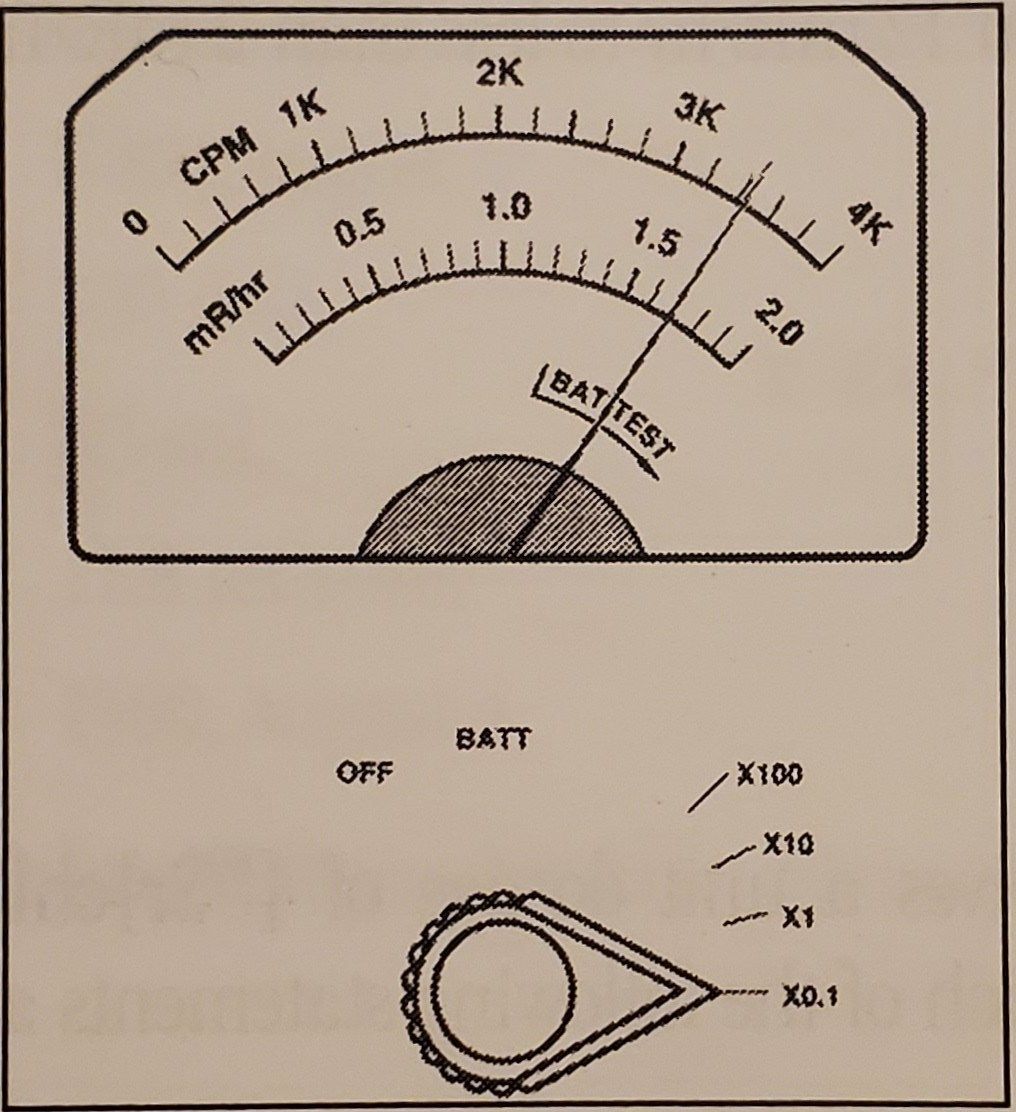
What is the measured exposure rate shown on the diagram of the GM meter depicted here?
Respuesta
-
0.017 mR/hr
-
0.17 mR/hr
-
1.7 mR/hr
-
17 mR/hr
-
170 mR/hr
Pregunta 2
Pregunta
Which of the following instruments should be used to determine whether all removable contamination has been eliminated?
Respuesta
-
Geiger-Mueller counter
-
well counter
-
dose calibrator
-
uptake probe
-
ionization chamber
Pregunta 3
Pregunta
When performing a room survey with a G-M counter, the technologist should first:
Respuesta
-
perform a battery check on the counter
-
calibrate the unit
-
measure each area designated on the survey diagram
-
perform a wipe test on each designated area
-
measure the room background
Pregunta 4
Pregunta
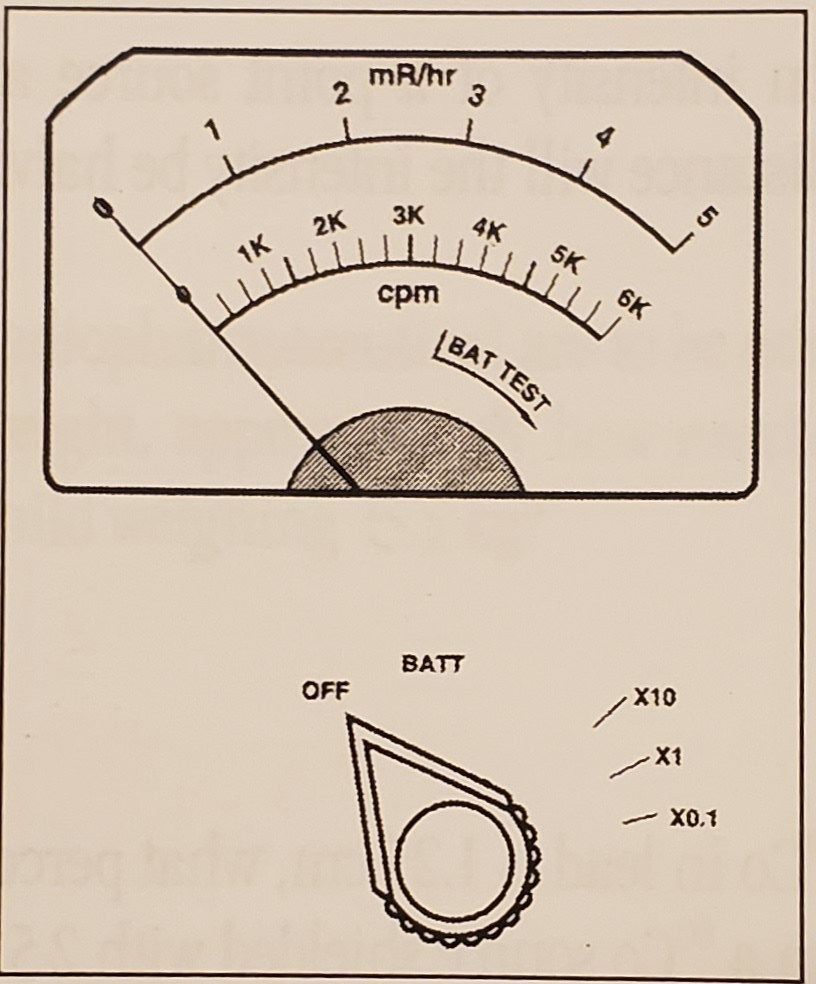
Which is the maximum exposure rate that can be measured with the G-M meter shown here?
Respuesta
-
50,000 mR/hr
-
5,000 mR/hr
-
500 mR/hr
-
50 mR/hr
-
5 mR/hr
Pregunta 5
Pregunta
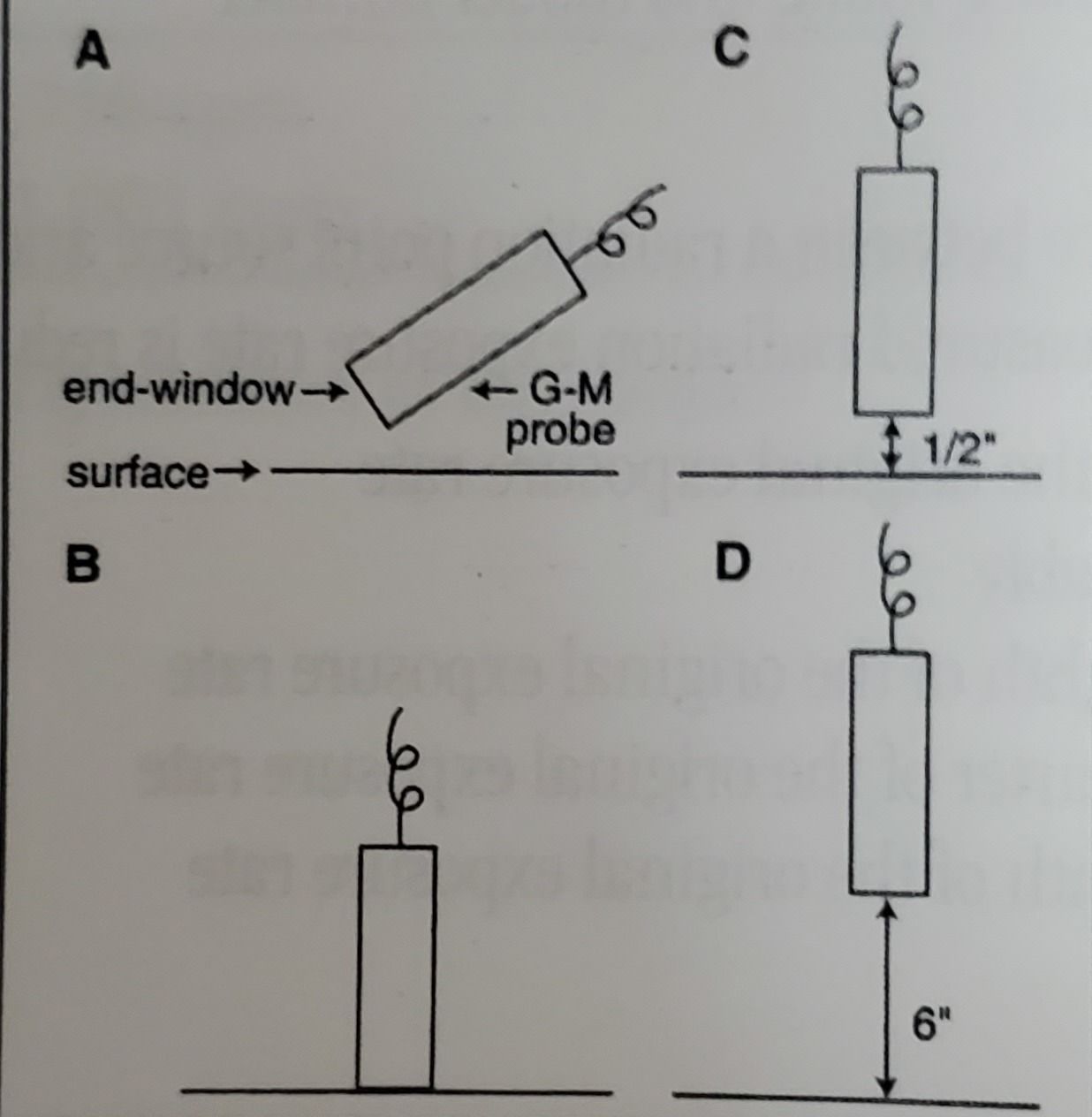
When surveying for contamination, which of the following diagrams depicts the correct position of the probe of an end-window GM meter in relation to the surface being monitored?
Respuesta
-
A
-
B
-
C
-
D
Pregunta 6
Pregunta
How often must survey meters be calibrated?
Respuesta
-
daily
-
before each use
-
annually
-
monthly
-
bi-annually
Pregunta 7
Pregunta
Which of the following instruments is most appropriate for detecting low-level accidental contamination?
Respuesta
-
thermoluminescent dosimeter
-
ionization chamber
-
Geiger-Mueller counter
-
pocket dosimeter
-
optically-stimulated luminescence dosimetry
Pregunta 8
Pregunta
Which of the following radiation monitoring devices is best suited to survey a patient who has received 5.55 GBq of I-131 for therapy?
Respuesta
-
pocket dosimeter
-
portable ionization chamber
-
Geiger-Mueller counter
-
dose calibrator
-
liquid scintillation counter
Pregunta 9
Pregunta
In calibrating the survey meter for the nuclear medicine department you discover that it has a 12% error. What is your next course of action?
Respuesta
-
recommend that it be serviced
-
throw it away
-
replace the batteries
-
use the survey meter as normal
-
check the high voltage power supply
Pregunta 10
Pregunta
The average energy required to create an ion pair is:
Respuesta
-
60 eV
-
34 eV
-
5 eV
-
30 keV
-
50 eV
Pregunta 11
Pregunta
An ionization of the entire fixed volume of a gas due to secondary ionization is known as the:
Respuesta
-
Geiger discharge
-
Townsend avalanche
-
proportional effect
-
internal amplification
-
inverse gain
Pregunta 12
Pregunta
How do the sizes of the pulses produced by the collection of ions in he proportional region compare to those produced by an instrument that operates in the ionization region of the gas curve for radiation detectors?
Respuesta
-
the pulses are in resonance
-
the pulses are smaller
-
the pulses are the same size
-
the pulses are larger
-
the pulses are affected by pulse pile-up
Pregunta 13
Pregunta
Gas amplification is a phenomenon associated with instruments that operate in which region of the gas curve for radiation detectors?
Respuesta
-
recombination
-
ionization
-
proportional
-
continuous discharge
-
G-M
Pregunta 14
Pregunta
The output pulse height of a gas detector is, in most cases, dependent upon what?
Respuesta
-
the quantity of radiation that passes through the gas
-
number of ions produced in the gas
-
volume of gas in the detector
-
pressure of the gas in the tube
-
type of gas in the tube
Pregunta 15
Pregunta
A GM counter can identify the energy of the source of radioactivity detected.
Respuesta
-
True
-
False
Pregunta 16
Pregunta
Why is a G-M counter not suitable for quantifying the exposure rate of a high activity spill?
Respuesta
-
the system is paralyzable at exposure levels greater than 2000 mR/hr
-
the detector probe cannot be positioned correctly to detect removable activity contained in a spill
-
the G-M counter is most sensitive to high energy radionuclide sources, which are not commonly used in nuclear medicine
-
the exposure rate would be overestimated
Pregunta 17
Pregunta
Which of the following statements is false in regards to ionization survey meters?
Respuesta
-
the ionization chamber measures current
-
ionization chambers are energy independent
-
ionization chambers can measure individual ionization events
-
ionization chambers are unaffected by deadtime
-
increasing the pressure of the chamber increases the sensitivity of the device
Pregunta 18
Pregunta
When is survey meter calibration not necessary?
Respuesta
-
before first use
-
annually
-
after the detector has been serviced for producing QC results outside acceptable limits
-
after a battery change
Pregunta 19
Pregunta
What is an advantage of an ionization chamber?
Respuesta
-
small pulse size produced
-
requires a calibration factor
-
sensitive to low levels of activity
-
changes in temperature and pressure affect the current
-
can differentiate different types of radiation by varying the window
Pregunta 20
Pregunta
What is the effect of increasing the temperature of the gas contained in a ionization chamber?
Respuesta
-
decreases the current produced by radiation interactions in a sealed chamber
-
decreases the current produced by radiation interactions in an unsealed chamber
-
increases the current produced by radiation interactions in a sealed chamber
-
increases the current produced by radiation interactions in an unsealed chamber
-
increases the current produced by radiation interactions in both sealed and unsealed chambers
Pregunta 21
Pregunta
What is a disadvantage of a GM counter?
Respuesta
-
readout is dependent on voltage
-
sensitive to low activities
-
can differentiate radionuclides based on their energy
-
low detection efficiency
-
not portable
¿Quieres crear tus propios Tests gratis con GoConqr? Más información.