
9329804


Pregunta 1
Pregunta
Who came up with an idea in 460-370 BC that atoms existed , couldn't split or destroy them?
Respuesta
-
Dalton
-
Democritus
-
Thomson
-
Rutherford
Pregunta 2
Pregunta
Who came up with an idea in 1800's that atoms are hard spheres with differing properties?
Respuesta
-
Dalton
-
Thomson
-
Rutherford
-
Democritus
Pregunta 3
Pregunta
Who discovered electrons in 1897 and came up with the Plum Pudding model?
Respuesta
-
Rutherford
-
Thomson
-
Democritus
-
Dalton
Pregunta 4
Pregunta
Who had a gold foil experiment in 1911 that made the plum pudding model wrong , and came up with an idea that most of an atom is an empty space?
Respuesta
-
Rutherford
-
Democritus
-
Dalton
-
Thomson
Pregunta 5
Pregunta
What did Bohr-Rutherford came up with in 1912?
Respuesta
-
He came up with an idea that electrons are in energy shells and they orbit around the nucleus
-
He came up with an idea that nucleus are full of dejunctional energy
-
He came up with an idea that atoms are small hard spheres
-
He came up with an idea that people just dream so big but end up in a street.
-
He came up with an idea that the atom particles consists of further smaller parts.
Pregunta 6
Pregunta
Electrons always [blank_start]equal[blank_end] the number of protons
Respuesta
-
equal
Pregunta 7
Pregunta
Protons have a charge of [blank_start]+ve[blank_end] and a mass of [blank_start]1[blank_end]
Respuesta
-
+ve
-
1
Pregunta 8
Pregunta
Electrons have a charge of [blank_start]-ve[blank_end] and a mass of [blank_start]1/1836[blank_end]
Respuesta
-
-ve
-
1/1836
Pregunta 9
Pregunta
Neutrons have a charge of [blank_start]0[blank_end] and a mass of [blank_start]1[blank_end]
Respuesta
-
0
-
1
Pregunta 10
Pregunta
Atomic mass and mass number the same thing?
Respuesta
- True
- False
Pregunta 11
Pregunta
Mass number // Atomic mass : It is the number of [blank_start]protons[blank_end] and [blank_start]electrons[blank_end] in an atom . *Put it in plural form and make the answer with a letter P starting on it first.*
Respuesta
-
protons
-
electrons
Pregunta 12
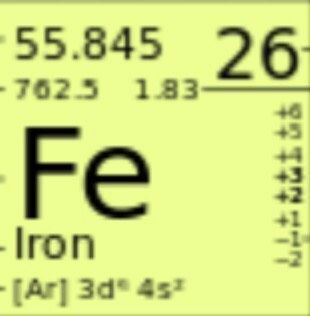
Respuesta
-
Atomic number
-
Mass number
Pregunta 13
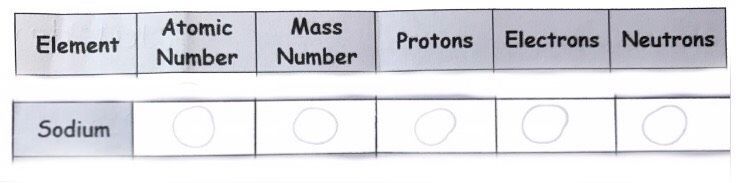
Respuesta
-
11
-
23
-
11
-
11
-
12
Pregunta 14
Pregunta
Isotopes are the different atoms of the same element containing the [blank_start]same[blank_end] number of [blank_start]protons[blank_end] but different amount of [blank_start]neutrons[blank_end].
Respuesta
-
same
-
protons
-
neutrons
Pregunta 15
Pregunta
Isotopes , fill in how many protons and neutrons in each isotope . Ignore the electrons .
Image:
Mobile upload (image/jpeg)
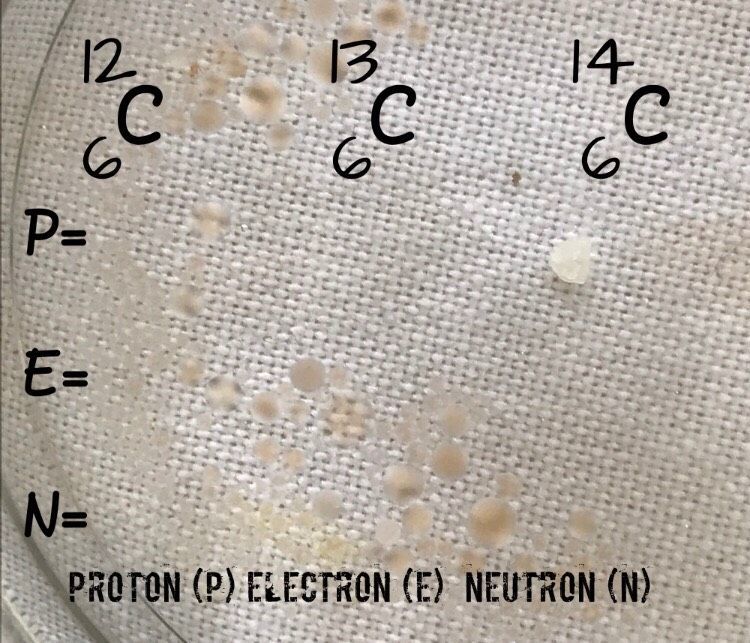
Respuesta
-
6
-
6
-
6
-
6
-
7
-
8
Pregunta 16
Pregunta
[blank_start]Omitri[blank_end] [blank_start]Mandelev[blank_end] created the periodic table in [blank_start]1869[blank_end] , he arranged it in order of [blank_start]increasing[blank_end] atomic mass.
Respuesta
-
Omitri
-
Mandelev
-
1869
-
increasing
Pregunta 17
Pregunta
Electron configuration. The first energy shell can hold a maximum of [blank_start]2[blank_end] electrons , the second and so on can hold a maximum of [blank_start]8[blank_end] electrons.
Respuesta
-
2
-
8
Pregunta 18
Pregunta
The electric configuration for sodium is 2.[blank_start]8[blank_end].[blank_start]1[blank_end].
Respuesta
-
8
-
1
Pregunta 19
Pregunta
An Ion is an [blank_start]electrically[blank_end] charged particle
Respuesta
-
electrically
Pregunta 20
Pregunta
Ionic bonding=[blank_start]Transfer[blank_end] of [blank_start]electrons[blank_end].
Respuesta
-
Transfer
-
electrons
Pregunta 21
Pregunta
One way of atoms of different elements forming chemical bonds to make a new compound is by IONIC BONDING
Respuesta
- True
- False
Pregunta 22
Pregunta
The element that loses its electron will become [blank_start]positive[blank_end] and the element that gains the electron will become [blank_start]negative.[blank_end]
Respuesta
-
positive
-
negative.
Pregunta 23
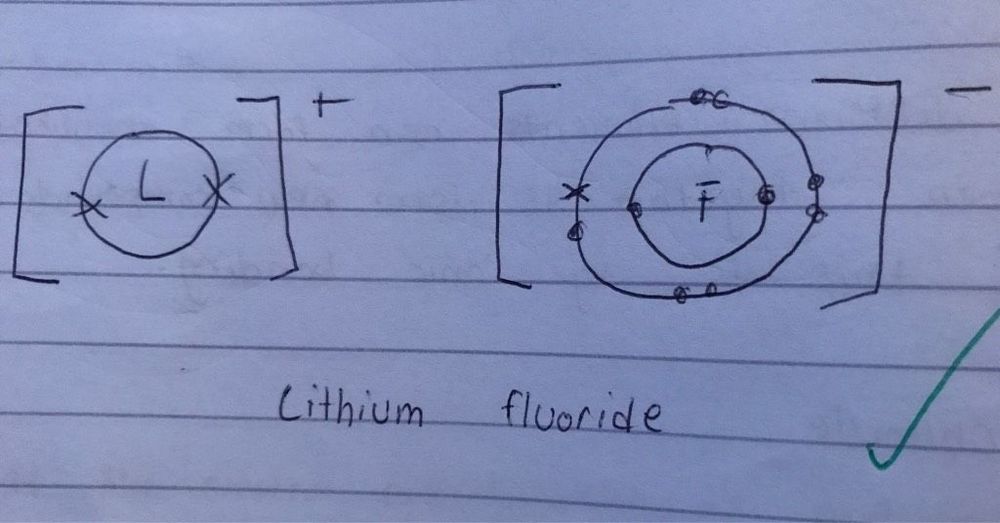
Respuesta
-
cation
-
anion
Pregunta 24
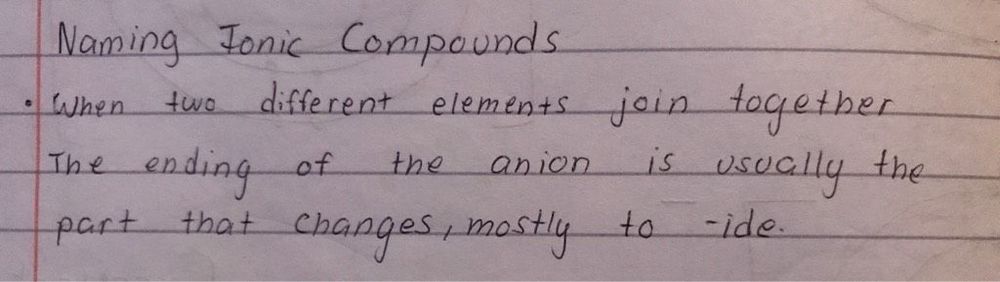
Respuesta
- True
- False
Pregunta 25
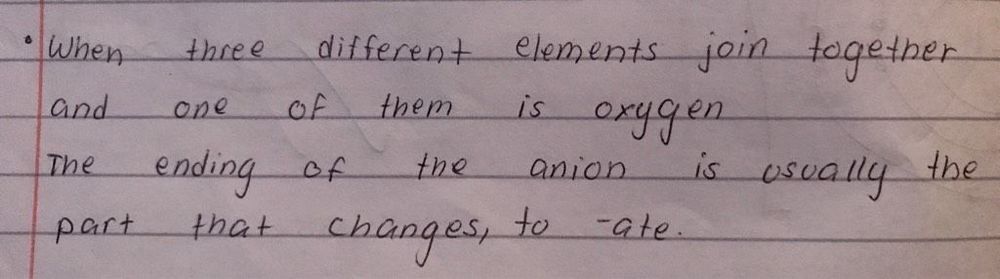
Respuesta
- True
- False
Pregunta 26
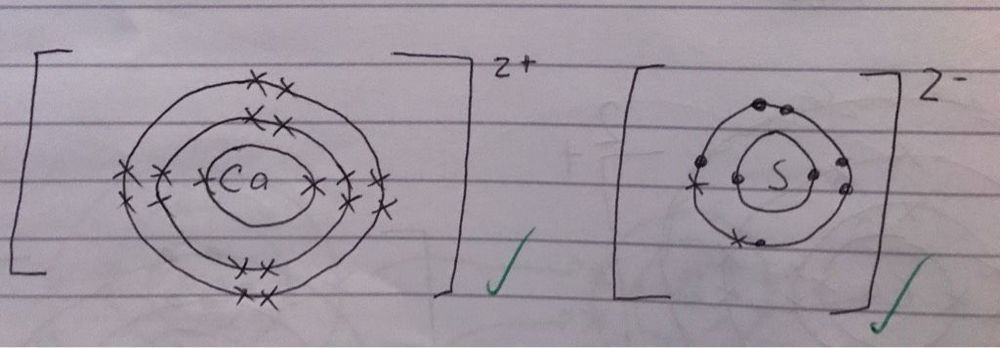
Respuesta
-
calcium sulfide
Pregunta 27
Pregunta
In potassium sulfate , there's potassium , sulphur , and [blank_start]oxygen[blank_end] .
Respuesta
-
oxygen
Pregunta 28
Pregunta
Depending on the group number , you can find out the valency number.
Respuesta
- True
- False
Pregunta 29
Pregunta
From group number 1-8 , list the valencies from the 1st group number to the last.
Respuesta
-
1 , 2 , 3 , 4 ,3 , 2 , 1 ,0
-
2 , 6 , 8 ,10 , 12 ,14 ,16 , 18
-
3 , 2 , 4 ,1 , 5 , 6 ,7 ,8
Pregunta 30
Pregunta
The diatomic elements are B[blank_start]romine[blank_end] , I[blank_start]odine[blank_end] , n[blank_start]itrogen[blank_end] , chlorine , oxygen , and fluorine .
Respuesta
-
romine
-
odine
-
itrogen
Pregunta 31
Pregunta
Transition metals valency is always [blank_start]2[blank_end] unless told otherwise by Roman numerals.
Respuesta
-
2
¿Quieres crear tus propios Tests gratis con GoConqr? Más información.