
30086824
Descripción

Diagrama por María Daniela Portillo Ortiz, actualizado hace más de 1 año

|
Creado por María Daniela Portillo Ortiz
hace más de 5 años
|
|
Nodos de los diagramas
- Cellulose
- Starch
- Glycogen
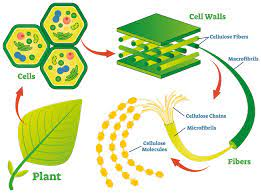
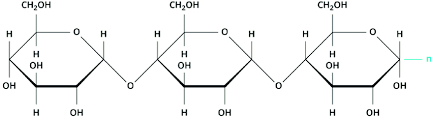
- Glucose molecules attached to each other in plants and its parts. One of the most important structural polysaccharides. Cellulose makes up most of the walls of the living cells of plants, like the fluffy bolls of cotton plants and about half of the bulk of tree trunks. Plants synthesize about a trillion tons of cellulose a year, making it the most abundant organic molecule on Earth.
- Starch is a polysaccharide in monosaccharides or glucose molecules. Plants often use starch as an energy-storage molecule. It's a polymer of glucose molecules.
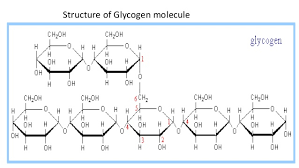
- Animals commonly storage glycogen. It is similar to a polysaccharide. It is a polymer of glucose molecules. It's commonly formed in roots and seeds, it consists of branched chains of up to half a million glucose subunits. Glycogen is stored in the liver and muscles of animals (including people). It is also a chain of glucose subunits, but is more highly branched than starch.

- Chitin
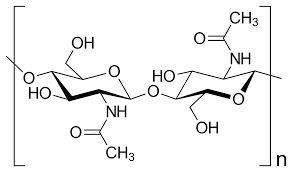
- Polysaccharide in which the glucose subunits bear a nitrogen-containing functional group. Chitin also stiffens the cell walls of many fungi, including mushrooms. Exoskeletons are made of chitin.
¿Quieres crear tus propios Diagramas gratis con GoConqr? Más información.