
Fichas
Methods Flash Cards
Fichas del conjunto (99)
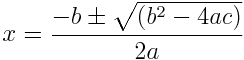
- 1Quadratic formula
- 2—
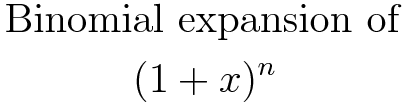
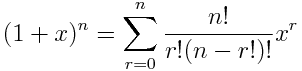
- 3—
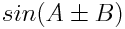

- 4—
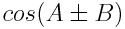

- 5—


- 6—


- 7—


- 8—

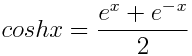
- 9—

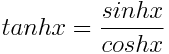
- 10—


- 11—


- 12—


- 13—

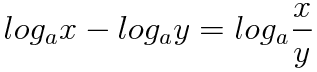
- 14—


- 15—

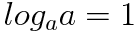
- 16—

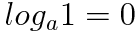
- 17Closed interval

- 18Open interval

- 19Infinite

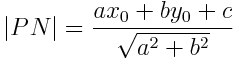
- 20Equation of a straight line

- 21—


- 22—


- 23—

- 24General equation of a conic

- 25Ellipse equation in standard form
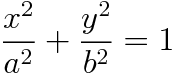
- 26Ellipse equation in parametric form

- 27Hyperbola equation in standard form
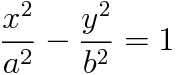
- 28Hyperbola equation in parametric form

- 29Parabola in standard form
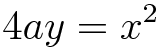
- 30Parabola in hyperbolic form

- 31Definition of the domainWhat goes into the function, the x values
- 32Definition of the codomainWhat may possibly come out of the function
- 33Definition of the rangeWhat actually comes out of a function, the y values
- 34Definition of a one-to-one functionEvery element of the range corresponds to one element of the domain
- 35Definition of an even functionSymmetrical about the y-axis

- 36Definition of an odd functionRotational symmetry about the origin

- 37Definition of a periodic functionGraph repeats itself every T
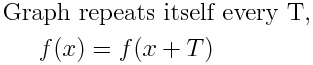
- 38Monotonically increasing

- 39Monotonically decreasing

- 40—
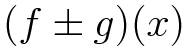

- 41—
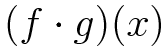

- 42—
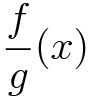

- 43Composite function

- 44Inverse functionwhere f(x) is one-to-one
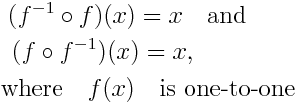
- 45Conditions for a function f(x) to be continuous at c

- 46—
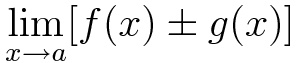

- 47—
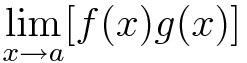

- 48—
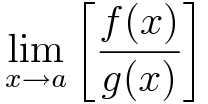

- 49nth term of an arithmetic sequence

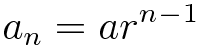
- 50nth term of a geometric sequence
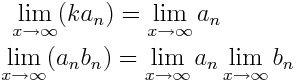
- 51Sum/difference rule

- 52Product rule
- 53Quotient rule

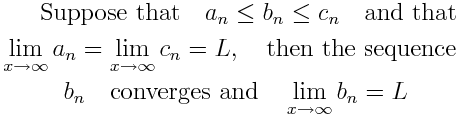
- 54Sandwich theorem
- 55Sum of n terms of an arithmetic series

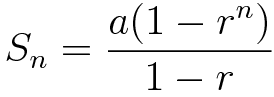
- 56Sum to n terms of a geometric series
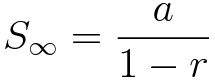
- 57Sum to infinity of a geometric series
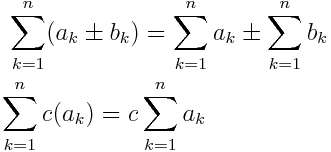
- 58Properties of convergent series
- 59Divergence test
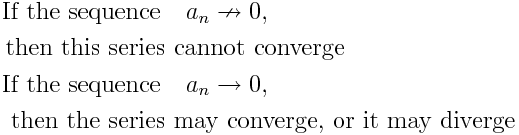
- 60Comparison test

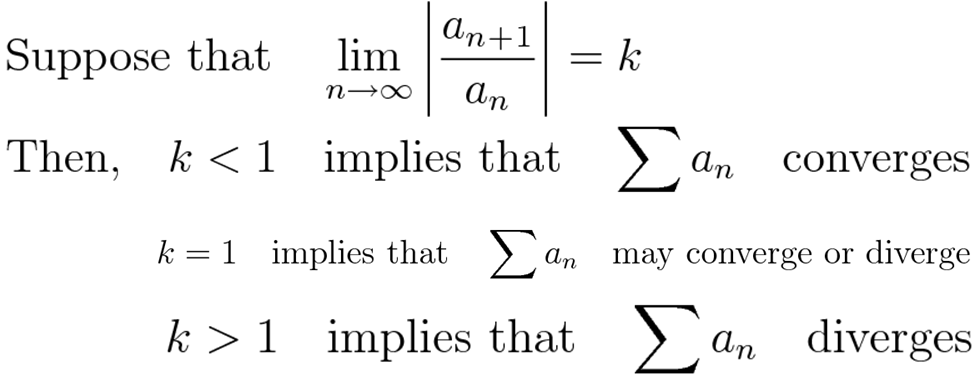
- 61Ratio test
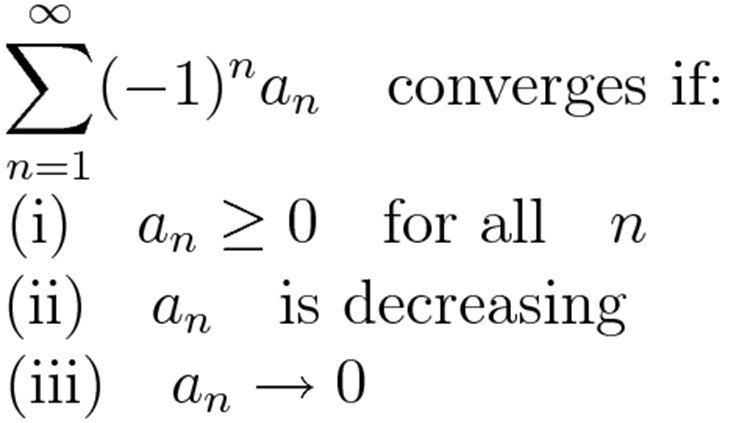
- 62Leibniz' theorem
- 63Absolute convergenceand it is said to converge absolutely.

- 64Formal definition of a derivative

- 65—

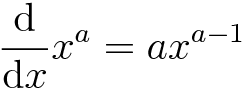
- 66—
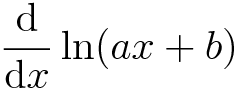
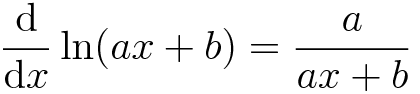
- 67—
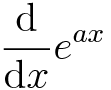
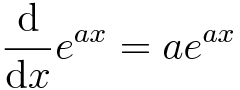
- 68—
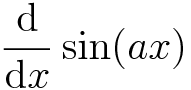
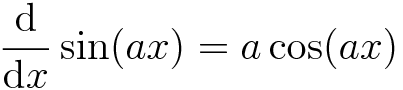
- 69—
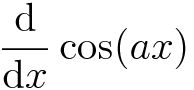
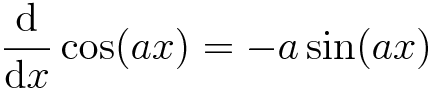
- 70—
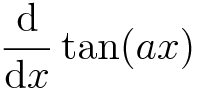
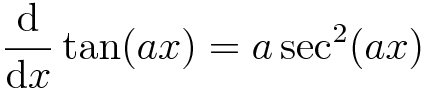
- 71—
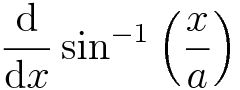
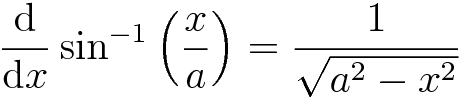
- 72—
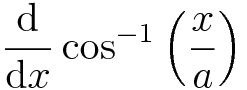
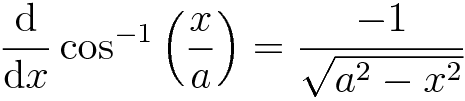
- 73—
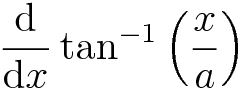
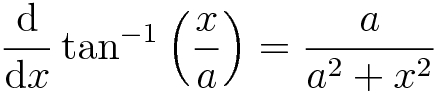
- 74—
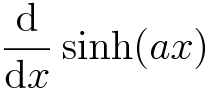
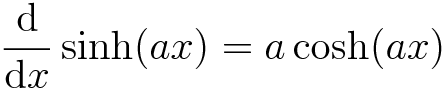
- 75—
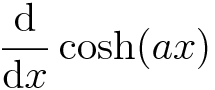
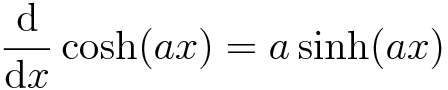
- 76—
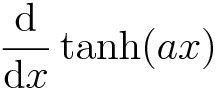

- 77Product rule
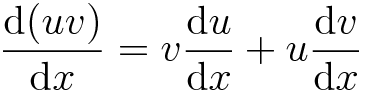
- 78Quotient rule
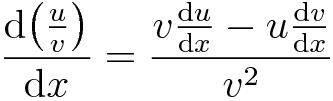
- 79Chain rule
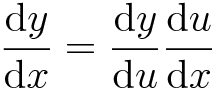
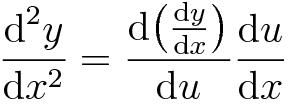
- 80Second derivative chain rule
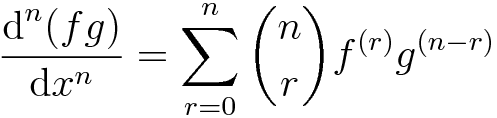
- 81Leibniz rule for repeated differentiation of products
- 82The linearization of f(x) at x=a

- 83Extreme value theorem of continuous functionsIf f(x) is continuous at every point on [a,b] then f takes both its maximum and minimum values on this interval.
- 84Concave function ff is concave if any chord joining two points lies above the graph
- 85Convex function ff is convex is any chord joining two points lies below the graph
- 86Point of inflexionthen x is a point of inflexion

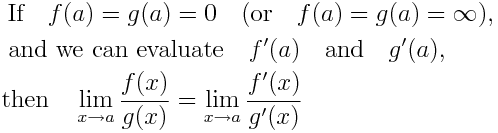
- 87L'Hôpital's rule (for functions)If f(a)=g(a)=0 (or f(a)=g(a)=∞), and we can evaluate f'(a) and g'(a), then
- 88Intermediate Value TheoremA function f(x) that is continuous at all
x∈[a,b] takes on every value between f(a) and f(b) - 89Rolle's TheoremSuppose that f(x) is continuous at all x∈[a,b] and it is differentiable at all x∈(a,b), and f(a)=f(b), then there is at least one value c∈(a,b) such that f'(c)=0
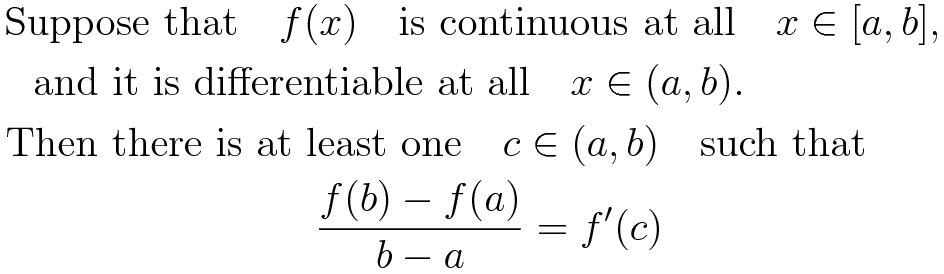
- 90The Mean Value TheoremSuppose that f(x) is continuous at all x∈[a,b], it is differentiable at all x∈(a,b) then there is at least one c∈(a,b) such that
- 91Constant Difference Theorem

- 92Maclaurin series

- 93Taylor series

- 94Remainder term, Taylor's theorem

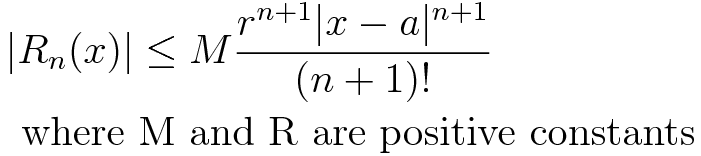
- 95Remainder estimationwhere M and R are positive constants
- 96Scalar product

- 97Vector product

- 98Equation of a line (vectors)

- 99Equation of a plane (vectors)

Información
- Descripción
- Fichas sobre Methods Flash Cards, creado por Hannah Williams el 13/11/2017.
- Creado por
- Hannah Williams
- Visitas
- 970
- Valoración