
5736768
Descripción

Fichas por Amelia Claire, actualizado hace más de 1 año

|
Creado por Amelia Claire
hace más de 10 años
|
|
| Pregunta | Respuesta |
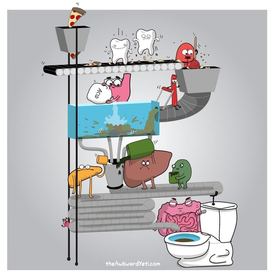
| digestive system - from teeth to anus | |
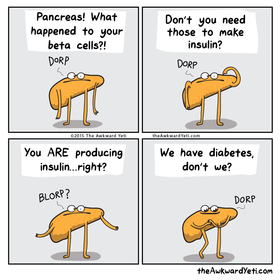
| damn pancreas | |
| Functions of the Digestive System | 1. Ingestion 2. Mechanical Processing 3. Digestion 4. Secretion 5. Absorption 6. Excretion |
| Digestive Organs | Mouth Pharynx Oesophagus Stomach Small Intestine Large Intestine |
| Accessory Organs | Teeth Tongue Salivary Glands Liver Gallbladder Pancreas |
| Mouth | oral cavity; ingestion mechanical processing, secretion and begin chemical digestion of carbohydrates |
| Pharynx | Muscular propulsion of food into the oesophagus - transport |
| Oesophagus | Transports materials to stomach |
| Stomach | sits under the liver; first major site of chemical digestion and mechanical processing (churning and mixing with secretions) to provide chemical breakdown |
| Small intestine | main and final site of chemical digestion, where absorption begins. enzymatic digestion |
| large intestine | AKA colon - dehydration and compaction of waste products; mass movement defamation process |
| Teeth & Tongue | mechanical processing - move food around mouth to swallow; sensory analysis of food |
| salivary glands | release/secrete lubricating fluids and enzymes; help to swallow food |
| Liver | produces and secretes bile; stores nutrients absorbed by GIT, Bile is important for lipid digestion |
| Gallbladder | stores bile and releases it when required by the GIT into the duodenum |
| Pancreas | exocrine secretion of buffers for digestive enzymes, endocrine cells secrete hormones |
| Mesentery | Serous membrane; two sheets made of areolar connective tissue; supplies blood, nerves and lymphatics to GIT Stabilises and attaches digestive organs to peritoneal cavity; stops them falling down or tangling up |
| Histological organisation | mucosa submucosa muscular externa serosa (attaches to mesentery) |
| about the mucosa (mucous membrane) | Has lamina propria (blood vessels and lymphatics) and muscular mucosa; longitudinal folds and circular folds villi and microvilli in SI areolar tissue Smooth muscle cells that work in different directions for peristalsis and segmentation |
| Submucosa | dense irregular connective tissue surrounds muscular mucosa and minds to muscularis external. Has blood and lymph; exocrine glands secrete buffers and enemies. Submucosal plexus innervates mucosa and submucosa; |
| Serous membrane | covers muscular externa; attaches to mesentery |
| digestive epithelium | Mouth: stratified squamous Stomach, SI, LI: simple Columnar (goblet cells, villi in SI) Mucous protects against damage by acids and enzymes or bacteria |
| Specialised Epithelial Cells | Stem Cells - constant renewal Enteroendocrine - secrete hormones to coordinate digestive functions Goblet Cells - secrete mucus to protect and lubricate Paneth's Cells - protect against microbes by secreting antimicrobial peptides; defensins |
| Smooth Muscle Movement | Coordinated by enteric nervous system Innervated by the Parasympathetic Nervous System division of autonomic nervous system |
| digestive movement |
¿Quieres crear tus propias Fichas gratiscon GoConqr? Más información.