
1968734
Descripción

Mapa Mental por Victor H Cano, actualizado hace más de 1 año

|
Creado por Victor H Cano
hace casi 11 años
|
|
SAB4#22_Project_Selection_Method
- Benefit measurement methods (comparative approach)
- Murder board
Nota:
- (a panel of people who try to shoot down a new project idea). This involves a committee asking tough questions from each project
- Peer review
- Scoring models
Nota:
- Different projects are given scores based on certain defined criteria. Project with higher score is selected.
- Economic Models
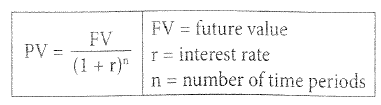
- Present Value (PV)
Nota:
- Present value means the value today of future cash flows. ESP Valor Presente
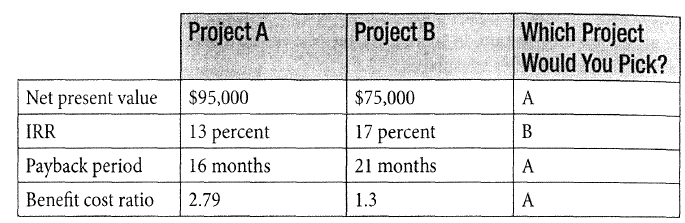
- Net Present Value (NVP)
Nota:
- It is the present value of the total benefits (income or revenue) minus the costs over many time periods. Generally, if the NPV is positive, the investment is a good choice unless an even better investment opportunity exists. The project with the greatest NPV is typically selected. ESP Valor Presente Neto
- Internal Rate of Return (IRR)
Nota:
- NOTE: You will not have to perform any IRR calculations on the exam. Simply know the higher the IRR the better. IRR. The rate (read it as "interest rate" at which the project inflows ("revenues") and project outflows ("costs") are equal.
- Payback Period
Nota:
- This term refers to the length of time it takes for the organization to recover its investment in the project before it starts accumulating profit.
- Cost-Benefit Analysis
Nota:
- Cost-benefit analysis compares the expected costs of the project to the potential benefits it could bring the organization. * A benefit cost ratio of >1 means the benefits are greater than the costs. *A benefit cost ratio of <1 means the costs are greater than the benefits. * A benefit cost ratio of =1 means the costs and benefits are the same.
- Present Value (PV)
- Murder board
- Constrained optimization methods (mathematical approach)
- Linear programming
- Integer programming
- Dynamic programming
- Multi-objective programming
- Linear programming
- Project Portfolio Management
Recursos multimedia adjuntos
¿Quieres crear tus propios Mapas Mentales gratis con GoConqr? Más información.