Mapa mental
Simple Present

Contenido del mapa
Simple Present
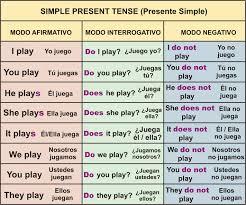
The simple present expresses a habitual action, ie, habits and routines of everyday life
- Way
- Negative form: Do not / Does not + Word without 'to'
- The negative auxiliary blocks do not / does not, followed by the base form of the verb, the infinitive without 'to':
- Example
- He doesn't study Maths
- We don' eat meat.
- He doesn't study Maths
- Example
- The negative auxiliary blocks do not / does not, followed by the base form of the verb, the infinitive without 'to':
- Interrogative: Do / Does + Subject + verb without 'to'
- For questions, the auxiliary 'do / does "before the subject is placed. The verb without 'to' follow them:
- Example
- Does he study French?
- Do you live here?
- Does he study French?
- Example
- For questions, the auxiliary 'do / does "before the subject is placed. The verb without 'to' follow them:
- Negative form: Do not / Does not + Word without 'to'
- Way