
36956587


Systems Architecture
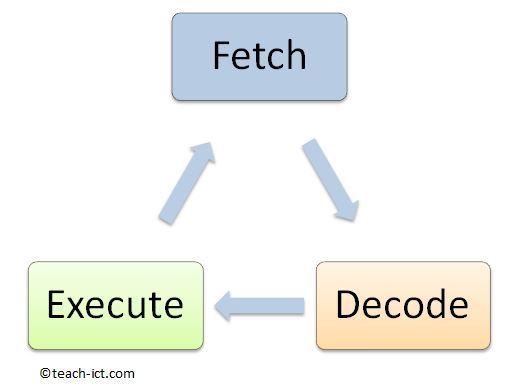
- Fetch Decode
Execute cycle
- Fetch
- Fetches instruction from memory such as RAM
- Fetches instruction from memory such as RAM
- Decode
- Instructions is decoded into binary so the computer can understand
- Instructions is decoded into binary so the computer can understand
- Execute
- The CPU performs the actions required by the instruction
- The CPU performs the actions required by the instruction
- Fetch
- CPU
- Clock Speed
- How fast the CPU can run
- measured in Megahertz or Gigahertz
- How many fetch decode execute cycles the
CPU can handle in a second
- How fast the CPU can run
- Cache
- the larger the size of the Cache the
faster the computer will be
- the closer the cache is to the CPU the quicker
the instructions will be ran
- Cache has 3 levels each one
closer to the CPU
- level 1
- Usually part of the CPU itself this makes it the
fastest cache level
- Usually part of the CPU itself this makes it the
fastest cache level
- Level 2 and level 3
- Both of these are slower and take longer to
access than L1 and are built between the
CPU and the RAM
- Both of these are slower and take longer to
access than L1 and are built between the
CPU and the RAM
- level 1
- Cache has 3 levels each one
closer to the CPU
- the larger the size of the Cache the
faster the computer will be
- Cores
- The more cores a CPU has the
more powerful it is
- More cores allows the CPU to run multiple
programs at the same time
- More cores allows the CPU to run multiple
programs at the same time
- The more cores a CPU has the
more powerful it is
- The CPU is an electrical circuit that is
responsible for processing the instructions on
a computer system
- Clock Speed
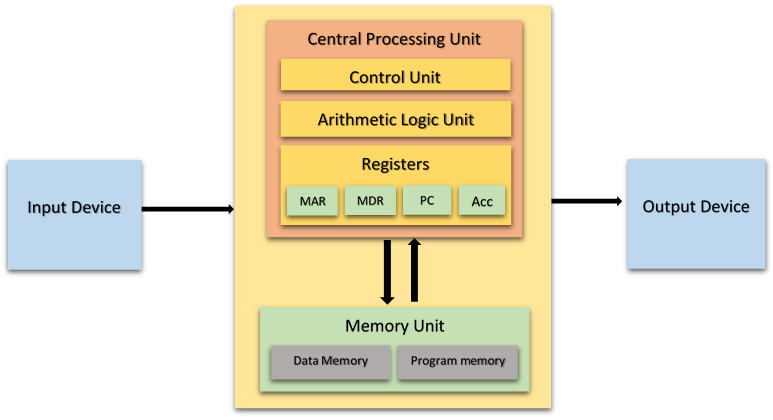
- Von Neumann Architecture
- Registers
- Memory Address
Register (MAR)
- Stores the memory location of data
that needs to be accessed
- Stores the memory location of data
that needs to be accessed
- Memory Data
Register(MDR)
- Stores the data that is being
transferred to and from memory
- Stores the data that is being
transferred to and from memory
- Program
Counter (PC)
- Stores the address of the next
instruction to be executed
- Stores the address of the next
instruction to be executed
- Accumulator
(AC)
- Stores results from calculations
- Stores results from calculations
- Arithmetic/Logic
Unit (ALU)
- Carries out calculations and makes
decisions on the data sent to the
processor
- Carries out calculations and makes
decisions on the data sent to the
processor
- Control Unit
(CU)
- Controls how data moves through the processor and
controls the timing of operations and the instructions
sent to the processor and the input and output devices
- Controls how data moves through the processor and
controls the timing of operations and the instructions
sent to the processor and the input and output devices
- Memory Address
Register (MAR)
- Registers
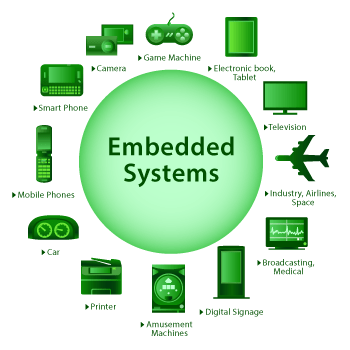
- Embedded Systems
- Embedded systems are circuits that have been
programmed for a specific purpose and can't be
re-programmed to do something else
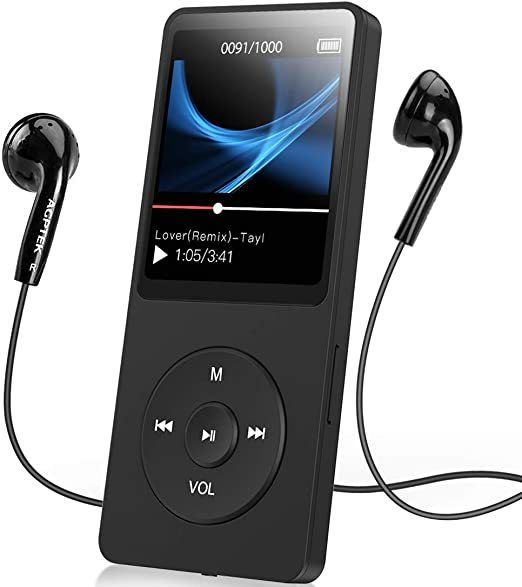
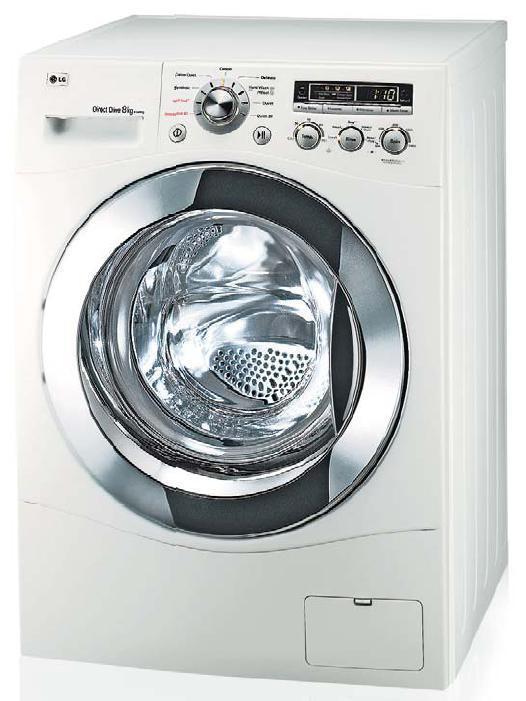
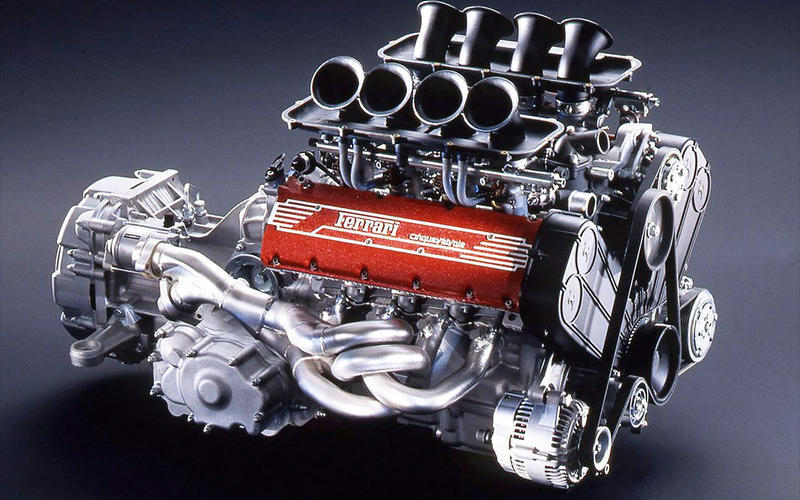
- Examples of Embedded Systems
- Washing machine
- Car engine
- MP3 Player
- Washing machine
- Examples of Embedded Systems
- Embedded systems are circuits that have been
programmed for a specific purpose and can't be
re-programmed to do something else
Recursos multimedia adjuntos

¿Quieres crear tus propios Mapas Mentales gratis con GoConqr? Más información.