
Mapa mental
SIMULATION INPUT MODELING
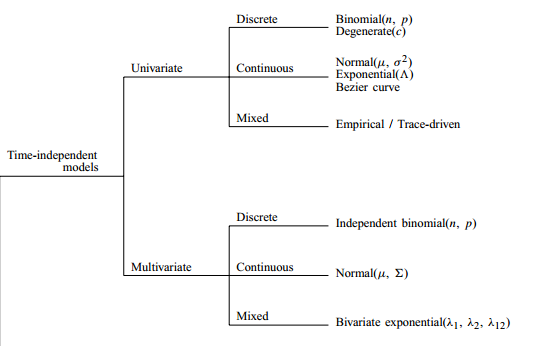
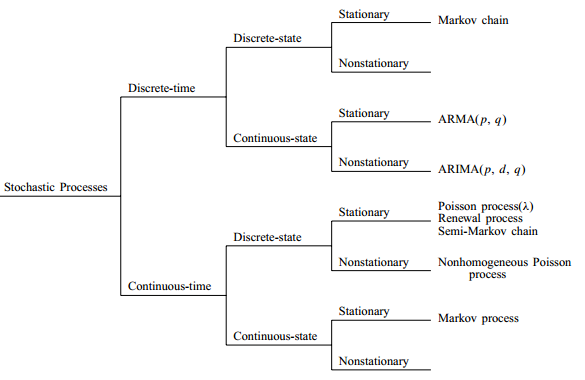
Contenido del mapa
SIMULATION INPUT MODELING
Successful input modeling requires a close match between the input model and the true underlying probabilistic mechanism associated with the system.
COLLECTING DATA
- The first is the classical approach, where a designed experiment is conducted to collect the data.
- The second is the exploratory approach, where questions are addressed by means of existing data that the modeler had no hand in collecting.
- there are several things that can be “wrong” about the data set
- Wrong amount of aggregation.
- Wrong distribution in time.
- Wrong distribution in space.
- Censored data.
- Insufficient distribution resolution.
Input models
assessing independence.
- autocorrelation
- analysis of this data set includes plotting a histogram and calculating the values of some sample statistics
- to be determined is whether a parametric or nonparametric model should be chosen for the process
- analysis of this data set includes plotting a histogram and calculating the values of some sample statistics
- autocorrelation
Imágenes y archivos del mapa
Información
- Descripción
- Mapa Mental sobre SIMULATION INPUT MODELING, creado por Luis Montes el 28/10/2015.
- Creado por
- Luis Montes · oct 2015
- Actualizado
- 9 nov 2017
- Visitas
- 6
- Valoración