
4359221
Descripción

Mapa Mental por Michael Maidment, actualizado hace más de 1 año

|
Creado por Michael Maidment
hace más de 10 años
|
|
B6 Beyond the Microscope
- Bacteria
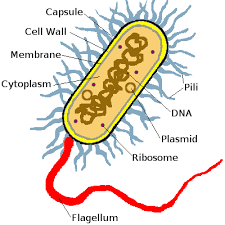
- Bacterial cells are usually
smaller and simpler than animal
cells
- Bacteria reproduce by
asexual reproduction
- It reproduces quickly
and you can grow
bacteria on an agar plate
- It reproduces quickly
and you can grow
bacteria on an agar plate
- We can use bacteria
to make useful
things like yoghurt
- Bacterial cells are usually
smaller and simpler than animal
cells
- Microorganisms and disease
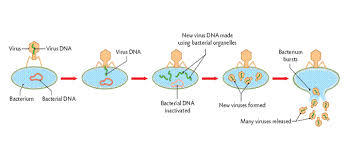
- Viruses can only reproduce
inside living cells
- Different diseases
can be transmitted
in different ways
- In food
- In water
- Airborne
Droplets
- Through
Contact
- In food
- Poor sanitation is
linked to a high
incidence of disease
- Poor sanitation is
linked with a high
incidence of disease
- Poor sanitation is
linked with a high
incidence of disease
- Viruses can only reproduce
inside living cells
- Treating infectious diseases
- Four stages
in infectious
disease
- Enters the body
- Rapidly reproduces
- Produces
toxins which
damages cells
- The toxins cause
symptoms and
your immune
system reacts
- The toxins cause
symptoms and
your immune
system reacts
- Produces
toxins which
damages cells
- Rapidly reproduces
- Enters the body
- Antiseptic and
antibiotics help
control diseases
- But bacteria can
become resistant
to antibiotics
- But bacteria can
become resistant
to antibiotics
- Disease spreads
rapidly after
natural disasters
- Natural disasters
like earthquakes
and hurricanes can
damage
infrastructure of
an area, and
completely disrupt
health services. In
these conditions
disease can spread
rapidly among the
population
- Natural disasters
like earthquakes
and hurricanes can
damage
infrastructure of
an area, and
completely disrupt
health services. In
these conditions
disease can spread
rapidly among the
population
- Pasteur, Lister and
Fleming all improved
disease treatment
- Paster
- Proved that
microbes
caused disease
and not the air
- Proved that
microbes
caused disease
and not the air
- Lister
- The first doctor
to use antiseptic
in surgery
- The first doctor
to use antiseptic
in surgery
- Fleming
- Discovered penicillin
- Discovered penicillin
- Paster
- Four stages
in infectious
disease
- Yeast
- Yeast can respire
anaerobically or
aerobicly
- Fermentation
- glucose --> ethanol + carbon dioxide
- Used to make
beer and wine
- glucose --> ethanol + carbon dioxide
- Fermentation
- Yeast growth
rates depending
on conditions
- Temperature
- Food
- pH
- Toxic waste
- Temperature
- Yeast can respire
anaerobically or
aerobicly
- Biofuels
- Biomass is living
or recently-dead
organic material
- The energy stored
in biomass can be
transferd into
more useful forms
- The energy stored
in biomass can be
transferd into
more useful forms
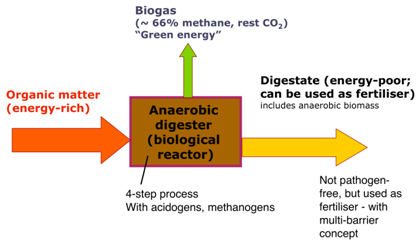
- Biogas is made
mainly of meathane
- This means it is very explosive
- This means it is very explosive
- Biogas can be used
as a fuel and is
made by anaerobic
fermentation of
waste materials
- It is a renewable
source
- Ethanol can be
used as a biofuel
- It is a cleaner fuel
than petrol or
diesel, producing
fewer pollutants
- It is a cleaner fuel
than petrol or
diesel, producing
fewer pollutants
- Biomass is living
or recently-dead
organic material
- Soils
- Different soils
contain different
particles
- Sandy soils
- Made up of
large mineral
particles
- High air content
- Very permeable
- High air content
- Made up of
large mineral
particles
- Clay soils
- Made up of
tiny particles
- Low air content
- Low permeability
- Low air content
- Made up of
tiny particles
- Loam soils
- Mixture
of sandy
and clay
- Mixture
of sandy
and clay
- Sandy soils
- Different soils
contain different
particles
- Life in the soil
- Soil is full of
living things
- Herbivores,
detritivores
and
carnivores
- Herbivores,
detritivores
and
carnivores
- Soil can
only
support
life if the
conditions
are spot
on
- In order for a
soil to
support life, it
must contain
water, oxygen
and humus
- In order for a
soil to
support life, it
must contain
water, oxygen
and humus
- Earthworms
help keep
soil and
fertile
- They bury
leaves
where
bacteria and
fungi can
decompose
them
- Their
burrows
allow air
to enter
the soil
- The mix up
soil layers
distributing
the
nutrients
more
equally
- Soil in
earthworm
manure is less
acidic than the
soil they eat.
This can help
to neutralise
soil acidity
- They bury
leaves
where
bacteria and
fungi can
decompose
them
- Soil is full of
living things
- Life in water
- Amoebas
regulate
water
content
using
contractile
vacuoles
- Amoebas
regulate
water with
contractile
vacuoles
which
collects the
water that
diffuses in
by osmosis
- The vacuole then
moves to the cell
membrane and
contracts to
empty the water
outside the cell
- The vacuole then
moves to the cell
membrane and
contracts to
empty the water
outside the cell
- Amoebas
regulate
water with
contractile
vacuoles
which
collects the
water that
diffuses in
by osmosis
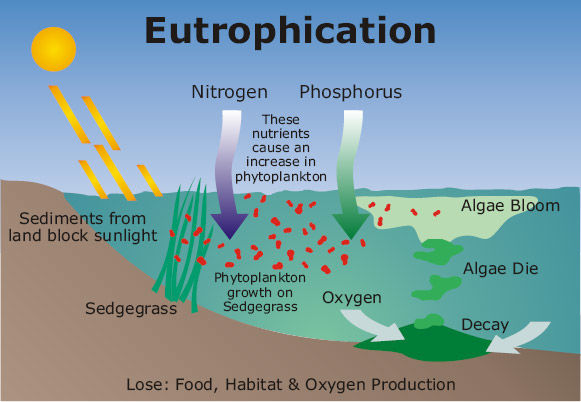
- Phytoplankton
are microscopic
plants
- Zooplankton
are
microscopic
animals.
Zooplankton
feed on
phytoplakton
- They are the
main producers
in aquatic food
webs so they
are very
important
- They are the
main producers
in aquatic food
webs so they
are very
important
- Zooplankton
are
microscopic
animals.
Zooplankton
feed on
phytoplakton
- There are
different types
of food web in
the oceans
- There are
several
causes of
water
pollution
- Amoebas
regulate
water
content
using
contractile
vacuoles
- Enzymes in Action
- Enzymes are use in...
- Biological
washing
powder
- Some of the stubborn stains
on cloths might not come
out so you use biological
washing powders, these
have a mixture of enzymes
which break down these
stains
- Some of the stubborn stains
on cloths might not come
out so you use biological
washing powders, these
have a mixture of enzymes
which break down these
stains
- Medical products
- Reagent strips are strips of
paper with enzymes and
chemicals in them are
dipped in urine to see if it
changes colour to test for
diabities
- Reagent strips are strips of
paper with enzymes and
chemicals in them are
dipped in urine to see if it
changes colour to test for
diabities
- The food industry
- It is used in the
making of low calorie
food, cheese and in
jucie extraction
- It is used in the
making of low calorie
food, cheese and in
jucie extraction
- Biological
washing
powder
- Immobilised
enzymes can be
used to make...
- Lactic free milk
- Reagent strips
- Lactic free milk
- Enzymes are use in...
- Genetic Engineering
- There are 5 main steps in GE
- Identify the gene you
are after in an organism
- Remove the gene
from the organisms
DNA
- Cut open the
DNA of the
organism that
you want to put
the gene into
- You can now colone
the host to make
more copies
- The cutting and
inserting of DNA is
done using enzymes
- The cutting and
inserting of DNA is
done using enzymes
- You can now colone
the host to make
more copies
- Cut open the
DNA of the
organism that
you want to put
the gene into
- Remove the gene
from the organisms
DNA
- Identify the gene you
are after in an organism
- There are 5 main steps in GE
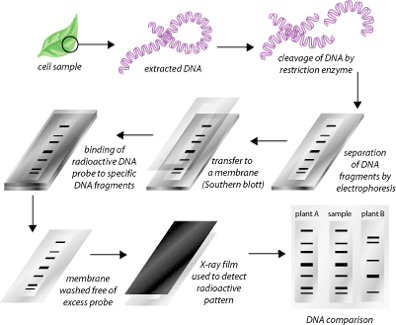
- DNA Fingerprinting
- Can be used to
solve crimes or
to check if a man
is the farther of a
child
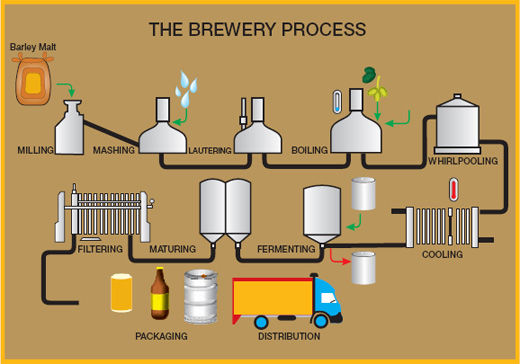
- Brewing
- Distillation increases the
alcohol concerntrtion
- Distillation is used to
separate the alcohol
out of the
alcohol-water
solution that is
produced by
fermentation
- Distillation is used to
separate the alcohol
out of the
alcohol-water
solution that is
produced by
fermentation
Recursos multimedia adjuntos
¿Quieres crear tus propios Mapas Mentales gratis con GoConqr? Más información.