
972075

Section 1- Forces and Motion
- Velocity and Acceleration
- Speed= how fast something is
moving
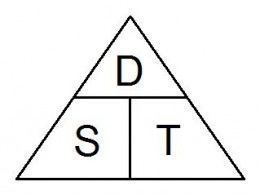
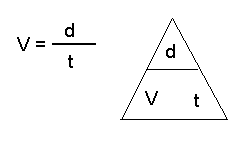
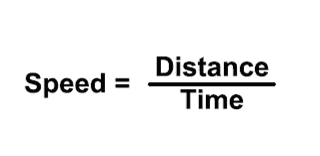
- Speed= Distance / Time
- Speed= Distance / Time
- Velocity= how fast something is moving +
DIRECTION
- Velocity= Distance / Time + Direction
- Velocity= Distance / Time + Direction
- Acceleration= how quickly velocity is changing
(how fast something gets faster)
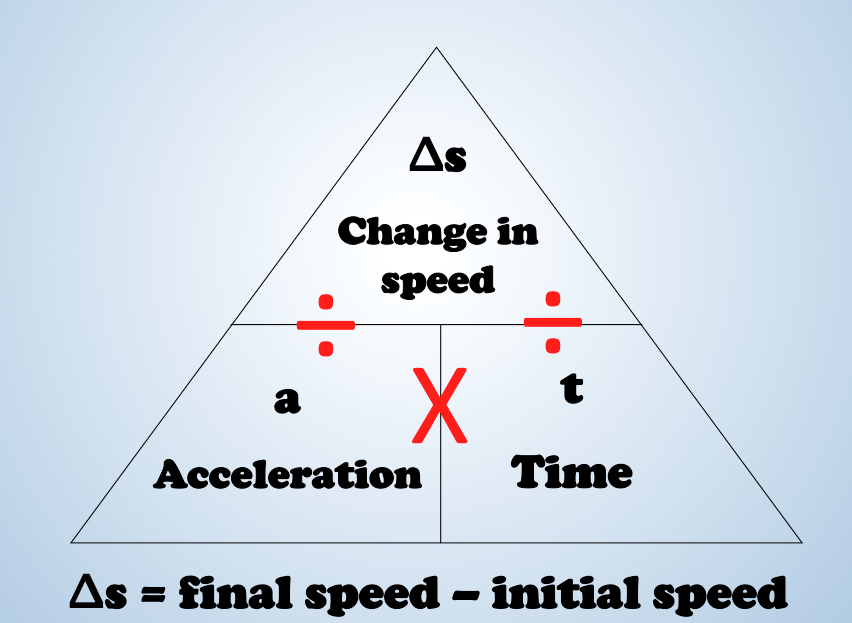
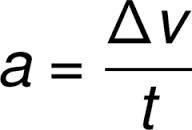
- Acceleration= Change in velocity / Time
- Acceleration= Change in velocity / Time
- Speed= how fast something is
moving
- Graphs
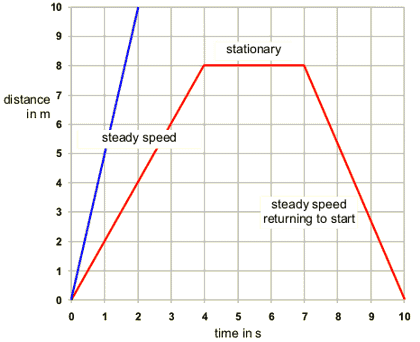
- Distance-Time Graphs
- Gradient= Speed
- Vertical / Horizontal
- Vertical / Horizontal
- Gradient= Speed
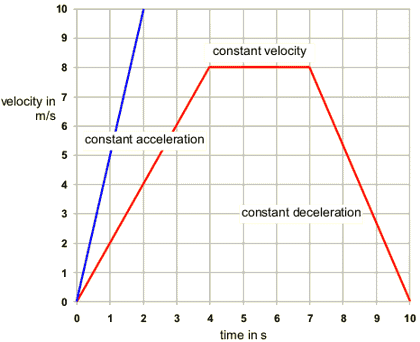
- Velocity-Time Graphs
- Gradient= Velocity
- Vertical / Horizontal
- Vertical / Horizontal
- Gradient= Velocity
- Distance-Time Graphs
- Mass, Weight and Gravity
- Gravity
- Gravity attracts all
masses but is not a force
- On the surface of a planet it makes all
things accelerate towards the ground,
at the same acceleration, e.g. Earth=
10 m/s2
- It gives everything weight
- It keeps planets in orbits
- Gravity attracts all
masses but is not a force
- Weight
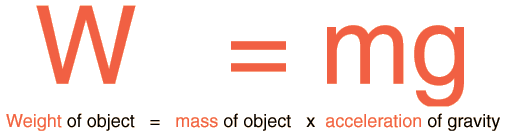
- Weight is caused by the pull of gravity
- Weight= Mass x Gravitational Field Strength
- Weight is a force measured in Newtons (N)
- The weight of an object is the
force of gravity pulling it
towards the center of the
Earth
- Weight is caused by the pull of gravity
- Mass
- The amount of 'stuff' in an object
- How heavy an object is
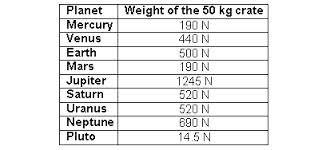
- An object has the
same mass when
on different planets,
it's weight will
change
- KG
- The amount of 'stuff' in an object
- Gravity
- Forces and Friction
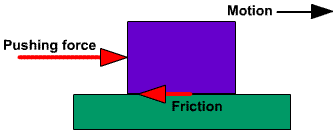
- A force is simply a push or pull
- Forces
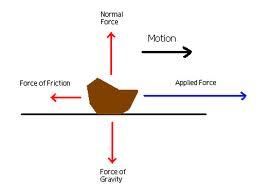
- GRAVITY or WEIGHT
(straight downwards)
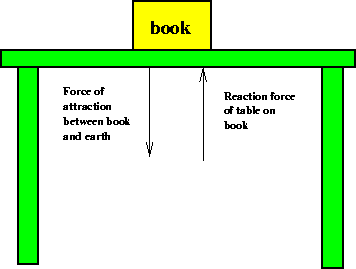
- REACTION FORCE
(from a surface,
straight upwards)
- Newton's third law say that if object a
exerts a force on object b then object
b exerts the exact opposite force on
object a.
- Newton's third law say that if object a
exerts a force on object b then object
b exerts the exact opposite force on
object a.
- ELECTROSTATIC FORCE
(between 2 charged objects,
direction depends of type of
charge e.g. repel or attract)
- THRUST or PUSH or PULL
(due to an engine or rocket
speeding something up)
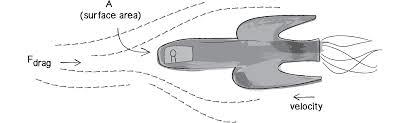
- DRAG or AIR RESISTANCE or FRICTION
(which slows something down)
- LIFT (due to an
aeroplane wing)
- TENSION
(in a rope
or cable)
- GRAVITY or WEIGHT
(straight downwards)
- Friction is always there to slow
something down
- Friction between
solid surfaces
which are gripping
- Friction between
solid surfaces which
are sliding past each
other
- Resistance or drag from
fluids (liquids or gasses)
- Friction between
solid surfaces
which are gripping
- A force is simply a push or pull
- Momentum
- All moving objects have momentum
- Momentum= how difficult it is to stop a moving object
- Faster travelling cars have more momentum
- Heavier cars have more momentum
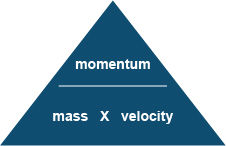
- Momentum= Mass x Velocity
- Measured in Kg m/s
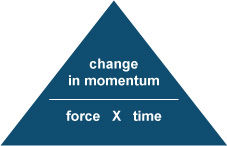
- When a force acts on an object, it causes a
change in momentum
- The change in momentum depends on the
size of the force and the time for which it is
applied
- The change in momentum depends on the
size of the force and the time for which it is
applied
- Force= Change in Momentum / Time
- Moment and Pivots
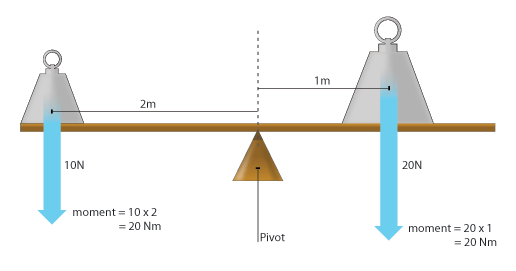
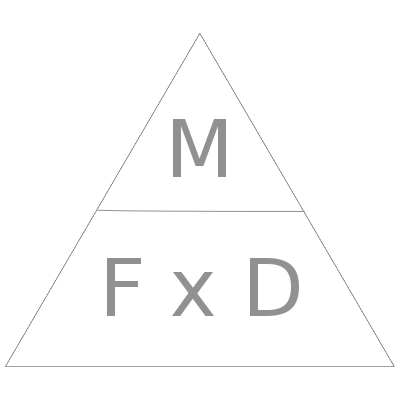
- Moment= Force Applied x Distance from the pivot
- Vector= a measurement with
direction e.g. velocity but not
speed
- Measured in Nm or Ncm
- Moment= Force Applied x Distance from the pivot
- All moving objects have momentum
- Work Done and Energy
- Energy is the 'mover' of matter
- Energy allows work to be done on other objects
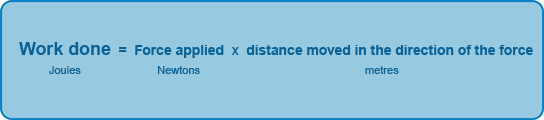
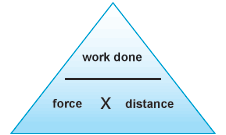
- Work is done when a force is applied to
an object and it moves a distance
- Work done is measured in Joules
- Work Done= Force x Distance
- Work Done= Energy Transferred
- Energy is the 'mover' of matter
- Potential and Kinetic Energy
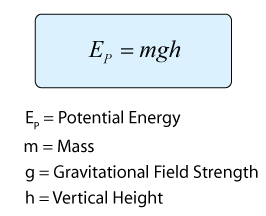
- Potential Energy
- Mass x Gravitational Field Strength x Height
- The amount of energy an object has
because of its position above the
ground
- Mass x Gravitational Field Strength x Height
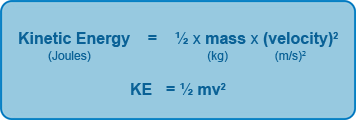
- Kinetic Energy
- 1/2 x Mass x Velocity2
- The energy an object has because it is moving. It
depends on mass and speed.
- 1/2 x Mass x Velocity2
- Potential Energy
- Equations
- Speed= Distance / Time
- Velocity= Distance / Time + Direction
- Acceleration= Change in velocity / Time
- Momentum= Mass x Velocity
- Force= Change in momentum / Time
- N
- Work Done= Force x Distance
- Kinetic Energy= 1/2 x Mass x Speed2
- Potential Energy= Mass x Gravitational Field Strength x Height
- J
- J
- J
- Potential Energy= Mass x Gravitational Field Strength x Height
- J
- Kinetic Energy= 1/2 x Mass x Speed2
- N
- kg m/s
- Force= Change in momentum / Time
- m/s2
- Momentum= Mass x Velocity
- m/s + direction
- Acceleration= Change in velocity / Time
- m/s
- Velocity= Distance / Time + Direction
- Speed= Distance / Time
Recursos multimedia adjuntos



¿Quieres crear tus propios Mapas Mentales gratis con GoConqr? Más información.