
2061480
Description

Mind Map by Karla Alvarenga 2952, updated more than 1 year ago

|
Created by Karla Alvarenga 2952
almost 11 years ago
|
|
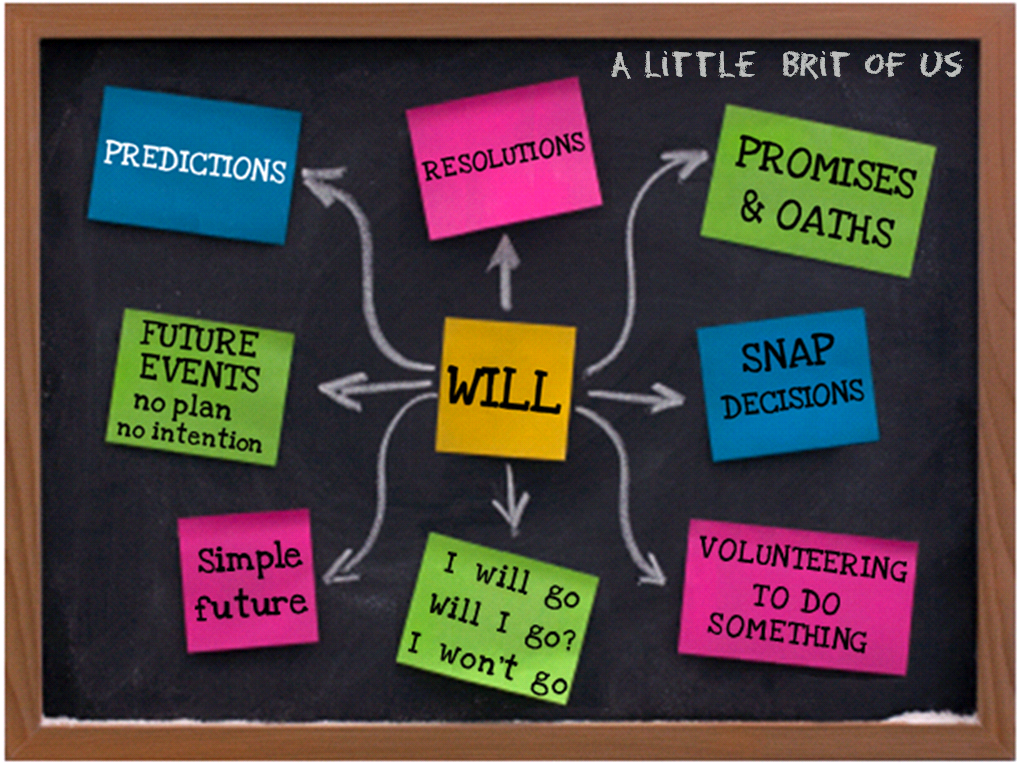
Future with "will"
- The auxiliary verb will is used in making predictions or simple statements of fact about
the future.
- For Example:
- The sun will rise at 6.30
tomorrow.
- Lunch break today will be 10 minutes longer
than usual.
- In the year 2050 all students will
have their own computers in school.
- Do you think she will come soon?
- The sun will rise at 6.30
tomorrow.
- For Example:
- Simple Future has two different forms in English: "will" and "be going to."
Although the two forms can sometimes be used interchangeably, they
often express two very different meanings. These different meanings
might seem too abstract at first, but with time and practice, the
differences will become clear. Both "will" and "be going to" refer to a
specific time in the future.
- For Example:
- You will help him later.
- Will you help him later?
- You will not help him later.
- You will help him later.
- For Example:
- The Future Simple tense is often called the "will" tense because we make the
Future Simple with the modal auxiliary verb will.
- From: Mariela Quijano & Karla Alvarenga
Media attachments

Want to create your own Mind Maps for free with GoConqr? Learn more.