
11840945
Descrição

FlashCards por TheMightyBluPepper ., atualizado more than 1 year ago

|
Criado por TheMightyBluPepper .
quase 8 anos atrás
|
|
| Questão | Responda |
| Colloidal dispersion | Sub micron sized particles of solid or liquid dispersed in a liquid |
| Polymer melt | Size and connectivity of molecules lead to new properties, such as rubber behaviour |
| Liquid crystals | Anisotropic molecule shapes lead to states with a degree of ordering intermediate between a solid and liquid |
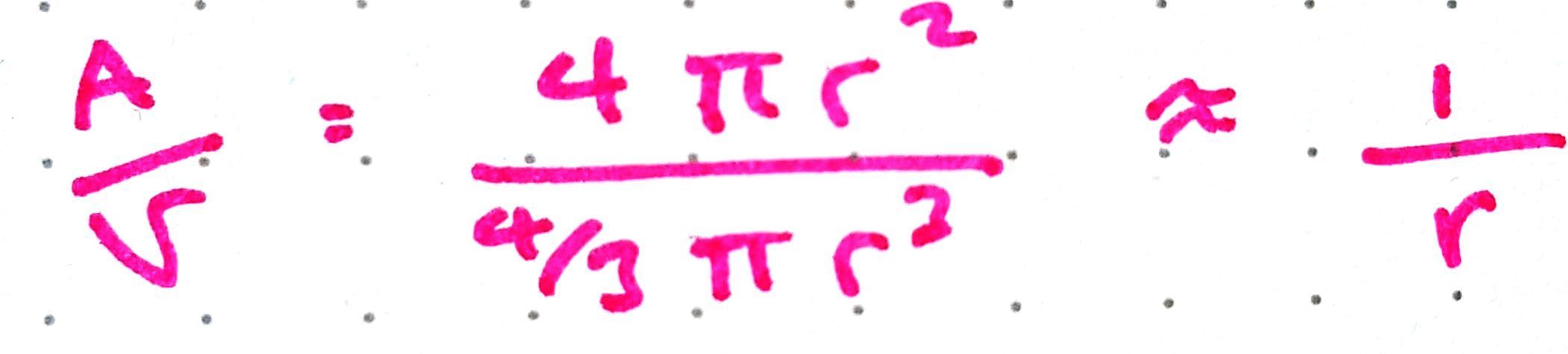
| Surface area to volume ratio of a spherical molecule |
Image:
Scm1 1 (binary/octet-stream)
|
| Colloids at low shear rate | Flows like a liquid |
| Colloid at high shear rate | Behaves like a solid |
| Polymer definition | A large molecule with typically more that 50 individual units |
| Behaviour of thermoplastics at different temperatures | At low temperature it behaves like a solid. At high temperature it softens as its molecules move with greater mobility |
| The four characteristics of soft matter | The length scale Brownian motion Weak short range forces Ability to self assemble into hierarchical structures |
| Typical size range for a colloid | Macroscopic, ie less than a micron in size but larger than nanometers |
| Implications of the size range | One needn't consider every detail about a colloid down to the atomic scale, and may use a "course grain model" |
| Typical energy range for bonds in soft matter | On the level of thermal energy (~kT) |
| Main type of force involved with soft matter interactions | van der Waals' forces |
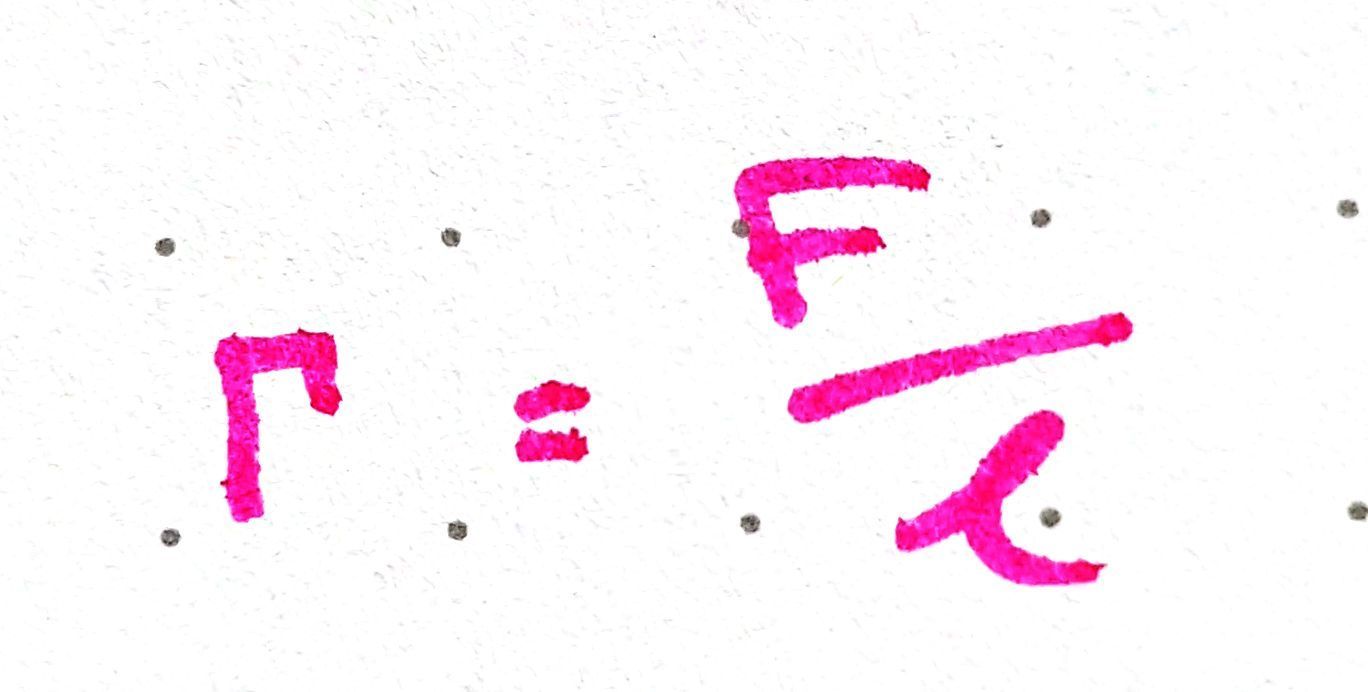
| Definition of surface tension | Force acting per unit width: |
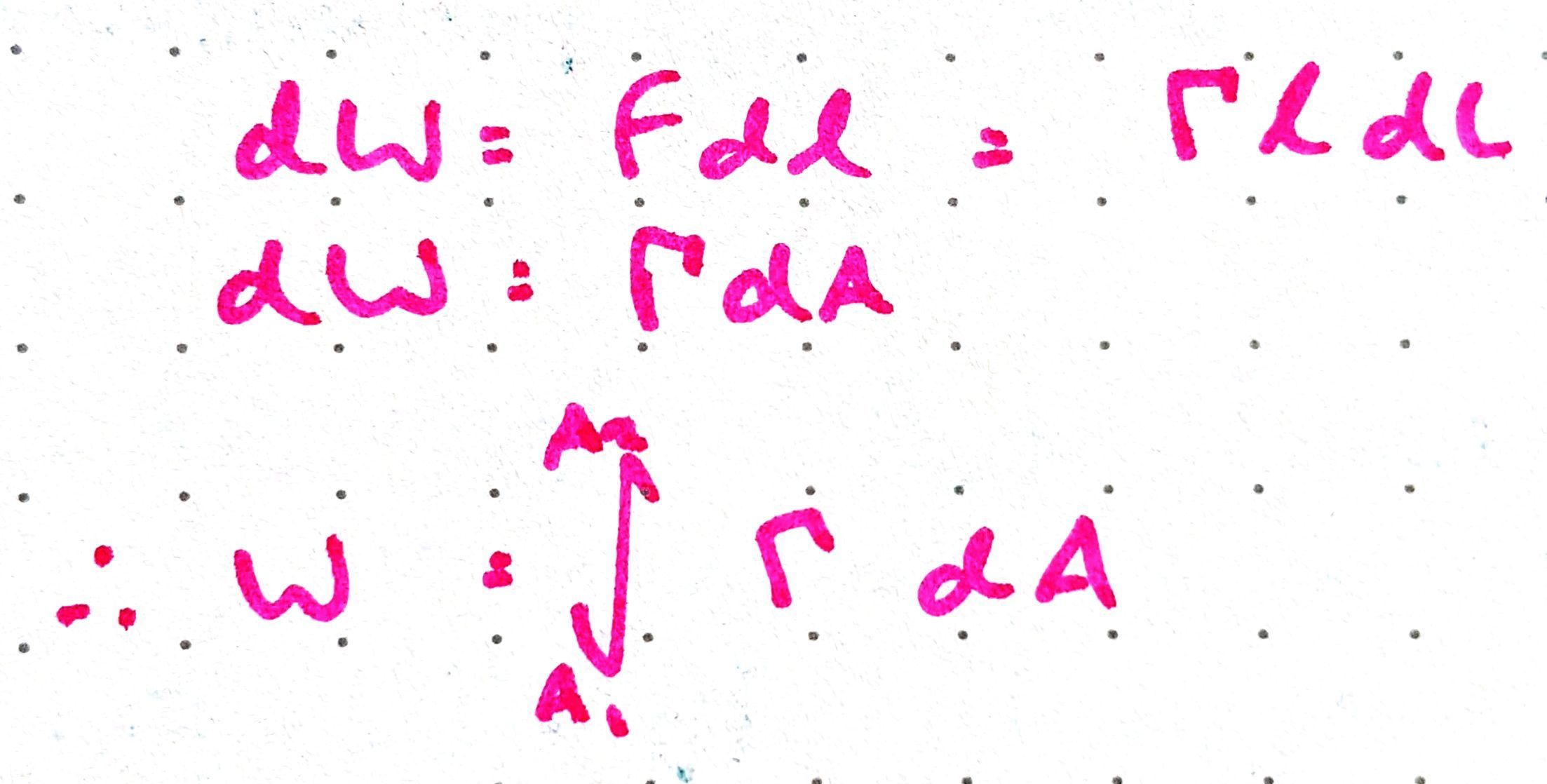
| Definition of work done to change the area in surface tension interactions | |
| Explanation of self assembley | Soft matter systems move towards an equilibrium which is the most thermodynamically favourable (reducing free energy) |
| Ingredients of a protein | Proteins are made up of polymerise amino acids |
| Primary structure of a protein | This is just a sequence of amino acids |
| Secondary structures of a protein | Alpha helices: a polypeptide chain forms a helix, stabilised by hydrogen bonds Beta sheets: Successive parts of the polypeptide chain form sheets, where neighbouring strands are joined by hydrogen bonds |
| Tertiary structure of proteins | A fully three dimensional arrangement of the polypeptide chain and all other structures |
| Polypeptide definition | Chain molecules made by the reactions of amino acids. They typically have 50-2000 amino acid residues |
| Hydrogen bond definition | A bond formed when a hydrogen atom is covalently bonded to to an electronegative atom. It creates an attractive energy to other atoms intermediate between a van der Waals' force and a full covalent bond |
Quer criar seus próprios Flashcards gratuitos com GoConqr? Saiba mais.