
3306852


| Questão | Responda |
| The Cave | Allegory about the path to wisdom and the illusory nature of the physical world |
| Dialectical | Finding pure ideas and the high forms |
| Epistemology | Study of knowledge A branch of philosophy that investigates the origin of nature, methods, and limits of human knowledge |
| Forms | Abstract pattern in objects but not an object itself; an ideal |
| Hypothetical | Reasoning and deduction |
| Imaginary | Images of things knowable by the senses Reflections, drawings, shadows, etc |
| Intellect | Part of the soul or psyche thinking judgment ideas |
| Intelligible | What is known with pure intellect Unchanging |
| Metaphysics | Big existential questions; determining what is real The branch of philosophy that treats of first principles, includes ontology and cosmology and is intimately connected with epistomology |
| The Myth of Er | Myth told by Plato to give his idea of a just afterlife |
| Objective | Things that are known by the senses |
| Passion | Part of the soul or psyche gratifies desire satisfies senses |
| Philodoxy | Love of doctrine, using beliefs to determine identity |
| Philosophy | Love of wisdom The rational investigation of the truths of being, knowledge or conduct |
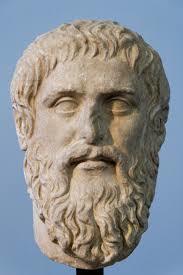
| Plato | 427-347 BCE, Greek philosopher |
| Platonic Form | Abstract ideal Standard of being for objects Standard of knowing for ideas |
| Psychological Ideas | Not forms Changeable May be wrong |
| Pythagoreans | Influenced Plato Combined mysticism and mathematics |
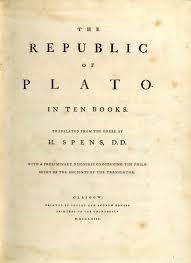
| Republic | Written by Plato; collections of fictional dialogue Philosophical dialogue (4th century BCE) by Plato dealing with the composition and structure of the ideal state |
| The Ring | Myth that suggests no difference between the actions of the just and the actions of the unjust when there are no consequences |
| Sensable | What is known with the senses Changeable |
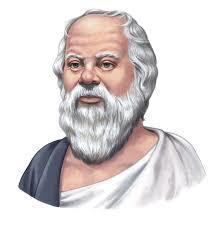
| Socrates | 469-399 BCE, Athenian philosopher |
| Spirit | Part of the soul or psyche emotions attitude |
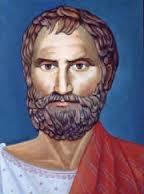
| Thales | Father of western philosophy; military strategist, astronomer, mathematician 640-546 BCE, Greek philosopher born in MIletus |
| Values Inquiry | Determining what is worthwhile or has value |
| Wisdom | How to navigate between what is and what should be The quality or state of being wise; knowledge of what is true or right coupled with just judgement as to action; sagacity, discernment, or insight |
Quer criar seus próprios Flashcards gratuitos com GoConqr? Saiba mais.