
38708450
Descrição

FlashCards por Jake Wisniewski, atualizado more than 1 year ago

|
Criado por Jake Wisniewski
mais de 3 anos atrás
|
|
| Questão | Responda |
| open skills | occur in dynamic environments where things are always changing, like during team sports |
| closed skills | occur in environments that are stable and predictable like golf |
| motor learning | the study of skill acquisition processes and includes the factors that help or hinder motor skill performance |
| motor performance | the demonstration of a skill or set of skills |
| descriptive feedback | feedback that describes the errors made during the performance of a skill |
| prescriptive feedback | provides suggestions to correct the error |
| knowledge of performance | feedback that provides information about the quality of the movement during exercise. |
| knowledge of results | external feedback on total performance after completing a movement |
| positive transfer | mastery of one task aids learning or performing another |
| negative transfer | mastery of one task conflicts with learning or performing another |
| zero transfer | when the learning of one skill has no impact on the learning of another |
| Tell, Show, Do | A technique that involves verbal explanations of procedures in phrases appropriate to the level of the patient followed by demonstrations |
| perceptual motor abilities | Physical attributes that combine the senses (e.g., seeing, hearing, smell) and motion (e.g., coordination, dexterity). |
| physical proficiency abilities | static strength, dynamic strength, explosive strength, trunk strength, extent flexibility, dynamic flexibility, gross body coordination, gross body equilibrium, stamina |
| auditory discrimination | The ability to tell the difference between one sound and another sound |
| visual discrimination | ability to compare and contrast objects |
| Kinesthetic Discrimination | the ability to detect small changes in muscle movement which involves large gross motor movements |
| constraints | boundaries that limit or promote movement options |
| arousal | Activation of the central nervous system, the autonomic nervous system, and the muscles and glands |
| anxiety | The condition of feeling uneasy or worried about what may happen |
| trait anxiety | internal anxiety that an individual brings to the speaking situation; not dependent on the specific situation |
| state anxiety | temporary feeling of anxiety elicited by a threatening situation |
| Locomotor movement | fundamental movement skills that allow an individual to move from one place to another (walking, skipping, jumping, hopping, leaping, sliding, galloping and running) |
| Non-locomotor skills | fundamental movements that consist of moving without traveling (bending, twisting, curling, stretching, reaching, pulling, turning, and swaying) |
| movement concepts | often taught with non-locomotor movements include personal space, levels, directions, and relationships with the body |
| skill themes | include balancing, jumping and landing, and transferring weight |
| rhythmic activity | combination of body movements and music or sounds |
| creative movement | use the body (with or without sound) to communicate |
| general space | space that does not belong to anyone and is used for students to travel during activities |
| personal space | the buffer zone we like to maintain around our bodies |
| manipulative skills | Use body parts to propel or receive an object, controlling objects primarily with the hands and feet. Bouncing/Dribbling, catching, kicking, rolling, striking, throwing, trapping. |
| mirroring | when partners are positioned face-to-face, and one partner copies the other |
| matching | when partners are positioned side-by-side, and one partner copies the other |
| agility | the ability to move quickly in various directions while maintaining control |
| balance | what keeps the body stable and upright , which helps keeps the body in control |
| line dance | No partners needed. Dancers are in rows as they all perform the same rhythmic patterns. Popular at social events. |
| verbal cues | are action verbs that should be just a few words or less, as students are better able to focus their attention and remember short phrases (squish the bug) |
| flow | the contrast between smooth and jerky movements, and the contrast between free and bound movements |
| smooth movements | are fluid and cues often used to convey this concept are glide, melt, and ooze |
| jerky movements | rigid, and cues used to describe this movement include rough and bouncy |
| free movement | movement is controlling the body rather than the body controlling the movement |
| bound movements | voluntary and controlled and appear tense or stiff at times, like when lifting a heavy object |
| effort | movement concept category that includes time, force and flow |
| buoyancy | the ability to float in water or air or some other fluid |
| drag | resistance by friction from air or water moving over a surface |
| Newton's First Law | An object at rest stays at rest and an object in motion stays in motion with the same speed and in the same direction unless acted upon by an unbalanced force (Law of Inertia) |
| gravity | an external force that attracts a body or object towards the earth's center and is commonly referred to as gravitational pull |
| stability | the body's ability to regain balance after displacement |
| Torque | a turning or twisting force |
| pathways | a movement concept under the space and spatial awareness (where the body moves) movement concept category 1. Straight 2. Curved 3. Zigzag |
| levels | a movement concept under the space and spatial awareness (where the body moves) movement concept category 1. low, or below the knees (crawling) 2. medium, or between the knees (walking) 3. high, or above the shoulders (walking on tiptoes) |
| base of support | the space between the feet that bears the weight of the body |
| conditioning | the process of getting the body prepared for the physical demands of physical activity and exercise |
| progressive overload | To gradually increase the amount of overload so that fitness gains occur, but without potential for injury |
| invasion games | Any team which players have to penetrate the territory of the opponent, and either enter a goal themselves or put a ball of some kind into a goal |
| net sports | are sports where you hit something over a net. Ex: Volleyball, tennis, ping pong, badminton |
| combative activities | include fencing, wrestling and martial arts |
| self-efficacy | One's belief in his or her own ability |
| variable practice | practice involving the performance of skills in a wide variety of contexts |
| part practice | a practice strategy that involves practicing parts of a skill before practicing the whole skill |
| Scope and Sequence | a gradual building of concepts and skills that consider the development rather than the age of the student |
| Tactical Games Approach | A teaching model that focuses on helping students understand the tactics or strategies of playing the game, more so than the physical skills needed for playing the game, also referred to as teaching games for understanding. |
| practice specificity | practice should resemble the game or competition as much as possible |
| folk dance | traditional dances that have been handed from one generation to another, cultural traditions and customs |
| ethnic dance | an indigenous dance from a certain race or country |
| square dancing | A partnered-group dance, usually beginning with dancers in groups of four facing each other. Dancers follow commands being shouted by a caller |
| orienteering | a competitive sport in which participants find their way to various checkpoints across rough country with the aid of a map and compass, the winner being the one with the lowest elapsed time |
| periodization of training | the systematic division of the training year into periods that allow for optimal performance development during the competitive season 1. transition or post-season stage 2. preparation or pre-season stage 3. competition phase |
| Cardiovascular Endurance | ability of heart to provide oxygen to muscles during physical activity for prolonged period of time |
| hypokinetic disease | disease associated with a lack of exercise |
| metabolic syndrome | A cluster of conditions that increase the risk of heart disease, stroke, and diabetes |
| musculoskeletal system | the system of bones and skeletal muscles that support and protect the body and permit movement |
| circulatory system | the body system made up of the heart, blood, and blood vessels. This system moves materials to and from the body cells |
| respiratory system | system responsible for taking in oxygen and releasing carbon dioxide using the lungs |
| digestive system | Breaks down food into absorbable units that enter the blood for distribution to body cells |
| excretory system | the system that removes waste from your body and controls water balance |
| endocrine system | Glands secrete hormones that regulate processes such as growth, reproduction, and nutrient use (metabolism) by body cells |
| integumentary system | skin, hair, nails |
| sympathtic nervous system | the division of the autonomic nervous system that arouses the body, mobilizing its energy in stressful situations |
| parasympathetic nervous system | the division of the autonomic nervous system that calms the body, conserving its energy |
| Muscular Strength | The amount of force a muscle can exert |
| Muscular Endurance | the ability of your muscles to perform physical tasks over a period of time without tiring |
| body composition | the ratio of body fat to lean body tissue, such as bone, muscle, and fluid |
| FITT training | Frequency, Intensity, Time, Type |
| SMART goals | Specific, Measurable, Attainable, Realistic, Timely |
| pedometer | An instrument that measures distance walked |
| accelerometer | instrument for measuring acceleration or vibrations |
| vasodilation | widening of blood vessels |
| HIIT training | High Intensity Interval Training |
| Fartlek training | This type of training allows an athlete to run at varying speeds, over unmeasured distances, on different terrain (Fartlek is Swedish for 'Speed play') |
| MHR | maximum heart rate |
| THRZ | target heart rate zone |
| RHR | resting heart rate |
| Hyperthermia | Abnormally high body temperature |
| Hypothermia | abnormally low body temperature |
| Frostnip vs Frostbite | - Nip: Affected skin is cold & painful - Bite: cold & numb |
| core muscles | the trunk muscles extending from the hips to the upper back |
| Proprioceptive Neuromuscular Facilitation (PNF) | Stretch muscle statically, contract and stretch muscle statically beyond initial static stretch, done with a partner |
| Split Training | Is a program of weight training that divides training sessions by body regions. |
| Contraindications | risky movements to avoid that include jerky movements, locking of the joints, hyperextension, and fast and uncontrolled movements |
| Macronutirents | carbs (45% - 65% of diet), proteins (12% - 20% of diet), fats (20% - 35% of diet) |
| Micronutrients | vitamins and minerals |
| Calories | A unit used to measure the amount of energy contained in foods |
| Five food groups | fruits, vegetables, grains, protein, dairy |
| BMI | body mass index |
| Ectomorph | tall and skinny, have difficult time gaining weight |
| endomorphs | tend to be short and stout and have large bones |
| Mesomorph | a person with a compact and muscular body build |
| Skinfolds | layers of fat under the skin that are measured to determine body fatness |
| BMR | basal metabolic rate (number of calories required to keep body functioning at rest) |
| Heredity | Passing of traits from parents to offspring |
| fad diets | weight-loss plans that are popular for only a short time |
| quackery | exaggerated, non-scientific claims about the benefits or effectiveness of a product |
| sports education model | Focuses on actual sports seasons and athletics teams as the grounds for planning and teaching sports to create the desire for a lifetime of physical activity |
| Movement Education | is the foundation of physical education programs and is where the direct physical application of psychomotor, cognitive, and affective domains derived, as well as the movement concepts of spatial awareness, effort, and relationships of the body |
| Skills theme approach | an elementary physical education framework that aids in the development of the fundamental movement skills (locomotor, non-locomotor, manipulative) with an overarching goal to ensure that students are proficient or competent in these areas |
| ALT-PE | academic learning time in physical education |
| Title IX of Education Act of 1972 | forbids gender discrimination in federally subsidized education programs, including athletics |
| guided discovery | when the teacher structures the environment to where students can figure out or solve the problem on their own (a.k.a - problem solving approach) |
| Physical Literacy | the ability to move with competence and confidence in a wide variety of physical activities in multiple environments that benefit the healthy development of the whole person |
| SHAPE America | Society of Health and Physical Educators America |
| Presidential Youth Fitness Program (PYFP) | an assessment that focuses on providing information on student health based on FitnessGram or Brockport Physical Fitness Test results |
| Every Student Succeeds Act (ESSA) | given greater latitude to individual states for decision making regarding content area standards, assessment techniques, and corrective actions for low performing schools |
| liability | is a violation of responsibilities (aka duty) usually attributed to negligence |
| negligence | misconduct that includes failure to create a safe environment that eliminates or reduces the risk of harm |
| malfeasance | a type of negligence when a teacher engages in misconduct by committing an unlawful act |
| Misfeasance | where the teacher adheres to proper protocols, but implements them inappropriately (improperly spotting a student on bench press) |
| Nonfeasance | when a teacher fails to act (example: if a teacher knows how to spot a student performing the bench press but does not do so, they can be held liable if injury occurs) |
| abuse | physical or emotional harm to someone |
| exploitation | the action or fact of treating someone unfairly in order to benefit from their work |
| Individuals with Disabilities Education Act (IDEA) | A special education law that requires schools to educate students with disabilities in least restrictive environments to the greatest extent of their abilities using plans tailored to the individual needs of the students |
| Adapted Physical Education | Modified physical activity in educational settings for students with disabilities |
| Federal Educational Rights and Privacy Act (FERPA) | Federal Educational Rights and Privacy Act (FERPA) A Federal law that protects the privacy of student education records. FERPA gives parents certain rights with respect to their children's education records. These rights transfer to the student when he or she reaches the age of 18 or attends a school beyond the high school level. |
| RICE | rest, ice, compression, elevation |
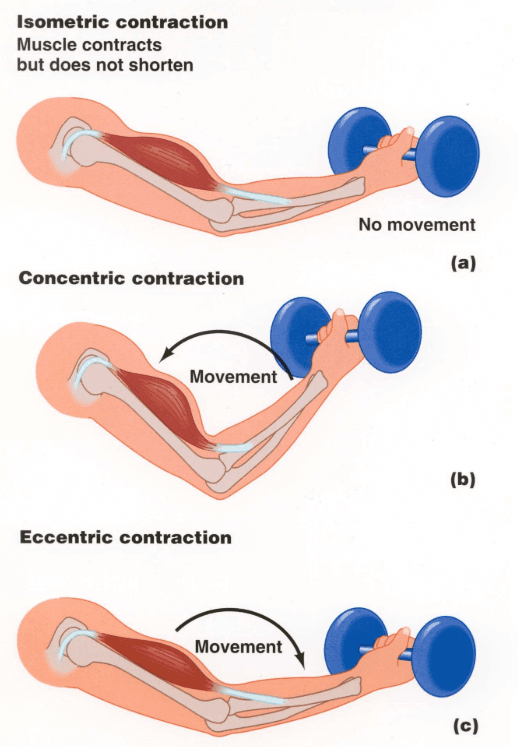
| Isometric Exercise | involve holding the body in a position with no muscle or joint movement. They help build muscular strength and endurance and are popular rehabilitation exercises (plank, wall sits) |
| Concentric movement vs. Eccentric movement |
Quer criar seus próprios Flashcards gratuitos com GoConqr? Saiba mais.