

Fechar
What is histology?
What is pathology?
Units of measurements used in histology
10 angstroms (Å) = 1 nanometer (nm)
10,000 angstroms = 1 micrometer (μm)
1,000 micrometers = 1 millimeter (mm)
10 millimeters = 1 centimeter (cm)
100 centimeters = 1 meter (m)
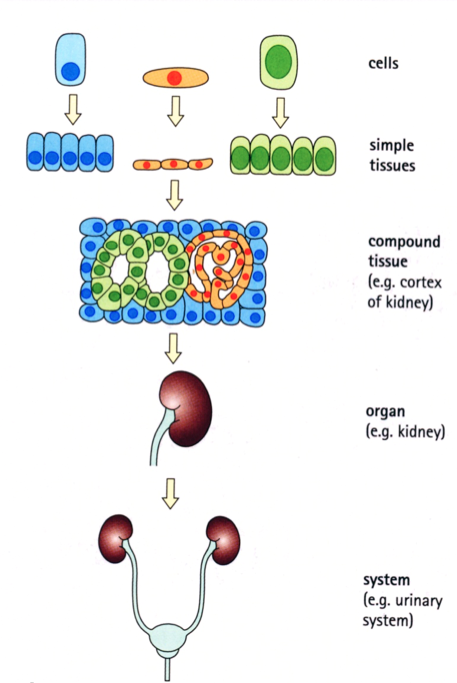
From Cells to Systems
cells --> tissues --> organs
How to Make a Slide with Tissue
The four basic tissues
1. Epithelium
2. Connective Tissue
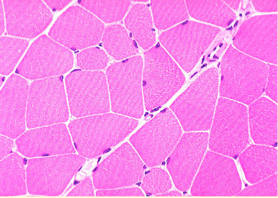
3. Muscle Tissue
4. Nerve Tissue
Fundamentals of histological stains
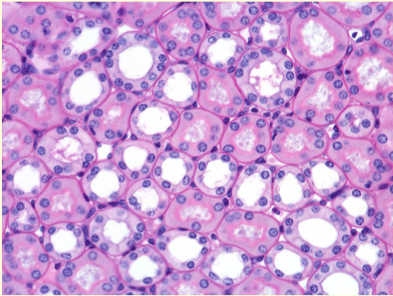
Acidophilic
Basophilic
Frequently used histological stains
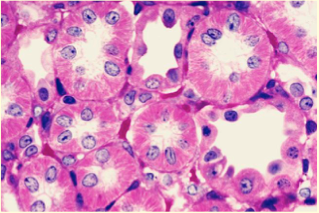
1. Hematoxylin and Eosin (H&E)
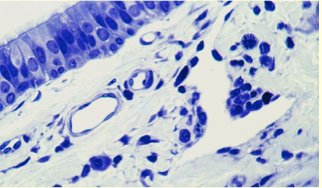
2. Toluidine Blue (TBO)
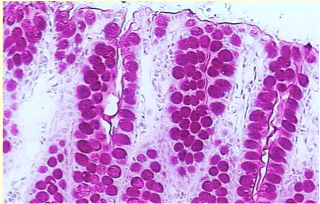
3. Periodic Acid-Schiff (PAS) method
CELL
KNOW difference b/w the nucleus of a cell & the cell itself!
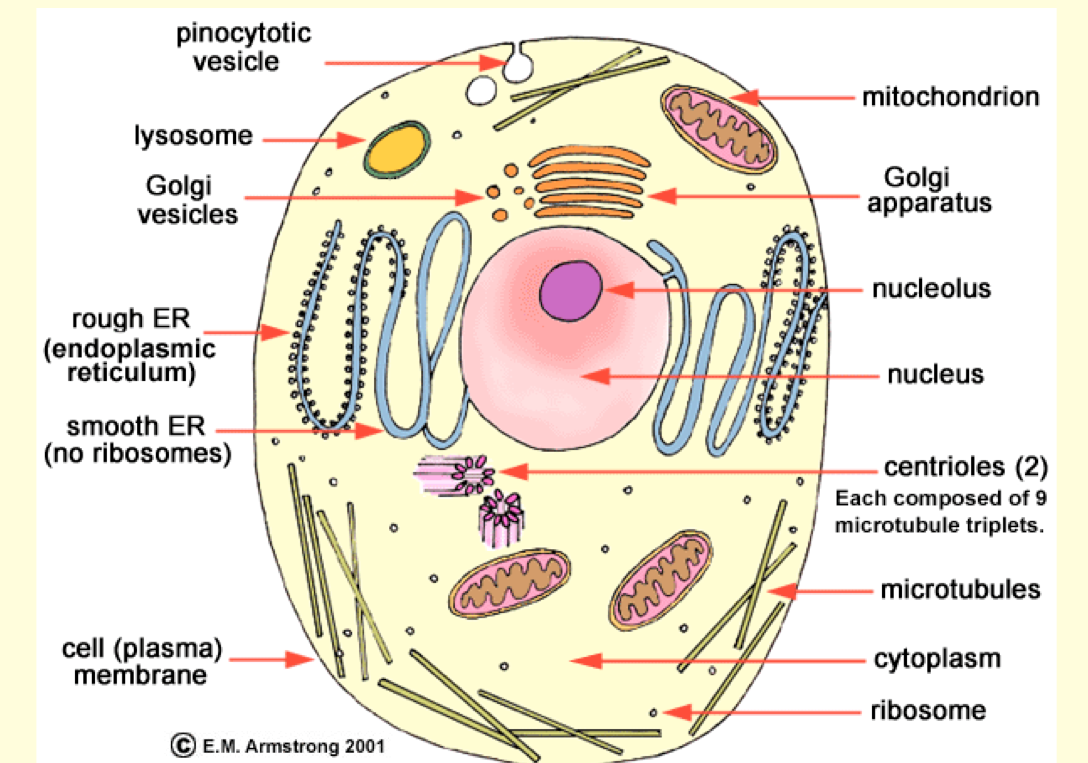
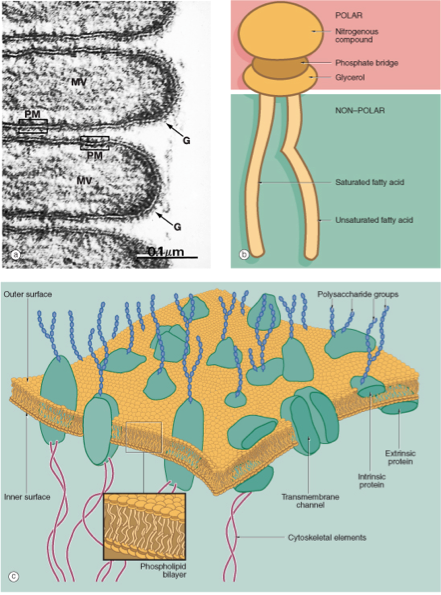
The cell membrane (or plasma membrane)
Nucleus (N), nuclear envelope (NE), and rough endoplasmic reticulum (RER)
Note: Appearance of nuclei is often characteristic of cell type and functional state
**NE and RER tend to surround the nucleus
NEURON
*RER: stains darker than the nucleus
The Golgi Apparatus
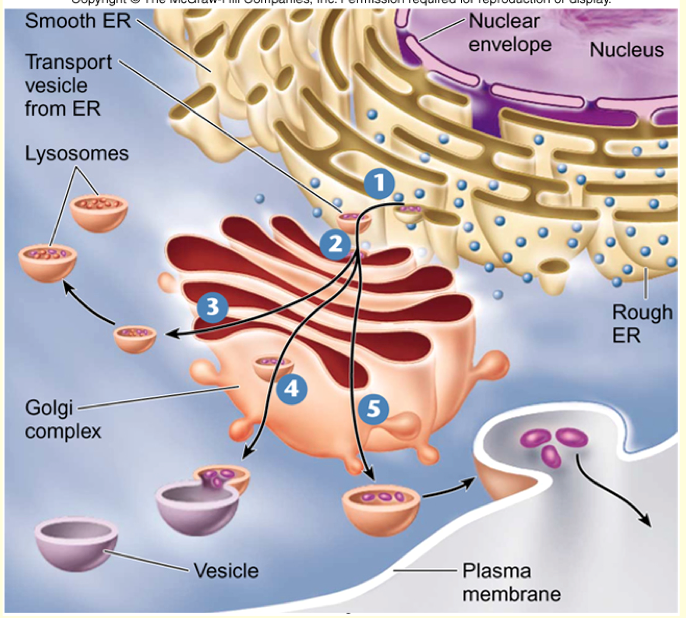
Golgi Apparatus
(major functions?)
Protein synthesis, targeting, and secretion:
Erythroblast
(General Pathway: Nucleus --> RER --> Golgi --> Other cells)
Protein synthesis, targeting, and secretion:
Eosinophil leukocyte
Protein synthesis, targeting, and secretion:
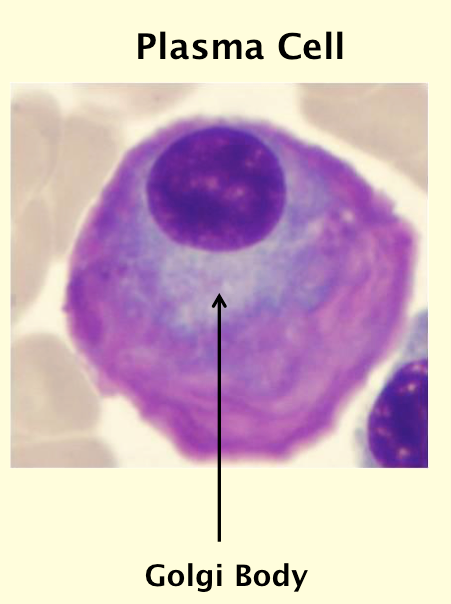
Plasma Cell
Protein synthesis, targeting, and secretion:
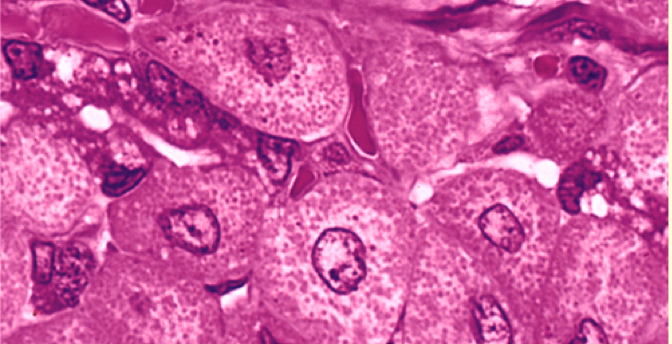
Pancreatic Acinar Cell
Mitochondria
(Greek: mitos=thread, chondrion=small cartilage)
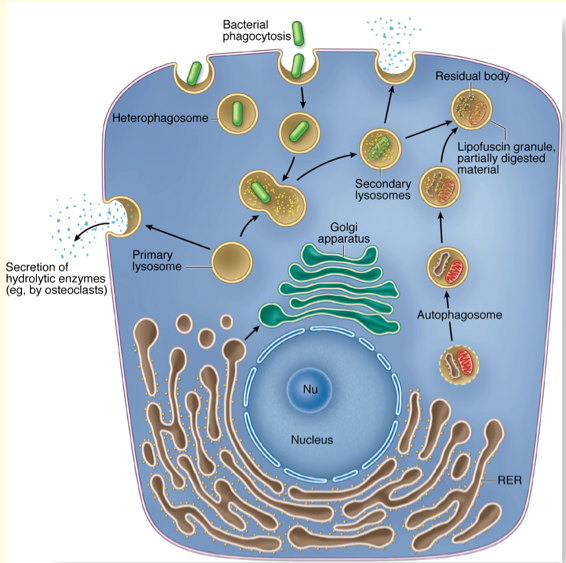
Lysosomes
(degrade intracellular things)
Other Cellular Components:
Cytoskeleton
Other Cellular Components:
Glycogen
Other Cellular Components:
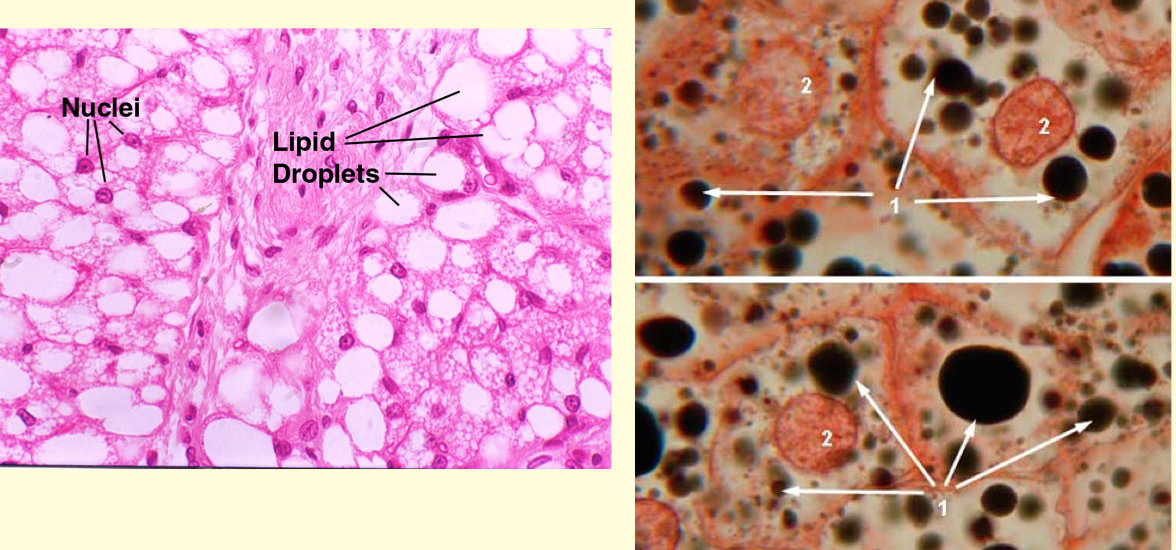
Lipids
Exam Question
The Lysosome is:
A. An organelle for storage of glycogen
B. Non-organelle that stores intracellular lipids
C. Digestive membrane bound vesicle of cells containing enzymes
D. Responsible for protein synthesis in cells


