
Quiz
Menstrual Disorders
This quiz has question types that open in the usual player.
Questions in this quiz (29)
1In the primary stage of the menstrual cycle, which pituitary hormone is responsible for stimulating ovarian follicle development?
- ALH
- BFSH
- CACTH
- DProlactin
- EGrowth Hormone
- FADH
- GOxytocin
2A surge of which pituitary hormone triggers ovulation?
- AFSH
- BLH
- COxytocin
- DADH
- EACTH
- FGrowth Hormone
- GTSH
3The [blank_start]Corpus Luteum[blank_end] is a hormone-secreting structure that develops in an ovary after an ovum has been discharged but degenerates after a few days unless pregnancy has begun.
- ACorpus Luteum
4The corpus luteum secretes [blank_start]progesterone[blank_end], which is a steroid hormone responsible for the development of the endometrium
- Aprogesterone
5The average menstrual cycle last [blank_start]28[blank_end] days
- A28
6Breakdown of the corpus luteum (luteolysis) typically occurs [blank_start]14 days[blank_end] post ovulation
- A14 days
- B7 days
- C4 days
- D24 hours
7Stages of the menstrual cycle:
[blank_start]Follicular phase[blank_end] = FSH stimulates follicle development. Raising oestrogen levels inhibit FSH production, therefore all follicles other than the dominant follicle die
[blank_start]Ovulation[blank_end] = Release of oocyte from ruptured dominant follicle
[blank_start]Luteal Phase[blank_end] = Formation of corpus luteum- ALuteal Phase
- BOvulation
- CFollicular phase
- DMenstrual phase
8During menstruation, arteriolar constriction brings above shedding of the functional layer of the [blank_start]endometrium[blank_end]
- Aendometrium
9Whilst the average menstrual cycle is 4 weeks long (28 days), a normal menstrual cycle is considered anything between [blank_start]3[blank_end] and [blank_start]5[blank_end] weeks in frequency.
- A3
- B3.5
- C2.5
- D5
- E4.5
- F6
10The passing of clots is a normal finding for a woman undergoing menstruation.
- ATrue
- BFalse
11Menstrual bleeding should be light - there should not be in excess of [blank_start]80[blank_end]ml passed.
- A80
- B120
- C50
12Menorrhagia: [blank_start]Prolonged and increased menstrual flow[blank_end]
Metrorrhagia: [blank_start]Regular intermenstrual bleeding[blank_end]
Polymenorrhoea: [blank_start]Periods occurring at < 21 day interval[blank_end]
Amenorrhoea: [blank_start]Absence of menstruation > 6 months[blank_end]
Oligomenorrhoea: [blank_start]Periods at intervals of > 35 days[blank_end]- APeriods at intervals of > 35 days
- BAbsence of menstruation > 6 months
- CPeriods occurring at < 21 day interval
- DProlonged and increased menstrual flow
- ERegular intermenstrual bleeding
13Pelvic Inflammatory Disease (PID) is typically caused by which organism?
- AChlamydia
- BGonorrhea
- CHerpes
- DHaemophilus
14Chlamydia infection typically affects which structure?
- AFallopian Tubes
- BCervix
- CUterus
- DVagina
- EOvaries
15Which layer of the uterus is most prone to development of carcinomas?
[blank_start]Endometrium[blank_end]- AEndometrium
16A woman presents to her GP complaining of heavy, painful periods. She describes that she has recently found sex painful. After referral to Ninewells and the relevant investigations have been conducted, she is diagnosed with benign smooth muscle tumors of the uterus.
This is known clinically as ...- AUterine Fibroids
- BAdenomyosis
- CEndometriosis
- DPelvic Inflammatory Disease
- EEndometrial Hyperplasia
- FCervical Eversion
17The following picture shows which condition?
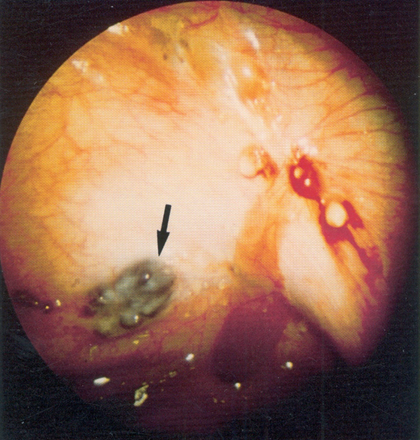
- AEndometriosis
- BUterine Fibroids
- CAdenomyosis
- DPelvic Inflammatory Disease
18Which condition can be described as the following:
"an often painful disorder in which tissue that normally lines the inside of your uterus grows outside of your uterus, most commonly in your ovaries, fallopian tubes and the tissue lining your pelvis.
[blank_start]Endometriosis[blank_end]- AEndometriosis
19[blank_start]Dysfunctional Uterine Bleeding[blank_end] is a condition affecting 50% of women with abnormal uterine bleeding. This diagnosis is made by exclusion and is also known as non-organic menorrhagia.
- ADysfunctional Uterine Bleeding
20Endometrial Carcinomas typically affect women who are [blank_start]post[blank_end]-menopausal - the peak age of incidence being around [blank_start]60[blank_end] years old
- Apost
- Bpre
- C60
- D80
- E35
- F25
21Most cases of Dysfunctional Uterine Bleeding are ...
- AAnovulatory
- BOvulatory
22Dysfunctional Uterine Bleeding:
Tends to present with an [blank_start]irregular[blank_end] cycle of menorrhagia
More common in [blank_start]obese[blank_end] women- Aobese
- Bunderweight
- Cirregular
- Dregular
23Ovulatory Dysfunctional Uterine Bleeding (the less common type) is thought to be caused by an inadequate production of [blank_start]progesterone[blank_end] by the corpus luteum.
- Aprogesterone
24The thicker a woman's endometrium, the more likely she is to develop endometrial carcinoma.
- ATrue
- BFalse
25Investigations of Dysfunctional Uterine Bleeding may require imaging of the uterus. Where Ultrasound scans are not enough, a scope can be inserted into the vagina and into the uterus in order to view its contents.
This procedure is called [blank_start]Hysteroscopy[blank_end]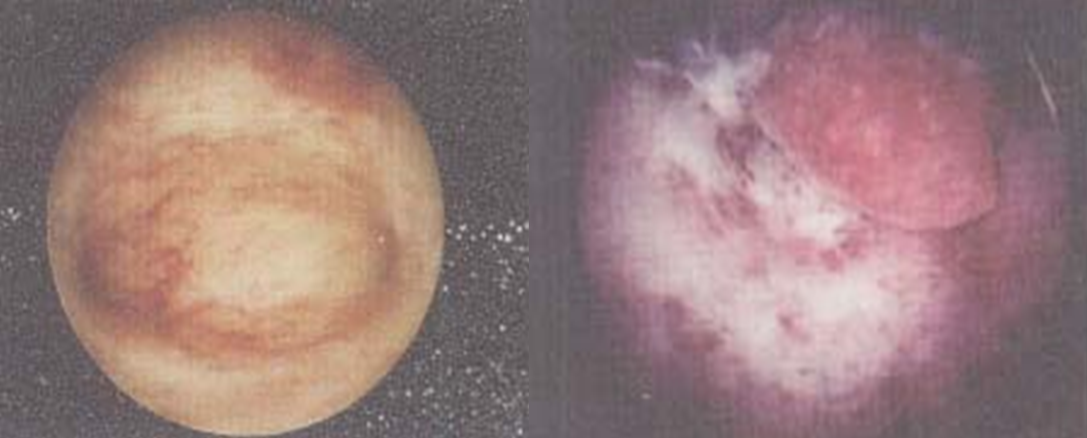
- AHysteroscopy
26Which of the following are the two main treatments for Dysfunctional Uterine Bleeding?
- AProgestogens (Synthetic Progesterone)
- BCombined Oral Contraceptive Pill
- CDanazol
- DGnRH Analogues
- ENSAIDs
- FCapillary Wall Stabilisers
27Patients that fail on [blank_start]2[blank_end] medical therapies for Dysfunctional Uterine Bleeding are typically then given a progestogen-releasing intrauterine device in the form of a coil.
- A2
- B3
- C4
28If medical treatments fail for Dysfunctional Uterine Bleeding, surgical treatment in the form of endometrial [blank_start]ablation[blank_end] should be attempted. If this is unsuccessful, surgical removal of the uterus (called a [blank_start]hysterectomy[blank_end]) should be considered.
- Aablation
- Bhysterectomy
29A sub-total hysterectomy involves removal of the uterus but preservation of the [blank_start]cervix[blank_end].
- Acervix
Information
- Description
- Menstrual Disorders lecture given on 07/11/2018
- Author
- Matthew Coulson
- Language
- English
- Views
- 46
- Tags
- Rating
- No ratings yet Rate this quiz