
33426477
Description

Quiz by Alejandro López Villar, updated more than 1 year ago

|
Created by Alejandro López Villar
over 4 years ago
|
|
Question 1
Question
Recuerda authentication DIGEST siempre usa [blank_start]NONCE[blank_end] que es esa valor random que se intercambian cliente y servidor para asegurar que las sesiones no se roban
Answer
-
NONCE
Question 2
Question
ENLAZA SIEMPRE CONCEPTOS COMO SIGUE:
TRUST @ INEGRIDAD
GENUINE -@ AUTHENTICATION
Answer
- True
- False
Question 3
Question
Objectives of Cryptography
[blank_start]Confidentiality[blank_end] - Assurance that the information is accessible only to those authorized to
have access.
[blank_start]Integrity[blank_end] - The trustworthiness of data or resources in terms of preventing improper and
unauthorized changes.
[blank_start]Authentication[blank_end] - Refers to the characteristic of a communication, document, or any data
that ensures the quality of being genuine.
[blank_start]Nonrepudiation[blank_end] - Guarantee that the sender of a message cannot later deny having sent
the message, and that the recipient cannot deny having received the message.
Answer
-
Confidentiality
-
Integrity
-
Authentication
-
Nonrepudiation
Question 4
Question
trustworthiness (intregridad) - [blank_start]Integrity[blank_end]
genuine - [blank_start]Authentication[blank_end]
Answer
-
Integrity
-
Authentication
Question 5
Question
Secret Key cryptography es también conocida como :
[blank_start]Symmetric encryption[blank_end]
Answer
-
Asymmetric encryption
-
Symmetric encryption
Question 6
Question
Tiendes a liarte
PRIVATE KEY --> [blank_start]SIMETRICA[blank_end]
PUBLIC --> [blank_start]ASIMÉTRICA[blank_end]
Answer
-
SIMETRICA
-
ASIMÉTRICA
Question 7
Question
La criptografia usa [blank_start]algoritmos[blank_end] para cifrar textos
Answer
-
Tokens
-
algoritmos
-
hash
Question 8
Question
RSA, MD5,
SHA, DES, and AES
son ?
[blank_start]Algoritmos[blank_end] de encriptamiento
Answer
-
Algoritmos
-
PKI
Question 9
Question
para ECCS
[blank_start]CIPHER[blank_end] son algoritmos usados para cifrar un texto; el resultado es un [blank_start]cypher text.[blank_end]
Answer
-
CIPHER
-
cypher text.
Question 10
Question
CIPHERS TOPOLOGY
CLASICAL CIPHERS: Most Basic. Operates on alphabets (A-Z).
[blank_start]Sustitution cipher[blank_end]: Replaces units of plaintext acording to reglular system. EJMPLO: autokey, hill, Gronsfeld, Beale
[blank_start]Transposition cipher[blank_end]: rearraging letters acording to a regular system. EJEMPLOS: rail Fence, Route, Myszkowski
MODERN CIPHERS:provide message secrecy, integrity, and authentication of the sender
2 Tipos:
- basados en el [blank_start]tipo de llave[blank_end]: simetricos o asimétricos
- basados en el typo de [blank_start]input data[blank_end]:
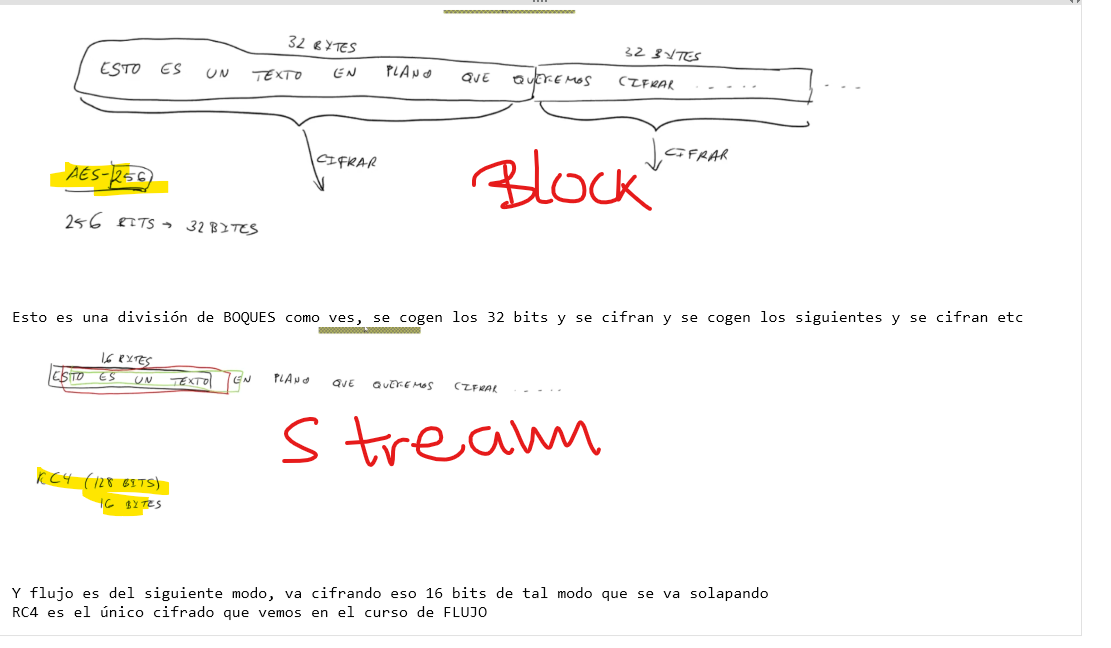
[blank_start]Block Ciphers:[blank_end] operan en grupos de bits de tamaño fijo
[blank_start]Stream Ciphers:[blank_end] opera sobre cada bit,one at a time, as a layer
MIRAR NOTA PROFESOR
Answer
-
Sustitution cipher
-
Transposition cipher
-
tipo de llave
-
input data
-
Block Ciphers:
-
Stream Ciphers:
Question 11
Question
eso es gráficamente como funciona el sistema de encriptación de BLOCK y de STREAM
Fíjate que el de STREAM es una especie de capa de cebolla o de matroska
Image:
Image (binary/octet-stream)
Answer
-
none
Question 12
Question
LEE CON ATENCIÓN
ALGORITMOS DE CIFRADO
AES : Block size; symétrico; tamaño de bloques de 128, 192, 256. funciona en software y hardware
DES: bloques de 64 bits. Se suele usar 3DES (3 vueltas) hasta poder pasar a AES
RC4: Stream cypher.
RC5: parameterized algorithm with a variable block size. 2 bits registers.
RC6: deriva de RC4, incluye: 4 bits register y intiger multiplication
DSA: Digital Signature Algorithm.First digital signture recognized by any goverment. Publica/Privada Asimétrica.
RSA: Rivest Shamir Adleman. Standar encryption hoy. Se usa en softaware y hardaware, desde placas a tarjetas de red etc.
Ejemplo: ALICE encritpa el mensaje en DES (por economía) y usa la llave pública de Bob para cifrar todo en RSA , el RSA es una especie de sobre/envelope que tiene el mensaje cifrado y la llave DES que se usó para cifrarlo. cuando BOB recibe el sobre, usa su llave para decriptar la llave DES y con la llave DES el mensaje.
CLAVE ACERCA DE MD5 y SHA, funciones de hash
Funcion de HASH no es un algoritmo de encriptado.
Un hash no encripta el mensaje, de un hash no se puede recuperar el mensaje. un hash es una especie "checksum" siempre de un mismo tamaño de bit, que nos dice si lo que estamos comprobando ha sido modificado o no, ya que un solo bit que se cambie, nos da un hash diferente.
FUNCIONES DE HASH
MD5 (Message Digest Function): 128 bits, muy usado en comprobaciones de integridad y para "guardar" passwords
SHA (Secure Hashing Algorithm): Publicado por U.S federal Informtion Processing Standar
3 tipos:
SHA1 (Diseñado por la NSA americana)- 160 bits. Ya no es seguro
SHA2 - 256 o 512 bits
SHA3 - en desarrollo aún
Answer
- True
- False
Question 13
Question
ALGORITMOS DE CIFRADO
[blank_start]AES[blank_end] : Block size; symétrico; tamaño de bloques de 128, 192, 256. funciona en software y hardware
[blank_start]DES[blank_end]: bloques de 64 bits. Se suele usar 3DES (3 vueltas) hasta poder pasar a AES
[blank_start]RC4[blank_end]: Stream cypher.
[blank_start]RC5[blank_end]: parameterized algorithm with a variable block size. 2 bits registers.
[blank_start]RC6[blank_end]: deriva de RC4, incluye: 4 bits register y intiger multiplication
[blank_start]DSA[blank_end]: Digital Signature Algorithm.First digital signture recognized by any goverment. Publica/Privada Asimétrica.
[blank_start]RSA[blank_end]: Rivest Shamir Adleman. Standar encryption hoy. Se usa en softaware y hardaware, desde placas a tarjetas de red etc.
Ejemplo: ALICE encritpa el mensaje en DES (por economía) y usa la llave pública de Bob para cifrar todo en RSA , el RSA es una especie de sobre/envelope que tiene el mensaje cifrado y la llave DES que se usó para cifrarlo. cuando BOB recibe el sobre, usa su llave para decriptar la llave DES y con la llave DES el mensaje.
CLAVE ACERCA DE MD5 y SHA, funciones de hash
Funcion de HASH no es un algoritmo de encriptado.
Un hash no encripta el mensaje, de un hash no se puede recuperar el mensaje. un hash es una especie "checksum" siempre de un mismo tamaño de bit, que nos dice si lo que estamos comprobando ha sido modificado o no, ya que un solo bit que se cambie, nos da un hash diferente.
FUNCIONES DE HASH
[blank_start]MD5[blank_end] (Message Digest Function): 128 bits, muy usado en comprobaciones de integridad y para "guardar" passwords
SHA (Secure Hashing Algorithm): Publicado por U.S federal Informtion Processing Standar
3 tipos:
SHA1 (Diseñado por la NSA americana)- [blank_start]160 bits[blank_end]. Ya no es seguro
SHA2 - 256 o 512 bits
SHA3 - en desarrollo aún
Answer
-
AES
-
DES
-
RC4
-
RC5
-
RC6
-
DSA
-
RSA
-
MD5
-
160 bits
Question 14
Question
Tanto AES como DES son [blank_start]simétricos[blank_end]
DSA y RSA son ejemplos de [blank_start]llave pública/privada[blank_end]
Answer
-
simétricos
-
llave pública/privada, asimétricos
Question 15
Question
LEER CON DETENIMIENTO
SSH SECURE SHELL
Remote Comunication : reemplaza otras formas de comunicación remota como rcp, rlogin etc
Secure Channel: nos permite un canal encriptado para logings, ejecución de comandos, transferencia de archivos etc
Strong Authentication: nos permite segura autenticación host-to-host, secura comunciación over a insecure internet.
Para autenticar puede usar PKI, passwords, hash etc
Noa protege de : IP source routing, DNS spoofing, captura de data (passwords etc ) etc
Answer
- True
- False
Question 16
Question
SSH SECURE SHELL
[blank_start]Remote Comunication[blank_end] : reemplaza otras formas de comunicación remota como rcp, rlogin etc
[blank_start]Secure Channel:[blank_end] nos permite un canal encriptado para logings, ejecución de comandos, transferencia de archivos etc
[blank_start]Strong Authentication[blank_end]: nos permite segura autenticación host-to-host, secura comunciación over a insecure internet.
Para autenticar puede usar PKI, passwords, hash etc
Noa protege de : IP source routing, DNS spoofing, captura de data (passwords etc ) etc
Answer
-
Remote Comunication
-
Secure Channel:
-
Strong Authentication
Question 17
Question
Public Key Infrastructure
Public Key Infrastructure (PKI) is a set of hardware, software, people, policies, and procedures
required to create, manage, distribute, use, store, and revoke digital certificates
Components of PKI
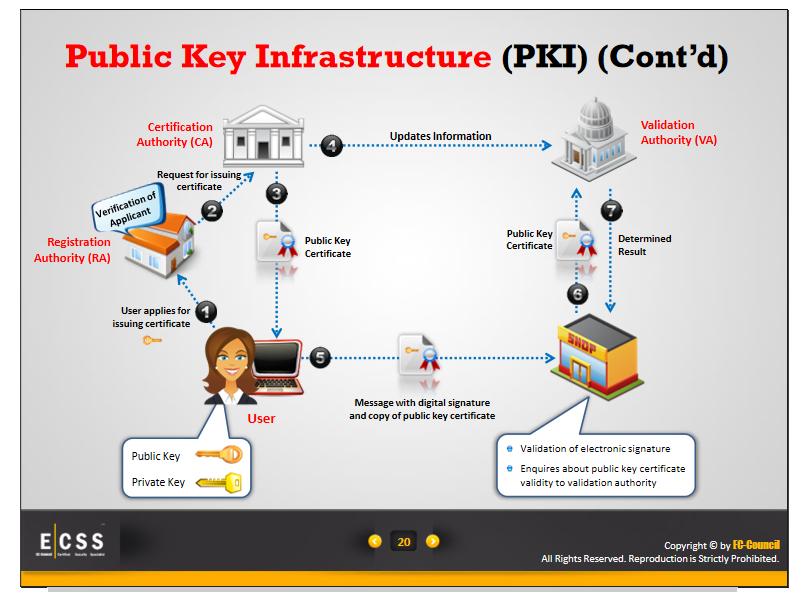
Registratios Authority RA - donde se solicita el certificado y se inicia el proceso
Certification Authority CA - la entidad que emite el certificado . Típicamente, X509
Validation Authority VA - la entidad que guarda registros (las llaves públicas) de los certificados emitidos y los valida cuando se le solicita saber si son o no son genuinos
EJEMPLO:
Ciudadano que intenta acceder al portal de la SSGG. El ciudadano envia al portal una copia de su llave publica y su digital signature
SSGG solicita a la VA que verifique si es o no es
VA responde y se permite el acceso o no al portal de la SSGG en relación con la respuesta de la VA
Image:
Image (binary/octet-stream)
Answer
-
none
Question 18
Question
Components of PKI
[blank_start]Registratios Authority RA[blank_end] - donde se solicita el certificado y se inicia el proceso
[blank_start]Certification Authority CA -[blank_end] la entidad que emite el certificado . Típicamente, X509
[blank_start]Validation Authority VA[blank_end] - la entidad que guarda registros (las llaves públicas) de los certificados emitidos y los valida cuando se le solicita saber si son o no son genuinos
Answer
-
Registratios Authority RA
-
Certification Authority CA -
-
Validation Authority VA
Question 19
Question
Public Key Infrastructure (PKI) is a set of hardware, software, people, policies, and procedures
required to create, manage, distribute, use, store, and revoke digital certificates
Answer
- True
- False
Question 20
Question
digital certificate vs digital signature
[blank_start]A digital certificate[blank_end] is a certification or electronic document issued by a Certification Authority (like the FNMT in Spain) that links a person with a public key and [blank_start]confirms his or her identity[blank_end].
A [blank_start]digital signature[blank_end] is a [blank_start]cryptographic mechanism[blank_end] that, applied to an electronic document, allows the receiver to:
Clearly [blank_start]authenticatio[blank_end]n, [blank_start]non-repudia[blank_end]tion and [blank_start]integ[blank_end]rity of the document.
Answer
-
A digital certificate
-
confirms his or her identity
-
digital signature
-
cryptographic mechanism
-
authenticatio
-
non-repudia
-
integ
Question 21
Question
LEE DETENIDAMENTE
SSL SECURE SOCKET LAYER
Protocolo para gestionar la seguridad de los mensajes en internet.
Usa RSA Asymetric encryption
Tres propiedades:
Private Channel - despues de el handsake todos los mensajes se encriptan don la la llave privada definida en el handshake
Authenticated Channel - siempre encriptado y autenticado si se desea en cada mensaje
Reliable Channel - alta integridad
Pasos (SSL Handshake Protocol flow) - se define la utenticidad de los extremos y se configura la llave privada que se usará en el proceso de comunicación-
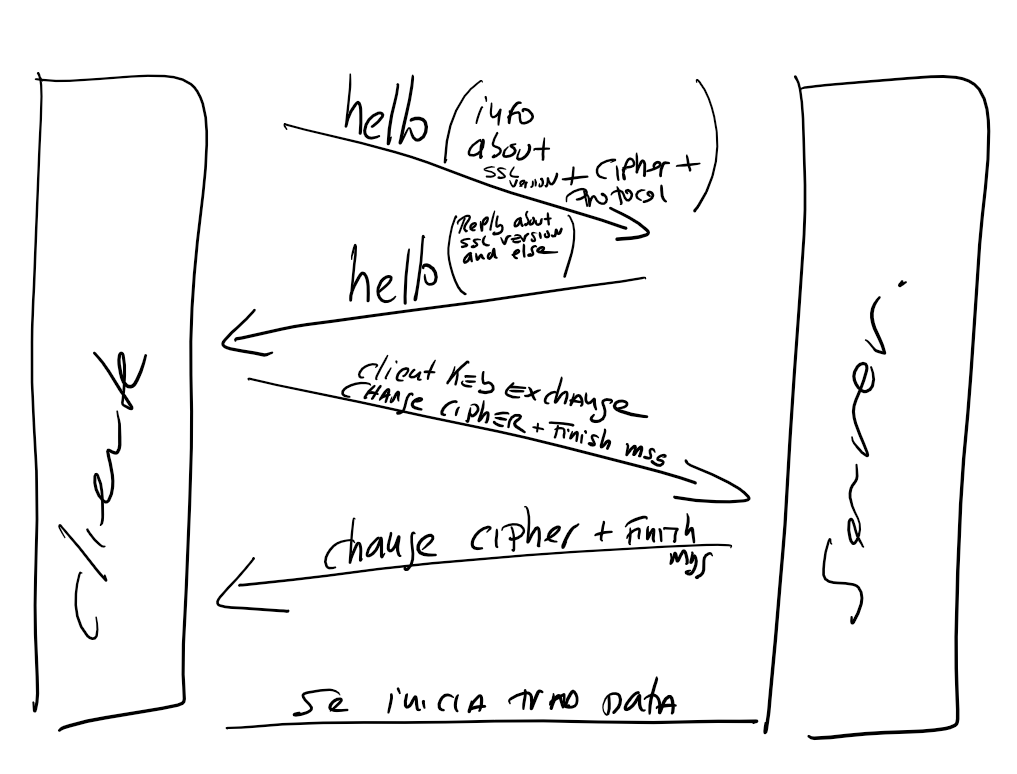
CLIENTE lanza un CLIENT HELLO con los datos del SSL, algoritmos disponibles y e información de hardware
SERVER determina la versión de SSL y algoritmos que se usarán, y envía un SERVER HELLO.
Cliente recibe el saludo del servidor y envía un mensaje randon (premaster secret) al CLIENT KEY EXCHANGE
a la vez envia un CHANGE CIPHER SPEC and FINISHED mensaje al servidor en forma de hash
SERVER comprueba que lo que ha recibido concuerda con lo que se envío en al key exchange.
Si es así
SERVER envía un CHANGE CIPHER SPEC and FINISHED mensaje y la transmission de datos puede comenzar
Answer
- True
- False
Question 22
Answer
-
none
Question 23
Question
SSL
Answer
-
RSA (USA COMO CYPER)
-
DSA
Question 24
Question
SSL SECURE SOCKET LAYER
Protocolo para gestionar la seguridad de los mensajes en internet.
Usa [blank_start]RSA Asymetric encryption[blank_end]
Tres propiedades:
[blank_start]Private Channel[blank_end] - despues de el handsake todos los mensajes se encriptan don la la llave privada definida en el handshake
[blank_start]Authenticated Channel[blank_end] - siempre encriptado y autenticado si se desea en cada mensaje
[blank_start]Reliable Channel[blank_end] - alta integridad
Pasos (SSL Handshake Protocol flow) - se define la utenticidad de los extremos y se configura la llave privada que se usará en el proceso de comunicación-
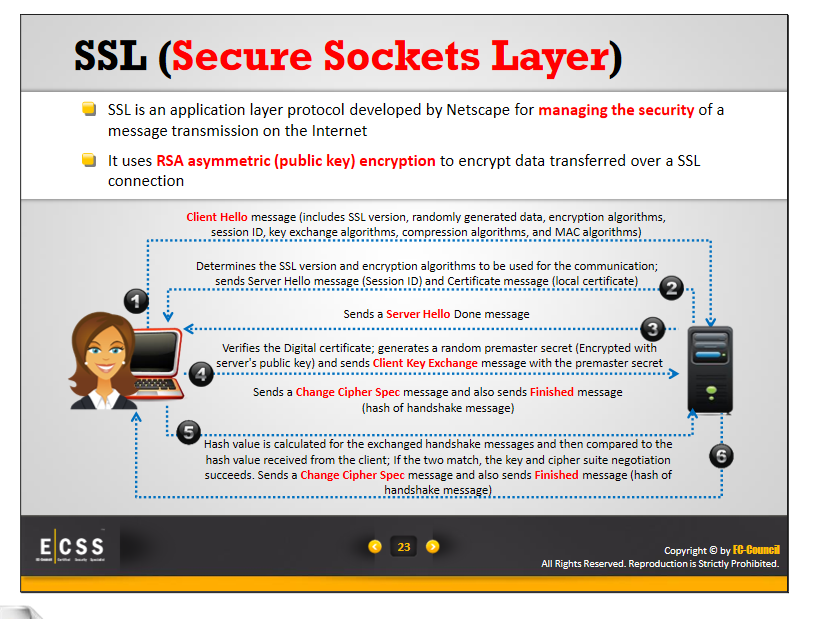
CLIENTE lanza un [blank_start]CLIENT HELLO[blank_end] con los datos del SSL, algoritmos disponibles y e información de hardware
SERVER determina la versión de SSL y algoritmos que se usarán, y envía un [blank_start]SERVER HELLO[blank_end].
Cliente recibe el saludo del servidor y envía un mensaje randon (premaster secret) al [blank_start]CLIENT KEY EXCHANGE[blank_end]
a la vez envia un [blank_start]CHANGE CIPHER SPEC and FINISHED[blank_end] mensaje al servidor en forma de hash
SERVER comprueba que lo que ha recibido concuerda con lo que se envío en al key exchange.
Si es así
SERVER [blank_start]envía un CHANGE CIPHER SPEC and FINISHED[blank_end] mensaje y la transmission de datos [blank_start]puede comenzar[blank_end]
Image:
Image (binary/octet-stream)
Answer
-
RSA Asymetric encryption
-
Private Channel
-
Authenticated Channel
-
Reliable Channel
-
CLIENT HELLO
-
SERVER HELLO
-
CLIENT KEY EXCHANGE
-
CHANGE CIPHER SPEC and FINISHED
-
envía un CHANGE CIPHER SPEC and FINISHED
-
puede comenzar
Question 25
Question
Todo lo que has visto aplica a TSL (TRANSPORT LAYER SECURITY) que es la evolución de SSL (Secure Socket Layer)
Answer
- True
- False
Question 26
Question
ahora bien
SSH vs SSL/TSL
¿cuál es la diferencia entre SecureShell, y SecureSocketLayer /TransportLayer Security?
he first difference between SSL and SSH is their application.
SSL is mostly used for establishing a secure connection between website and clients
SSH is utilized to create secure remote connections on insecure networks.
The second difference between SSL and SSH is in the method they both operate.
While SSH and SSL both rely on public key cryptography.
SSL works on public key infrastructure. It means that it involves CAs and, therefore, involves the use of digital certificates.
SSH, on the other hand, doesn’t involve digital certificates and relies only on the key exchange. In other words, an organization wanting to implement SSH doesn’t need to go to a certificate authority. It can issue its own key pairs and distribute keys to appropriate users.
Answer
- True
- False
Question 27
Question
SSL usa -- [blank_start]CA Certificates[blank_end]
SSH usa -- [blank_start]Certificados propios[blank_end]
Answer
-
CA Certificates
-
Certificados propios
Question 28
Question
[blank_start]SSL[blank_end] - tipicamente se usa en conexiones a paginas web, los cetificados emitidos por alguna entidad PKI
[blank_start]SSH[blank_end] - empresas privadas buscando conexion segura entre sus servidores y clientes, los certificados pueden ser emitidos por la misma empresa ya que no se usaran fuera de ella
Answer
-
SSL
-
SSH
Question 29
Question
autentication básica y digest
BASICA- [blank_start]PASS YUSER[blank_end]
DIGEST - [blank_start]NONCE[blank_end]
-FORM : [blank_start]WEB , COOKIE[blank_end]
- RSA TOKEN : [blank_start]GOOGLE AUTHENTICATOR[blank_end]
- CERTIFICATION : [blank_start]X590[blank_end]
Answer
-
PASS YUSER
-
NONCE
-
WEB , COOKIE
-
GOOGLE AUTHENTICATOR
-
X590
Question 30
Answer
-
none
Want to create your own Quizzes for free with GoConqr? Learn more.