
8702590
Description

Quiz by mehdi mohaqeq, updated more than 1 year ago

|
Created by mehdi mohaqeq
over 8 years ago
|
|
Question 1
Question
When CDI is centered with from indication you can read the radial that you are on shown by:
Answer
-
Top index
-
Reciprocal of the course set by OBS
-
90° to the left of top index
-
90° to the right of top index
Question 2
Question
What is the operational status of a VOR/VORTAC if you receive only the coded identifier every 30 seconds?
Answer
-
The VOR is inoperative the DME is operating normally.
-
The DME is inoperative the VOR is operating normally.
-
Maintenance is being performed and that neither the VOR nor DME is operating normally.
-
Both the VOR and DME signals are operating normally.
Question 3
Question
Unless otherwise determined through flight inspection procedures what is the normal expected service of an (L) class navigation air as it appears on an En-route Low Altitude Chart?
Answer
-
40NM
-
30NM
-
20NM
-
10NM
Question 4
Question
Which indication should you receive when you are directly over a VORTAC by using only the DME for this situation? Flight altitude ................................................................... 6,500 ft MSL NAVAID site elevation .......................................................... 500 ft MSL
Answer
-
The DME would indicate approximately 1 NM
-
The DME would indicate "0" miles.
-
The DME would indicate approximately 5 NM.
-
The DME would "break lock" as you passed directly overhead.
Question 5
Question
Relative bearing: 270°, magnetic heading: 360°, on which magnetic bearing the aircraft is flying?
Answer
-
Magnetic bearing 270° from the station
-
Magnetic bearing 275° to the station
-
Magnetic bearing 90° from the station
-
Magnetic bearing 90° to the station
Question 6
Question
Which of the following statement does not belong to VOR classifications?
Answer
-
LVOR
-
TVOR
-
VORTAC
-
HVOR
Question 7
Question
The DME error is:
Answer
-
One half of NM
-
3% of distance
-
One NM when flying 6076 feet above station
-
1/2 NM or 3% whichever is greater
Question 8
Question
Reception range of NDB is depending on:
Answer
-
Power of NDB
-
Atmospheric condition
-
Latitude
-
All answers are correct
Question 9
Question
The ADF is tuned to a radio beacon if the magnetic heading is 040° and the relative Bearing is 290°, the magnetic bearing TO that radio beacon would be:
Answer
-
150°
-
285°
-
330°
-
105°
Question 10
Question
Night effect is caused by ionosphere layer.
Answer
- True
- False
Question 11
Question
Radio beams which are transmitted by VOR …………. from ……….. .
Answer
-
Counter clockwise - true north
-
Clockwise - true north
-
Counter clockwise - magnetic north
-
clockwise - magnetic north
Question 12
Question
NDB signals are transmitted in the range between:
Answer
-
190 kHz-535 kHz
-
190 kHz-335 kHz
-
190 kHz-353 MHz
-
190 kHz-535 MHz
Question 13
Question
Relative bearing is the clockwise angle between ............ and ......... facility.
Answer
-
Aircraft - VOR
-
Heading-VOR
-
Aircraft's nose — NDB
-
Lateral axis of aircraft — NDB
Question 14
Question
When checking the course sensitivity of a VOR receiver how many degrees should the OBS be rotated to move the CDI from the center to the last dot on either side?
Answer
-
5-10
-
10-12
-
15-18
-
18-20
Question 15
Question
Given: Wingtip bearing change 15° Elapsed time between bearings 8 min True airspeed 90 kts Fuel flow 8.6 Gal/hr Wind Calm The time, distance and fuel required to fly the station is:
Answer
-
48 min - 32 NM - 4.58 Gal
-
32 min - 48 NM - 4.58 Gal
-
27 min - 45 NM - 6.50 Gal
-
48 min - 48 NM - 4.58 Gal
Question 16
Question
Pointing an aircraft directly to the NDB station regardless of wind is called:
Answer
-
NDB orientation
-
Homing
-
Tracking
-
Bracketing
Question 17
Question
For minimizing shoreline effect, you should avoid flying to the station with angle:
Answer
-
Less than 40°
-
More than 30°
-
Less than 30°
-
At right angle
Question 18
Question
To track inbound on the 215 radial of a VOR station the recommended procedure is to set the OBS on:
Answer
-
215° and make heading corrections toward the CDI needle.
-
215° and make heading corrections away from the CDI needle.
-
035° and make heading corrections toward the CDI needle.
-
035° and make heading corrections away from the CDI needle.
Question 19
Question
When there is no Morse code of VOR station, it means that the:
Answer
-
Station is not operational.
-
Station is part-time operational.
-
Station has no Morse code.
-
Station is very close to us.
Question 20
Question
What is the total correction angle when an aircraft has flown 48 NM and experienced 4 NM left drift and distance to station is 120 NM?
Answer
-
3
-
5
-
7
-
9
Question 21
Question
The magnetic heading is 305° and the ADF shows a relative bearing of 135°. The magnetic bearing from the radio beacon would be:
Answer
-
080°
-
135°
-
170°
-
260°
Question 22
Question
What is the maximum error of VOR over airborne checkpoint when we compare two VOR against each other?
Answer
-
±6°
-
±4°
-
4°
-
6°
Question 23
Question
What would be the MB From with MH of 349° and MB TO of 318°?
Answer
-
327°
-
329°
-
138°
-
318
Question 24
Question
For minimizing the night effect you should:
Answer
-
Use strong power station
-
Select NDBs with frequency less than 350 MHz.
-
Fly at higher altitude.
-
Fly at lower altitude.
Question 25
Question
The DME actually measures:
Answer
-
Horizontal distance.
-
Slant distance.
-
Horizontal distance and corrected for altitude.
-
Slant distance and corrected for altitude.
Question 26
Question
VORs are divided into 3 classes according to their:
Answer
-
Range
-
Reception altitude
-
Shape
-
A & B are correct.
Question 27
Question
You are flying on 120° Radial of a VOR station, in no wind condition what heading should fly to stay on 120° radial:
Answer
-
No definite heading because heading has no effect on VOR.
-
Heading of 120°
-
Heading of 300°
-
Both B and C are correct.
Question 28
Question
Which is true about homing when using ADF during crosswind conditions?
Answer
-
To a radio station results in a curved path that leads to the station.
-
Practical navigation method for flying both to and from a radio station.
-
To a radio station requires that the ADF have an automatically or manually rotatable azimuth.
-
Is most effective method in strong crosswind.
Question 29
Question
Determining your position with respect to VOR facility is known as:
Answer
-
VOR orientation
-
Cross check
-
Intercepting
-
Tracking
Question 30
Question
When flying to the station on a predetermined radial for staying on the radial during crosswind:
Answer
-
The WCA must be added to the course selected.
-
By maintaining CDI on center position.
-
By adding WCA to the heading.
-
By flying a heading equal to the selected course.
Question 31
Question
For elimination of terrain effect the pilot should select:
Answer
-
Only strong station.
-
Station with frequency lower than 350 kHz.
-
A bearing which is greater than 30° relative to station.
-
A normal NDB station but should notify the ADF fluctuation
Question 32
Question
What is the optimum accuracy associated with VOR navigation on victor airways?
Answer
-
± 5°
-
± 2°
-
± 1°
-
± 3°
Question 33
Question
When flying on a radial to the station the positive identification of station passage is by:
Answer
-
Fluctuating of CDI.
-
Changing TO/FROM flag.
-
OFF flag indication.
-
By changing the selected course on dial.
Question 34
Question
Depending on altitude and line of sight, you can use DME facility:
Answer
-
up to 130 NM
-
up to 45 NM
-
up to 199 NM
-
up to 100 NM
Question 35
Question
Which one is the best quotation ever?
Answer
-
Baroon k be shishe mizane
-
Barge magnet gat shode
-
Ghorshaye ravan bargardan
-
A,B & C are correct
Question 36
Question
The most disadvantages of VOR operation is:
Answer
-
Freedom from interference.
-
Extreme accuracy.
-
Automatic wind correction.
-
Line of sight transmission.
Question 37
Question
As altitude increase over the VOR, the cone of confusion will be greater.
Answer
- True
- False
Question 38
Question
Magnetic bearing from station is found by:
Answer
-
RB +Aircraft heading.
-
RB ± Aircraft heading.
-
RB + Aircraft heading ± 180°.
-
It's read directly from tail of the needle.
Question 39
Question
The needle of movable-card ADF shows if magnetic heading set correctly on top index:
Answer
-
Relative bearing
-
Magnetic bearing from the station
-
Magnetic bearing to the station
-
B & C are correct
Question 40
Question
One of the advantages of VOR against NDB is:
Answer
-
Interference - free
-
more distance coverage
-
line of sight
-
B & C are correct
Question 41
Question
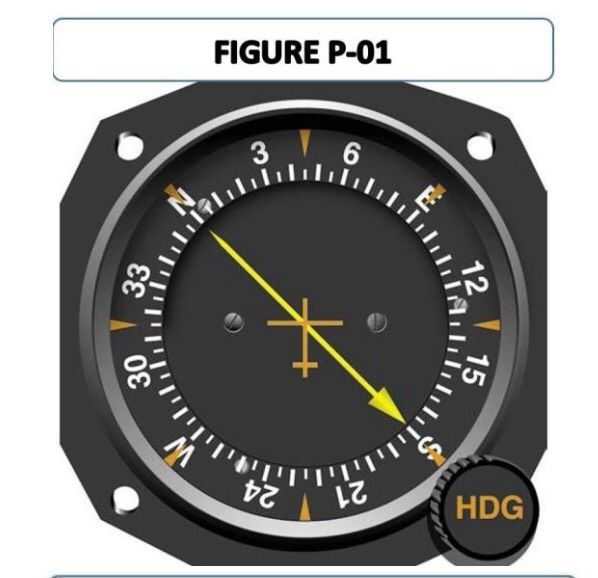
(Refer to Figure P-01) What is the magnetic heading?
Answer
-
045°
-
180°
-
035°
-
060°
Question 42
Question
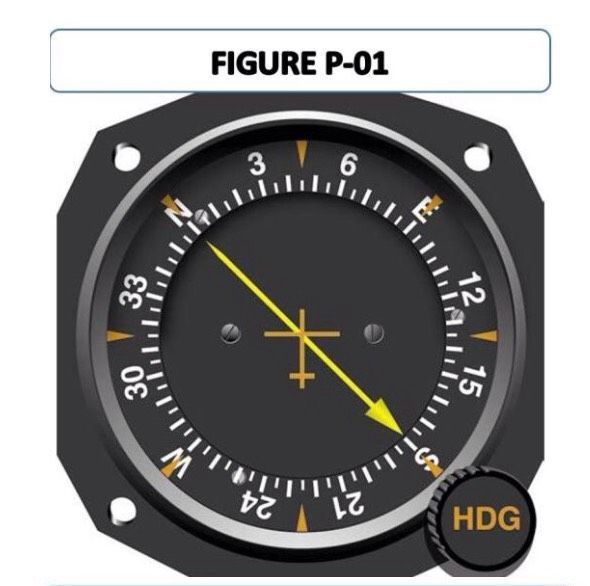
(Refer to figure P-01) What is the magnetic bearing From (QDR)?
Answer
-
180°
-
360°
-
310°
-
330°
Question 43
Question
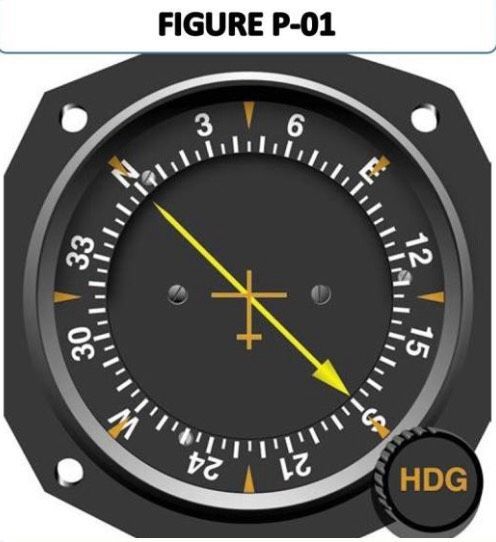
(Refer to Figure P-01) What is the aircraft heading to intercept magnetic bearing 310° from the station with 040° intercept angle?
Answer
-
270°
-
310°
-
320°
-
350°
Question 44
Question
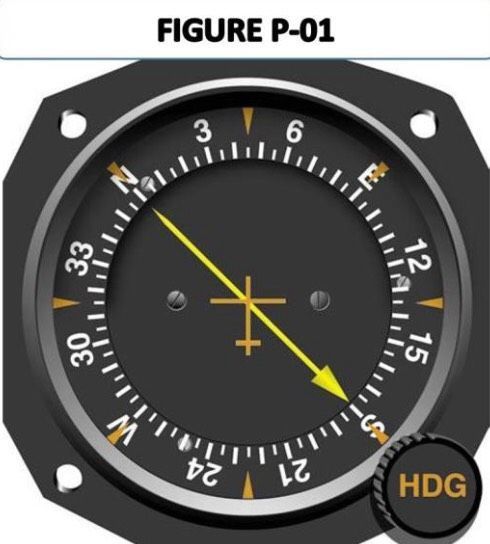
(Refer to Figure P-01) What is the optimum aircraft heading to intercept magnetic bearing 210° to the station?
Answer
-
150°
-
060°
-
330°
-
240°
Question 45
Question
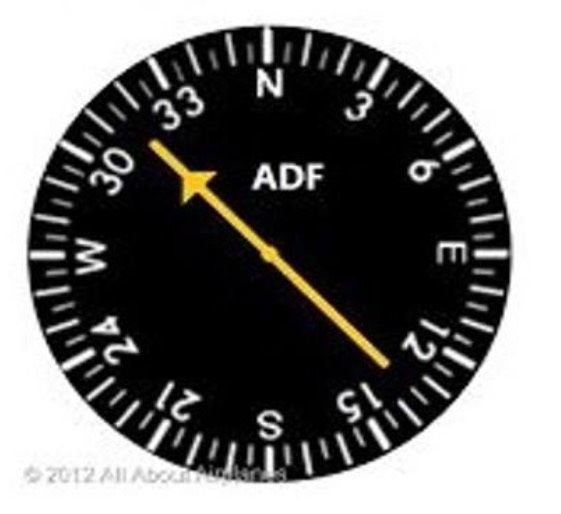
(Refer to Figure P-02) What is the aircraft relative bearing?
Answer
-
300°
-
310°
-
315°
-
320°
Question 46
Question
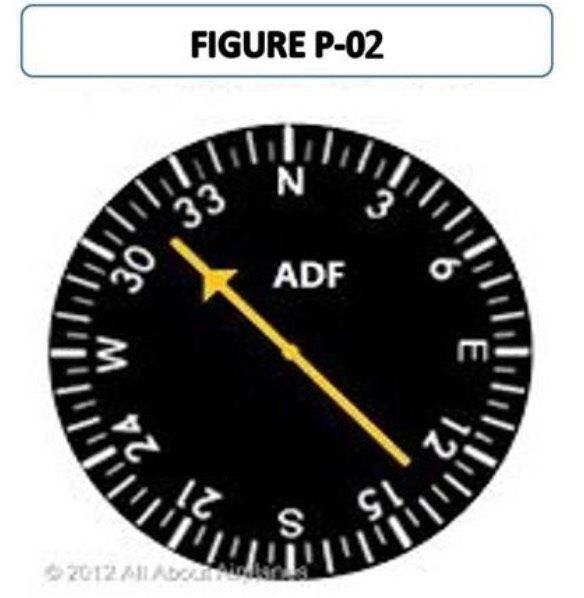
(Refer to Figure P-02) What is the aircraft magnetic bearing from (QDR) the station when flying on magnetic heading 275°?
Answer
-
070°
-
050°
-
230°
-
315°
Question 47
Question
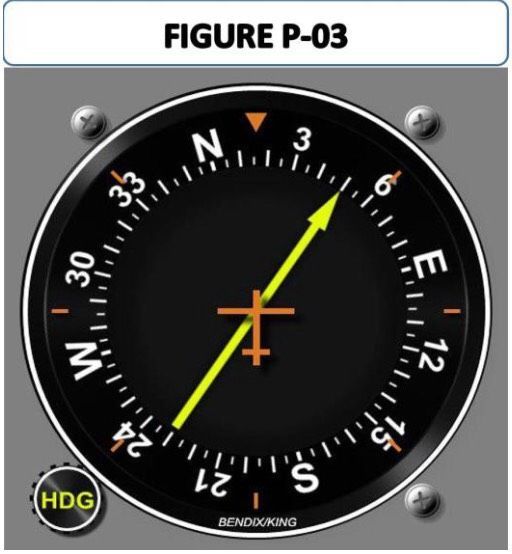
(Refer to Figure P-03) What is the relative bearing?
Answer
-
035°
-
045°
-
050°
-
230°
Question 48
Question
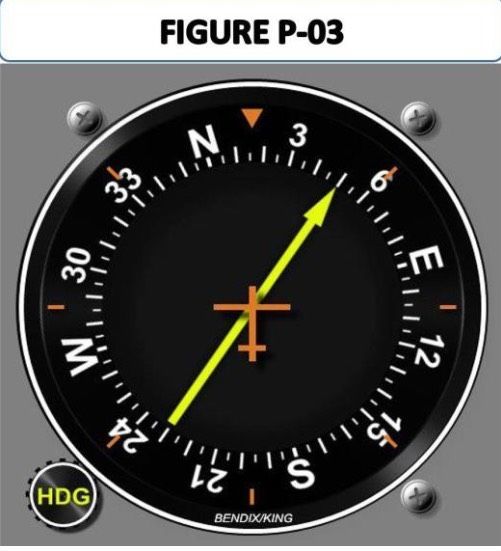
(Refer to Figure P-03) What is the optimum aircraft heading to intercept magnetic bearing 075° to the station?
Answer
-
020°
-
200°
-
190°
-
290°
Question 49
Question
The basic information given by the ADF is:
Answer
-
The relative bearing from the aircraft to the NDB
-
The magnetic bearing from the aircraft to the NDB
-
The true great circle track from the NDB to the aircraft.
-
The magnetic direction of the loop aerial with reference to the sense aerial.
Question 50
Question
Which of the following may cause inaccuracies in ADF bearings?
Answer
-
Static interference, height effect, lack of failure warning.
-
Station interference, mountain effect, selective availability.
-
Coastal refraction, slant range, night effect.
-
Lack of failure warning, station interference, static interference.
Question 51
Question
What action must be taken to receive a bearing from ADF?
Answer
-
BFO on.
-
Select the loop position.
-
Both the loop and sense aerials must receive the signal.
-
Select the ANT position.
Question 52
Question
An aircraft is homing to a radio beacon whilst maintaining a relative bearing of zero. If the magnetic heading decreases, the aircraft is experiencing:
Answer
-
Left drift.
-
Right drift.
-
A wind from the west
-
Zero drift.
Question 53
Question
An aircraft is flying on a heading of 270° (M). The VOR OBS is also set to 270° with the full left deflection and FROM flag displayed in which sector is the aircraft from the VOR ground station:
Answer
-
SE
-
SW
-
NW
-
NE
Question 54
Question
An aircraft is inbound to NDB X on the 073° QDR and experiences a drift of 12°L. A position report is required when crossing the 133° QDR from NDB Y. If the aircraft is on track, the moveable card ADF indications at the reporting point will be:
Answer
-
Heading: 085°; X Pointer: 073°; Y Pointer: 133°.
-
Heading: 085°; X Pointer: 253°; Y Pointer: 133°
-
Heading: 265°; X Pointer: 073°; Y Pointer: 313°.
-
Heading: 265°; X Pointer: 253°; Y Pointer: 313°.
Question 55
Question
An aircraft is required to approach a VOR via the 104° radial. Which of the following settings should be made on the VOR indicator?
Answer
-
284° with the FROM flag showing.
-
284° with the TO flag showing.
-
104° with the TO flag showing.
-
104° with the FROM flag showing.
Question 56
Question
The indications Of a VOR in an aircraft tracking towards a VOR are 075°(M) with "TO" indication and the CDI needle centered. A co-located NDB shows 012° relative. What are the drift and heading in (M)?
Answer
-
12° right; 087°
-
12° left; 063°.
-
12° right; 063°,
-
12° left; 087°.
Question 57
Question
In which situation speed indications on an airborne Distance Measuring Equipment (DME) most closely represent the groundspeed of an aircraft flying at FL400?
Answer
-
When passing abeam the station and within 5 NM of it.
-
When tracking directly towards the station at a range of 100 NM or more.
-
When overhead the station, with no change of heading at transit.
-
When tracking directly away from the station at a range of 10 NM.
Question 58
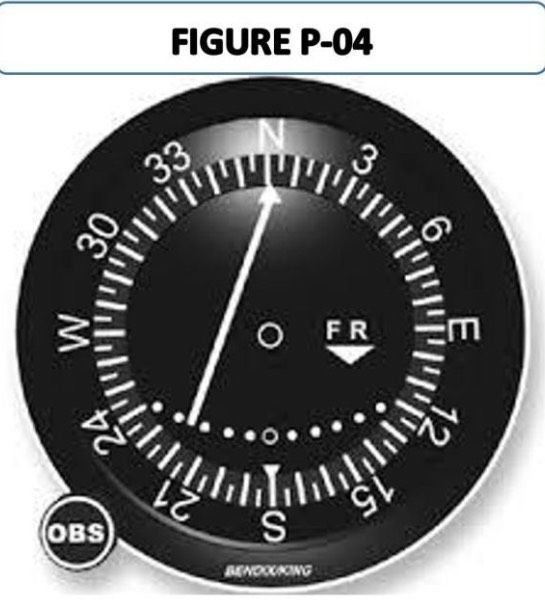
Question
Refer to FIGURE P-04, what is the minimum lateral distance to intercept R-360° when an aircraft flying at 30NM station?
Answer
-
0.5 NM
-
1.5 NM
-
2.5 NM
-
3.5 NM
Question 59
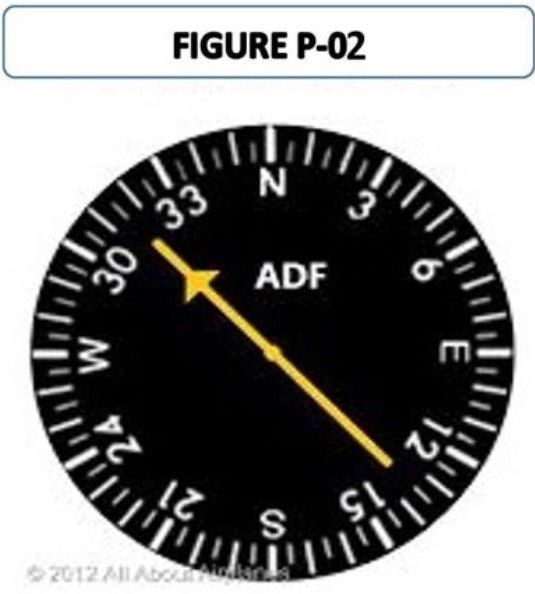
Question
Refer to FIGURE P-02, which magnetic bearing from will cross if an aircraft flying on magnetic heading 140°?
Answer
-
095°
-
285°
-
305°
-
255°
Question 60
Question
Inhaled oxygen is carried to the cells of your body by attaching to ……………….. in your bloodstream.
Answer
-
Hemoglobin
-
Lungs
-
Vessels
-
Veins
Question 61
Question
Which one of the following switch positions should be used when selecting a code on the transponder?
Answer
-
NORMAL
-
STBY (standby).
-
IDENT (identification).
-
ALT
Question 62
Question
The term CAVOK is used when weather conditions are:
Answer
-
9999, CB, NOSIG.
-
9000, SKC, NOSIG.
-
8000, HAZARDOUS WX NIL, NOSIG.
-
9999. NSC, NSW
Question 63
Question
The min vertical and horizontal distance from cloud for VFR flight within a controlled airspace in order is?
Answer
-
1500 ft, 1000 M
-
1500 M, 1000 M
-
1000 ft, 1500 M
-
1000 ft, 1500 ft
Question 64
Question
On which runway braking action completely lost?
Answer
-
Dry
-
Slushy
-
Wet
-
Ice
Question 65
Question
When NOTAM N is issued?
Answer
-
For canceling previous NOTAM.
-
For replacing previous NOTAM.
-
For publishing new NOTAM.
-
For special NOTAM
Question 66
Question
Ignition systems of piston engines are:
Answer
-
Independent of the electrical system of the airplane.
-
Dependent on the battery.
-
Dependent on the DC generator.
-
Dependent on the AC generator.
Question 67
Question
Rolling is the rotation of the aeroplane about the:
Answer
-
Longitudinal axis.
-
Vertical axis.
-
Lateral axis.
-
Wing axis.
Question 68
Question
The cylinder head and oil temperatures may exceed their normal operating ranges if:
Answer
-
A higher octane rating than specified for the engine is used.
-
A lower octane rating than specified for the engine is used.
-
The engine is operated at a higher than normal oil pressure.
-
The engine is operated at a too rich mixture.
Question 69
Question
What feature is normally associated with the cumulus stage of thunderstorm?
Answer
-
Roll cloud
-
Continuous up draft
-
Frequent lightning
-
Beginning of rain at the surface
Question 70
Question
What conditions are necessary for the formation of a thunderstorm?
Answer
-
Frontal activity cumulus clouds and sufficient moisture
-
Cumulus clouds unbalance of static electricity and turbulence
-
Sufficient heat moisture and electricity
-
Initial lifting action unstable air and sufficient moisture
Question 71
Question
Rime ice normally is encountered in … and clear ice in …
Answer
-
Stratus clouds and cumulus clouds
-
Cumulus clouds and stratus clouds
-
Cumulus clouds and cumulus clouds
-
Stratus clouds and stratus clouds
Question 72
Question
High density altitude causes:
Answer
-
Engine power output decreases
-
Propeller efficiency decreases
-
Aerodynamic lift decreases
-
All of answers are correct
Question 73
Question
“Dynamic Hydroplaning“ is defined as:
Answer
-
Standing water about one-tenth of one inch or more.
-
Standing water or slush about one-thousandth inch.
-
A thin film of water, more than one-thousandth inch.
-
A thin film of water, not more than one- tenth of an inch.
Question 74
Question
A controlled airspace extending upwards from the surface of the Earth to a specified upper limit is:
Answer
-
Air traffic zone.
-
Control area.
-
Control zone.
-
Advisory airspace
Question 75
Question
An alternate aerodrome at which an aircraft can land should this become necessary shortly after take-off and it is not possible to use the aerodrome of departure is known as:
Answer
-
En-route alternate aerodrome
-
Destination alternate aerodrome
-
Take-off alternate aerodrome
-
ETOPS alternate aerodrome
Question 76
Question
Which FDR shall record the configuration of lift and drag devices only?
Answer
-
Type IA
-
Type IIA
-
Type I
-
Type II
Question 77
Question
What is the meaning of “Report” in radiotelephony?
Answer
-
My transmission ended and no response is expected.
-
Repeat all or the following part of your last transmission.
-
Repeat all of your last transmission.
-
Pass me the following information.
Question 78
Question
Which frequency shall be used for the first transmission of an urgency call?
Answer
-
The international emergency frequency.
-
The air-ground frequency in use at the time.
-
The regional guard frequency.
-
Any frequency at pilot's discretion
Question 79
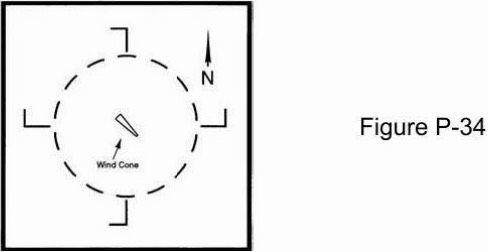
Question
(Refer to figure P-34) The segmented circle indicates that a landing on Runway 26 will be with a:
Answer
-
Right-quartering headwind.
-
Left-quartering headwind.
-
Right-quartering tailwind.
-
Left-quartering tailwind.
Question 80
Question
- If the reported surface wind is 010° at 18 knots what is the crosswind component for RWY08 during landing?
Answer
-
7 knots
-
15 knots
-
17 knots
-
21 knots
Want to create your own Quizzes for free with GoConqr? Learn more.