
Description


|
Created by Kenia Reyes
almost 7 years ago
|
|
Page 1
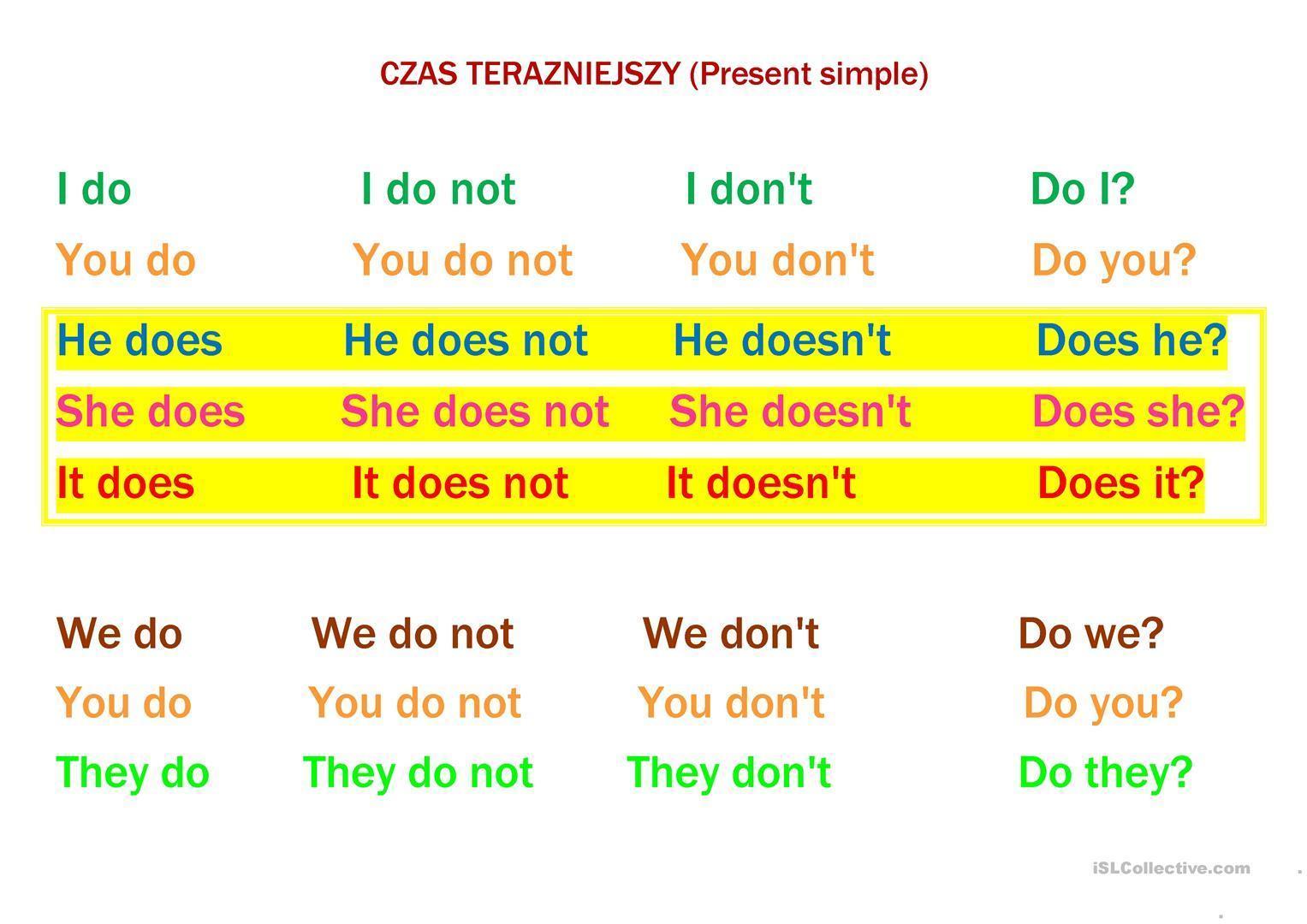
AFIRMATIVE FORM The simple present is a verb tense with two main uses. We use the simple present tense when an action is happening right now, or when it happens regularly. Depending on the person, the simple present tense is formed by using the root form or by adding ‑s or ‑es to the end. Example: Pauline loves pie. The other is to talk about habitual actions or occurrences. Example: Pauline practices the piano every day. The simple present tense in English is used to describe an action that is regular, true or normal. We use the present tense: 1. For repeated or regular actions in the present time period. The train to Berlin leaves every hour. John sleeps eight hours every night during the week. 2. For facts. The President of The USA lives in The White House. A dog has four legs. 3. For habits. Carol brushes her teeth twice a day. They travel to their country house every weekend. 4. For things that are always / generally true. It rains a lot in winter. The Queen of England lives in Buckingham Palace. They speak English at work. NEGATIVE FORM To make a negative sentence in English we normally use Don't or Doesn't with all verbs EXCEPT To Be and Modal verbs (can, might, should etc.). Affirmative: You speak French. Negative: You don't speak French. You will see that we add don't between the subject and the verb. We use Don't when the subject is I, you, we or they. Affirmative: He speaks German. Negative: He doesn't speak German. Negative Contractions Don't = Do not Doesn't = Does not I don't like meat = I do not like meat. INTERROGATIVE FORM To make a question in English we normally use Do or Does. It has no translation in Spanish though it is essential to show we are making a question. It is normally put at the beginning of the question. Affirmative: You speak English. Question: Do you speak English? You will see that we add DO at the beginning of the affirmative sentence to make it a question. We use Do when the subject is I, you, we or they. Affirmative: He speaks French. Question: Does he speak French?
Want to create your own Notes for free with GoConqr? Learn more.