
Quiz
SCI
Erstelle ein kostenloses Konto, um dieses Quiz zu beenden
Speichere deinen Fortschritt und sieh dir dein Endergebnis an.
oder mit deiner E-Mail registrieren
Schon ein Konto? Anmelden
Fragen in diesem Quiz (47)
1I can think of at least three indirect causes for spinal cord injury.
Select False to review a few answers at the end of the quiz.- ARichtig
- BFalsch
2Cervical trauma caused by rapid deceleration (as in a head on collision), is NOT likely to result in neurological injury.
- ARichtig
- BFalsch
3Diving into a shallow pool may cause a Tear Drop Fracture.
Which of the following describes the MOI?- AExtreme cervical flexion with axial loading
- BCervical Flexion
- CCervical Flexion with Rotation
- DCervical Extension
4Diving into a shallow pool is likely to cause which of the following types of cervical injuries?
- AExtreme Flexion with Axial Loading
- BVertical Compression
- CFlexion with Rotation
- DFlexion
- EExtension
- FLateral Flexion
5Which of the following types of cervical injuries generally result in stable fractures without neurological involvement?
- AExtreme Flexion with Axial Loading
- BVertical Compression
- CFlexion with Rotation
- DFlexion
- EExtension
- FLateral Flexion
6A Hangman's Fracture is generally caused by which of the following traumatic cervical movements?
- AFlexion
- BFlexion with Axial Loading
- CExtension
- DVertical Compression
7An SCI due to cervical extension, is commonly caused by which of the following MOIs?
- AFalling and striking the chin from below
- BGetting rear-ended (MVA)
- CHead-on Collision (MVA)
- DDiving into a shallow pool
8Thoracic SCI are most commonly caused by traumatic movements in which of the following directions?
- AFlexion
- BExtension
- CFlexion with Rotation
- DVertical Compression
- EExtension with Lateral Flexion
9Which of the following is the most likely traumatic movement of the lumbar spine resulting in SCI following a MVA?
- AFlexion with Distraction
- BFlexion
- CFlexion with Rotation
- DShear
- EVertical Compression
10Which of the following is likely to cause an SCI via Shear forces?
- AHead-on MVA
- BRear-End Collision MVA
- CBeing struck from behind by a heavy object
- DFalling onto an uneven surface (e.g. landing flat across a parking curb)
- EDiving into a shallow pool
11I can list the 4 mechanisms of secondary tissue destruction following an SCI.
If not, select false to review them at the end of the quiz.- ARichtig
- BFalsch
12Name that syndrome
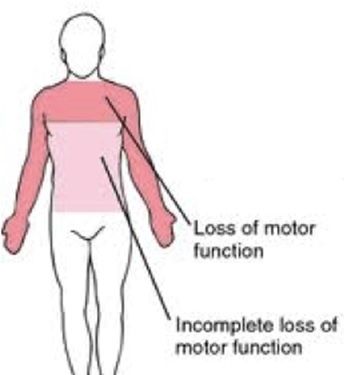
- ACentral Cord Syndrome
- BBrown Sequard Syndrome
- CAnterior Cord Syndrome
- DPosterior Cord Syndrome
13Name that Syndrome
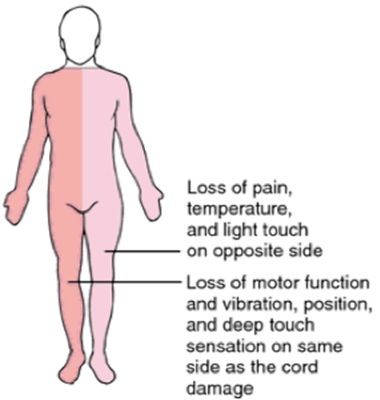
- ACentral Cord Syndrome
- BBrown Sequard Syndrome
- CAnterior Cord Syndrome
- DPosterior Cord Syndrome
14Name that Syndrome
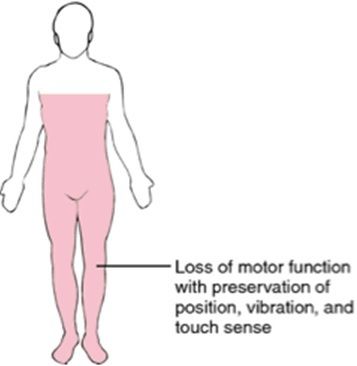
- ACentral Cord Syndrome
- BBrown Sequard Syndrome
- CAnterior Cord Syndrome
- DPosterior Cord Syndrome
15Which syndrome is most likely to occur from the following MOI?
Mechanism of Injury (MOI): central hemorrhage and necrosis that does not progress outward, usually extension injuries in the elderly, but can also occur with flexion injuries- ACentral Cord Syndrome
- BBrown Sequard Syndrome
- CAnterior Cord Syndrome
- DPosterior Cord Syndrome
16Which syndrome is most likely to occur from the following MOI?
MOI: gun shot or stab wounds, flexion with rotation, burst fractures- ACentral Cord Syndrome
- BBrown Sequard Syndrome
- CAnterior Cord Syndrome
- DPosterior Cord Syndrome
17Which syndrome is most likely to occur from the following MOI?
MOI: trauma to cord itself, damage to anterior spinal artery, damage from a tear drop or burst fracture- ACentral Cord Syndrome
- BBrown Sequard Syndrome
- CAnterior Cord Syndrome
- DPosterior Cord Syndrome
18Which syndrome is most likely to occur from the following MOI?
MOI: cervical hyperextension injuries- ACentral Cord Syndrome
- BBrown Sequard Syndrome
- CAnterior Cord Syndrome
- DPosterior Cord Syndrome
19Select the proper symptoms of Conus Medullaris Syndrome and Cauda Equina Syndrome.
- AAreflexic bowel and bladder
- BHyperreflexic bowel and bladder
- CFlaccid paralysis of LE
- DFlaccid paralysis of UE
- EHypertonicity of LE
- FHypertonicity of UE
20Despite a dearth of supprotive clinical evidence, there are several commonly used neuroprotective pharmaceuticals (Methylprednisone, GM-1, Gacyclidine, Tirilazad, and Naloxone).
- ARichtig
- BFalsch
21For a patient that needs stability for the cervical spine in all directions, which of the following orthosis would be good choices?
- AHalo
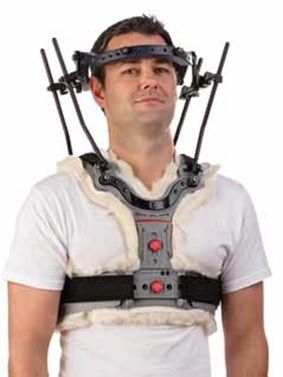
- BMinerva
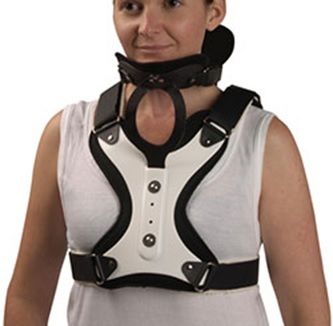
- CSOMI
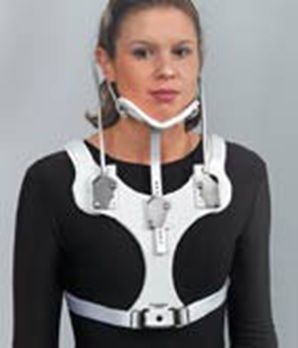
- DPhiladelphia Collar
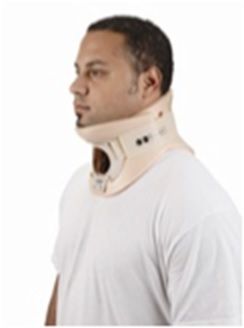
- AHalo
22For a patient that needs stability for the upper and mid cervical spine in flexion, which of the following orthosis would be good choices?
- AHalo
- BMinerva
- CSOMI
- DPhiladelphia Collar
- AHalo
23For a patient that needs stability for the mid and lower cervical spine in flexion, which of the following orthosis would be good choices?
- AHalo
- BMinerva
- CSOMI
- DPhiladelphia Collar
- AHalo
24Which of the following orthoses would be best if you needed to limit all trunk movements?
- ATLSO
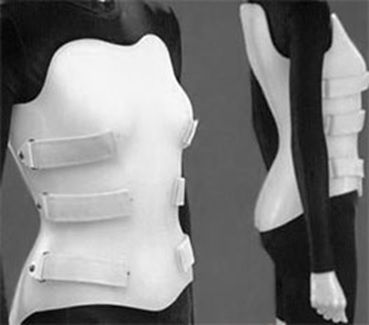
- BJewett Hyperextension Brace
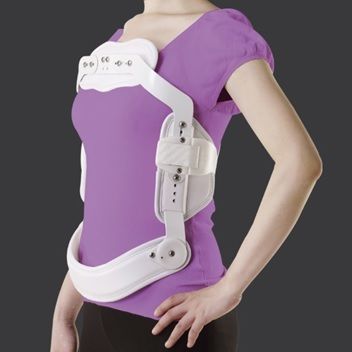
- CKnight Taylor Brace
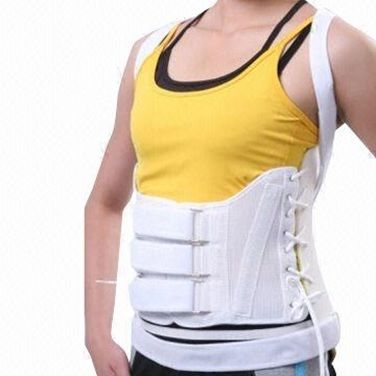
- DLSO
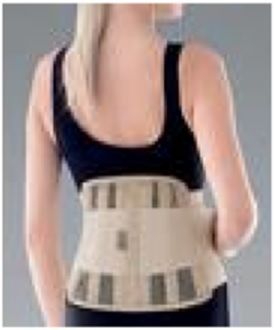
- ATLSO
25Which of the following orthoses would be best if you needed to limit flexion, but encourage extension of the the lower thoracic and upper lumbar spine?
- ATLSO
- BJewett Hyperextension Brace
- CKnight Taylor Brace
- DLSO
- ATLSO
26Which of the following orthoses would be best if you needed to limit lumbar flexion, extension, and lateral flexion, but allow thoracic rotation?
- ATLSO
- BJewett Hyperextension Brace
- CKnight Taylor Brace
- DLSO
- ATLSO
27Of the following orthoses, which one is not generally used as part of a post-surgical rehab plan, because it doesn't actually limit movements in the spine?
- ATLSO
- BJewett Hyperextension Brace
- CKnight Taylor Brace
- DLSO
- ATLSO
28If you didn't need to limit spinal movements, but simply provide kinesthetic reminders to the patient, which of the following orthoses would be appropriate?
- ATLSO
- BJewett Hyperextension Brace
- CKnight Taylor Brace
- DLSO
- ATLSO
29To prevent ulcers and respiratory infections, how frequently should a patient be rolled in bed?
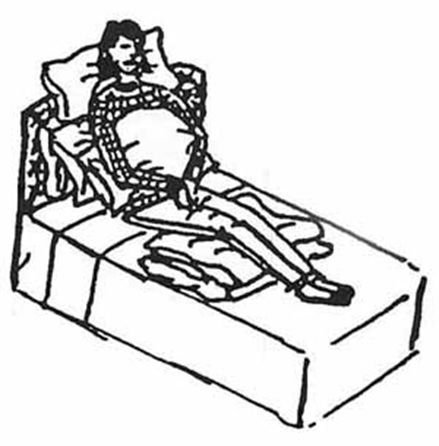
- AEvery 15-minutes
- BEvery hour
- CEvery 2-hours
- DTwice a day
30How often should a patient in a wheelchair perform pressure relief?
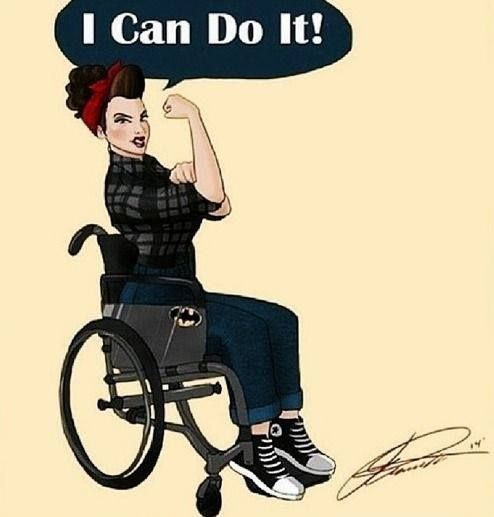
- AEvery 5-minutes
- BEvery 10-15-minutes
- CEvery 30-60-minutes
- DOnce a day
31Which of the following are the proper precautions for a Cervical Collar or Halo?
- ANo Prone
- BNo Lifting >5-lbs unilaterally
- CNo Hip Flexion >90-degrees
- DNo SLR >60-degrees
- ELogrolling only
- FNo Shoulder ABD or Flexion >90-degrees
- GNo Shoulder ABD >90-degrees
- HNo Cervical Ext >60-degrees
- INo Supine
- JNo Hip Extension past Neutral
32Which of the following are the proper precautions for a TLSO?
- ANo Prone
- BNo Lifting >5-lbs unilaterally
- CNo Hip Flexion >90-degrees
- DNo SLR >60-degrees
- ELogrolling only
- FNo Shoulder ABD or Flexion >90-degrees
- GNo Shoulder ABD >90-degrees
- HNo Cervical Ext >60-degrees
- INo Supine
- JNo Hip Extension past Neutral
33Which of the following are the proper precautions for a LSO?
- ANo Prone
- BNo Lifting >5-lbs unilaterally
- CNo Hip Flexion >90-degrees
- DNo SLR >60-degrees
- ELogrolling only
- FNo Shoulder ABD or Flexion >90-degrees
- GNo Shoulder ABD >90-degrees
- HNo Cervical Ext >60-degrees
- INo Supine
- JNo Hip Extension past Neutral
34Which of the following activities violate Scapular Precautions for patients with tetrapelgia (or high paraplegia) and a surgical incision through the trapezius?
- AUsing arms to pull on bed rail during rolling
- BCardio exercise with the UE bike
- CPush-up Pressure Relief
- DReaching for a cup on the bedside table
- EReaching for a cup on the lapboard
- FIndependent Transfer with a Slideboard
- GIndependent Transfer without a Slideboard
- HLat Pull-downs with Resistance Band
- IBicep Curls with Resistance Band
35Patients with SCI will lose the ability to shiver or sweat BELOW the level of lesion because of the loss of sympathetic and somatic systems. This is a complication of thermoregulation.
- ARichtig
- BFalsch
36While working with your patient he suddenly complains that his ears are ringing and he is feeling light-headed. As you sit him down on the mat, he says he feels sick to his stomach.
Of the SCI Complications we have studied, which do you suspect?- AOrthostatic Hypotension
- BAutonomic Dysreflexia
- CThermoregulation
37While working with your patient, you begin to suspect that he has orthostatic hypotension.
What should you do?- ARecline Patient
- BMonitor BP
- CSit Patient Up
- DStand Patient Up
- ESearch for Source of Irritation
- FCall the Nurse!
38While working with your patient, you begin to suspect that he has autonomic dysreflexia.
What should you do?- ARecline Patient
- BMonitor BP
- CSit Patient Up
- DStand Patient Up
- ESearch for Source of Irritation
- FCall the Nurse!
39Which of the following are Symptoms of Orthostatic Hypotension?
- ALoss of Vision
- BDizziness
- CRinging in the Ears
- DNausea
- ELightheadedness
- FBradycardia
- GInc. BP
- HAnxiety
- IPaling of the Skin
- JSweating
40Which of the following are Symptoms of Autonomic Dysreflexia?
- ALoss of Vision
- BDizziness
- CRinging in the Ears
- DNausea
- ELightheadedness
- FBradycardia
- GInc. BP
- HAnxiety
- IPaling of the Skin
- JSweating
41Which of the following occurs when a noxious stimulus below the level of lesion triggers an excessive sympathetic response. Generally, occurs with injuries above T6.
- AOrthostatic Hypotension
- BAutonomic Dysreflexia
- CSpasticity
42According to the VOPP, which of the following possible triggers for Autonomic Dysreflexia is most common?
- ABladder or Foley Catheter Issue
- BPressure Sore
- CIngrown Toenail
- DMuscle Spasm
- EROM Exercises
43Spasticity is Velocity-Dependent.
- ARichtig
- BFalsch
44Which of the following are related to UMN Spasticity?
- ACaused by damage to descending tracts
- BSpastic Paralysis
- CClonus
- DInc. Deep Tendon Reflexes
- EMuscle Spasms
- FAbnormal Reflex to Cutaneous Stimuli
- GCaused by Damage to Anterior Horn Cells
- HFlaccid Paralysis
- IDecreased or Absent Deep Tendon Reflexes
- JCaused by Conus Medullaris or Cauda Equina Injuries
45Which of the following are related to LMN Spasticity?
- ACaused by damage to descending tracts
- BSpastic Paralysis
- CClonus
- DInc. Deep Tendon Reflexes
- EMuscle Spasms
- FAbnormal Cutaneous Stimuli
- GCaused by Damage to Anterior Horn Cells
- HFlaccid Paralysis
- IDecreased or Absent Deep Tendon Reflexes
- JCaused by Conus Medullaris or Cauda Equina Injuries
46How might Spasticity be viewed as a good thing?
- ACan prevent loss of muscle and tone
- BCan assist in preventing muscle edema and thrombus formation
- CCan assist in circulation by constricting the venous walls and raising blood pressure, thereby reducing hypotension
47Which of the following are triggers for spasticity?
- AQuick, passive stretch of muscle
- BIngrown toenail
- CUTI
- DBowel Impaction
- EMuscle Spasm
- FTickling
Informationen
- Beschreibung
- USA-NM2 (Final) Quiz am SCI, erstellt von Ben Williams am 26/02/2018.
- Autor
- Ben Williams
- Sprache
- English
- Aufrufe
- 120
- Verlauf
- Erstellt am 26 Feb 2018 · aktualisiert am 1 Mär 2018
- Schlagwörter
- Bewertung
- Noch keine Bewertungen Bewerte dieses Quiz