
Quiz
3d-Modeling
Erstelle ein kostenloses Konto, um dieses Quiz zu beenden
Speichere deinen Fortschritt und sieh dir dein Endergebnis an.
oder mit deiner E-Mail registrieren
Schon ein Konto? Anmelden
Fragen in diesem Quiz (158)
1What is computer graphic?
- AThe science of turning the rules of geometry and physics into (digital) pictures that mean something to people
- Bthe formal statement of the meaning or significance of a word,phrase, idiom, etc., as found in dictionaries
- Can "animated corpse resurrected by mystical means, such as witchcraft"
- Dare visual presentations on some surface, such as a wall, canvas, screen, paper, or stone to brand, inform, illustrate, or entertain.
2What is a vector?
- AA vector describes a length and a direction
- Bidealization of such objects
- Cis one of the basic shapes in geometry
- DI do not know
3What is the length of vector a?
- A||a|| - length of vector a
- Ba
- C|a|
- D5
4What is a unit vector?
- AUnit vector is a vector of length 1
- BUnit vector is a vector of length 0
- CThere is no such vector
- DJust vector
5What is DOT Product of 2 vectors?(select 2 options)
- Aa .b = ||a|| * ||b|| * cosα
- Ba .b = xa* xb + ya * yb+
- Ca xb = (ya*zb – za*yb,za*xb – xa*zb ,xa*yb – ya*xb)
- Dy = m*x + b
6What is Cross Product?(select 2 options)
- Aa x b = (ya*zb – za*yb,za*xb – xa*zb ,xa*yb – ya*xb)
- B|| a x b || = ||a|| * ||b|| * sinα
- Ca .b = ||a|| * ||b|| * cosα
- Da .b = xa* xb + ya * yb
7Common equation of Explicit Curve Representation.
- Ay = f(x)
- By = m*x + b
- Cf(λ) = (x(λ), y(λ)
- Df(λ) = (x(λ), y(λ))
8What is Explicit Representation of a 2D line?
- Ay = m*x + b
- Bf(λ) = (x(λ), y(λ)
- Cf(λ) = (x(λ), y(λ))
- Dy = f(x)
9What is equation of Parametric representation of 2D Curve?
- Af(λ) = (x(λ), y(λ))
- By = f(x)
- Cy = m*x + b
- Dy=m
10Full equation of Parametric Representation of a Circle.
- A

- B
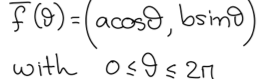
- C

- D
- A
11Full equation of Parametric Representation of an Ellipse.
- A
- B
- C
- D
- A
12Equation of tangent vector.
- A
- B
- C
- D
- A
13Equation of normal vector in tangent point.
- A
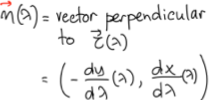
- B
- C
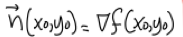
- D

- A
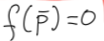
14Common equation of Implicit Curve Representation
- A
- B
- C
- D
- A
15Normal Vectors from the Implicit Equation.
- A
- B
- C
- D
- A
16 Point in 2D Euclidian coordinates
- A
- B
- C
- D
- A
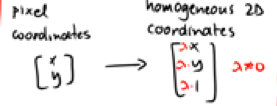
17Point in Homogeneous coordinates(select 2 options)
- A
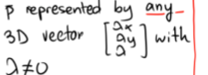
- B
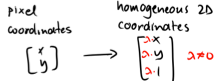
- C
- D
- A
18Coordinates of point P which located at infinity
- A
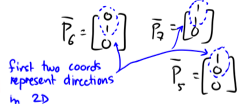
- B
- C
- D
- A
19What represent point at infinity in Homogeneous coordinates.
- APoints at infinity have their last coordinate equal to zero
- BPoints at infinity have their last coordinate equal to 1
- CPoints at infinity have their last coordinate equal to 5
- DPoints at infinity have their last coordinate equal to 6
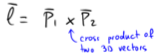
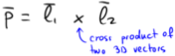
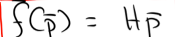
20Line equation in Homogeneous coordinates
- A
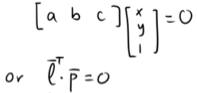
- B
- C
- D
- A
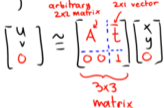
21Equation of The Line Passing Through 2 Points
- A
- B
- C
- D
- A
22Equation of Intersection Point of Two Lines
- A
- B
- C
- D
- A
23Common Equation of General Linear 2D Transformations
- A
- B
- C
- D
- A
24General form of Affine Transformations Matrix
- A
- B
- C
- D
- A
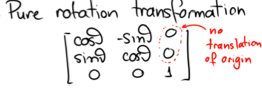
25Equation of “Pure” rotation
- A
- B
- C
- D
- A
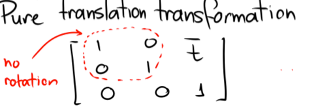
26Equation of “Pure” translation
- A
- B
- C
- D
- A
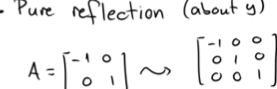
27Equation of “Pure” reflection
- A
- B
- C
- D
- A
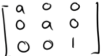
28Equation of “Pure” uniform scaling
- A
- B
- C
- D
- A
29Plane Equation in Homogeneous Coordinates
- Aax + by + cz +d = 0
- B-ax + by + cz +d = 0
- Cax + by + dz +d = 0
- Dax - by + cz +d = 0
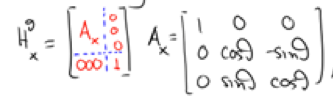
30Equation of Elementary Rotations in 3D by θ about x axis.
- A
- B
- C
- D
- A
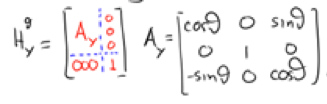
31Equation of Elementary Rotations in 3D by θ about y axis.
- A
- B
- C
- D
- A
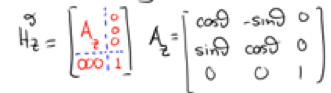
32Equation of Elementary Rotations in 3D by θ about z axis.
- A
- B
- C
- D
- A
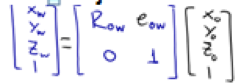
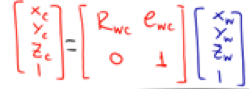
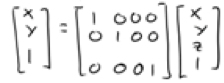
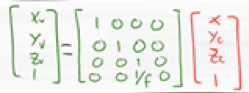
33Orthographic Projection Equation in Homogeneous Coordinates
- A
- B
- C
- D
- A
34Equation of transformation from Canonical view to image.
- A
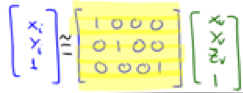
- B
- C
- D
- A
35Equation of transformation from Camera to Canonical view.
- A
- B
- C
- D
- A
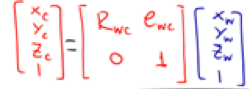
36Equation of transformation from World to Camera
- A
- B
- C
- D
- A
37Equation of transformation from Object to World
- A
- B
- C
- D
- A
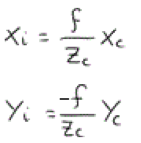
38The Perspective Projection Equations in 3D
- A
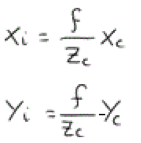
- B
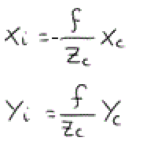
- C
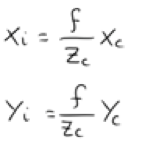
- D
- A
39Thin lens low equation.
- A
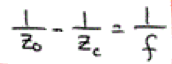
- B
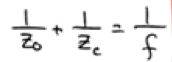
- C
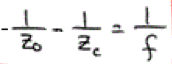
- D
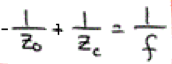
- A
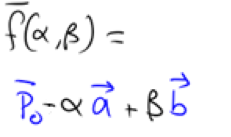
40Equation of parametric representation of planar patch
- A
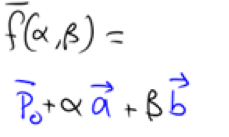
- B
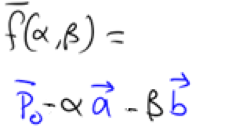
- C
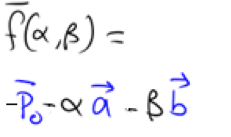
- D
- A
41What if Polygon Mesh?
- AA collection of polyhedrons (vertices, edges, faces)
- BA collection of polygons (vertices, edges, faces)
- CA collection of vertices (polygons, edges, faces)
- DA collection of faces (vertices, edges, polyhedrons)
42Cubic Curve equation for Interpolation with Splines
- AP(t) = at3 + bt2 + ct
- BP(t) = at3 + bt2 + d
- CP(t) = -at3 + bt2 + ct + d
- DP(t) = at3 + bt2 + ct + d
43Derivative equation of Cubic Hermite Interpolation
- AP’(t) = 3at2 + 2bt - c
- BP’(t) = 3at2 + 2bt + c
- CP’(t) = 3at2 - 2bt + c
- DP’(t) = 4at2 + 2bt + c
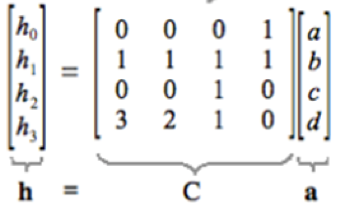
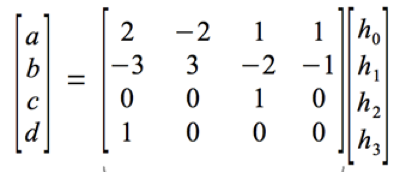
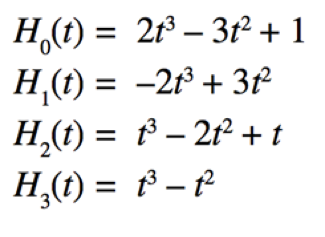
44Hermit constraint matrix
- A
- B
- C
- D
- A
45Hermite basis matrix
- A
- B
- C
- D
- A
46Hermit basis function
- A
- B
- C
- D
- A
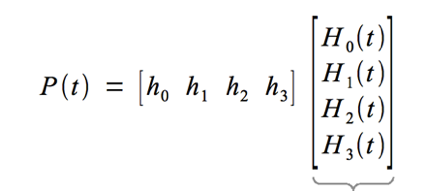
47Equation of Hermite polynomials
- A
- B
- C
- D
- A
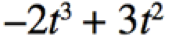
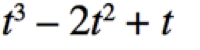
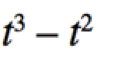
48Which one is H_0 (t) from Hermite Basis Function
- A

- B
- C
- D
- A
49Which one is H_1 (t) from Hermite Basis Function
- A
- B
- C
- D
- A
50Which one is H_2 (t) from Hermite Basis Function
- A
- B
- C
- D
- A
51Which one is H_3 (t) from Hermite Basis Function
- A
- B
- C
- D
- A
52Which one is Catmull-Rom Interpolation in terms of Hermit
Constrains.- A
- B
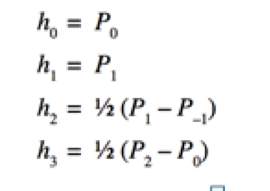
- CAll above
- DNo true answer
- A
53Goal of Polygon Clipping
- ARemove points and parts of objects outside the view volume
- BMain goal is remove surface patches that point away from the camera (backfacing patching)
- CInstead of deciding the depth order pixel by pixel, draw the polygons back to front. Must sort polygons in decreasing z order
- DAdd points and parts of objects outside the view volume
54Goal of Backface Culling
- ARemove points and parts of objects outside the view volume
- BMain goal is remove surface patches that point away from the camera (backfacing patching)
- CInstead of deciding the depth order pixel by pixel, draw the polygons back to front. Must sort polygons in decreasing z order
- DAdd points and parts of objects outside the view volume
55Which one is Backface Culling Criterion
- A(p-e)*n > 0
- B(p-e)*n < 0
- C(p-e)*n >= 0
- D(p-e)*n >> 0
56Which one is not Algorithm for visibility determination?
- AZ-Buffering
- BPainter’s algorithm
- CBSP Trees
- DPhong
57Which one is Z-Buffering main Idea?
- AInstead of deciding the depth order pixel by pixel, draw the polygons back to front. Must sort polygons in decreasing z order
- BVisibility determined pixel by pixel during polygon cscan-conversion
- CRemove points and parts of objects outside the view volume
- DAdd points and parts of objects outside the view volume
58Which one is The Heedless Painter’s Algorithm main Idea?
- AInstead of deciding the depth order pixel by pixel, draw the polygons back to front. Must sort polygons in decreasing z order+
- BVisibility determined pixel by pixel during polygon cscan-conversion
- CRemove points and parts of objects outside the view volume
- DAdd points and parts of objects outside the view volume
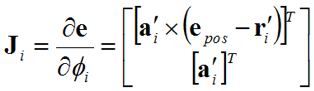
59The Jacobian of Inverse Kinematics
- A
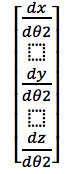
- B
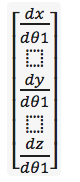
- C
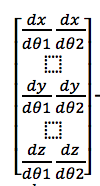
- A
60The Jacobian of Inverse Kinematics
- AО is different at each (V1, V2)->must recomputed after each step, it may not be invertible->take pseudoinverse
- BSome other answe
- CSome other answ
- DSome other answer
- AО is different at each (V1, V2)->must recomputed after each step, it may not be invertible->take pseudoinverse
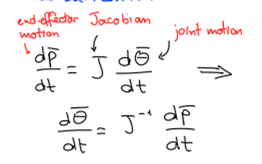
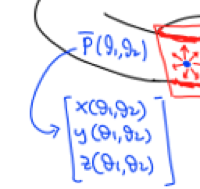
61Equation of joint motion according Jacobian
- Alinearization
- B
- C
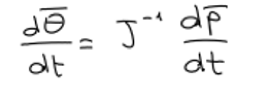
- Alinearization
62Equation of en-effector according Joacobian
- A
- B
- C
- A
63Which one is The Heedless Painter’s Algorithm main Idea?
- AInstead of deciding the depth order pixel by pixel, draw the polygons back to front. Must sort polygons in decreasing z order+
- BVisibility determined pixel by pixel during polygon cscan-conversion
- CRemove points and parts of objects outside the view volume
- DAdd points and parts of objects outside the view volume
64Which one is not Advantages of Ray Tracing
- AOther answer
- B
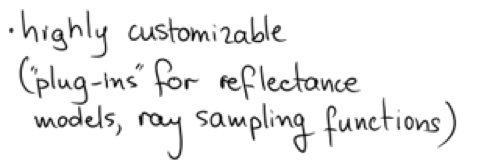
- C
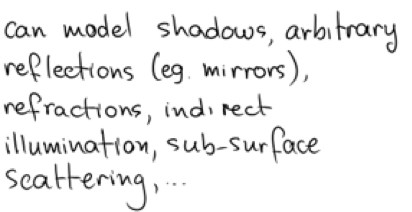
- D
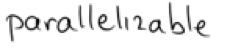
- E
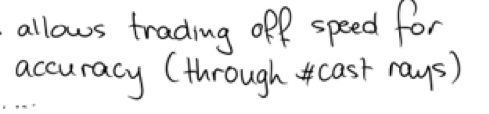
65Which one is BSP-Tree Algorithm main Idea?
- AА) Maintain a data structure that allows slow computation of depth order for every eye position. B) Have mechanism to split polygons if necessary.
- BА) Maintain a data structure that allows fast computation of depth order for every eye position. B) Have mechanism to split polygons if necessary.
- CА) Maintain a data structure that allows fast computation of depth order for every eye position. B) Have mechanism to do not split polygons if necessary.
- DА) Maintain a data structure that allows fast computation of depth order for every eye position. B) I am the King of the Lizards!
6661. By the rule of Z-Buffer Algorithm, what would be the result if drew closest triangle first?
- Ao The result would be always different
- Bo There is no any result, padavan
- Co The result would be the same
- Do LEROOOOOOOOOOOOOY
67Which one of the steps is not from Ray Tracing: Basic Algorithm
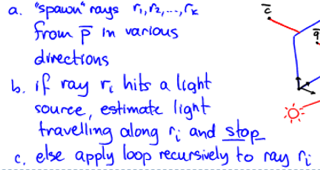
- A1)cast ray r through q
- B2)find 1st intersection of q with scene (i.e. poit p)
- C3)estimate amount of light reaching p
- D4)estimate amount of light travelling from p to q along ray r
- ESome other answer
6862. Which are disadvantages of Z-Buffer Algorithm? (select 2 options)
- AMemory for z-buffer. Wasted computation when over-writing distant points.
- BGPU for z-buffer.Wasted computation when over-writing distant points.
- CMemory for z-buffer.Wasted computation when creating distant points.
- DMemory for z-buffer.Wasted computation when computing cosines.
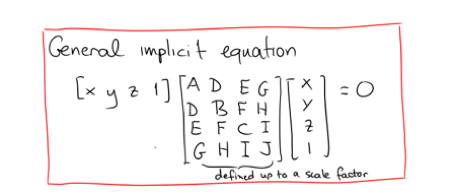
69General implicit Equation of Computing Ray-Quadric Intersections
- A
- B
- C
- D
- A
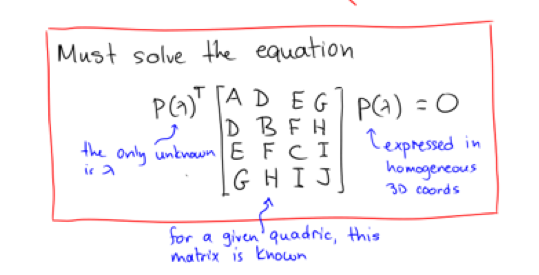
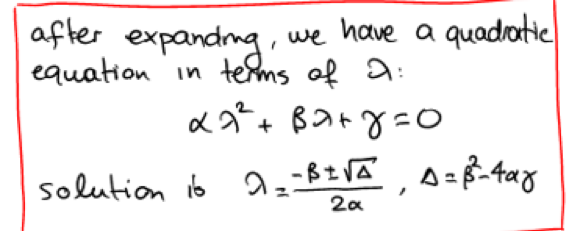
70Parametric equation of Ray-Quadric Intersections with parameter λ
- A
- B
- C
- A
7163. Which are advantages of Z-Buffer Algorithm? (select 2 options)
- ASimple, accurate. Independent of order polygons are drawn.
- BHard, but accurate.Independent of platform.
- CDo not involve your brains, idiot.
- DSimple, accurate. Independent of order polygons are drawn
72According The Heedless Painter’s Algorithm, how do we sort polygons that do not have a single Z-value?
- ASort according to depth of farthest vertex.
- BSort according to depth of closest vertex.
- CSort according to size of farthest vertex.
- DDo not sort! Let’s rock!
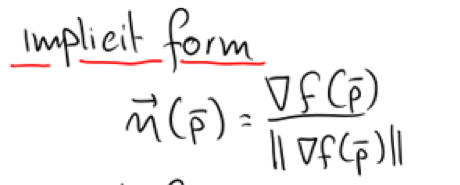
73Implicit form of equation of Computing Normal at a Hit Point
- A
- B

- A
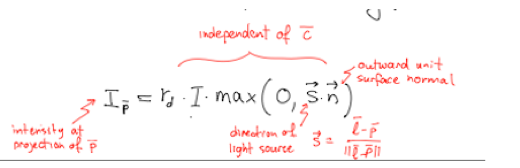
74The Diffuse Component of Phong model: Basic Equation for single light
- A
- B
- C

- A
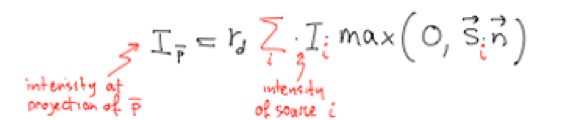
75The Diffuse Component of Phong model: General Equation
- A

- B

- C
- A
76The Specular Component of Phong model: Basic Equation
- A
- B
- C
- A
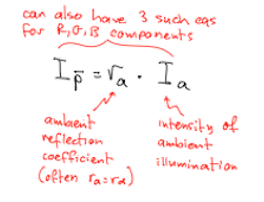
77Equation of ambient component from Phong model.
- A
- B
- C
- A
78Main idea of Supersampling
- ARender multiple samples for each pixel. Compute (weighted) average of samples.
- BThese feelings won't go away. They've been knockin' me sideways
- CRender one sample for each pixel. Compute (weighted) average of samples.
- DRender multiple samples for each pixel. Compute absolute sum of samples.
79Phong Reflection: The General Equation
- A

- B
- C
- A
80What kind of pixel grid could be? (select 2 options only from CG course)
- ARegular grid, Jittered grid
- BNon-regular grid, Jittered grid.
- CRegular grid, Very Jittered grid.
- DIt’s Bum Bum Bigelow!
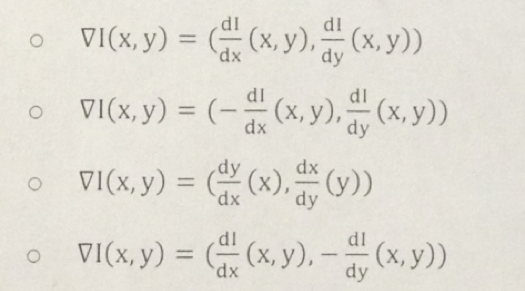
81Equation of Image Gradient
- A1
- B2
- C3
- D4
8269. Basic idea of Keyframe Animation
- ADefine model parameter at key frames and interpolate (often using cubic splines).
- BDefine model parameter at every possible frames and interpolate (often using cubic splines).
- CMy eyes are blind, but I can see
- DDefine model parameter and do nothing. Seriously. I do nothing. Trust me.
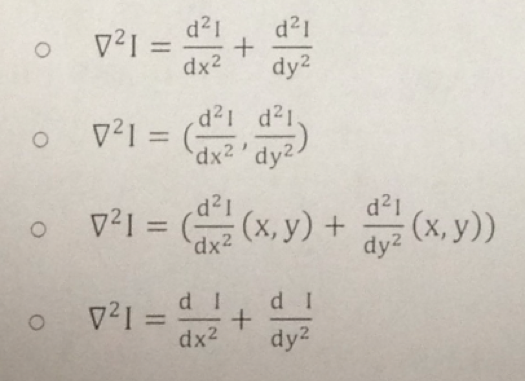
83Equation of Image Laplacian
- A1
- B2
- C3
- D4
84Basic idea of Forward Kinematics
- AInstead of painstakingly specifying every little motion, specify very few keyframes (or just initial & goal). Interpolations are done automatically. Or another possible answer: Specify how joints should move.
- BInstead of painstakingly specifying every little motion, specify all keyframes. Interpolation are done automatically
- CБи-боп-боп-бип.Арггхх. Тыуженапалубе?
- DDream of Californication!!!
85Basic idea of Motion Capture?
- ARecord motions of real people/objects, then transfer to digital characters
- BRecord standing of real people/objects, then transfer to digital characters.
- CThe race is run, the book is read. The end begins to show.
- DRecord motions of almost real people/objects, then transfer to digital characters.
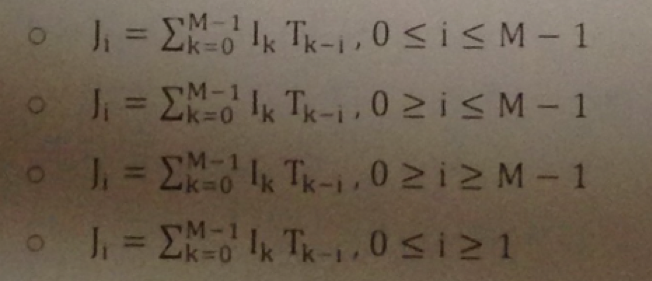
86General Sum Notation of Cross-Correlation
- A1
- B2
- C3
- D4
87What is the set of points that are “reachable” by this 2-axis structure?
- ADyson Sphere
- BTorus
- CCircle
- DАфигего
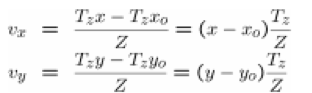
88“Pure” translation Equation
- A
- B
- C
- D
- A
89What is rasterization?
- AProject geometry onto image. Compute pixel color using local shading model.
- BЗачем вы вообще это учите? Идите гулять, развлекаться. Забейте на учебу.
- CProject geometry onto screensaver. Compute pixel color using local shading model.
- DProject pixels backwards onto scene. Compute pixel color using local shading model.
90General Linear 2D Transformations: Common Equation
- A
- B
- C
- A
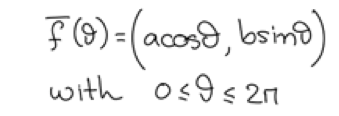
91Ellipse: Full equation of Parametric Representation
- A
- B
- C
- A
92What is Ray tracing?
- AProject pixels backwards onto scene. Compute pixel color at q by estimating light reaching p directly or indirectly.
- BDear mama, you helped me write this. By showing me to give is priceless.
- CProject pixels backwards onto scene saver. Compute pixel brightness at q by estimating light reaching p directly or indirectly.
- DProject pixels forward onto image. Compute pixel color at q by estimating light reaching p directly or indirectly.
93Pros of Keyframe Animation
- AVery expressive. Animator has full control of animation.
- BVery labor intensive.Difficult to create convincing physical realism
- CVery expressive. Animator has partial control of animation
94From Camera to Canonical view: Equation of transformation.
- A

- B
- C
- D
- A
95What is Inverse Kinematics?
- ASpecify where character should go, then deduce joint motion.
- BSpecify how joints should move.
- CSpecify the reality of this unreality in this reality of that realism
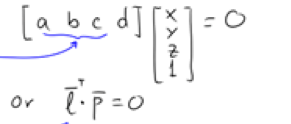
96Equation of Plane in Homogeneous Coordinates
- A
- B
- C
- A
97Pros of Key-Framing with Forward Kinematics
- AVery easy to specify & implement.
- BIt is easier to say what cons do key-framing has.
- CVery easy to test & integrate
98Cons of Key-Framing with Forward Kinematics(select 3 options)
- AOften we care about how the character looks like, not how to get there. Very hard to know how to move joints of a complicated figure in order to get the desired pose (esp. in presence of obstacles.). End-effector spaces quickly become very complicated
- BOften we care more about where the character should go, not how to get there.
Very hard to know how to move joints of a complicated figure in order to get the desired pose (esp. in presence of obstacles.).
End-effector spaces quickly become very complicated.
99How many algorithms of Computing Ray-Triangle Intersection(select 1 option according the course)
- A2
- B1
- C3
- D4
100Which one is not Light Source
- Apoint source
- Bdistant source (spotlight)
- Cextended source (aka area source)
- Dmain sources of light
101What is defuse reflection?
- ARepresents “matte” component of reflected light, usually caused by “rough” surfaces (clay, eggshell, etc.)
- BRepresents shiny component of reflected light, caused by mirror-like reflection off of smooth or polished surfaces (plastics, polished metal, etc.)
- CCaused by materials that are not perfectly opaque. Examples include glass, water and translucent materials such as skin.
- DRepresents the component of reflected light that scatters in the material’s interior (after transmission) before exiting again Examples include skin, milk, fog, etc.
102What is Specular Reflection?
- ARepresents shiny component of reflected light, caused by mirror-like reflection off of smooth or polished surfaces (plastics, polished metal, etc.)
- BCaused by materials that are not perfectly opaque. Examples include glass, water and translucent materials such as skin.
- CRepresents the component of reflected light that scatters in the material’s interior (after transmission) before exiting again Examples include skin, milk, fog, etc.
- DRepresents “matte” component of reflected light, usually caused by “rough” surfaces (clay, eggshell, etc.)
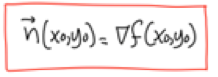
103Implicit Equation of Normal Vectors
- A
- B
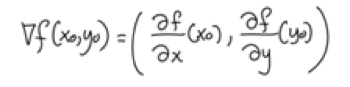
- C
- D
- A
104What is Transmission?
- ACaused by materials that are not perfectly opaque. Examples include glass, water and translucent materials such as skin.
- BRepresents “matte” component of reflected light, usually caused by “rough” surfaces (clay, eggshell, etc.)
- CRepresents the component of reflected light that scatters in the material’s interior (after transmission) before exiting again Examples include skin, milk, fog, etc.
- DRepresents shiny component of reflected light, caused by mirror-like reflection off of smooth or polished surfaces (plastics, polished metal, etc.)
105What is Sub-surface Scattering?
- ARepresents the component of reflected light that scatters in the material’s interior (after transmission) before exiting again Examples include skin, milk, fog, etc.
- BCaused by materials that are not perfectly opaque. Examples include glass, water and translucent materials such as skin.
- CRepresents “matte” component of reflected light, usually caused by “rough” surfaces (clay, eggshell, etc.)
- DRepresents shiny component of reflected light, caused by mirror-like reflection off of smooth or polished surfaces (plastics, polished metal, etc.)
106Phong model: equation of ambient component.
- A
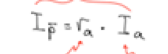
- B
- C
- A
107Rasterization is
- AThe task of taking an image described in a vector graphics format (shapes) and converting it into a raster image (pixels or dots) for output on a video display or printer, or for storage in a bitmap file format.
- BThe task of taking an image described in a hard graphics format (shapes) and converting it into a raster image (pixels or dots) for output on a video display or printer, or for storage in a bitmap file format.
- CThe task of taking a pixel described in a vector graphics format (shapes) and converting it into a raster image (pixels or dots) for output on a video display or printer, or for storage in a bitmap file format.
108“+” of Key-Framing with Forward Kinematics
- AVery easy to specify & implement
- BVery hard to specify & implement
- CVery easy to specify &work with
109Inverse Kinematics is
- ASpecify where character should go, then deduce joint motion
- BSpecify where people should go, then deduce joint motion
- CSpecify where character should go, then apply joint motion
110“+”of Keyframe Animation
- AVery expressive, Animator has full control of animation
- BVery expensive, Animator has full control of animation
- CVery expensive, Animator has not to control of animation
111Ray Tracing: which one is not Advantages
- AHighly customize, can model shadows, arbitrary reflection, parallelizable, allows trading off speed for accuracy – advantages
- BHighly not customizable
- CNot arbitrary reflection
112Gouraud shading: main idea
- ADraws all triangle points p with identical color/intensity
- BCompute Li-L(bi ,ni , si ) for each vertex, Inter[plate the Li s to get value at p
- CInterpolate bi ,ni , si to get b,n,s at p , then Compute L(b,n,s)
113Matting is
- AMatting refers to the problem of accurate foreground estimation in images and video. It is one of the key techniques in many image editing and film production applications
- BMatting refers to the advantages of accurate foreground estimation in images and video. It is one of the key techniques in many image editing and film production applications
- CMatting refers to the problem of not foreground estimation in images and video. It is one of the key techniques in many image editing and film production applications
114Main Idea of Flat shading
- ADraw all triangle points p with identical colour/intensity
- BDraw all triangle points p with identical colour
- CDraw all triangle points p with identical intensity
115Phong shading: main idea
- AInterpolate bi ,ni , si to get b,n,s at p , then Compute L(b,n,s)
- BCompute Li-L(bi ,ni , si ) for each vertex, Inter[plate the Li s to get value at p
- CDraws all triangle points p with identical color/intensity
116Amount of algorithms of Computing Ray-Triangle Intersection(select 1 option according the course)
- A2
- B5
- C3
117Computer graphic is
- AThe science of turning the rules of geometry and physics into (digital) pictures that mean something to people
- BThe science of turning the rules of geometry pictures that mean something to people
- CThe science geometry and physics into (digital) pictures that mean something to people
118Gouraud shading vs Flat shading, which one is “-”?
- ASpecular highlights stil a problem for large triangles
- BNo visible seams between mesh triangles
- CSmooth, visually pleasing intensity variations that mask coarse geometry
- DComputationally less efficient (mut interpolate 3 vectors and evaluate Phong reflection model at each triangle pixel)
119Vector is
- AA vector describes a length and a direction(A vector is a quantity or phenomenon that has two independent properties: magnitude and direction.)
- BA vector describes a scalar coordinate
- CA vector describes a direction coordinate
120Motion Capture: Basic idea
- AMotion capture is the process of recording the movement of objects or people.
- BMotion capture is the process of playing the movement of objects or people
- CMotion capture is the process of moving the objects or people
121Phong shading vsGouraud shading, which one is “-”?
- AComputationally less efficient (mut interpolate 3 vectors and evaluate Phong reflection model at each triangle pixel)
- BSpecular highlights stil a problem for large triangles
- CNo visible seams between mesh triangles
- DSmooth, visually pleasing intensity variations that mask coarse geometry
122Ray tracing is
- Aray tracing is a technique for generating an image by tracing the path of light through pixelsin an image plane and simulating the effects of its encounters with virtual objects.
- Bray tracing is a technique for generating a pixels by tracing the path of light through image
- Cray tracing is a technique for planning an image by tracing the path of light through pixels
123Specular Reflection is
- ARepresents shiny component of reflected light, caused by mirror-like reflection off of smooth or polished surfaces (plastics, polished metal, etc.)
- BRepresents ambient component of reflected light
- CRepresents mirror component of reflected light
124What is the “-” of Phong shading?
- ASo in Phong Shading the attribute interpolated are the vertex normals, rather than vertex intensities. Interpolation of normal allows highlights smaller than a polygon.
- BComputationally less efficient (mut interpolate 3 vectors and evaluate Phong reflection model at each triangle pixel)
- CNo visible seams between mesh triangles
- DSmooth, visually pleasing intensity variations that mask coarse geometry
125Main Idea: Flat shading
- ADraw all triangle points p with identical colour/intensity
- BDraw all triangle points p with identical colour
- CDraw all triangle points p with identical intensity
126Main Idea : Flat shading
- ADraw all points with identical color/intensity
- BDraw all points with random color/intensity
- CInterpolate color/intensity from vertices
- DApproach of Interpolative Shading
127What is OpenCV?
- AOpenCV is an open source computer vision library
- Bis an open source program for generating 3B images
- CIs a tool for extracting foreground images from any background
128Which one is interpolated shading?
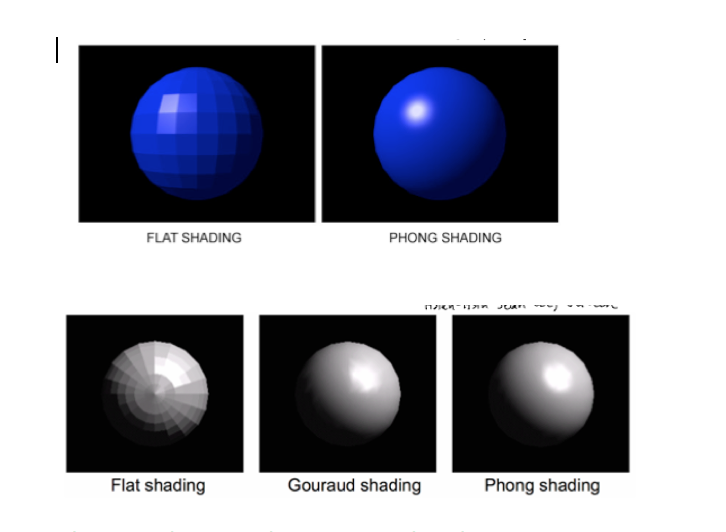
- APhong and gouraud are interpolated
- BFlat is interpolated
- COnly gouraud is interpolated
- DOnly phong is interpolated
129What is visible spectrum corresponds to light wavelength?
- A400 to 700 nm
- B300 to 700 nm
- C100 to 500 nm
- D700 to 900 nm
1302D Taylor series expansion near (0,0)
- A
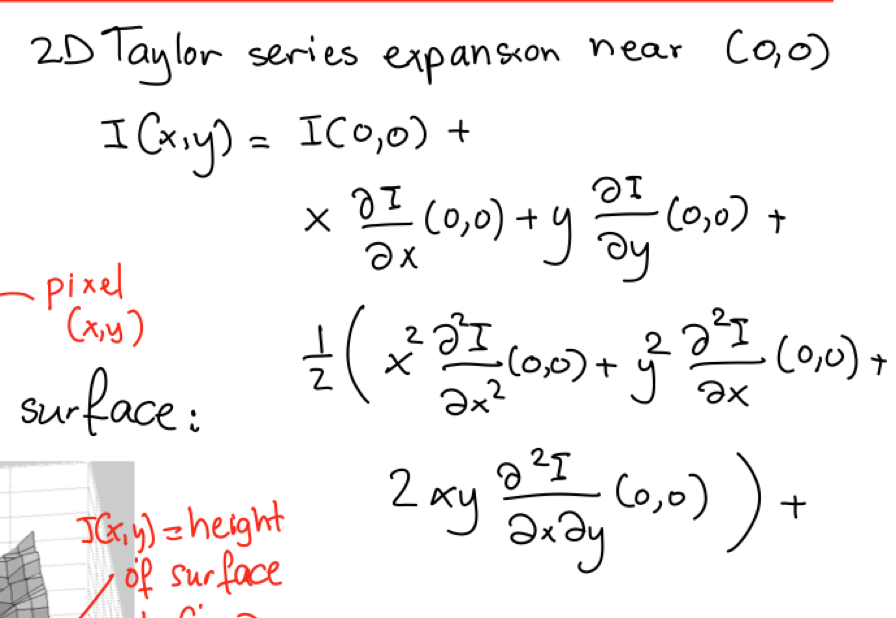
- Bучите ; не знаю как это будет
- A
131What is matting?
- ASeparating a desired foreground image from a background of a constant color
- BSeparating two images and combining them into 3d image
- CPainting image from pieces to other image
- DBinding different pieces
132How many components (color) in array of each pixel are used in computer graphic?
- A4
- B3
- C2
- D1
133Which is matting equation?
- AC= C0 +(1-a0)Ck
- BC= C0 +(a0-1)Ca
- CC= (C0 + a0)Ck
- DC= (1-a0)Ck -C0
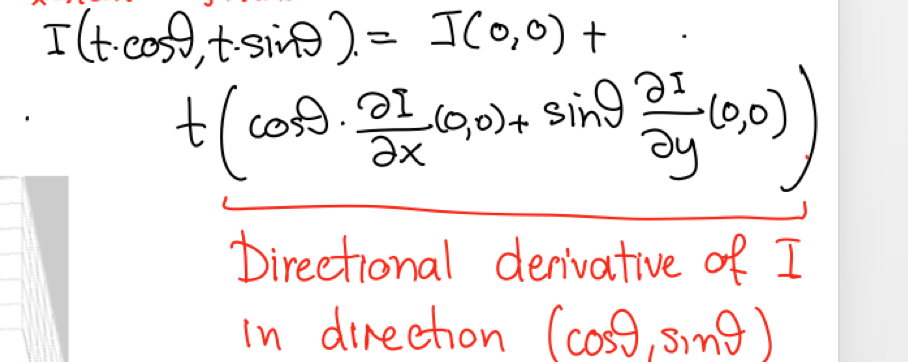
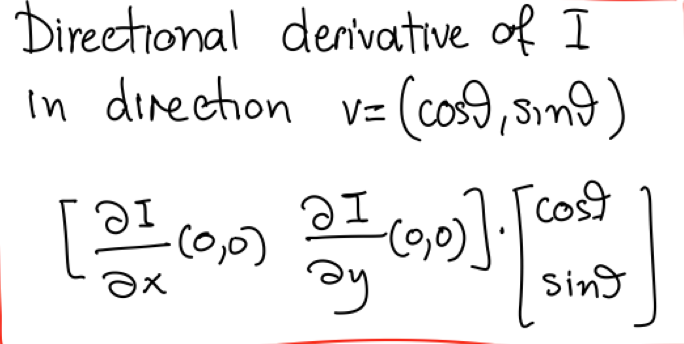
134Direction derivative of I in direction (cosθ,sinθ)
- A
- B
- A
135In one of matting solution if we know that there is NO Blue Color, what is the value of component B in RGB?
- A0
- B1
- C1.5
- D1.7
136What is the goal of Gaussian pyramid
- Ao Develop representation to decompose images into information at multiple scales, to extract features or structures of interest, to attenuate noise
- Bsome other answer
- Csome other answer.
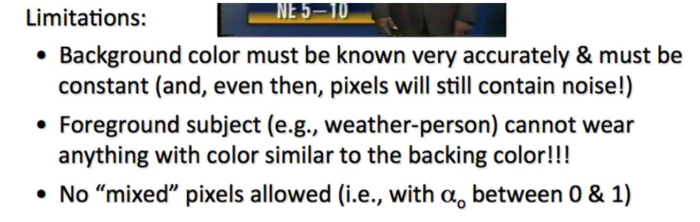
137Which one is not limitation of matting algorithm?
- A
- Bучите
- A
138How many arguments can take function cvLoadImage()
- A2
- B1
- C3
- D4
139How many arguments can take function cvReleaseImage()
- A1
- B2
- C3
- D4
140How many arguments if function glTranslatef()
- A3
- B1
- C2
- D4
141How many arguments if function gluSphere()
- A4
- B1
- C2
- D3
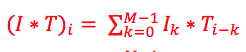
142Equation of Convolution
- A
- B
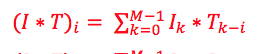
- C

- D
- A
143How many arguments in function glRotatef()
- A4
- B1
- C2
- D3
144What mean the 1st argument in function glRotatef()
- AAngle
- BAxis
- CMode
- DControl variable
145How many arguments in function glScalef()
- A3
- B1
- C2
- D4
146Equation of Convolution in 2D(MxN -image)
- A

- B

- C
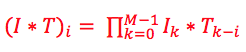
- D
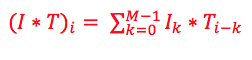
- A
147The unit vector is
- Avector is a vector of length 1
- Bunique vector
- Cvector orthogonal to normal
- Dusual vector
148Interpolated shading is
- APhong and Gouraud shading
- BFlat Shading
- CPhong Shading
- DGouraud shading
149Matting is
- ASeparating a desired foreground image from background of constant or almost constant color
- BShading model
- CDefining shape of curve
- DThe same as Smoothing
150Equation of Downsampled and Smoothed Image g_(l+1)
- A

- B

- C

- D

- A
151Transmission is
- ALightpassesthrough the object
- Bthe component of reflected light that scattersin the material’s interior (after transmission) before exiting againLight absorbed by the object
- CLight reflected by the object
152Forward Kinematics: Basic idea
- ASpecify how joints should move
- BSpecify where character should go, then deduce joint motion
- CRecord motions of real people/objects, then transfer to digital characters
- DSpecify how end effector should move
153General Expression of REDUCE() function
- A
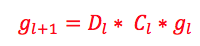
- B

- C
- D
- A
154Sub-surface Scattering is
- AComponent of reflected light that scattersin the material’s interior (after transmission) before exiting again
- BLight absorbed by the object
- CLightpassesthrough the object
- DLight reflected by the object
155What is the goal of Gaussian pyramid
- ADevelop representation to decompose images into information at multiple scales, to extract features or structures of interest, to attenuate noise
- Bsome other answ
- Csome other answer
156Equation of EXPAND(g_l) function
- A

- B

- C

- D

- A
157Equation of EXPAND(g_l) function in 1D
- A

- B

- C

- D

- A
158Main Idea of Laplacian Pyramid
- ARather than store smoothed images, store only the convolution coefficient, between levels Gl and G(l+1)
- BExtract features or structures of interest
- CDevelop representation of decomposed images into information at multiple scales
- DRather than store smoothed images, store only the difference, between levels Gl and G(l+1)
Informationen
- Beschreibung
- Трудных предметов нет, но есть бездна вещей, которых мы просто не знаем, и еще больше таких, которые знаем дурно, бессвязно, отрывочно, даже ложно. И эти-то ложные сведения еще больше нас останавливают и сбивают, чем те, которых мы совсем не знаем.
- Autor
- Csse 1502
- Sprache
- English
- Aufrufe
- 56
- Schlagwörter
- Bewertung
- Noch keine Bewertungen Bewerte dieses Quiz