
Quiz
Seizure and Epilepsy
Dieses Quiz enthält Fragetypen, die sich im gewohnten Player öffnen.
Fragen in diesem Quiz (82)
1[blank_start]Seizure[blank_end] is a transient occurrence of signs and symptoms due to abnormal excessive or synchronous neuronal activity in the brain
- ASeizure
2[blank_start]Epilepsy[blank_end] is a neurological disease marked by the sudden and recurrent episodes of seizures
- AEpilepsy
3A person is considered to have epilepsy if they meet any of the following conditions:
- AAt least two unprovoked (or reflex) seizures occurring greater than 24 hours apart
- BOne unprovoked (or reflex) seizure and a probability of further seizures similar to the general recurrence risk (at least 60%) after two unprovoked seizures, occurring over the next 10 years
- CDiagnosis of an epilepsy syndrome
- DHave an single unprovoked seizure event
4More than 30 minutes of:
- continuous seizure activity
- two or more sequential seizures without full recovery of consciousness between seizures.- ASeizure
- BEpilepsy
- CStatus Epilepticus
5Some seizures occur as single events
- Withdrawal of [blank_start]CNS[blank_end] depressants
- During acute [blank_start]neurologic[blank_end] illnesses
- Systemic [blank_start]toxic[blank_end] conditions
- Cocaine use
- Overdosing on [blank_start]digoxin[blank_end]
- [blank_start]Electrolyte[blank_end] disturbances
- Hypoglycemia- ACNS
- Bneurologic
- Ctoxic
- Ddigoxin
- EElectrolyte
6Causes of seizures
[blank_start]Vascular[blank_end]: stroke, post-stroke, AV malformations
[blank_start]Infections[blank_end]: meningitis, Lyme disease, brain abscess, HIV related
[blank_start]Trauma[blank_end]: Brain injury
[blank_start]Autoimmune[blank_end]: SLE
[blank_start]Metabolic[blank_end]: hypoglycemia, electrolyte disturbances (Na⁺, Ca⁺⁺, Mg⁺⁺)
[blank_start]Idiopathic[blank_end]: versus cryptogenic
[blank_start]Neoplasm[blank_end]: primary brain tumor or metastatic
[blank_start]Syndromes[blank_end]: Down’s Syndrome
[blank_start]Stimulants[blank_end]: IV drug use, cocaine, ephedrine, herbal remedies- AVascular
- BInfections
- CTrauma
- DAutoimmune
- EMetabolic
- FIdiopathic
- GNeoplasm
- HSyndromes
- IStimulants
7[blank_start]Seizures[blank_end] are also called the electrical storms in the brain
- ASeizures
8[blank_start]GABA[blank_end] is the main inhibitory neurotransmitter
[blank_start]Glutamate[blank_end] is the major excitatory neurotransmitter- AGABA
- BGlutamate
9Every individual has a seizure [blank_start]threshold[blank_end], which is the level of excitability at which neurons will discharge abnormally
- Athreshold
10Patients with epilepsy have a [blank_start]lower[blank_end] seizure threshold
- Alower
11[blank_start]Prodrome[blank_end] is feelings, sensations, or changes of behavior hours or days before a seizure
- warning that a seizure is coming
- not considered part of the seizure- AProdrome
- BAura
- CIctal phase
- Dpost-ictal phase
12[blank_start]Aura[blank_end] or warning is the first symptom of a seizure
- Changes in smells, sounds, tastes, vision, “strange” feelings, racing thoughts, fear/panic, headache, nausea, numbness or tingling in part of the body
- Considered part of the seizure- AAura
13[blank_start]Ictal[blank_end] phase is the middle of a seizure
- Correlates with the electrical activity in the brain
- Where the symptoms are observed- AIctal
14[blank_start]Post-ictal[blank_end] phase is the end of a seizure
- Recovery period after the seizure (immediate or can take minutes to hours)- APost-ictal
15Every person with seizures will not have every stage or symptom
- ARichtig
- BFalsch
16[blank_start]Partial[blank_end] seizures start in one area or side of the brain
- APartial
17[blank_start]Generalized[blank_end] seizures start on both sides of the brain at the same time and usually loss of consciousness is observed
- AGeneralized
18A partial seizure in which consciousness is not impaired is referred to as a [blank_start]simple[blank_end] partial seizure
- Asimple
19A partial seizure in which consciousness is impaired is referred to as a [blank_start]complex[blank_end] partial seizure
- Acomplex
20A partial onset evolving to generalized tonic-clonic is referred to as a [blank_start]secondarily generalized[blank_end] seizures
- Asecondarily generalized
21Name the type of the seizure:
Generally occurs in young children
Sudden onset, interruption of ongoing activity
Blank stare
Possibly a brief upward rotation of the eyes- AAbsence
- BMyoclonic
- CClonic
- DTonic
22Name the type of seizure:
Brief shock-like muscular contractions of the face, trunk, and extremities- AAbsence
- BMyoclonic
- CClonic
- DTonic
23Name the type of seizure:
Rhythmic, repetitive, jerking muscle movement- AAbsence
- BMyoclonic
- CClonic
- DTonic
24Name the type of seizure:
Flexion, extension, and adduction of extremities
Extension of back and neck
Contraction of thoracic and abdominal muscles (may become apneic)
Upward eye movement and mouth partially open
May cry out as air is forced from the lungs- AAbsence
- BMyoclonic
- CClonic
- DTonic
25Which of the following statements about Atonic seizures are true?
- ASudden loss of muscle tone
- Bcommon in children
- Cmay present with head drop, dropping of a limb, and slumping to the ground
- DPatients often wear protective headgear to prevent trauma
26There are NO diagnostic laboratory tests for epilepsy
- ARichtig
- BFalsch
27[blank_start]Prolactin[blank_end] levels can be transiently elevated after GTC or CP seizures, however this observation can not be used as a diagnostic marker for epilepsy.
- AProlactin
28[blank_start]Electroencephalogram (EEG)[blank_end] is very useful in the diagnosis of various seizure disorders (only to confirm a diagnosis)
- AElectroencephalogram (EEG)
- BMagnetic Resonance Imaging (MRI)
- CComputed Tomography (CT)
29Which of the following is NOT useful in the diagnosis of seizure disorders?
- AElectroencephalogram (EEG)
- BMagnetic Resonance Imaging (MRI)
- CComputed Tomography (CT)
30Focal seizures: previously called [blank_start]partial seizures[blank_end], these start in an area or network of cells on one side of the brain
Generalized seizures: previously called [blank_start]primary generalized[blank_end], these affect both sides of the brain at onset
Unknown onset: is the onset of the seizure is not known
Focal to bilateral seizure: previously called [blank_start]secondary generalized seizure[blank_end], it starts in one side of the brain and spreads to both sides- Apartial seizures
- Bprimary generalized
- Csecondary generalized seizure
31Focal aware: replaces the term [blank_start]simple partial[blank_end]; if awareness remains intact even if person is unable to talk or respond during a seizure
Focal impaired awareness: replaces the term [blank_start]complex partial[blank_end] seizure; if awareness is impaired or affected at any time during a seizure even if a person has a vague idea of what happened
Awareness unknown: for example if person lives alone or has seizures only at night
Generalized seizures: these are all presumed to affect a person’s awareness or consciousness in some way- Asimple partial
- Bcomplex partial
32Which of the following statements are true in regards to febrile seizures?
- AChildren aged 3 months to 6 years may have tonic-clonic seizures when they have a high fever
- BMore likely to occur if there is a family history of febrile seizures
- CMost children do not require daily treatment with medications
- DThe outlook is excellent; the majority of children will not have seizures without a fever after the age of 5
- EMedications can be considered for children who have repeated episodes of multiple febrile seizures
33Which drugs can be used as prophylaxis in the treatment of febrile seizures?
- APhenobarbital
- BValproate
- CLamotrigine
- DLorazepam
34What medications can be given at the time of a febrile seizure?
- ADiazepam gel or liquid (can be given rectally)
- Bclonazepam (placed on the tongue)
- Cdiazepam tablet (crushed and put between the cheek and gum)
- Dlorazepam tablet (crushed and put between the cheek and gum)
- Ecan be treated with AED's
35Initiation of AEDs is recommended in the following cases:
After one seizure in patients with [blank_start]risk factors[blank_end]
After two seizures that occurred within a period of [blank_start]6-12[blank_end] months- Arisk factors
- B6-12
36Risk factors for seizures (at least one is need to initiate treatment)
- [blank_start]CNS[blank_end] insult (stroke, head trauma, bleeding)
- Family history of [blank_start]epilepsy[blank_end]
- changes in [blank_start]EEG[blank_end]
- some [blank_start]childhood[blank_end] illness (babies born small for their age, babies who have seizure in the first month of life, babies born with abnormal areas in the brain)
- [blank_start]brain[blank_end] tumor
- autism
- use of [blank_start]illegal drugs[blank_end] such as cocaine- ACNS
- Bepilepsy
- CEEG
- Dchildhood
- Ebrain
- Fillegal drugs
37The probability of a 2nd seizure can be as high as [blank_start]80[blank_end]% after 5 years
- A80
38If the probability of a 2nd seizure is less than 10% in the 1st year and 24% after 2 years, you are NOT considered to be at risk and treatment initiation should not begin.
- ARichtig
- BFalsch
39A 50 year old male had a documented GTC seizure at 10am this morning. Patient has been recently diagnosed with a brain tumor. What is your recommendation regarding initiating AEDs for this patient?
- ATreatment with anticonvulsants should be initiated
- BTreatment with anticonvulsants should be deferred at this point
40Which of the following are triggers for seizures?
- AMissed medicine
- BLack of sleep
- CStress
- DAlcohol
- EDrug abuse (amphetamine, stimulant, marijuana, heroin, nicotine, caffeine)
- FMenstruation (hormonal change, can adjust medication dose in women with regular cycles or prescribe lorazepam (Ativan) for several days around the menstrual cycle
- GOthers (OTC agents such as diphenhydramine, some herbal medicines)
41Diphenhydramine raises the seizure threshold
- ARichtig
- BFalsch
42Which of the following factors must be considered when selecting the appropriate AED therapy for a patient?
- ASeizure type
- BAge
- CGender (pregnancy)
- DPharmacokinetic profile
- EInteractions/other medical conditions
- FEfficacy
- GExpected adverse effects
- HAbility to comply with a prescribed regimen
- ICost
43An antiepileptic drug should not be considered ineffective unless patient develops an unacceptable ADR with continued seizure
- ARichtig
- BFalsch
44Despite appropriate initial treatment, [blank_start]30-35[blank_end]% of patients are refractory to treatment
- A30-35
- B20-30
- C40-50
45carbamazepine half-life is variable because of [blank_start]auto-induction[blank_end] which is usually complete 3 to 5 weeks after initiation of a fixed carbamazepine regimen
- Aauto-induction
46Which of the following agents can cause acute hepatic failure, acute pancreatitis, and alopecia?
- APhenytoin (Dilantin)
- BCarbamazepine (Tegretol)
- CValproic Acid (Depakote)
- DGabapentin (Neurontin)
47Serum concentrations are useful when optimizing AED therapy, they should be assessed by:
- Checking "[blank_start]steady state[blank_end]": different for each drug (average 1 to 3 weeks)
- Checking at a [blank_start]consistent[blank_end] time: preferably first thing in the [blank_start]morning[blank_end]
- Its best to check a [blank_start]trough[blank_end] level first thing in the morning, [blank_start]8[blank_end] hours after the last dose (lowest level)- Asteady state
- Bconsistent
- Cmorning
- Dtrough
- E8
48Give the following information, calculate the corrected phenytoin concentration.
(Total phenytoin is 8mcg/mL ; albumin 1mg/dL)
Corrected phenytoin = measured phenytoin / [(0.29 x albumin) + 0.1)- A10
- B20
- C30
- D40
49What is the most common type of seizure experienced by adults?
- Apartial seizures
- Bgeneralized seizures
- Cabsence seizures
50[blank_start]Carbamazepine[blank_end] and phenytoin first line therapy in new-onset partial and generalized seizures
- ACarbamazepine
51Of the agents listed below, which received FDA approval for use as monotherapy in patients with partial seizures?
- ALamotrigine (Lamictal)
- BTopiramate (Topamax)
- COxcarbazepine (Trileptal)
- DLevetiracetam (Keppra)
- EGabapentin (Neurontin)
52[blank_start]Lamotrigine[blank_end] was determined to be a cost effective alternative to carbamazepine
- ALamotrigine
- BGabapentin
- CTopiramate
53Indicate the appropirate drug therapy treatment for absence seizures:
1st line: [blank_start]Ethosuximide (Zarontin)[blank_end]
2nd line: [blank_start]Valproate (Depakote)[blank_end]
3rd line: [blank_start]Lamotrigine (Lamictal)[blank_end]- AEthosuximide (Zarontin)
- BValproate (Depakote)
- CLamotrigine (Lamictal)
- DValproate (Depakote)
- EEthosuximide (Zarontin)
- FLamotrigine (Lamictal)
- GLamotrigine (Lamictal)
- HEthosuximide (Zarontin)
- IValproate (Depakote)
54Which of the following agents are infective in absence seizures and can precipitate and increase seizure frequency
- APhenytoin (Dilantin)
- BPhenobarbital
- CCarbamazepine (Tegretol)
- DOxcarbazepine (Trileptal)
- EGabapentin (Neurontin)
- FTiagabine (Gabitril)
- GValproate (Depakote)
55What is the appropriate therapy to utilize in the treatment of mixed absence and partial or generalized:
- AValproate (Depakote)
- BLamotrigine (Lamictal)
- CTiagabine (Gabitril)
- DFelbamate (Felbatol)
56[blank_start]Ethosuximide[blank_end] in combination with another AED is a n alternative therapy in the treatment of mixed absence and partial/generalized seizures.
- AEthosuximide
57[blank_start]Phenytoin (Dilantin)[blank_end] is the traditional treatment for tonic-clonic seizures. [blank_start]Carbamazepine (Tegretol)[blank_end] and Valproate (Depakote) are equally efficacious and have less side effects.
- APhenytoin
- BCarbamazepine
58What drugs are alternative in the treatment of tonic-clonic seizures?
- ALamotrigine (Lamictal)
- BTopiramate (Topamax)
- CPhenytoin (Dilantin)
- DGabapentin (Neurontin)
59Seizure freedom for ≥ 2 years implies overall >[blank_start]60[blank_end]% chance of successful withdrawal in some epilepsy syndromes
- A60
60Patients who are seizure free:
[blank_start]2[blank_end] years: Absence
[blank_start]4[blank_end] years: simple partial, complex partial, tonic-clonic seizures- A2
- B4
61Sudden discontinuation of AED therapy can precipitate withdrawal seizures and status epilepticus. Especially with benzodiazepines and barbiturates
- ARichtig
- BFalsch
62When converting to monotherapy from polytherapy:
Eliminate [blank_start]sedative[blank_end] drugs first
Withdraw antiepileptic agents [blank_start]slowly[blank_end] over several months- Asedative
- Bslowly
63AEDs and Pregnancy
- AED teratogenicity is related to exposure in the [blank_start]first[blank_end] trimester of pregnancy
- [blank_start]Seizures[blank_end] may be deleterious to the fetus
- Risks from seizures are greater than risks from [blank_start]medications[blank_end]
- All antiepileptic patient drugs carry [blank_start]teratogenic[blank_end] risks
- Polytherapy of AED's [blank_start]increases[blank_end] risk
- [blank_start]Breastfeeding[blank_end] is encouraged and can be done safely, advise the mother to take the AED immediately after breastfeeding- Afirst
- BSeizures
- Cmedications
- Dteratogenic
- Eincreases
- FBreastfeeding
64AEDs and Pregnancy
Before pregnancy:
- Attempt AED monotherapy with [blank_start]lowest[blank_end] effective dose
- [blank_start]Folate[blank_end] supplementation (at least 1mg/day orally)
During pregnancy:
- Avoid use of: Barbiturates, [blank_start]phenytoin[blank_end], carbamazepine,
- Limit dose of [blank_start]Valproate (Depakote)[blank_end] during the 1st trimester (1,400 mg/day)
- [blank_start]Lamotrigine (Lamictal)[blank_end] is considered safe
- Continue [blank_start]folate[blank_end] supplementation (1mg/day)
- Consider [blank_start]Vitamin K[blank_end] (10mg/day) starting at 36 weeks (baby should receive 1 mg IM at birth)- Alowest
- BFolate
- Cphenytoin
- DValproate
- ELamotrigine
- Ffolate
- GVitamin K
65[blank_start]Brief[blank_end] seizures are defined as lasting less than 5 minutes
[blank_start]Prolonged[blank_end] seizure are defined as lasting between 5 and 30 minutes- ABrief
- BProlonged
66Status epilepticus (SE) is defined as more than [blank_start]30[blank_end] minutes of either
(1) A [blank_start]continuous[blank_end] seizure activity
(2) Two or more sequential seizures without full recovery of [blank_start]consciousness[blank_end] in between seizures- A30
- Bcontinuous
- Cconsciousness
67The 30-minute definition is based on the duration of convulsive status epilepticus that may lead to permanent neuronal injury. What are some of the adverse consequences?
- Ahypoxia
- Bacidosis
- Chyperthermia
- Dhypothermia
68Types of Status Epilepticus
status epilepticus consisting of repeated generalized tonic-clonic (GTC) seizures with persistent neurological depression of neurologic function between seizures- Aconvulsive
- Bnon-convulsive
- CRepeated partial seizures
69Types of Status Epilepticus
status epilepticus where seizures produce a continuous “ epileptic twilight” state- Aconvulsive
- Bnon-convulsive
- Crepeated partial seizures
70Types of Status Epilepticus
manifested as focal motor signs, focal sensory symptoms, or focal impairment of function (e.g. aphasia) not associated with loss of consciousness- Aconvulsive
- Bnon-convulsive
- Crepeated partial seizures
71Causes of Status Epilepticus
[blank_start]Type I[blank_end]; no structural lesion: infection, CNS infection, metabolic, low AED levels, alcohol, idiopathic
[blank_start]Type II[blank_end]; structural lesion (poor prognosis): anoxia/hypoxia, CNS tumors, CVA, drug overdose, hemorrhage, trauma- AType I
- BType II
72Clinical Presentation of Generalized Convulsive SE
Symptoms:
Impaired [blank_start]consciousness[blank_end]
[blank_start]Disorientation[blank_end] once is controlled
Pain associated with injuries
Early signs:
Generalized [blank_start]convulsions[blank_end]
Acute injuries/CNS insults that cause extensor or flexor posturing
[blank_start]Hypothermia[blank_end]/fever suggestive of inter-current illnesses
Incontinence
Normal blood pressure/hypotension and respiratory [blank_start]compromise[blank_end]
Late signs:
Clinical seizures/may not be apparent
[blank_start]Pulmonary[blank_end] edema with respiratory failure
Cardiac failure, hypotension or hypertension
Disseminated intravascular coagulation, multisystem [blank_start]organ[blank_end] failure
Rhabdomyolysis- Aconsciousness
- BDisorientation
- Cconvulsions
- DHypothermia
- Ecompromise
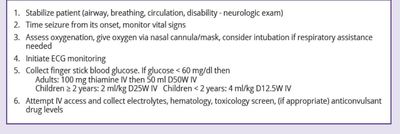
- FPulmonary
- Gorgan
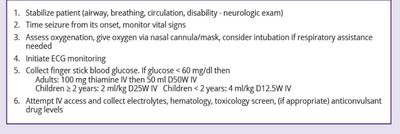
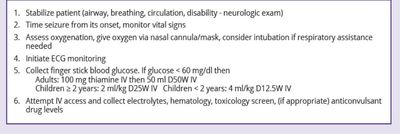
73Which of the following is the proposed interventions for the treatment of Status epilepticus during the stabilization phase (0-5 minutes) ?
- A
- B
- C
- D
- A
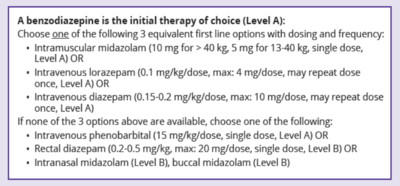
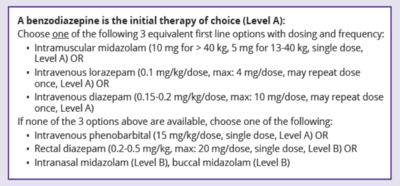
74Which of the following is the proposed interventions for the treatment of Status epilepticus during the initial therapy phase (5-20 minutes) ?
- A
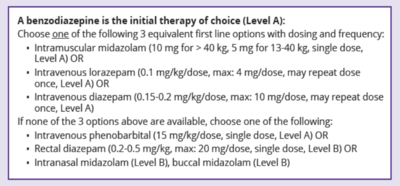
- B
- C
- D
- A
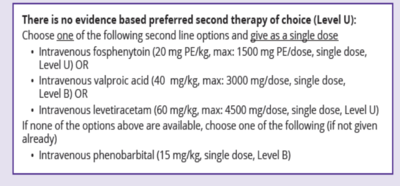
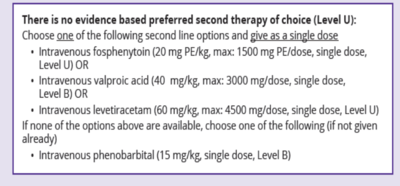
75Which of the following is the proposed interventions for the treatment of Status epilepticus during the second therapy phase (20-40 minutes) ?
- A
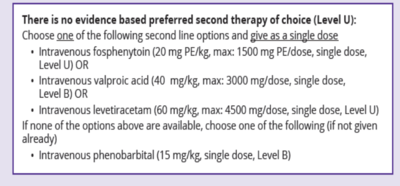
- B
- C
- D
- A
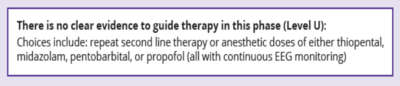
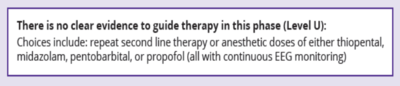
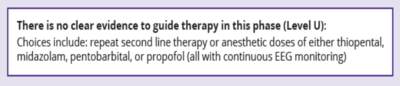
76Which of the following is the proposed interventions for the treatment of Status epilepticus during the third therapy phase (40-60 minutes) ?
- A
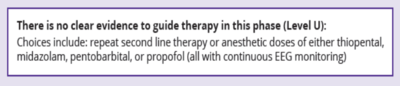
- B
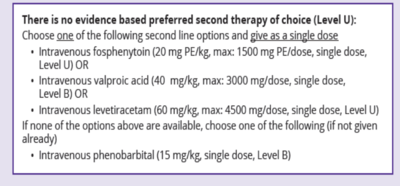
- C
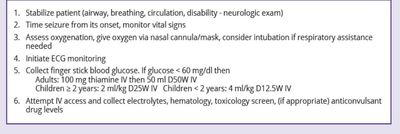
- D
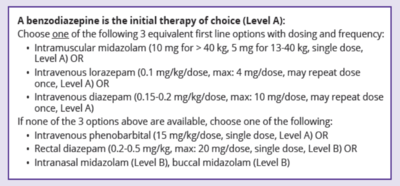
- A
77Of the two major ingredients in marijuana, which one causes the psychoactive effect of getting "high"
- ATetrahydrocannabinol (or THC)
- BCannabidiol (or CBD)
78Medical Marijuana and Epilepsy
Currently open-labeled studies in the U.S. of [blank_start]Epidiolex[blank_end] produced by GW Pharmaceuticals, a drug derived from CBD (99% oil-based extract)- AEpidiolex
79Which of the following are non-pharmacologic treatment of seizures and epilepsy?
- ALifestyle modifications (adequate sleep, avoid alcohol & stimulants), avoid precipitants, use stress reduction techniques)
- BKetogenic diet ( high in fats, low in proteins and carbs)
- Cvagal nerve stimulation
- Dsurgery
80Ketogenic Diet
Traditionally started gradually in the hospital after a [blank_start]24 – 48[blank_end] hour fast
Ratio (fat: carbs and proteins)
- [blank_start]4:1[blank_end] more strict
- [blank_start]3:1[blank_end] for infants, adolescents
- Vitamins and minerals are supplemented
Side effects: due to large amount of fat consumption
-Constipation
-Weight [blank_start]gain[blank_end]
-[blank_start]Acidosis[blank_end] when ill
- [blank_start]Vitamin[blank_end] deficiency (if unsupplemented)
- [blank_start]Renal[blank_end] stones
- Impaired weight and height
- Dyslipidemia
- Gastrointestinal upset
Requires strict control and patient compliance- A24 – 48
- B4:1
- C3:1
- Dgain
- EAcidosis
- FVitamin
- GRenal
81Which of the following statements are true in regards to Vagal Nerve stimulation?
- AIntermittent programmed electrical stimulation of left vagus nerve
- BFDA approved for partial onset seizures in patients >12 years old refractory to AEDs
- CImplanted Medical Device
- DAdverse effects local, related to stimulus (hoarseness, throat discomfort, dyspnea, cough, voice alteration)
- EMay allow antiepileptic drug reduction (dose or number)
82National Institute of Health Consensus Conference:
3 requirements for surgery:
(1) Absolute diagnosis of [blank_start]epilepsy[blank_end]
(2) [blank_start]Failure[blank_end] on adequate trial of drug therapy
(3) Definition of the electro clinical syndrome- Aepilepsy
- BFailure
Informationen
- Beschreibung
- NAPLEX Pharmacy (Neuro ) Quiz am Seizure and Epilepsy , erstellt von Mark W. am 10/01/2017.
- Autor
- Mark W.
- Sprache
- English
- Aufrufe
- 36
- Schlagwörter
- Bewertung
- Noch keine Bewertungen Bewerte dieses Quiz