
Society and Crime
Folien in diesem Satz (5)
-
- During the Middle Ages, it was very rare that you would leave the town or village you were born in. You lived there, worked there and died there. However, in the 16th century certain factors led to the greater movement of people:
- Rising population
- Falling wages
- Food shortages and rising food costs
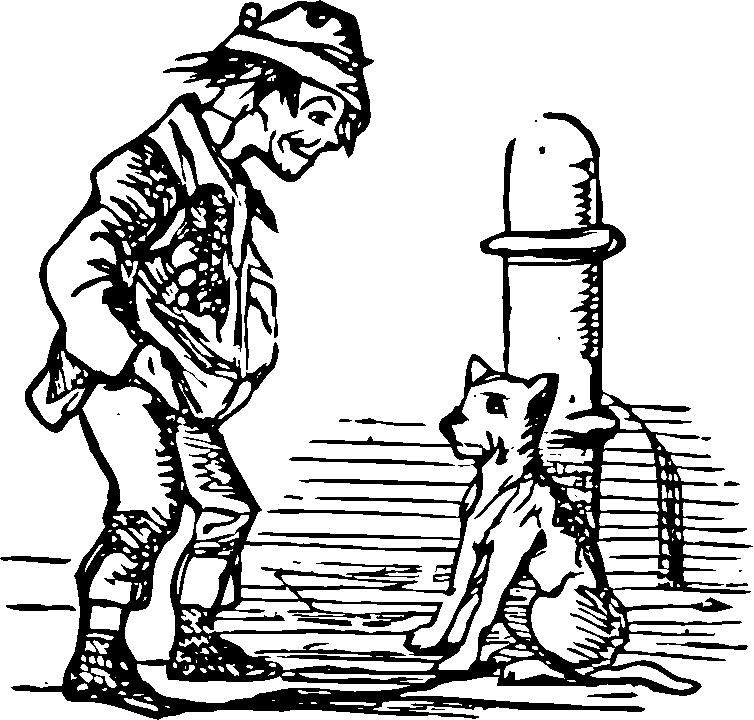
- People left their villages behind in the hope of finding employment and a better life somewhere else. These people became known as vagabonds or vagrants. Generally, they lived most of their lives homeless and unemployed.
- Vagabonds faced a desperate situation when arriving at a new village or town and being unable to find work. They had no home and no food. These conditions led some vagabonds to turn towards crime. Further, the wealthier populations began to see vagabonds, not as poor people trying to find their way in the world, but potential lawbreakers.
-
- In 1495, the Vagabonds and Beggars Act was passed, this led to 'idle' people being placed in stocks and then sent back to their home town or village. People saw vagabonds as lazy and the guilty of bringing trouble upon themselves. During the 16th century, there was detailed documents of the types of beggars on the streets and many assumed these people had no honest needs:
- Dummerers - people impersonating a deaf or mute individual
- Drunken tinkers - these were thieves who used trade as a cover story
- Prancers - stole horses
- Kinchin morts - female beggars
- Many laws were passed in order to deal with beggars on the streets.
- The Vagrancy Act 1547:
- Any healthy and fit vagabond who had not worked for three days was branded with the letter V, then sold into slavery for two years
- This was a very severe law and the punishment was often not carried out
- The law was repealed after three years.
- 1597 Act for the Relief of the Poor:
- Severe punishments in order to deter vagabonds
- These including public whipping or using a hot iron to burn the person
-

- These laws were introduced to develop a more consistent and coherent means for addressing vagabonds.
- Local parishes were now expected to provide poor relief (financial assistance) to those unable to work
- These people were termed the 'deserving poor'; the elderly and disabled
- Those who were fit to work but didn't work and accepted poor relief were known as the 'undeserving poor'
- They would receive branding or whipping as punishment
- Each parish had Overseers of the Poor who collected the Poor rate tax
- This was utilised to buy tools and materials so the poor could work
- Children would also get the opportunity to receive apprenticeship in a particular trade
-
- During the 16th and 17th centuries, new farming and land management techniques came into practice. These new practices had serious repercussions for poor people in rural areas. Large areas originally used for gathering wild foods and firewood became enclosed (exclusive land) by wealthy landlords. These enclosed lands were used for practices, such as the grazing of land by sheep, whose wool would be sold for profit.
- Enclosed land made it more difficult for the rural poor to sustain themselves. Therefore, many rural occupants made their way into towns and villages to find work. However, some poor people living in rural areas chose to ignore the enclosures and continue to hunt rabbits and fish on enclosed land.
- In 1671, the Game Act made it illegal to trespass and hunt on enclosed lands. Landlords viewed trespassers and poachers as thieves, yet poor people sympathised with those caught poaching. As discussed in the first part of this course, poaching was seen as a 'social crime'; people did not think the law was fair.
-

- In the 17th century, the parliament introduced import duties (taxes on goods coming into a country) on goods coming into the country through the trade industry.
- People began exploiting this system as they realised there was profit to be made in smuggling goods into the country and avoiding import duties. This made sense as people were also happy to buy goods at a lower price.
- Smuggling was a crime that the government had difficulty trying to cope with, moreover, people did not view it as a serious crime.
Informationen
- Beschreibung
- Der Nutzer hat seine Fachbereichs-Information gelöscht. Folienset am Society and Crime, erstellt von Gelöschter Nutzer am 09/08/2017.
- Erstellt von
- Gelöschter Nutzer
- Aufrufe
- 17
- Verlauf
-
- Erstellt von Andrew Burke · 4 Aug 2017
- Kopiert von Andrew Burke · 9 Aug 2017
- Bewertung