
Karteikarten
Thermal Comfort: Model of Adaptive Thermal Comfort
Karten in diesem Stapel (15)
- 1What does this model state? What does it propose?The Adaptive Model of Thermal Comfort (AMTC) states that if a change occurs such as to produce discomfort, people react in ways that tend to restore their comfort.
The AMTC proposes that the boundaries of comfort are much wider that those of the HBM and are more appropriate to naturally ventilated buildings where the indoor environmental conditions fluctuate more widely than in tightly controlled air conditioned buildings. - 2Factors affecting comfort?1. Demographics - gender, age, culture, economic status
2. Context - season, climate, building design and function
3. Environmental Interactions - indoor air quality, acoustics, lighting
4. Cognition - attitude, preference, expectation - 3How to make yourself comfortable1. Personal adjustment
a) Clothing
b) Posture
c) Moving to a different location
d) Consumption of hot/cold food or drinks
2. Technological or environmental adjustments – Fans, blinds, heats
3. Cultural adjustment
a) Scheduling of activities
b) Dress codes
c) Siestas
There is also the concept of perceiving that you are in control of your comfort (real or perceived). - 4Example of Pakistan Project• Variable climate
– Very hot in summer – Very cold in winter
• Variable indoor climate (13oC - 36oC, operative)
• Little discomfort between 20oC-30oC, desk-fans and open windows in summer
• More clothes and closed windows in winter
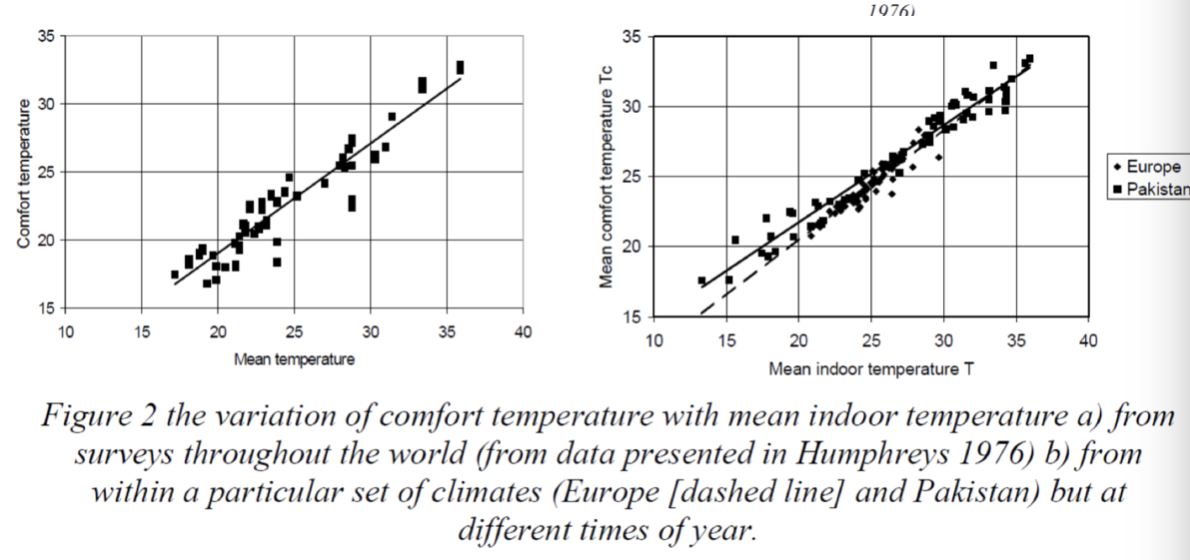
• Behavioural responses achieved thermal comfort - 5What does this graph show?Shows how survey results indicate satisfaction with a range of different indoor temperatures.
- 6What do comfort surveys show? What about in free-running buildings?• Comfort surveys have shown that the lower the monthly mean outside air temperature the cooler the acceptable indoor temperature.
• Similarly, people tolerate higher indoor temperatures in warmer weather
• People are also more tolerant in “free-running” buildings (i.e. naturally ventilated, non- air conditioned - artificial heating or cooling) - 7Comfort vs outdoor temperature: - What does this mean?i.e. if there was a cold day in June or a hot day in October we would be surprised.
- 8Quantify the adaptive model...- Theory suggest people respond based on thermal experience
- Recent thermal experience is most important
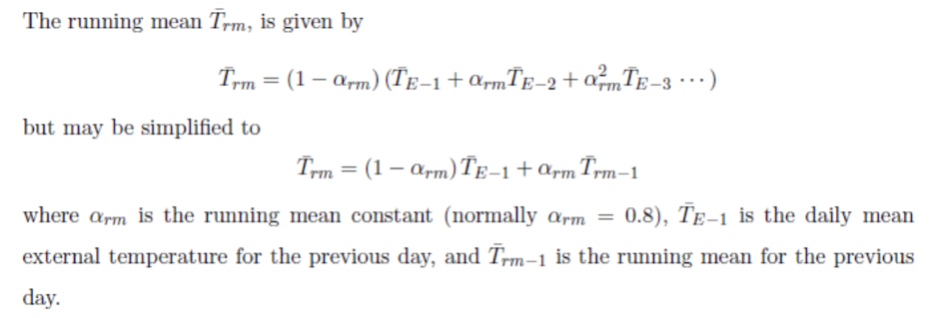
- A running mean of outdoor air temperature is weighted according to time
- More appropriate than a monthly average - 9State the running mean equation:
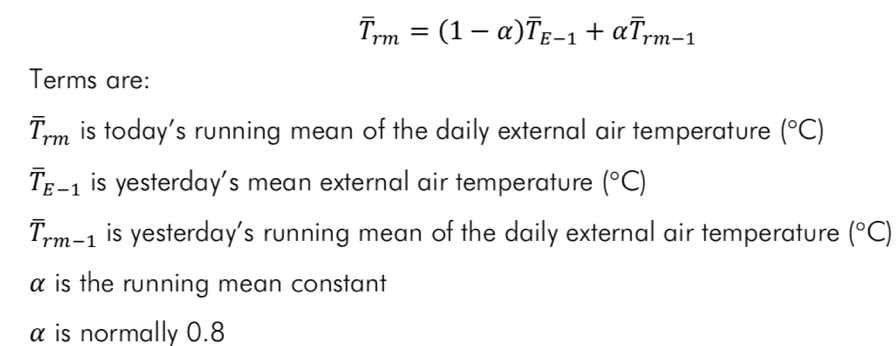
- 10What does this simplify to? What is alpha usually?
- 11What are the internal comfort temperatures? Where can these be found?Found in BSEN15251
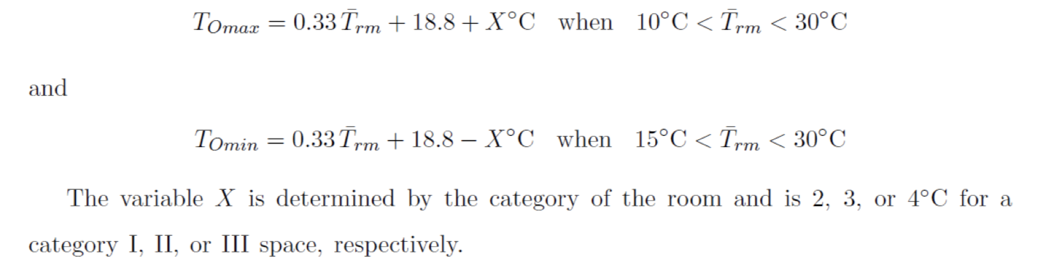
- 12Graph of BSEN 15251 limits
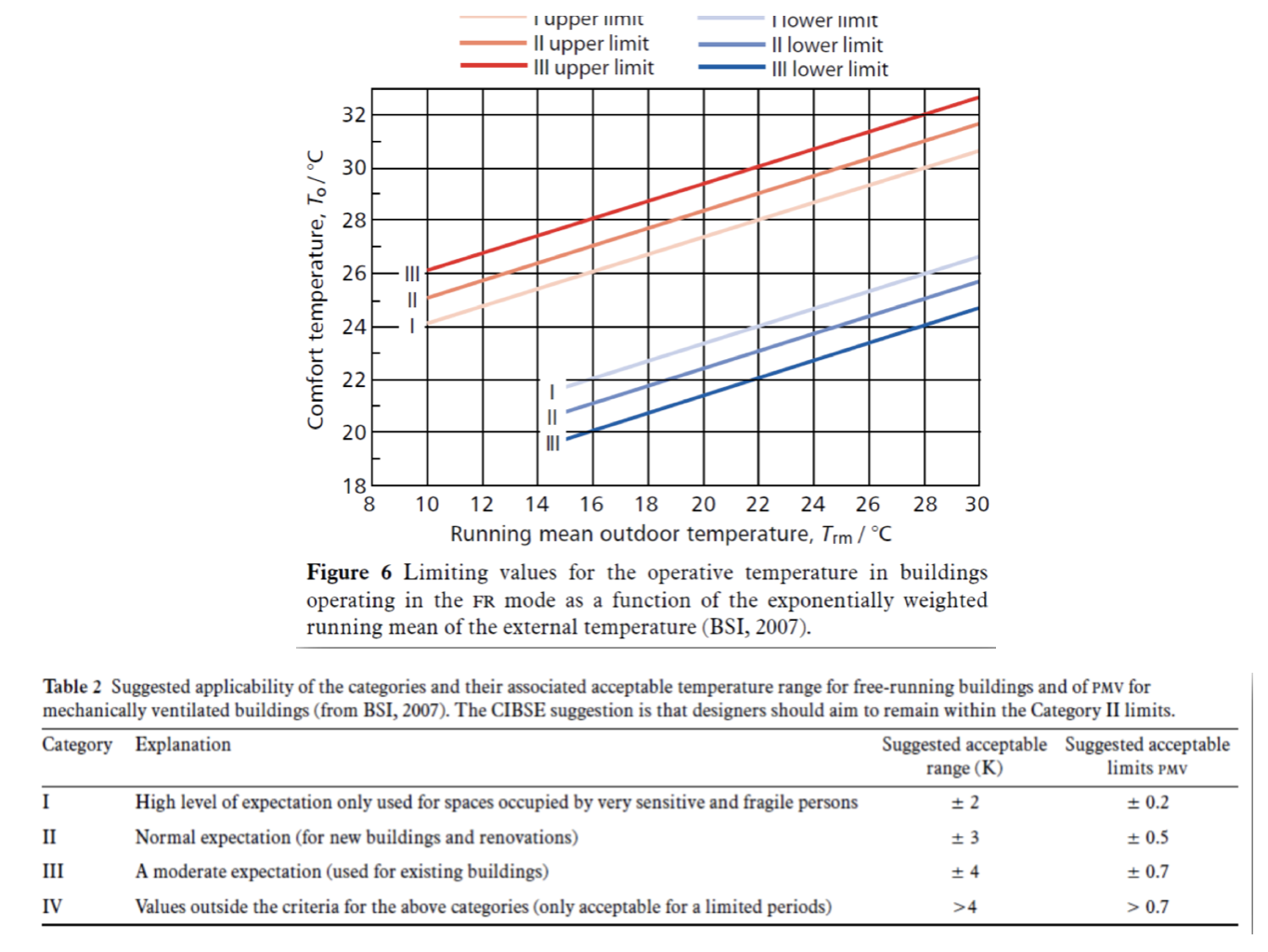
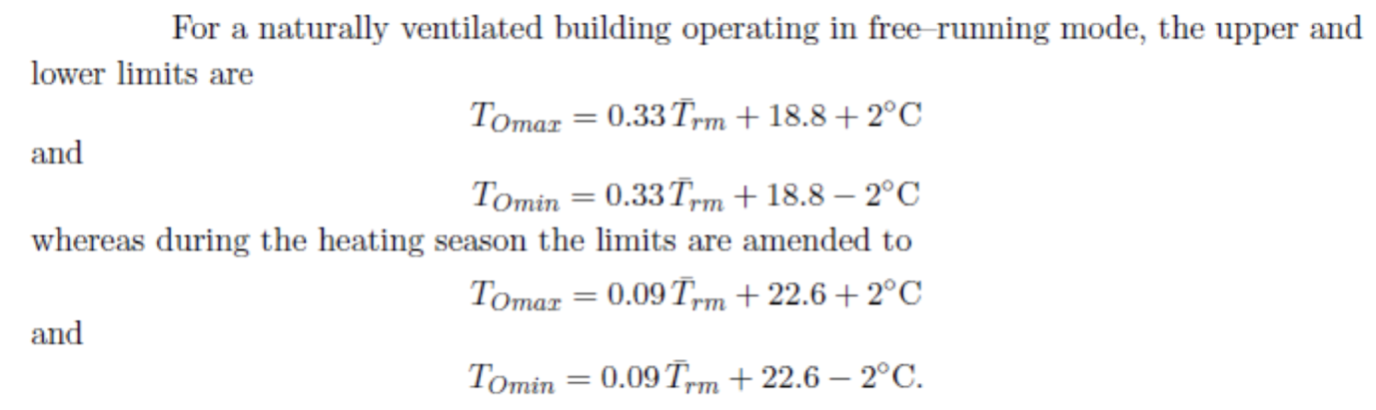
- 13Upper and lower limits for naturally ventilated and heated buildings
- 14What is the human?“The human being is a comfort seeking animal who will, given the opportunity, interact with the environment in ways that secure comfort”
- 15What does the model question?- Casts doubt on use of test chamber results (by Fanger) for application in free-running buildings
- Draws on world-wide observations that people seem to accept conditions outside the usual comfort ranges as though they have adapted to their own climate
- Mirrors the flexibility of real people
Informationen
- Beschreibung
- Architectural Engineering Karteikarten am Thermal Comfort: Model of Adaptive Thermal Comfort , erstellt von Alice Kimpton am 15/10/2019.
- Erstellt von
- Alice Kimpton
- Aufrufe
- 44
- Bewertung