
Karteikarten
aws solutions architect
Karten in diesem Stapel (171)
- 1Regionphysical location in the world that consists of two or more AZs
- 2Availability Zoneone or more data centers - housed in separate facilities
- 3Edge locationsendpoints for AWS that are used for caching content
- 4Shared Responsability Can you do this yourself in the console?Yes - you are responsible
No - AWS is responsible
Encryption - shared resposability - 5S3 Standard99.99%
AZ(s) >=3
Suitable for most workloads
websites, CDN, mobile, gaming apps, big data analytics - 6S3 Standard-Infrequent Access99.9%
AZ(s) >= 3
Long-term, infrequently accessed critical data
backups, data store for disaster recovery - 7S3 One Zone-Infrequent Access99.5%
AZ = 1
Long term, infrequently accessed, non-critical data - 8S3 Glacier99.9%
AZ >= 3
Long-term data archiving
Needs to be accessed within a few hours or minutes - 9S3 Glacier Deep Archive99.9%
AZ >= 3
Rarely accessed data archiving
default retrieval time 12 hourse
financial records for regulatory purposes - 10S3 Intelligent Tiering99.9%
AZ >= 3
Unknown or unpredicatble access patterns - 11Encrypting S3 objects- In Transit (SSL/TLS + HTTPS)
- At Rest SSE
- Client-Side Encryption
- Enforce with Bucket Policy (x-amz-server-side-encryption in parameter header) - 12Encryption at rest - S3 Bucket Server-side Encryption- SSE-S3 (S3 managed Keys)
- SSE-KMS (key management service)
- SSE-C (Customer provided Keys) - 13EBS - gp2 (ssd)- Suitable for boot disks and general apps
- Up to 16.000 IOPS per volume
- 99.9% durability - 14EBS - gp3 (ssd)- Suitable for high performance apps
- Predictable 3.000 IOPS baseline performance and 125 MiB/s regardless of volume size
- 99.9% durability - 15EBS - io1 (ssd)- Suitable for OLTP and latency-sensitve apps
- 50 IOPS/GiB
- Up to 64.000 IOPS per volume
-High Performance and most expensive
- Up to 99.9% - 16EBS - io2 (ssd)- Suitable for OLTP and latency-sensitve apps
- 500 IOPS/GiB
- Up to 64.000 IOPS per volume
- Up to 99.999%
- Latest Generation - 17EBS - st1 (HDD) Throughput Optimized HDD- Suitable for big data, data warehouses, ETL
- Max throughput is 500 MB/s per volume
- 99.9% durability
- Cannot boot volume - 18EBS - sc2 (HDD) Cold HDD- Less frequetly accessed data
- Max throughput is 250MB/s per volume
- Lowest cost
- 99.9% durability
- Cannot boot volume - 19How to Encrypt Volumes1. Create a Snapshot of the Volume
2. Create a copy of the Snapshot enabling encryption
3. Create an AMI of the snapshot
4. Create new EC2 instances using AMI - 20RDS- SQL Server
- Oracle
- MySQL
-PostgreSQL
- MariaDB
- Amazon Aurora - 21Aurora- MySQL and PostgreSQL
- 2 copies in each AZ in 3 AZs
- Sharable snapshot
- 3 types of replicas
- Automated backups by default - 22DynamoDB- NoSQL Database
- Spread into 3 geographically distinct data centers
- Consistent reads (default)
- Strongly Consistent Reads - 23DynamoDB Transactions- All or Nothing
- ACID (Atomic, Consistent, Isolated, Durable)
- Financial Transactions - 24DynamoDB Backups- Full backups at any time
- Zero impact on performance
- Consistent within seconds and retained until deleted
- Same regions as the source table - 25DynamoDB Point-in-Time Recovery (PITR)- Protects against accidental writes or deletes
- Incremental backups
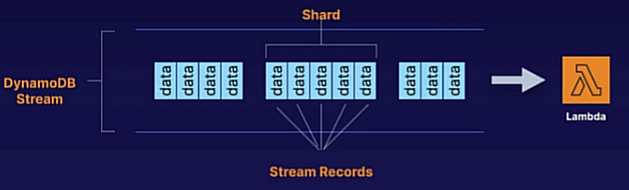
- Not enabled by default - 26DynamoDB Streams- Time-ordered sequence of item-level changes in a table
- 27DynamoDB Global Tables- Add Redundancy to DynamoDB
- Must turn on DynamoDB Streams
- Globally distributed apps
- Replication latency under one second - 28Amazon DocumentDB- Database for MongoDB
- 29Cassandra- AWS Keyspaces
- Uses NoSQL
- Big data solution - 30Neptune- Graph database
- 31QLDB (Quantum Ledger Database)- Immutable databases
- 32Timestream- Time-Series Data
- 33Security Groups- Virtual firewalls
- Stateful - 34Network ACLs- Optional Layer of Security that acts like a firewall
- Default: allows all inbound and outbound traffics
- Custom: denies all inboUnd and outbound traffic
- Subnets are associated with a network ACL
- 1 subnet -> 1 ACl & 1 ACL -> n subnets
- Block IP here (not in Security Groups) - 35VPC endpoints- Privately connect your VPC to other supported AWS services
- Connect AWS services without leaving Amazon internal network
- Interface and gateway endpoints - 36VPC peering- Connect 1 VPC with other via direct network route using private IP addresses
- Peering is in a star configuration
- Does not support transitive peering
- Peer between regions - 37AWS PrivateLink- Peering tens, hundreds to thousands of VPCs
- Requires a Network Load Balancer and an ENI (on the customer VPC) - 38Transit Gateway- Connects on-premises and VPCs through a central hub
- Simplifies network topology
- Acts as a cloud router
- Can limit how VPCs talk to each other - 39Direct Connect- Establish a private connectivity between AWS and your on-premise data center
- Physical Ethernet connection
- More fast, secure, reliable than VPNs - 40VPN Cloudhub- Simplifies VPN Topology
- 41WavelenghtScenario about 5G increasing application speeds at the edge using mobile networks
- 42Route 53- Amazon DNS service
- Allows you register domain names, create hosted zones, manage and create DNS records - 43CNAME- Resolve one domain name to another
- Cannot be used for naked domain names - 44A Record/ Alias- Used by a computer to translate the name of the domain to an IP address
- Can be used for naked domain names - 45Simple Routing Policy Route53- Sends traffic at a random order
- 46Weighted Routing Policy Route 53- Send traffic based on weights (80% - 20%)
- 47Latency Routing Policy Route 53- Sends traffic based on latency
- 48Failover Routing Policy Route 53- Sends traffic based on Active/Passive
- 49Geolocation Routing Policy Route 53- Sends traffic us to us-east and eu to eu-west
- 50Geoproximity Routing Policy Route 53- Based on geographic location of users and resources
- Must have Route 53 traffic flow - 51Elastic Load Balancing- Distributes incoming application traffic across multiple targets
- Multi Az - 52Application Load Balancer- Operates at Layer 7
- Listeners
- Rules
- Target Groups
- Only support HTTP and HTTPS (with SSL) - 53Network Load Balancer- Operate at Layer 4
- Use where you need extreme performance
- Protocols not supported by Application Load Balancers
- Can decrypt traffic but needs certificate installed - 54Classic Load Balancer- Uses layer 7 and 4
- Legacy Load Balancers
- X-Forwarded-For: see original ip address of the client
- Error 504: application stopped responding - 55Sticky Session- Bind user´s session to a specific EC2 instance
- 56Deregistration Delay- Enabled: keep connections open even if the EC2 instance becomes unhealthy
- Disabled: immediately close connections to instances that are unhealthy - 57CloudWatch- Monitoring and observability platform
- Uses metrics
- Best to create Alarms - 58CloudWatch Logs- Monitor, store and access log files from a variety of sources
- Agent Based
- If are SQL logs -> CLoudWatch Logs Insight - 59Grafana- Data visualizations that allows querying, correlating, and visualizing your metrics, logs and traces from different sources
- AWS Managed
- Use cases: Container Metrics visualizations, IoT, troubleshooting - 60Prometheus- Used for securely monitoring container metrics at scale
- Serverless - 61Vertical Scaling- Resizing ec2 instances to match with demand
- 62Horizontal Scaling- Adding or removing instances to match up with the demand
- 63Auto Scaling Groups- Collections of EC2 instances that are treated as a collective group for purposes of scaling and management
- Set up minimum, maximum and desired number - 64Scale out- The act of adding more instances when needed
- 65Scale in- The act of removing instances when they are not needed
- 66RDS Scaling- Aurora serverless
- Uses read replica (spread workload)
- Scaling Storage (only able to scale up not down)
- Vertical scaling (resizing database) - 67Non-relational Database Scaling (DynamoDB)- AWS is responsible for scaling
- Provisioned: predictable workload
- On-demand: Sporadic workload - 68SQS- Messaging queue that allows asynchronous processing of work
- Default retention period: 4 days
- Encrypted in transit by default (add at rest)
- Not bi-directional
- Long vs short polling (always prefer long) - 69SQS FIFO- Guarantees messages ordering
- No message duplication
- Lower performance
- More expensive - 70SNS- Push-based messaging service
- Delivers message to subscribed endpoints
- Encryption in transit by default (add at rest)
- If it fails, it will not try again (except http(s))
- Loves Cloudwatch
- Often used as alerts - 71API Gateway- Fully managed AWS service that allows you to create, maintain, monitor and secure your API
- Safe "front door" to your application - 72AWS Batch- Run batch computing workloads (EC2 or ECS/Fargate)
- Skip installation and maintance of batch computing - 73Amazon MQ- Managed messagin broker
- RabbiMQ or ActiveMQ (Always choose Amazon MQ)
- JSM, AMQP 0-9-1, AMQP, MQTT, OPenWire, Stomp protocols -> Amazon MQ has to be in the answer - 74AWS Step Functions- Serverless orchestration service
- State Machine
- Workflow decision requirements: condition checks, failure catches, wait periods - 75Amazon AppFlow- Managed integration service to exchange data between SaaS appas and AWS services
- Bi-directional data transfers
- Managed and faster transfer of SaaS into AWS services - 76Redshift- Fully managed, petabyte-scale data warehouse
- Very large relational database
- Only supports single-AZ deployments - 77Elastic MapReduce (EMR)- Managed big data platform to process vast amounts of data using open-source tools
- AWS ETL tool
- Creates EC2 instances in your VPC
- Open Source Cluster - 78Kinesis- Ingets, process and analyze real-time streaming data
- Two versions: Data streams and data firehose
- Can be a queue (like SQS). Is faster than SQS and can store data up to a year (but sqs is easier) - 79AWS Athena- Iteractive query service to analyze data in S3 using SQL
- Serverless SQL - 80AWS Glue- Serverless data integration that makes it easy to discover, prepare and combine data
- Allows you to ETL workloads without managing Underlying servers - 81AWS QuickSight- Fully managed BI data visualization service
- Creates dashboards
- Sharing data - 82AWS OpenSearch (ElasticSearch)- Managed Service allowing to run search and analytics engines
- Ingets, search and analyze data in your clusters
- Used primarily for analyzing log files and various documents, especially within an ETL process - 83AWS Data Pipeline- Managed ETL service to automate movement and transform your data
- Data-driven workflows
- Integrates with storage services and compute services - 84Amazon Managed Streaming for PAache Kafka- Fully managed service for running data streaming apps that uses Apache Kafka
- Provides control-plane operations
- Push broker logs to CLoudWAtch, S3 or Kinesis Data Firehose - 85Lambda- Serverless compute service to run code without provisioning or managing servers
- 15 minutes of runtime
- Lambda Triggers: S3, Kinesis, EventBridge (common triggers) - 86Container- Standard unit of software that packages up code and its dependencies so apps runs quickly and reliably from one computing environment to another
- - 87ECS- Manage 1, 10, hundreds to thousands of containers
- ELB integration
- Easy to use
- Role Integration
- Always prefered over EKS
- AWS Container management solution - 88EKS- AWS managed Kubernetes management solution
- Best used when you are not all in on AWS
- More work to configure - 89Fargate- Serverless compute engine for containers
- Uses ECS or EKS - 90Lambda x Fargate- Fargate when you have more consistent workloads
- Lambda to unpredictable or incosistent workloads
- Lambda to applications that can be expressed as a single function - 91EventBridge- Serverless event bus
- Pass events from a source to an endpoint
- EventBridge is the glue: holds together serveless application to Lambda functions - 92ECR- AWS Managed container image registry
- Private - 93ECS and EKS Anywhere- Orchestrates containers outside AWS
- 94Aurora Serverless- On-demand or Auto scaling database
- Based on demand - 95AWS X-Ray- Collects application data to gain insights about requests and responses of services
- Traces and downstram response times - 96DDos Layer 4 Attack- SYN Flood
- Amplification attack - 97DDos Layer 7 Attack- Get or POST flood
- 98CloudTrail- AWS service that increases visibility by recording API calls and Console actions (on a S3)
- It´s like a CCTV
- Identify which users and accounts called AWS
- After incident investigation, real-time intrusion detection, industry and regulatory compliance - 99AWS Shield- Protection from DDoS attackes on Layer 3 and 4
- There is a paid version (Advanced) costs $3000 a month - 100AWS WAF- Web Application Firewall that monitors HTTP and HTTPS requests
- Filter what IP addresses are allowed
- Operates at layer 7
- Allow all requests except the ones you specify
- Reject all request except the ones you specify
- Count the requests that match properties that you specify
- Can block DDoS Attacks as well - 101AMazon GuardDuty- Threat detection service
- Uses AI to monitor for malicious behavior
- Analyzes unusual API calls, unauthorized deployments etc
- 7-14 days to set a baseline
- Monitors CLoudTrail logs, VPC Flow Logs and DNS logs - 102Firewall Manager- Security management service in a single pane of glass
- Centrally set up and manage firewall rules across AWS Organizations - 103Macie- Uses AI to inspect data in S3
- Finds PII, PHi and financial data - 104Inspector- Automated security assessment service that helps improve security and compliance of apps deployed on AWS
- Network assessments: VPC scan
- Host assessments: EC2 scan - 105KMS- Managed service that creates and control encryption keys used to encrypt your data
- Centralized control over the lifecycle and permissions of your key
- Have automatic Key rotation - 106HSM- Hardware Security Module
- Physical computing Device that safeguards and manages digital keys and performs encryption and decryption functions - 107CloudHSM- Dedicated HSM
- Full control of underlying hardware
- No automatic key rotation - 108Secrets Manager- Service that stores, encrypts and rotates your DB credentials and other secrets
- Automaticaly rotates credentials (not by default)
- When rotation is enabled, immediately rotates the secret (be careful) - 109Parameter Store x Secrets Manager- If it depends of the costs choose parameter store
- 110Presigned URLS- Anyone who receives the presigned URL can access the object for a limited time
- 111ARN- arn:partition:service:region:account_id:resource_type/resource
- arn:aws:iam:us-east-1:123456789012:table/orders
- arn:aws:s3:::my_bucket/image.png - 112IAM Policies- Explicit deny > everything else
- AWS joins all applicable policies
- Not explicitly allowed == impclicitly denied - 113AWS Certificate Manager- Creates SSL certificates
- Integrates with ELB, CloudFront, API Gateway
- Free service - 114Audit Manager- Continual Audit AWS usage to stay compliant with industry standars and regulations
- HIPPA or GDPR -> think of this service - 115AWS Artifact- DISTRACTOR
- audtis and compliance reports - 116Cognito- Authentications, authorization and user maangement
- User pool: Authenticate and get tokens
- Identity Pool: Use tokens to get AWS Credentials - 117Amazon Detective- DISTRACTOR
- Analyzes root cause of event - 118AWS Network Firewall- managed service to easily deploy physical firewall protection across your VPCs
- 119Security Hub- View all security related alerts in a central place
- 120CloudFormation- Creates immutable architecture
- Stateless is better than stateful
- Can use Parameter store to help make you more flexible templates - 121Elastic Beanstalk- Amazon PaaS
- Single-stop application deployment model
- Beanstalks should be u sed for simple one-stop solutions - 122Systems Manager- Suite of tools designed to let you view, control and automate AWS architecure ans on-premises resources
- Automation Documents: used to control AWS resources - 123CloudFront- CDN that securely delivers data, videos, applications and APIs
- Helps reduce latency using AWS edge locations
- Defaults to HTTPS connections with ability to add SSL certificate (only way to add HTTPS to static S3 website) - 124ElastiCache- Managed version of 2 open source technologies: Memcached and Redis
- 125Memcached- Simple database caching solution
- Not a database by itself
- No failover
- No backups - 126Redis- Supported as a caching solution
- Functions as a standalone database
- Failover
- Supports backups - 127DynamoDB Accelerator (DAX)- In-Memory Cache
- Reduce DynamoDB response times
- Highly available - 128DAX x Elasticache- DAX only to DynamoDB
- ElastiCache is more flexible - 129Global Accelerator- Networking service that send users traffic through AWS infra
- Helps to deal with IP Caching
- Always saves two IP addresses - 130AWS Organizations- Free governance tool that allows you to create and manage multiple accounts
- Centralized logging
- Easily create and destroy accounts
- Consolidated Billing
- Service Control Policies (only way to restrict root account) - 131AWS Config- Inventory Management and Control tool
- Shows history of our infra
- Creates rules to make sure resources conforms to the best practices
- this service = standards - 132AWS RAM (Resource Access Manager)- Allows you to share resources with other accounts within your organization
- same region -> use this service
- different region -> use VPC Peering - 133Cross-Account Role Access- Ability to set up temporary access
- 134Directory Service- AWS Fully managed version of Active Directory
- Managed Microsoft AD: entire AD suite
- AD Connector: tunnel between AWS and your on-premises AD - 135Cost Explorer- Allows you to visualize your cloud costs
- Generate reports based on variety of factors (resource tags) - 136AWS Budgets- Plan and set exppectations around cloud costs
- Create alerts to warn users about exceeding their allotted spend - 137Compute Optimizer- Anaylzes configurations and utilization metrics of AWS resources
- Reports current usage optimizations and potential recommendations
- Can create graphs - 138Trusted Advisor- Fully managed best-pratice auditing tool
- Recommended best practices provided by AWS
- Cost Optimization, Performance, Security, Fault Tolerance, Service Limits
- Possible to automate a response - 139AWS Control Tower- Set up and govern an AWS multi-account env
- Automates account creation and security controls
- Prevents governance drift with guardrails
- Quickest way to create and manage a secure, compliant multi-account env - 140Guardrails- High-Level rules providing continuous governance for AWS env
- 141Account Factory- Configurable acocunt template
- 142CloudFormation StackSet- Atuomated deployments of templates deploying repeated resources for governance
- 143Shared Accounts- Three accounts used by Control Tower created during landing zone creation
- 144Preventive Guardrail- Ensures accounts maintain governance by disallowing violating actions
- Uses SCP
- Supported in all regions - 145Detective Guardrail- Detects and alerts on noncompliacnt resources
- Uses AWS config rules
- Only in certain regions - 146License Manager- Simplifies Managing software licenses
- Centrally manage licenses
- Strictly used for licenses - 147AWS Health- Visibility of resource performance and availability of AWS services or accounts
- Have alerts - 148AWS Catalog- Create and manage catalogs
- AMIs, servers, software, databases
- Are written in cloudformation templates - 149AWS Proton- Creates and manages infrastructure and deployment tooling
- 150Snowcone- 8TB of storage, 4GB of memory and 2 vCPUS
- IoT sensor integration - 151Snowball Edge- 48Tb to 81Tb in storage
- Storage, COmpute and GPU flavors - 152Snowmobile- 100 PB of storage
- Designed for exabyte scale data cente migration - 153Storage Gateway- Hybrid cloud storage service that helps you merge on-premise resources with AWS
- One time migrations or long-term pairing - 154File Gateway- Uses NFS or SMB mount to connect to AWS cloud
- Helps with migrations to AWS - 155Volume Gateway- Uses iSCSI mount to connect to AWS cloud
- Perfect for backup or migration - 156Tape Gateway- Replace physical tapes
- Doesnt change current workflow - 157DataSync- Agent-based solution to migrate on-premises storage to AWS
- Uses NFS and SMB shares
- Is a migration solution
- One time migration
- Continuous Sync -> Storage Gateway - 158Transfer Family- Move files in and out of S3 or EFS using SFTP, FTPS or FTP
- Best way to change nothing
- Trick old applications to use S3
- Legacy Applications - 159Migration Hub- Single place to track progress of your application migration
- 160Application Discovery Service- Helps to plan, simplify and track migration
- Agentless and Agent Based discoveries - 161AWS Application Migration Service- Also known as AWS MGN
- Good RTO and RPO
- Automated lif-and-shift service for expediting migration apps to aws
- Used for physical, virtual or cloud servers - 162Amazon Comprehend- Understand meaning and sentiment in your text
- Positive or negative things about a comment - 163Kendra- Intelligent search service
- Uses ai to find different silos of information (in S3, file servers and websites) - 164Textract- Extracts text, handwriting and data from scanned documents
- 165Amazon Forecast- Predict Time-series data
- IoT, Analytics and DevOps Applications - 166FraudDetector- Detect fraud in your data
- Scenario where you are asked to build a fraud detection machine learning - 167Amazon Transcribe- Convert Audio and Video files into text
- Used to generate subtitles - 168Lex- Build conversational interfaces in apps using natural language models
- Used to automated bots
- Virtual agents - 169Polly- Turns your text into lifelike speech
- What Alexa uses to speak more naturally - 170Lex- Build conversational chatbots
- Logic behind A-Lex-a - 171SageMaker- Ground Truth: set up labeling jobs for traingin datasets
- NOtebook: Managed Jupyter Notebook env
- traning
- Inference
Informationen
- Beschreibung
- Karteikarten am aws solutions architect, erstellt von Artur Lee am 19/08/2023.
- Erstellt von
- Artur Lee
- Aufrufe
- 4
- Bewertung