
Karteikarten
Chem second semester final
Karten in diesem Stapel (151)
- 1photoelectronic effectmovment of electrons in some metals at specific wavelengths of light creating a weak current flow
- 2electron cloudimage produced due to the movment of an electron around the nucleus of an atom
- 3orbitalspecific shape of an electron cloud
- 4energy and frequency equationE = h x frequecy
where E is energy and h is planks constant which equals 6.626 x 10 to the negative 34 J x second - 5sublevela region in space where an electron will most likley be found , it is the region around the nucleus where the electron will most likley be seen if it could be seen
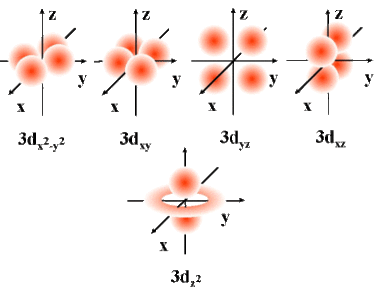
- 6d orbital
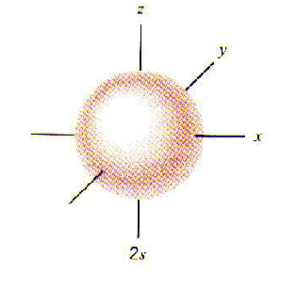
- 7s level orbital
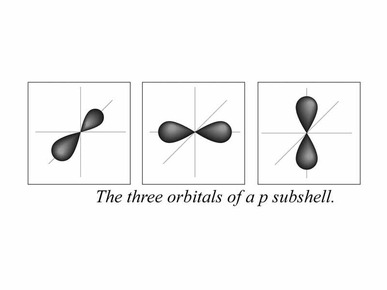
- 8p orbital
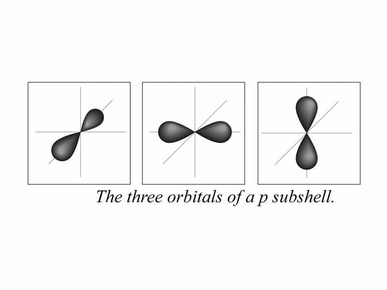
- 9p orbital
- 10f orbital
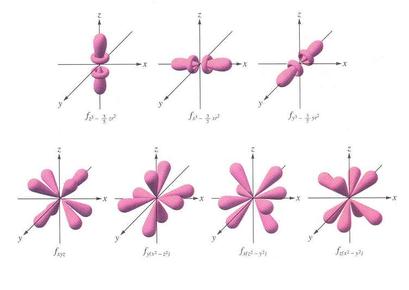
- 11f orbital
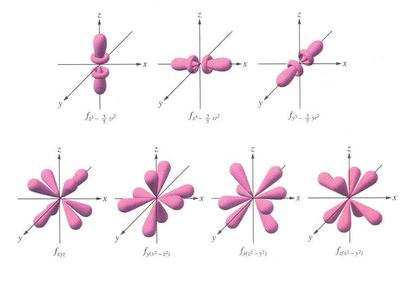
- 12aubauf principalelectrons enter orbitals of lowest energy first
- 13pauline exclusion principalorbitals contain a maximum ampunt of two electrons. the first electon has a positive spin and the second electron has a negative spin
- 14pauline exclusion principalorbitals contain a maximum ampunt of two electrons. the first electon has a positive spin and the second electron has a negative spin
- 15pauline exclusion principalorbitals contain a maximum ampunt of two electrons. the first electon has a positive spin and the second electron has a negative spin
- 16hunds levelin sublevels that contain more then one orbital so pretty much the P D and F the e- will enter each orbital one at a time with a positive spin before doubling up
- 17energy leavel diagramrepresentation fo the elecrons relative to their energy
- 18principal quantum numberstates the energy region of the electrons .
the principal quantum number representation is n =
n1 = s level only
n2= s and p levels only
n3= s , p and d levels only
n4 = s,p,d, and f levels only - 19electron configurationrepresentation of the orbital, sublevelm and number of electrons in the sublevel
2He= 1S2
1 is the quantum number , s is the orbital,and then two is number of electrons in the sublevel.
when writing out these the principal quantum numbers must be in order so if 4s is before 3d then the 3d and 4 s must be switched - 20placment of reaction electronsreaction electrons are located in the highest quantum number, not on the highest sublebe
- 21promotions s-d levelselectrons will prmote to allow
greater stability they do this
1. half filling their outer s and d levels
2. totally filling the d level and half filling the s.
it is the s level electrons that are always promoted - 22reasons why the condensed electron figuration is needed- elements in a noble gas arrangment are non reactive in a normal reaction system
-this configuration presenst the outermost electrons which will most likley be invilved in reactions , reactions always happen in the highest quantum level - 23condensed shorthand notation3Li = [ 2He] 2s1
27 [CO] 4s2 3d7 - 24Orbital overlaysLook at notes for these they are pretty straight forward
- 25quantum addressway of writing the location of an electron.
20Ca (4,0,0-1/2)
41Nb (4,2,0,1/2) - 261st number of the addressprincipal quantum number , gives the main level of an e-. They will be the principal quantum numbers 1 for s subleve. 2 for p sublevel. 3 for d subleve. 4 for f sublevel.
- 272nd number of the addressis the angualr movment , it gives the type of orbital
1. 0 for s sublevel
1 for p sublevel
2 for d sublevel
3 for f subleve - 28third level of the addressmaximum quantum number this the orientation of the orbital . is is a Px , a DXy, or and F...
to assign these you do an energy level row for this sublevel start at the middle go positive numbers to the right and negative to the left - 29third level of the addressmaximum quantum number this the orientation of the orbital . is is a Px , a DXy, or and F...
to assign these you do an energy level row for this sublevel start at the middle go positive numbers to the right and negative to the left - 304th level of the addressmagnetic spin number- is eithe a positive 1/2 for the first electron in or a -1/2 for the second electron in
- 31stability rule 1noble gas configuration. it wants its outer electrons to be liek that of a noble gas meaning outermost s and p levels
- 32stability level 2pseudo noble gas configuration filled outtermost s, p and d levels
- 33stability rule 3outermost filled s orbital
- 34stability rule 4half filled outtermost s,p,d,f
- 35stability rule 5none of the above.
- 36stabilityrule one is the greatest and 5 is the least. atoms want their electrons to be in the greatest stability arrangment
- 37chemical tendencythe gaining or losing of electrong during the formation of an ion
- 38metal chemical tendencytends to lose e-
- 39nonmetals chemical tendencytends to gain e- from anions
- 40periodic patternstraits that exist as you move across or down sections of the periodic table
- 41atomic radius(size of radius) the measure of hald the distance between atoms lath are next to eachother in a crystal. the pattern
ACROSS THE PERIOD - size of the atoms radius's decrease
DOWN THE GROUo - size of the atoms radius increase - 42ionization energyamount of energy needed to remove an atom from an atom ... look in notes for examples.
PATTERN :
ACROSS THE PERIOD - ionization increases
DOWN THE GROUP - ionization energy decreases this is due to the shielding effect - 43shielding effectthe outter e- are hidden from the nucleus and easier to remove theen the inner ones because they are hidden from the nucleus
- 44Determining is elements follow the inonization energyyou find out what happens when you remove the last electron from the last level of the energy level diagram then find out where it ranks in terms of chemical stability and chemical tendency . if it its more beneficial to ionize then it wil. use the periodic pattern to find out if it follows the pattern
- 45doing second ioniozation energysame procedure as finding the first ionization energy but you take out 2 electrons . it follows the second IE pattern if it takes on the same characteristics of the 1st IE
- 46electron affinitymeasures the chane in energy when an e- is added to an atom
- 47periodic pattern for electron affinityAcross the period excluding nnoble gases the EA increases
down a group it decreases due to the shielding effect - 48figuring out if elements follow the periodic patternis gone about the same way as ionization energy . if an atom gains greater stability by gainig an electron then it then it needs less energy if it is hurt then it needs more energy .
- 49electro magnetivitymeasures teh ability of an atom to pull electrons toward itself in a bond
- 50periodic tend of electromagnetivityacross a period - electromagnetivity increases
down a group- electromagnetivity decreases - 51electromangetivity differences0.0-0.4 nonpolar covalent bond
0.4 - 1.0 slightly polar convalent bond
1.0 -2.0 sliglthy polar covalent bond
2.0 and greater ionic bond - 52finding electromandetivity of two elementslook at the chart on the back of the periodic table and find the numbers for each element and subtract them
- 53heterogeneousmixture in which you can see the seperate particels contained in it
- 54homogeniousyou can not see the seperate parts of the mixture
- 55electrolytea solution that conducts electricity because the substances dissolved in it allow it to conduct an electrical current because they are charged particles
- 56nonelectrolytesa substance that dissolves in water to give the solution that does not conduct an electrical current .
- 57process of solvationchemical making of a solution.
1. breaking solute -solute bonds
2. breaking solute-solvent bonds
*** both above are endothermic
3. Making solute solvent bonds
*** it is an exothermic reaction - 58solutionsmallest particles of combined matericals they do not refect light beacues the particles are so slow that the light just passes over them
- 59colloidthey are large and they refelct light and give a hazy look they are combinations of particles, alloys are a type of these
- 60suspensionsmixtures where partices are suspended in the solution then sink back down to the bottom
- 61solutesubstance being dissolved
- 62solventsubstance doin the dissolving
- 63solvation of an ionic crystallook in the notes
- 64solvation of a molecular crystallook in the notes
- 65rate of solutionhow fast we can get a substance in solution
- 66wasy to speed up rate of sultion of a solid into a liquid1. agitate it
2. crush the soluton
3. increase the temperature of the mixture - 67increasing rate of solution of a gas into a liquid1. decrease the temp of the mixture
2. increase the pressure of a mixture - 68saturated solutionmaximum amount of solute into soultuon
- 69ubsaturated solutionmore solute will be able to be dissolved
- 70supersaturated solutionmore solution in solvent then is normally possible
- 71reading solubility graphslook in notes
- 72molaritymass solute / l of solutiom
- 73how to make a mixtureuse a volumetric flask. fill it half way with distilled H20 . add the G of the solute which will be found using the molarity. then swirl it until fully dissolved then fill up to the etched line with distilled H20
- 74moalrity with stiochemistyhow many grams of Cl2 are produced when 87.2 ml of 42MHCL reacts with excess phophorous.
You will be ginvent the balaenced equation and you must use the molarity relationship
ANSWER: 1.30 x 10 to the 1 grams of Cl2 - 75molalitymoles solute / Kg solvent
- 76using molality in mathhow many grams NaOh are neede to reproduce 7.6 M NaOH using 665 g H20
ANSWER: 2.02 x 10 to the second g NaOH - 77dissociationformation of ions in aqueous solution from ionic substances
- 78ionizationformation of ions in aqueous solutions from molecular substances
- 79colligative propertiesrelationship influenced by the number of particles in a sample
- 80freezing point depressiondelta t f = Kf . m . number of formula particle
delta t f is the number of degrees the freezing point will change
Kf is the molar Fp constant
m is the moalr concentration - 81finding the freezing point depressiondetermint the frezing point depression of 9.81 m KCl aqueous solution
ANSWER: -36.5 degrees celcius - 82boliing point elevationdelta T =Kb . m. number of formula particles.
delta K b = change of degrees for boiling
m = molal concentration
kb= molar boliling point constant - 83finding boiling point elevationcalculate the boiling point of 5.26 m nonelectrolyte ether solution
ANSWER: 45.2 degrees celcius - 84molar dilution equationM1V1=M2V2
- 85finding molar dilutionswhat amount of 4.7 m H2SO4 solution is needed to prepare 150 ml of a 1.5 molar H2SO4 solution
ANSWER; 4.8 x 10 to the 1 ml - 86normalityH+ or OH- mol equivelenace/ l solution
3.3 M HCL = 3.3 normal HCl
3.3 M H2SO4 = 6.6 normal H2SO4
4.4 normal H2Cl = 2.2 H2SO4 - 87organic chemistrycompounds composed of covalently bonded carbon, hydrogem and smaller amounts of elements such as nitrogen, oxygen, halgoens ect
- 88alkanesingle bonds in the carbon chain
- 89prefixes for expressing number of carbons in a compound1. meth
2 eth
3 prop
4 but
5. pen
6. hex
7. hept
8. oct
9. non
10. dec - 90aneending saying there is only one bond
- 91substituentsadditions to the main chaing of carobns
- 92substituent the halogensFlorine- floro
Chlorie- Chloro
Iodine - Iodo
Bromine- Bromo - 93substituents the methyl groupCh3-methyl
Ch2, Ch3 - ethyl
CH2,CH2,CH3- propyl - 94substituents the methyl groupCh3-methyl
Ch2, Ch3 - ethyl
CH2,CH2,CH3- propyl - 95other substituentsamino - NH2
nitro - NO2 - 96nomenclature rules1. locate the longest carbon chaing , this is assigned the family name
2. the substituents are assigned carbon positions so they will dispay the lowest number of carbon positions
3. substituents are arrened in aplhabetical order are prefixes are used to describe the number of atoms - 97condensed formularead notes for this . you will always start at the first carbon and wirte it out from there
- 98alkene familysays theri are double bonds in the carbon chain
- 99alkyne familysays their are triple bonds in the main carbon chain
- 100alkene and alkyne nomenclaturethe multiple bonds are assigned the smallest numb carbon in the chain
2. the substituents are then assigned the next smalles carbon numbers
3 alphabetical order is next used - 101deriving R in the ideal gas law equationYou first need to convert your PV, n and T to the appropriate thing like atm, mL, Mmoles and Kalvins. then plug the values in the equation and you will find R
- 102Using the Ideal gas law equationdetermine the volume of a sample of chlorine weighing 12.4g at 25.6 degrees celcius and 3.95 atmospheres
R= 8.21 atmL / molesK
ANSWER : 1.09 x 10 to the 1st L CL2 - 103Graph of the ideal Gas Law equationso the graph is extrapalated. P and V are on the y axsis and n and T are on the other. there will be 2 slopes the slope of A and the slope of B and they are equal to eachother
- 104Molar conversions1 mole = molar mass
1 mole = 6.02 x 10 to the 23rd particles
1 mole = 22.4 L at STP
*** for the ideal gas laws you can not use this conversion - 105Using the ideal gas law and stiochemetryC5H10 reacts with O2 at 25.0 degrees celcius at 842 torr. determine the volume in ml of CO2 produced if the pentine measures 18.9 g.
Ok so your gonna do the converstions for the ideal gas law equations. then your gonna do the mapping and go from g C5H10 to moles C5H10 to moles of the CO2 at this point you cant go from moles to l because because its not at STP so you use the ideal gas law equation to get to liters and the go from liters to Ml CO2 .
ANSWER: 2.98 x 10 to the 4th mL CO2 - 106Daltons law of partial pressuresthe total pressure of a mixture of gases equals the patrial pressures of all the gases that are mixed into it
- 107Daltons law of partial pressures equationPT= P1+P2+P3....
- 108Daltons law of partial pressures equationPT= P1+P2+P3....
- 109How to use Daltos law of partial pressuresWhat is the pressure of a gas collected by the displacemet of H2O if the total pressure is 895.6 torr ar 24.0 degrees celcius
PT= p + 120+ px
H20 Pressure = 22.4 torr
895 torr = 22.4+Px
Px= 873.2 torr - 110Effusionmovment of gas through a narrow opening
- 111diffisionmovment of gas from a region of higher concentration to a region of lower concentration
- 112diffisionmovment of gas from a region of higher concentration to a region of lower concentration
- 113Grams Law of Effustion equationRate of A / Rate of B = the square root of MMB / MMA
**** MM stands for molar mass - 114using grams law of effusion equation option 1Compare the rate of effusion between CO2 and N2
ANSWER : N2 effuses 125 times faster then CO2 - 115using Grams law of effusion option BCo2 effuses at a rate of 1.16 times faster then and unknown gas determine the molar mass of the Gas.
Anawer = 59.4 grams / mole - 116quantum mechanicsthe sturcures of an atom relating the frequency , wavelenght, and energy signatures of the atoms electrons
- 117electro magnetic spectrumdisplay of the relationshi of electromangnetic radiation
- 118radiationway of categorizing energy systems
- 119the electromagnetic spectrumRadio Waves
micro waves
inferred
Visibe ROYGBIV
ultra volate
x-rays
gamma rays
cosmic rays
the spectrum moves from left to right! - 120crestthe top of a wave
- 121troughthe very bottom of the wave
- 122Wavelenghtthe distance between corresponding parts of the wave.
- 123lambdathe greek letter that symbolizes wavelength
- 124Frequencythe number of cycles a wave goes through within a given amount of time .
it is figured out cycles / minute - 125nuthe greek letter that looks like a v and represents frequency
- 126wavelenght and frequency relationshipinversly preportional
- 127wavelenght and the electromagnetic spectrumas you move from right to left the wavelength becomes shorter
- 128frequency and the electromagnetic spectrumthe frequency increases as you move across the electromagnetic spectrum
- 129equation for wavelength frequencyC=Wavelength X frequency
C is the speed of light and is a constant number equaling 3.00 x 10 to the 8th meter / second - 130Energy and wavelength relationshipthey are inversly preportional
- 131energy and the electromagnetic spectrumthe center visible light is neutral and then going to the left it is low energy and then from the center going right is high energy
- 132quantumexpression of energy from the electromagnetic spectrum
- 133photonquantum of light energy
- 134particle theory of lightlight travels in bundles (particles) that pulse from a source.
EX: a red glow from a hot metal - 135Pressure Conversions1 atm - 760 terr
1 atm - 760 mg Hg
1 atm - 101.3 KPa
*** all four of these measurments are equal and can be interchanges they are also conversion factors and can be used in dimensional analysis - 136Boyles Gas lawsat a constant temperature, the volume and pressure of a gas will vary inversley . as pressure increases volume will decrease and as pressure decreases the pressure will increase.
- 137boyles gas law equationP1 V1 = P2 V2
both the pressure and the volume must be taken at the same time. - 138manometera device used to measure the cahnge in pressure of a gas.
- 139example probelm of Boyles Gas lawat a constant temperature , the volume of a gas sample is 26.9 L at 32 atm. what is the volume in mililiters if the pressure becomes 878 torr?
ANSWER : 7.4 X 10to the 4th ml - 140Charles's Gas Lawsat a constant pressure temperature and volume will vary preportionally .
As temperature increases so will pressure and as pressure decreases so will temperature. - 141Temperature in Gas Law CaluclationsTemperature in Gas laws is always calculated in Kelvin Units .
- 142Calcuation for Kelvin Unitesdegrees Celcuis + 273 = Kelvin Units
- 143Charles Gas Law GraphThis graph will taper off into values unknown , when this happens the term is extrapalted, temperature will be on the Y axsis and the volume will be on the X axsis
- 144Charles Gas law equationV1T2=V2T1
- 145Gay-Lussiacs Gas Lawat a constant volume themperature and pressure will vary preportionally . As temperature increasis so will pressure as temperature decreases so will pressure
- 146gay Lussiacs graphthis graph is also extrapalated. The temperature will be on the Y axsis and the pressure will be on the X axsis.
- 147Heating of a Gasthe kenetic energy of the Gas will increase. The number of collision wil the sides of the container the gas is in increases and the pressure increases as well.
- 148Cooling of a Gasif you place a container of a gas in an ice bath it slows the kenetic energy of the particels down. because the energy has decreases the volume will decreases because they are exerting less force and also the pressure also decreases because their are less collisions of the gas against their container
- 149combined gas lawsrelationship that allowes the volume,pressure and temperature to vary simoultaneously. In this realtionship if something is held constant then it is canciled out of the equation
- 150combined gas law equationP1V1T2 = P2V2T1
- 151ideal gas law equationPV=nRT
n= number of moles of the Gas
R= the ideal gas law constant
Informationen
- Beschreibung
- High School/Secondary Exams Honors chemistry Karteikarten am Chem second semester final, erstellt von kayceecrist11 am 25/05/2013.
- Erstellt von
- kayceecrist11
- Aufrufe
- 109
- Tags
- Bewertung