
Karteikarten
Instrument Identification

Karten in diesem Stapel (41)
- 1—Burnisher
=smooth off rough margins of restoration, remove any scratches, emphasise grooves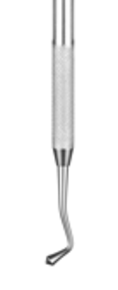
- 2—Flat plastic
= deliver materials into the cavity preparation and to manipulate plastic material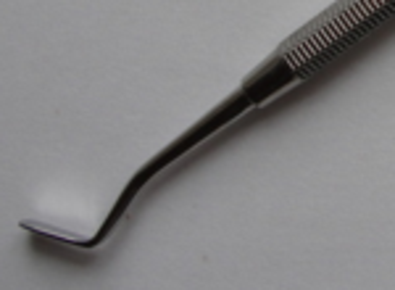
- 3—William's probe
= identify the depth of the sulcus or periodontal pocket. This probe is graded at 1, 2, 3, 5, 7, 8, 9 and 10 mm.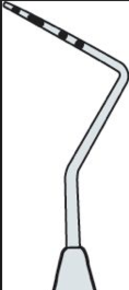
- 4—Gingival Margin Trimmer
= for the horizontal finishing of outter cavity margins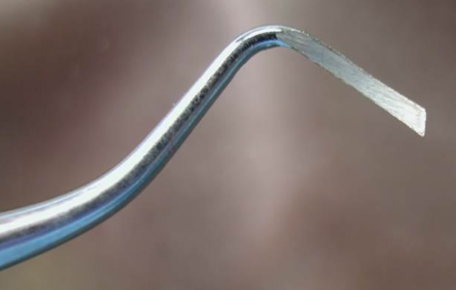
- 5—Green Gracey Curette (7/8)
- Buccal and palatal/lingual surfaces of posterior teeth
- 6—Blue Gracey Curette (13/14)
- Distal surfaces of posterior teeth
- 7—Brown Gracey curette (15/16)
- Mesial surfaces of difficult molars
- 8—Dark blue/purple Gracey curette (17/18)
- Distal surfaces of difficult molars
- 9—Polishing Discs
= polishing composite restorations, more aesthetically pleasing and smoother on tongue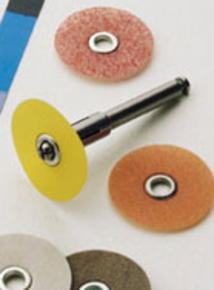
- 10—Cavitron (UltraSonic Scaler)
- to remove calculus and root surface debridement
- clean out periodontal pockets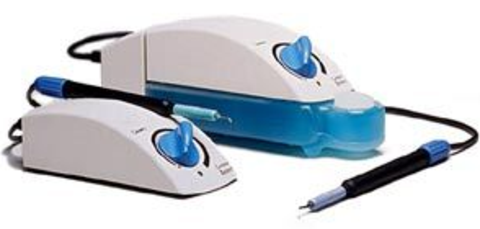
- 11—IRM
= used to fill access opening. powder and liquid mixed to make a thick putty-like paste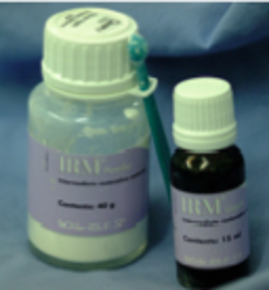
- 12—Rubber dam
(forceps/hole puncher/frame)
= used to isolate teeth during operative dental procedures+endodontics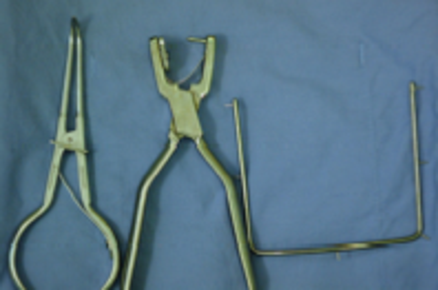
- 13—Light Grey Gracey Curette (1/2)
- All surfaces of anterior teeth
- 14—Dark grey Gracey curette (3/4)
- All surfaces of anterior teeth (for heavier deposits)
- 15—Orange Gracey Curette (11/12)
- Mesial surfaces of posterior teeth
- 16—Silicone Stoppers
= to set working lengths on files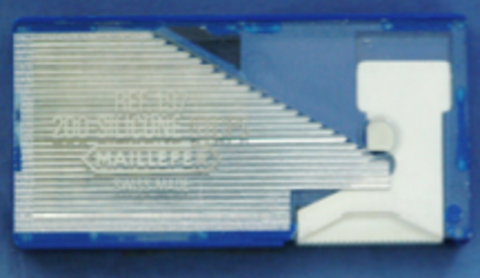
- 17—Gutta Percha
= used to obturate prepared canals
(we used 0.02 taper cones)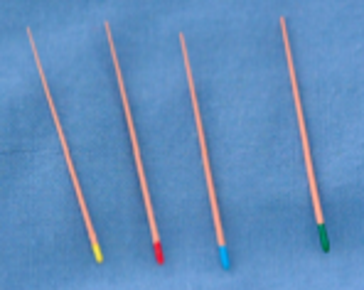
- 18—Endodontic explorer
= sharp, used to locate canal orifices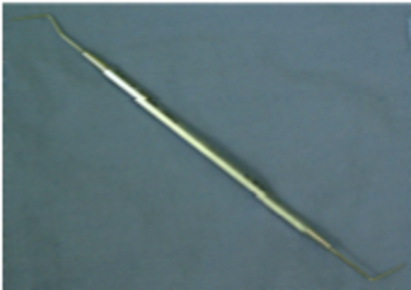
- 19—Endodontic ruler
= used to set lengths on files and gutta percha points.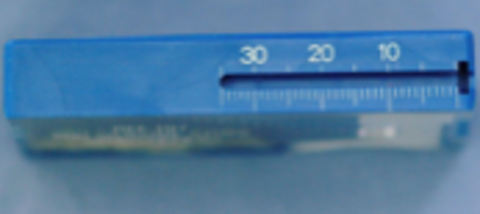
- 20—Paper Points
= used to dry fluids from canals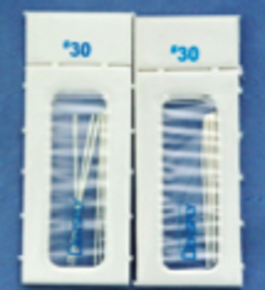
- 21—Finger Spreader
= used to laterally condense gutta percha during obturation of canal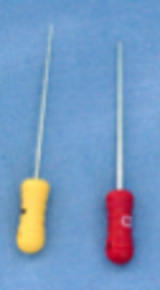
- 22—Barbed broaches
= for removal of pulp tissue form wide canals - 23—Reamers
= shaving canal wall via 'half twist and pull' motion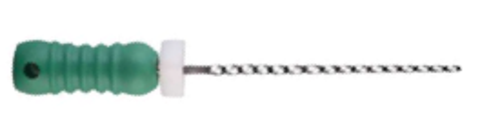
- 24—K Files
= twisting triangular or square cross section, used by reaming or push-pull action.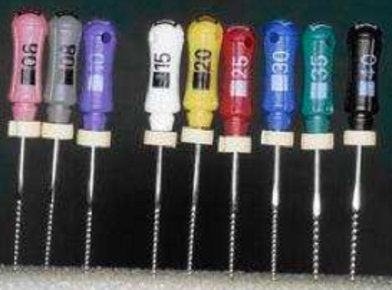
- 25—K flex-files
= rhomboid cross section, alternate sharp and non cutting edges, improved flexibility and reservoir for debris.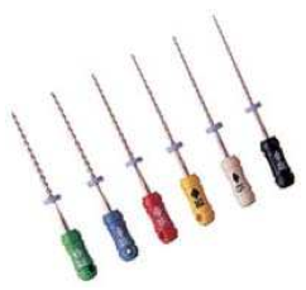
- 26—Hedstrom file
= round cross sectional blank, only push-pull action.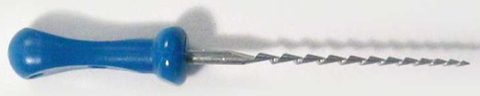
- 27—Nickel-Titanium files
= superelasticity and memory. (resistant to torsional force)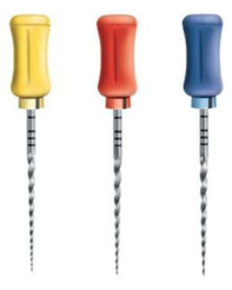
- 28—Greater Taper hand files
= creation of pre-determined funnel shaped canal with the use of fewer files. clockwise+anticlockwise going closer into apex (no need for stepback)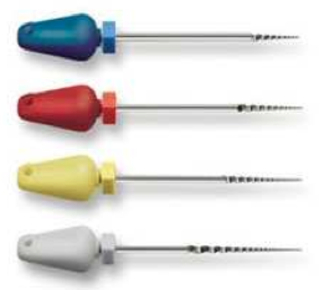
- 29What design features do rotary instruments have?Variable taper (dont have to use loads of different sized files to get desired taper)
Flute design (determine cutting efficacy and debris removal)
Non-cutting tips (reduce risk of apical transportation)
Radial land (minimise file fracture and keep file centred in canal) - 30How to use rotary instrument?Light pressure
5-10s each time then clean, irrigate, lubricate canal.
'Pecking motion'
GG for coronol flare then small hand file to WL enlarging canal to 15-20 size.
Then start with rotary - 31—Gates Glidden
= to flare up coronal section of canal, non end cutting and latch grip used in contra-angled hand piece.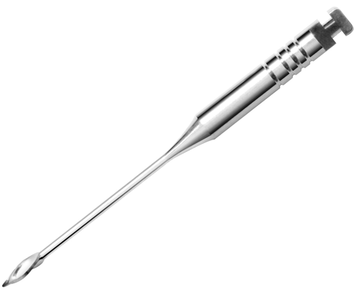
- 32—Excavator
= removal of caries inside cavity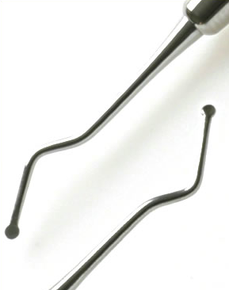
- 33—Chisel
= Get rid of enamel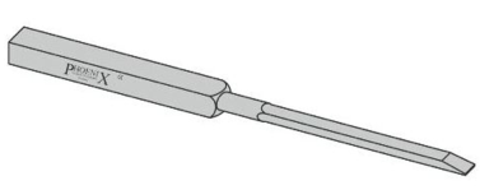
- 34—Explorer
= find soft spots of caries, scrape plaque of debris off, detection of calculus or PRF on restoration (overhangs etc).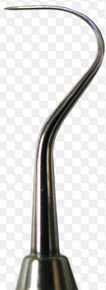
- 35—Retract soft tissues
Light reflection
Indirect view of the teeth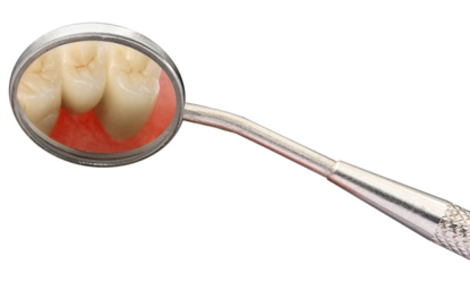
- 36—Syringe
= To administer analgesia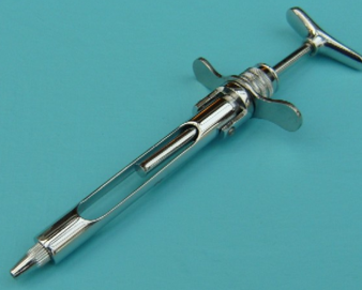
- 37—Air/Water Tip
= inserted into a valve that will allow the dental professional to blow air or squirt water on the desired area in the mouth. (disposable or metal tip)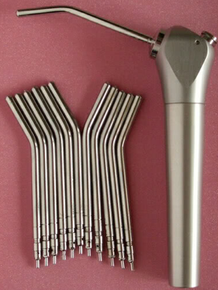
- 38—Plugger
= firmly pack the amalgam. This ensures all the air pockets are filled and allows the dentist to insert the maximum amount of amalgam.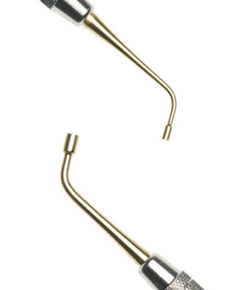
- 39—Carver
= create smooth surface of amalgam and make it anatomically look like tooth. occlusion with other teeth are ok.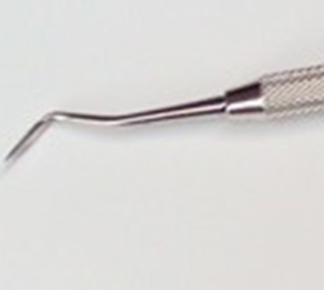
- 40—Spatula
= mix temporary fillings or glue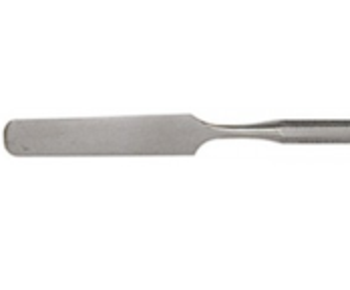
- 41Difference between gracey and universal currette?Universal - two cutting edges.
Gracey- one cutting edge (site specific).
Informationen
- Beschreibung
- undergraduate OSSE 2nd year Karteikarten am Instrument Identification, erstellt von Jeni Thomas am 26/05/2013.
- Erstellt von
- Jeni Thomas
- Aufrufe
- 83
- Tags
- Bewertung