
Karteikarten
Introduction to Project Management
Karten in diesem Stapel (128)
- 1Bruce Tuckman’s Stages of Team DevelopmentBruce Tuckman’s Stages of Team Development
➢ 1965 Assumptions:
• Teams go through a maturation or life cycle process.
• The stages are inevitable for the team to grow.
• The four life cycle stages are not necessarily of the same duration or intensity.
• The team performs better when there is a higher level of unity (group cohesion) → productivity rises with every stage. - 21. Forming• Team members tend to be both excited and anxious
• There is uncertainty and lack of clarity on goals, norms, structures, roles and expectations
• “Feeling each other out” – adaptive & conformist behaviour
• Need for direction and clarity on goals and roles & responsibilities - 32. Storming• The gap between expectations and reality becomes clear
• There is confusion and frustration with regards to roles, goals, authority
• Boundaries are tested
• Subgroups may form (“us versus them”)
• Struggle for attention, power and authority
• Some progress on tasks - 43. Norming• Understanding and appreciation of differences
• Growing trust, respect, cohesion and harmony
• Increasing clarity in roles, goals, tasks and structure
• (Shared) values are lived
• Increasing results: average to high
• Willingness to share leadership, responsibilities and control
• A “we” feeling emerges and energises
• Conflicts are accepted and handled constructively - 54. Performing• Strong shared sense of purpose.
• Empowered team: interdependence, optimal productivity, continuous learning and improvement.
• Relationships and communication based on trust, respect and openness.
• Flexibility and shared leadership enable a quick response to new challenges.
• Acknowledgement and appreciation of individual and team performance. High morale.
• Open and integrative in relation to context and environment. - 65. Adjourning• The project comes to an end and the team disbands
• Team members may experience a sense of loss and/or positive anticipation about regaining their independence
• Celebrate successes and capture best practices
• Reflect, evaluate and reap the learning
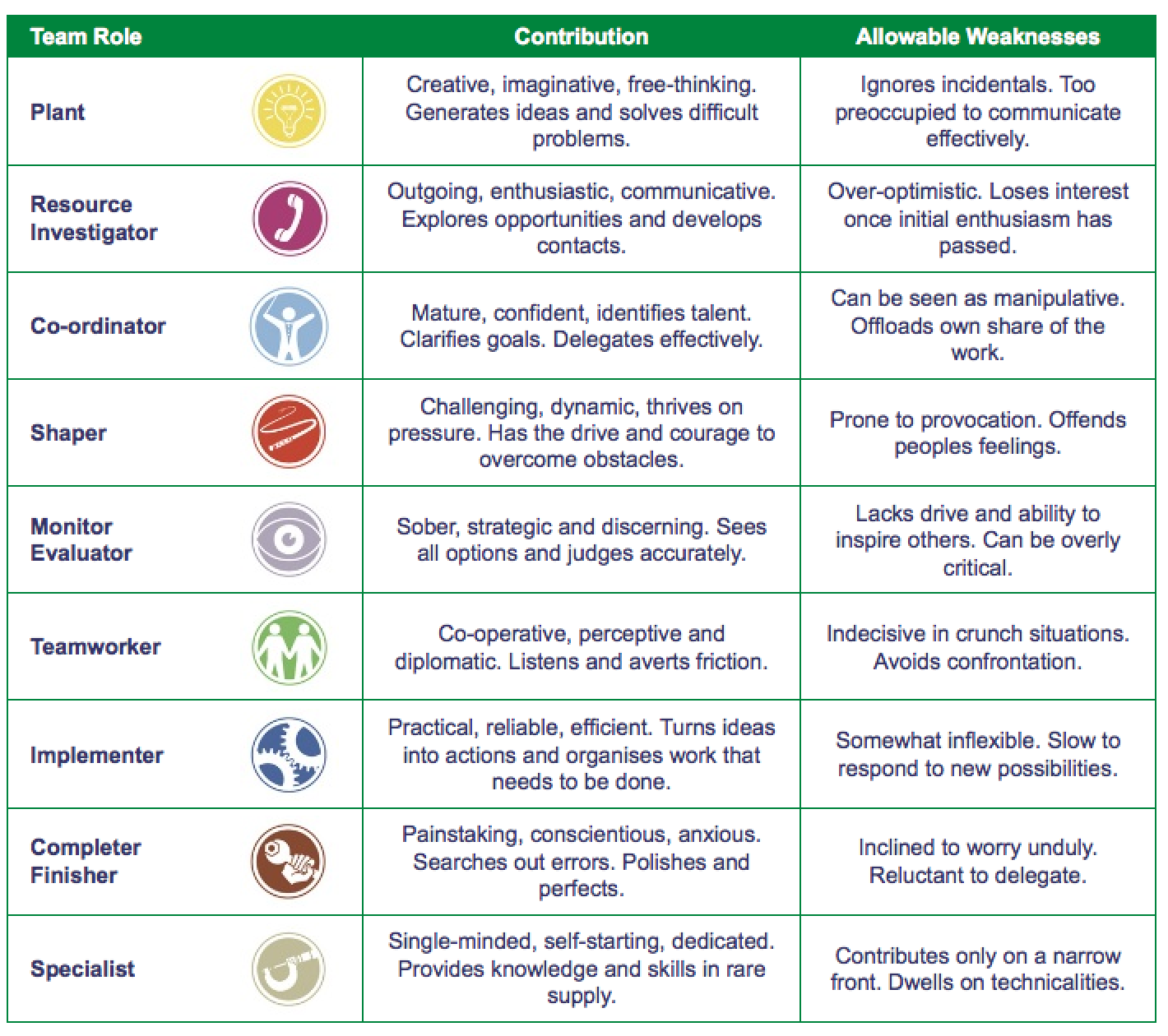
• Rituals mark and ease the transition - 7Belbin Team RolesEach team needs a leadership role, a creative role, and operational role. (Belbin team roles)
- 8What is a project?Characteristics:
• It’s a unique endeavour
• Temporary. With clear beginning and end
• With a temporary project organisation
• Agreed scope
• Goal and defined project results
• One sponsor - 9Project- based working• Depending on the task and available expertise, you can improvise, work in routines, or work project based
1. Improvisation= Question focused, Ad hoc, Flexible, Process approach, Vague, Uncertain, New
2. Routine= Work oriented, continuous, effective, clear, certain, known
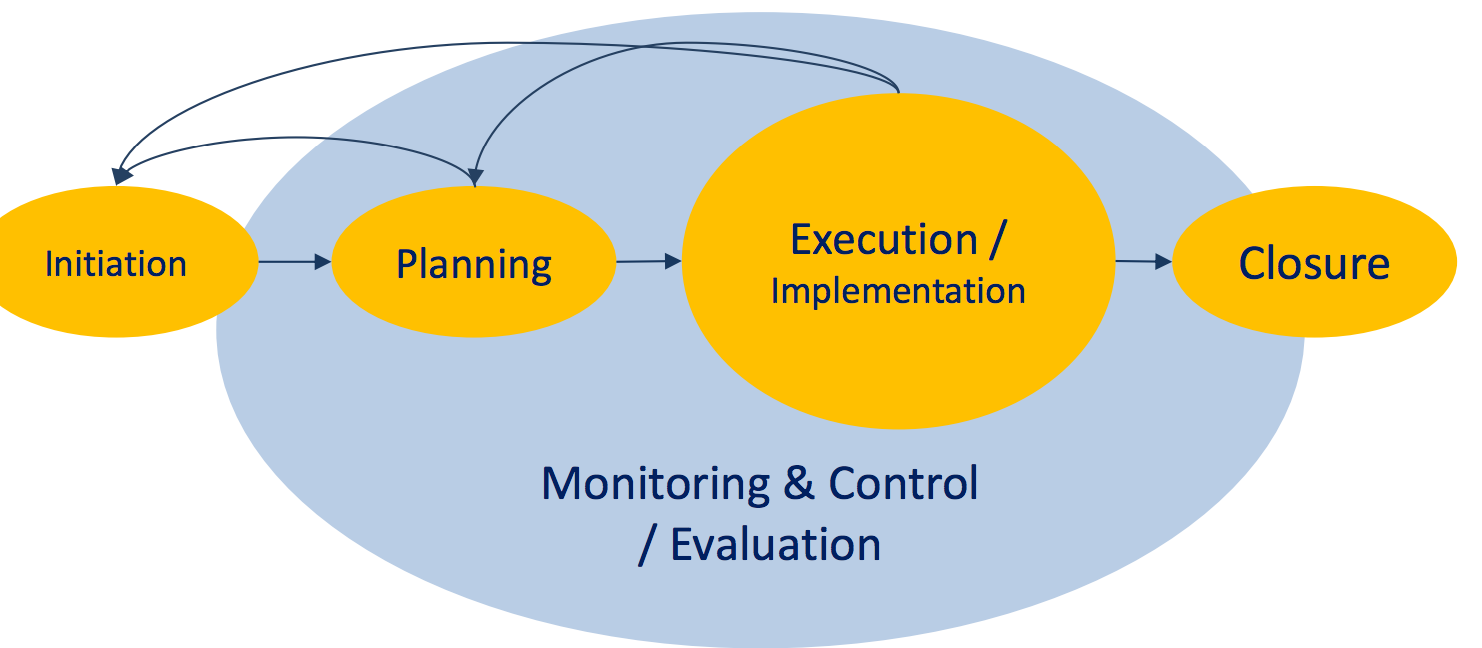
3. Project-oriented = Result oriented, effectivity, predictable, planning approach, relatively certain, wanted, step-by-step more clear - 10Project Management= Application of methods, tools, techniques and competencies to a project. It is accomplished through processes and includes various phases of the project lifecycle: initiating, planning, executing, monitoring & controlling and closing. Each phase has deliverables to the stakeholders.
- 11Project ManagerLeads and manages the execution of project activities and the completion of deliverables. He/ She gives direction to the project team, and reports progress directly to the sponsors.
- 12Project lifecycle

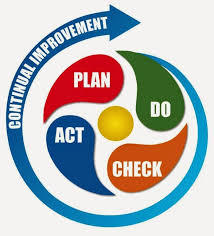
- 13PDCA Cycle
- 14Project successThe extent to which, within the set requirements and the agreed restrictions, the actual deliverable is in accordance with the result expected from various interest parties.
- 15Project Management successThe appreciation of the project management results of various interest parties.
- 16Projectis a temporary endeavor undertaken to
create a unique product, service, or result. Behind each project is a theory of action – a set of beliefs held by those who plan a project about how the change will come about. - 17PROGRAMis a group of projects managed in a
coordinated way - 18Social projectpeople in an organisation,
culture of an organisation
• Establish a more daring
culture in a college
• Increase good citizenship - 19Technical projectChanges in technology or
in our physical
environment
• ICT
• Infrastructure - 20Development projectDevelop something new,
innovative
• Develop an electric car
• Set up a school in India - 21Research projectCollect data, map data;
often used to prepare
decision-making.
• Feasibility study
• Map age distribution of the
citizens in Zwolle-region - 22Project Planning & Design• WHAT to improve or change
• HOW the project can bring about or contribute to the
improvement or change
• WHO will contribute to the project and who is
affected by it
• WHAT it will cost
• By WHEN will the result be delivered
• HOW to obtain the necessary resources
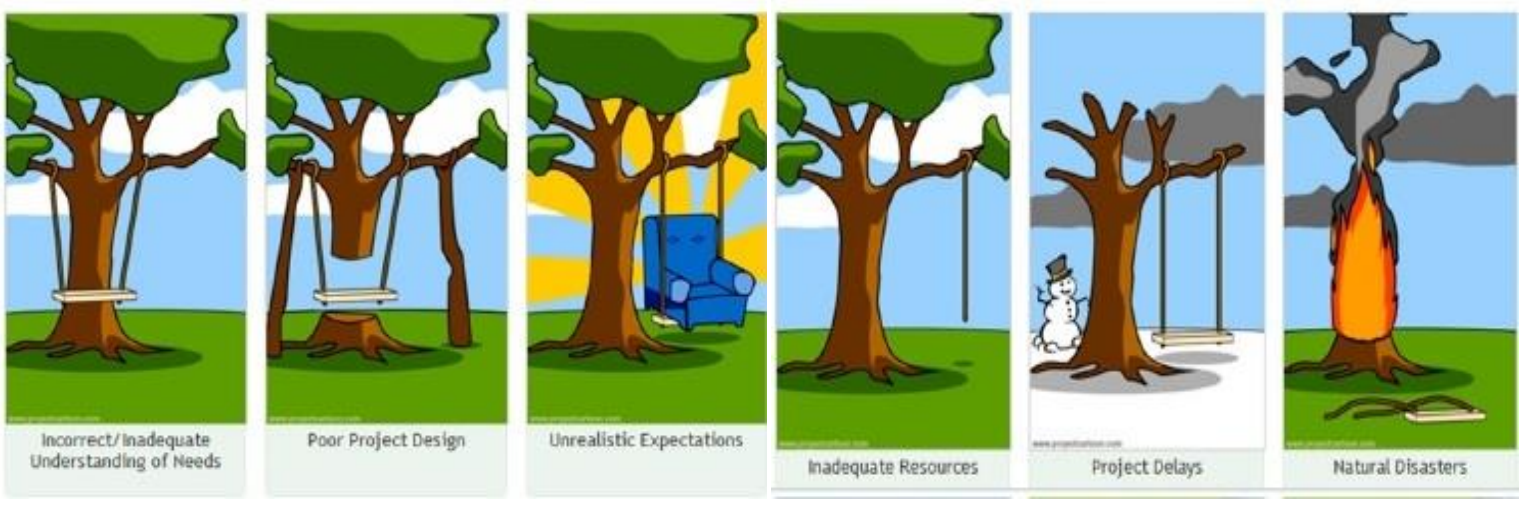
• HOW to tell if you are achieving your desired results - 23Project management failure
- 24Improving interventions with PCM

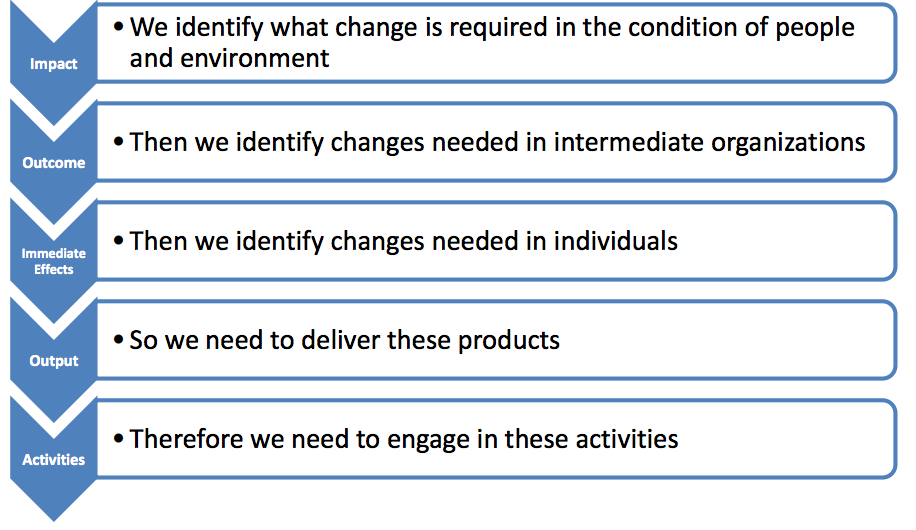
- 25Activity-driven approach
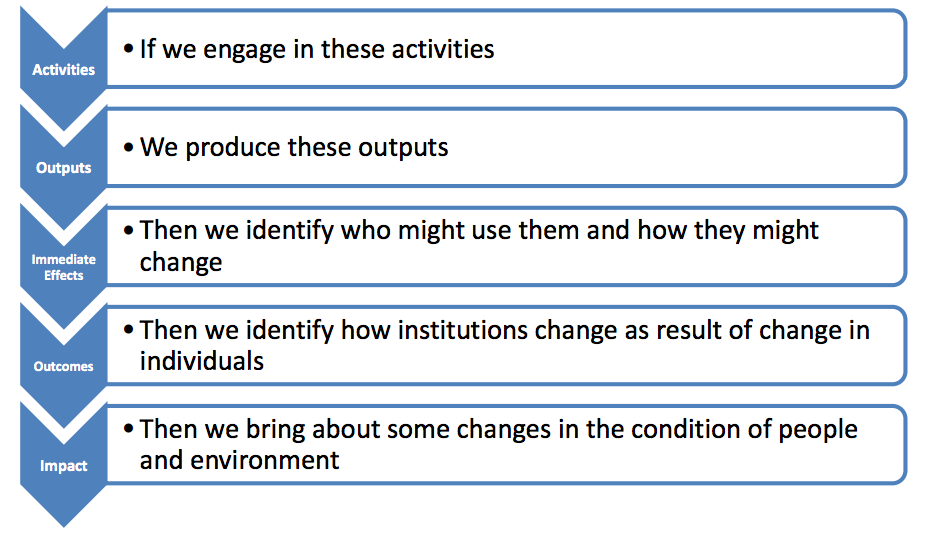
- 26Change-driven/ Result-based approach
- 27Principles of Results-based approachDevelop projects based on thorough understanding of
situation to improve
• Clearly identify and involve beneficiaries, partners,
stakeholders (participatory process)
• Develop clear, logical, achievable objectives
• Define realistic outputs and results
• Identify and manage risks
• Establish and use monitoring systems in adaptive
management
• Evaluate and capture lessons to increase knowledge and
improve practice - 28Project Management cycle
- 29InitiationReview project charter or project brief
• Set initial project goal, objectives and scope
• Define project scope and project objectives
• Define project benefits
• Situation or problem analysis
• Stakeholder analysis
• Prepare preliminary project timeline (start/stop date)
• Determine preliminary project costs
• Identify source of project funding - €$ and people
• Decide whether to continue the project - 30PlanningBegin to prepare the project plan
• Review goals and objectives
• What strategies need to be considered
• Identify the specific activities; Definition of each activity
• Sequencing of activities; Estimate activity duration
• Develop schedule
• Develop risk management plan
• Determine resource needs and resource costs
• Allocate overall cost budget to individual resources
• Finalize the project plan - 31Execution (ImplementationBegin the project
• Perform the tasks and activities from the plan
• Evaluate overall performance to ensure quality standards
are being met
• Develop individual and team skills to enhance project
performance
• Manage relationship with stakeholders. Distribute project
information to stakeholders in a timely manner - 32Monitoring & Controlling / EvaluationCoordinate change control across the entire project
• Control changes to the project scope
• Ensure that the project objective is being achieved;
• Control changes to the project schedule; Ensure that the milestones
are being reached on time
• Control changes to the project budget; Ensure that the project stays
within budget
• Monitor specific project results to determine if they comply with
relevant quality standards
• Ensure that all the lines of communication are open with all relevant
stakeholders
• Monitor and control project risks - 33Closure• Complete the project goal
• Deliver the project objectives successfully
• Satisfy the stakeholders
• Closeout all contracts
• Administrative closure – generate, gather, and disseminate
all information to formalize project completion
• End of project report; Document all lessons learned;
Document best practices
• Handover; Create file system for all project documentation - 34Responsibilities of a Project Managerto direct, supervise and control the project from
beginning to end.
1. define the project (manageable
tasks, obtain appropriate resources, build a team)
2. set the final goal for the project and motivate
his/her team to complete the project on time.
3. inform all stakeholders of progress on a regular
basis.
4. assess & monitor risks to the project and
mitigate them.
5. No project ever goes exactly as planned, so project managers must learn to
adapt to and manage change. - 35Management versus Leadership

- 36project coordinatorinvolves asking employees to work on project tasks within a certain time frame. They’re responsible for building ‘the whole’ out of various building blocks of the isolated contributions. They need expertise.
- 37project leadermanages a full-fledged team and is responsible for the process. The team is accountable for the quality of the project result(s). The most important task is to create synergy between the team members. They’re not expected to be an expert in the subject area. But some familiarity with the content is generally essential.
- 38creating team- Clear division of roles, duties and responsibilities
- Recognizing your abilities and integrating them with your team mates
- Open atmosphere and a culture with room for feedback
- Ambitious and shared vision and objectives - 39Success factors of a well functioning team- Clear objectives
- Joint responsibility
- Open communication
- Mutual respect
- Flexibility
- Show initiative - 40MeetingsWe don’t hold a meeting if it’s not necessary. If you decide to hold a meeting, ensure that it is well prepared:
- They have to transfer information
- Provide an overview of the current situation
- (collectively) arrive at a decision or solution - 41Selective perceptionwe only observe what we want to hear. To avoid this ask the receiver what he has understood from your message.
- 42Verbalwhat is said, words. The advantage of written communication is that you can take your time to think about your words, and the receiver has more time to let the message sink in. Furthermore, it’s documented, so you can look at it again.
- 43Non-verbalbody language, what you do. Learn to observe better, so you can see if the verbal message agrees with the non-verbal message.
- 44Communication plan1. Identify the role of communication in the project
2. List the target groups, objectives, ‘messages’, and resources
Carefully select your audience; those individuals and groups that are important for the ultimate success of the project.
3. Identify activities, planning, costs, organization
Who’s going to do what? When? What is it going to cost?
4. Implement and evaluate the plan
Make sure the plan allows for feedback on effectiveness of project communication. Was it understood? - 45project secretaryS/he has duties like: organizing team meetings, taking notes, and selecting and registering project documents. Their role is often underestimated, but they have considerable influence on the project because of the contacts they have.
- 46Version management1) not everyone’s allowed to change a document
2) every time a new version of a document is created, it gets a unique code. Then carefully file the various versions.
3) A good project file is: accessible (easily found, logically arranged), complete and up-to-date - 47successful project- Structure (project contract, methods, tools, procedures)
- Leadership (imagination, self-awareness, commitment, inspiration)
- Collaboration (team development, communication, culture, synergy)
- Environment (client requirements, sponsors, force field) - 48A processis made up of sequential activities that head in the desired direction. The focus is always on the following step, after which the direction is again determined. It consists of divergent (exploring) and convergent (selecting) actions.
- 49Initiation faceA project idea gets initiated and a person wants to sponsor this. You’ll assess whether the project is viable. This could be done through a business case. The phase is brought to a close with the project brief.
- 50Definition phaseIn this phase the problem team has the task of clearly defining the project. Agreements are made about the scope, deadlines, quality demands etc. At the conclusion of the definition phase, the project contract is signed by the sponsor, the project leader, and important stakeholders.
- 51Execution phaseThe team gets to work on the intended project result. Milestones ensure clarity about the decisions that must be taken. The execution phase will be split up in a number of sub-phases.
- 52Closing phaseSometimes the project team supports the users of the project for some time after the formal completion of the project. In addition, a thorough project evaluation should be held during this phase, e.g. lessons learned.
- 53The project plan (or: project contract)The project plan documents the intended result, the enabling activities, and how the project will be managed from beginning to end. It’s signed by the sponsor and the project leader
The contents:
- Project definition
- Work Breakdown Structure
- Control plan (all agreements on time, money, quality, information, organization and communication)
- Risk analysis - 54Project controlProgress reports should give an estimate of how far the project has progressed.
• Time: look at progress according to schedule. Can you deliver everything on time?
• Money: constantly check that the project is within the agreed financial framework
• Quality: are the results satisfactory? - 55Success factora condition that increases the probability of achieving success
- 56Success criteriastandards used by a person to decide if something is successful.
- 57triple constrainttime, money, quality.
- 58risk managementIn the first stage of the project, determine the main risks and translate the necessary risk responses into an outline vision on the approach. The development of the approach should be done together with the most important people involved (sponsor, supplier, user representatives).
- 59hierarchy into the goalsProject mission
I
Project goals
I
Objectives Benefits - 609 elements of the project definition1. Challenge
2. Impetus
3. Objective
4. Project result
5. Scope demarcation
6. Effects
7. Users
8. Constraints
9. Relationship to other projects - 61ImpetusThe impetus is the event that makes the project acute, that has resulted in the project being set into motion now. It clarifies why the project must take place now and why it’s urgent.
Why now? Why can’t it wait? - 62ChallengeProblems that have been identified. Look for the challenge behind the problem.
What makes it worthwhile to work on this project? - 63Objectiverefers to its contribution to the achievement of a higher goal. It’s often partly achieved with the completion of the project result. Make it as tangible as possible.
What does the organization want to achieve with this project? To what greater good must the project result make a contribution? - 64Project resultThis is what the project is all about. Results should always be tangible and therefore be formulated as a noun.
What is completed when the project is completed? (e.g. physical result) - 65Scope demarcationindicates what WILL and WON’T be delivered.
What seems like a project result but really isn’t? what falls outside the project and is something the sponsor doesn’t get? - 66Effectsthe consequences related to the execution of the project. These can be (un)intentional, and both positive and negative.
- 67UsersThe user is the person(s) for whom the project result is intended. Also take into account anyone who’s impacted by the project.
Who will benefit most from the project result? Who might be most inconvenienced by the project result? - 68ConstraintsList the factors that deserve particular attention because no concessions can be made to them.
What resources are available? Is there a final deadline? What is the level of quality that we’re expected to deliver? - 69Stakeholder analysisDocument which parties have an influence. Involve them in the project. Document whether they have high/low interest/power. The key word in developing a strategy is always trust!
- 70Force field analysisHow to avoid project failure? Use the force field analysis to identify:
- How the stakeholders regard the project
- The interests they have in the project
- How they relate to each other; e.g., the nature and strength/weakness of these relationships - 71Project scopeboundaries of the project. It describes the project result, how the deliverables are put together, what we deliver, and what we are not going to carry out. The scope can be broken down and structured by the Work Breakdown Structure.
- 72Deliverablesthe specific output of the project. Make it clear what you’re going to deliver. Explicitly mention what you’re not going to deliver.
- 73scope description- Name, date
- Business objective
- Project deliverables, and description of the work - 74Scope creepsmall changes of the scope, each of which taken separately does not appear to justify redefining the scope but added together contribute to a major scope change
- 75Planning packagesa component about which we still have insufficient information to split it up further
- 76Work packagesthe lowest level at which it is possible to identify the activities to be carried out by the team, and to make realistic estimates
- 77Stakeholder- The influence/power they have on the project
- Their interest. The consequences of the project for them
The greater the influence and stake someone has, the more you need to involve that person - 78Work Breakdown Structuredetermine how the project will be executed. It’s a way of creative structuring. It’s a delivery oriented breakdown of the work to be delivered. Everyone gets a task they like. Less popular activities are divided up by the team.
When to stop on refining activities: 1) you can plan and budget them accurately, 2) they can be executed in a manageable period, 3) the activities listen can be carried out in a routine way - 79Steps to make WBS1. Have the team check whether the project definition gives rise to questions
2. Ask the project team members to write down all the activities and sub-activities, results and sub-results they can think of on post-its. Collect as many ideas as possible
3. Discuss each post-it and stick it on one of the sheets hanging on the wall. All the ideas are explained by the proposer, discussed and only then placed on the sheet.
4. Go back to the post-its and group together those ideas that belong together
5. Give the clusters a name (e.g. sub-results, project phases, professional areas etc)
6. Construct the WBS. Place the project result at the top, with the sub-results under it. Then layer the main activities, the activities, and the sub-activities
7. Cross check for completeness. It should be so detailed that you can use it to draw up a project schedule - 80Configurationthe functional and technical features, as described in the technical documentation and realized in the product.
- 81Configuration managementIt ensures that the documentation we’re going to deliver is in line with what is actually delivered. Everyone works with the same products (versions).
- 82Steering groupsare interested parties who may carry as much weight as the sponsor and can exert pressure on the decision-making process. They might be a supplier or customer.
- 83Sounding board groupbroaden support for the project by providing an avenue for feedback.
- 84A good sponsorthe 4 A’s
- Authorized (formal power) at least one level higher in the organization than the line managers involved in the project
- Available (accessibility)
- Attached (commitment to the project)
- Accomplished (experience, personal qualities) - 85the project scheduleIs the WBS ready? Make the following seven steps:
1. Determine the interdependency between the activities
2. Set milestones
3. Estimate how much time each activity will require
4. Conduct resource planning (e.g., team member availability
5. Determine the project duration and critical path
6. Compare the schedule with agreed upon time constraints
7. Monitor progress - 86A milestoneis an important observable event during a project and usually this is marked by the delivery of an important product.
- 87MoneyInitiation phase → Cost estimate
Definition phase → Budget
Execution phase → Cost monitoring
Closing phase → Financial evaluation - 88cost control systemis the collection of control measures you take to control the costs.
- 89risk analysis1. Identify
What are vulnerable areas? And what are the specific risks in each vulnerable area?
2. Evaluate
What is the probability of the risks? What are possible consequences? The interaction of these two factors point to which risks demand more attention.
3. Refine
Explore the most relevant risks. Describe the risk event in a clear cause and effect relationship.
4. Plan
What can the team do to prevent undesirable developments and/or to mitigate their impact on project successes. - 90Risk assessmentassessment of the probability and the possible impact of the risks
- 91Risk aversionthe negative attitude of the management with respect to a risk
- 92SWOT analysisan analysis of the strong and weak points within an organization or project compared against the opportunities and threats from the surroundings.
- 93Risk management strategies:- Prevention: take measures to reduce the probability, to eliminate it, or to introduce an early warning signal
- Adjustment: cope with the risks, e.g. by allocating extra time or budget
- Damage limitation: the team implements measures that will keep the negative consequences to a minimum - 94Scope Management

- 95Time Management

- 96Define task list- is the process of identifying the specific
actions to be performed to produce the project
deliverables.
- Using the defined WBS, each work package will be broken
down or decomposed into task list - 97Estimate activity durationNumber of work days required to complete a task
• Influenced by:
• number of people that can work on a task
• use of machinery or manual labour
• need to wait for other people or things to happen before you
can complete the task
• Weekends or non-work days are not included in the duration
Can be done subjective, with expert opinion, comparitive, empirical - 98Estimate resourcesWhat resources (persons, equipment, or
materials)?
What quantities of each resource will be used? - 99Concurrent activitiesDescribes two or more activities that
can run at the same time
Running activities concurrently can
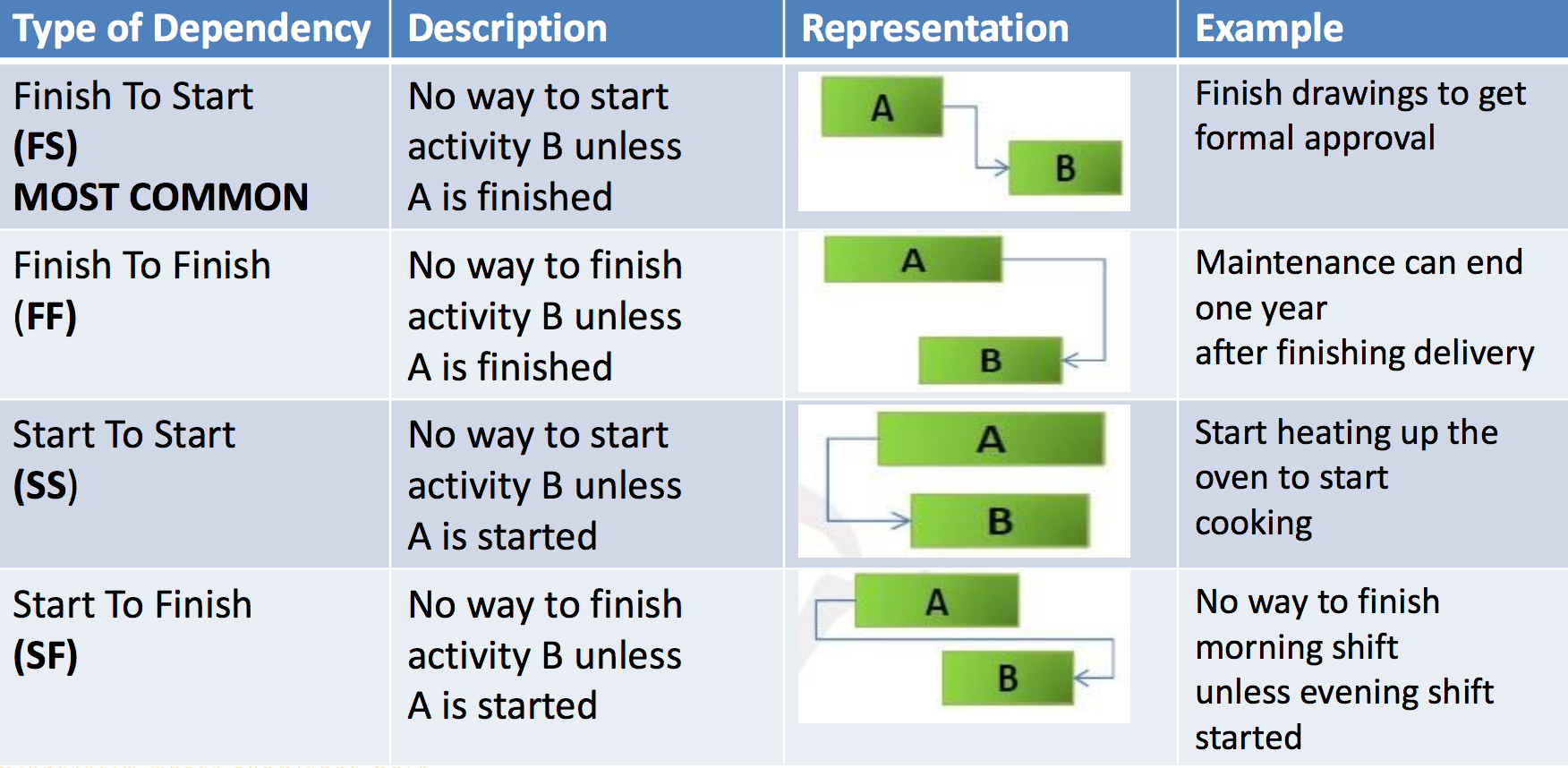
shorten over-all project duration - 100Dependent activitiesRelationship between two or more
activities
The most common dependency is the
Finish--Start. That indicates that one
tasks cannot start until another task
finishes - 101Types of Dependency
- 102Network Diagramindicates the sequence and order in which each activity must be
performed. - 103Critical PathLongest continuous
chain of activities through the
network schedule that establishes the
overall project duration. Failure of a
critical path activity and late finish times
will result in the overall project
duration being extended. - 104Estimating start date• Set task start-date at earliest possible date
• Tasks that can run concurrently – set start
dates to be the same (or close) for both tasks
• Dependency exists betwen tasks – set start
date of the sucessor to be on or after the end
date of the predecessor task/s - 105Estimating end date

- 106Responsibility Assignment Matrixuses the Work
Breakdown Structure (WBS) and the organizational
structure to link deliverables and/or activities to
resources. deliverables are assigned a
responsible party, who will review or add input and the
appropriate approval authority is identified. - 107RAM – RACIR esponsible - owner, the person who owns the work.
Each deliverable/activity must have an owner.
A pproval - the person who approves the deliverable or
activity. There should only be one approver.
C onsulted - this person delivers information required
to do the work.
I nformed - a person that needs to be informed of the
progress of the work. - 108RAM – PARISP articipant - involved but not at a critical level
A ccountable - must answer to management
for the project task status
R eview needed or required
I nput needed or required
S ign Off Required - 109Estimate activity costsbased on an estimate of the types and
quantities of resources required to
perform the activity. E.g. budget item, measurement unit, cost per unit, quantity of unit - 110Indirect CostsNot directly linked to the
project but they are
required to help support
the project - 111Direct CostsLinked directly to the project. Identified easily from
tasks in the timeline. Can be further broken down into
two sub-categories - 112budget items- Labour cost
- Travel cost
- Subcontracts & consultant cost
- Equitment cost
- Material cost
- Facilities cost
- Reserv - 113Budget item costQuantity required x Cost per unit
- 114Parametricdetermined by identifying the unit cost or duration
and the number of units required for the project or activity. - 115Analogoususes the actual costs of a previous, similar project for
the basis for estimating the costs of the current project - 116Three-point techniqueSimple Average: E_SA=(O+P+M)/3
- 117Top-down approachthe total project budget is known and the
project needs to know the costs of each individual activity - 118Bottom up approachrequires estimating the individual activities
and cost of each input and adding them up to get the project total. - 119Reserve or contingency cost• Additional amount of project cost added to budget to
compensate for perceived underestimates, project delays,
or uncertain project situation
•reflects uncertainty or risk
• Add to an activity cost OR add to total budget cost OR to
both
• Fixed amount OR percentage of budget cost
• ALWAYS document the contingency amount and the
reason it was added in budget. - 120Risk Managementis the identification,
assessment, and prioritization of risks followed
by coordinated and economical application of
resources to minimize, monitor, and control
the probability and/or impact of unfortunate
events or to maximize the realization of
opportunities. - 121Risk PrioritiesThe priority of a risk helps to determine the amount of resources
and time that should be dedicated to managing and monitoring the
risk.
• Very Low, Low, Medium, High, and Very High priority is assessed
by using probability and impact scores
• The potential timing of a risk event may also be considered when
determining risk management actions - 122Probability of occurrenceThe chance of a risk occurring is rated on a scale between >0 and
1
• When the probability of occurrence = 1; (100%)
– The risk has occurred; it then becomes an issue and is
managed as an issue
• For most risks, estimating the precise probability of occurrence
may be difficult - 123Consequence of risk occurrenceRisks are reviewed for the effect that they would have on the
project’s objectives and other elements of the program
• The level of impact, may be rated from very low (1) to very high (5),
and is assessed against at least four categories:
– Cost
– Schedule (consider critical path)
– Scope
– Performance - 124Risk Responseis the process of developing options and
determining actions to enhance opportunities and reduce threats to
the project’s objectives
Appropriate to the significance of the risk
– Cost effective in meeting the challenge
– Timely and realistic within the project contend
– Agreed to by all parties involved - 125Risk EscalationRisks should be managed at the lowest practical level
• But conditions may arise where a risk should be escalated to
higher levels of management or beyond the program/project - 126Risk MitigationTaking early action to reduce the probability and/or impact of a risk
occurring is often more effective that trying to repair the damage
after the risk has occurred - 127Risk management model
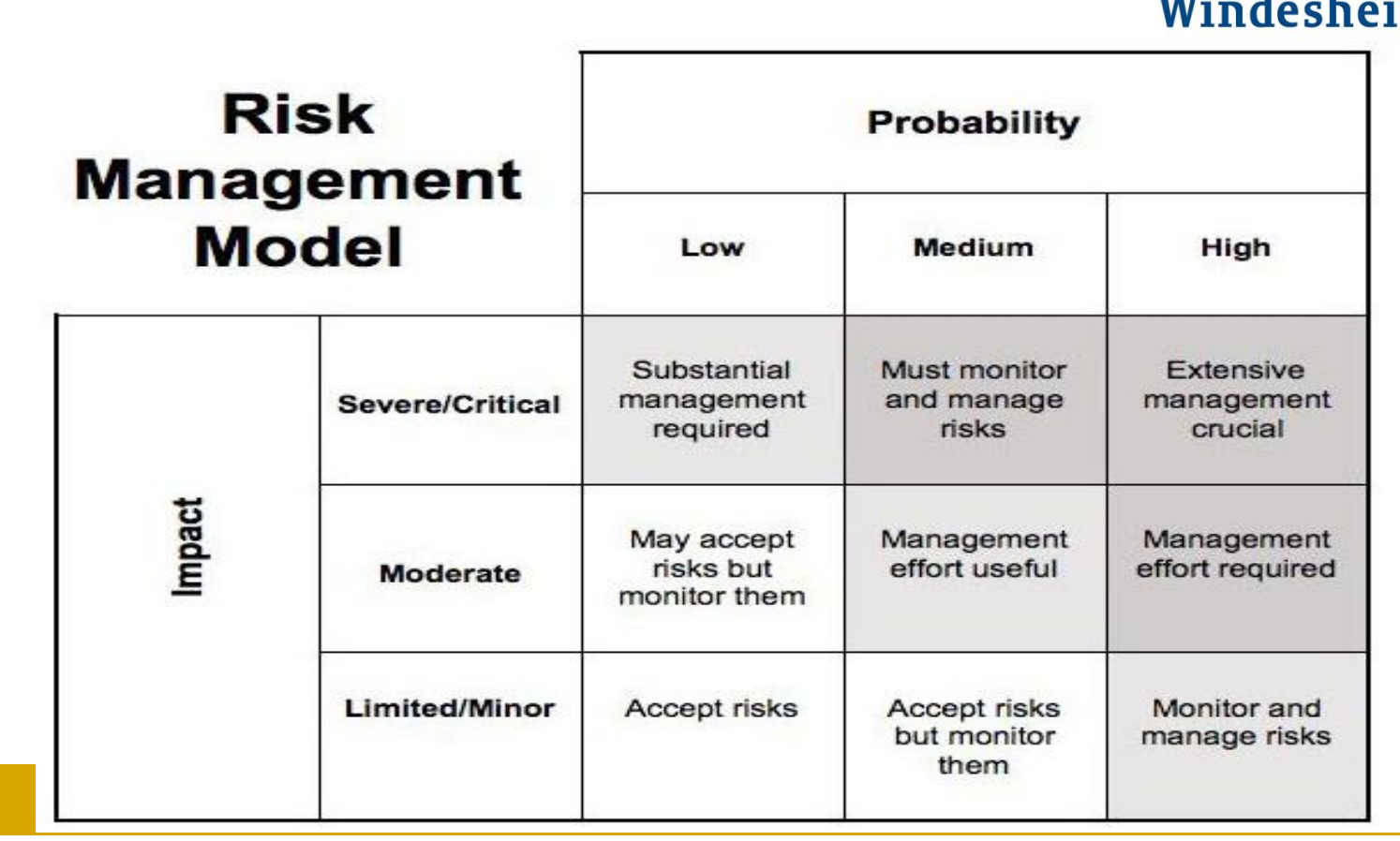
- 128Risk Management PlanIdentify and assess risks (and opportunities) for your project
• Prioritize risks; rank according to Probability & Impact
• Which risks can be prevented by adjusting the project plan?
Adjust project plan if desired
• Make a risk assessment matrix
Informationen
- Beschreibung
- Flashcards on Introduction to Project Management, created by Martita K on 12/11/2017.
- Erstellt von
- Sarina Noa
- Aufrufe
- 20
- Verlauf
-
- Erstellt von Martita K · 12 Nov 2017
- Kopiert von Sarina Noa · 18 Nov 2017
- Bewertung