
Karteikarten
Art of Japan Exam 3
Karten in diesem Stapel (39)
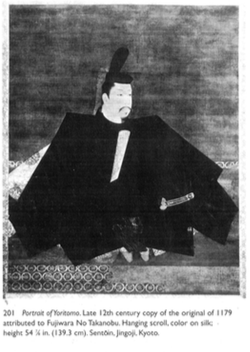
- 1—- Image of Warrior Minamoto no Yoritomo (1147-99)
- Dressed as a courtier but has a sword (warrior)
- Portraits hung in temples when they die, offerings and prayers made to portrait (memorial portraits) - 2—- Image of Warrior Minamoto no Yoritomo (1147-99)
- Dressed as a courtier but has a sword (warrior)
- Portraits hung in temples when they die, offerings and prayers made to portrait (memorial portraits)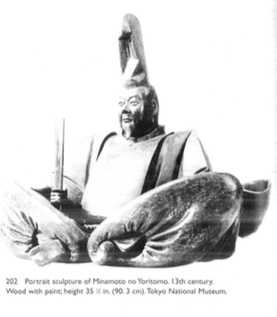
- 3—- Burning of Sanjo Palace
- painting commissioned by warrior group (diff from previous paintings)
- In 1159, troops led by Fujiwara attack retired emperor Go Shirakawa’s palace and set fire to it → Building is Shinden style built for the emperor (residential)
- Women hiding, fighting, progression from right to left, courtiers of the Fujiwada trying to get emperor out,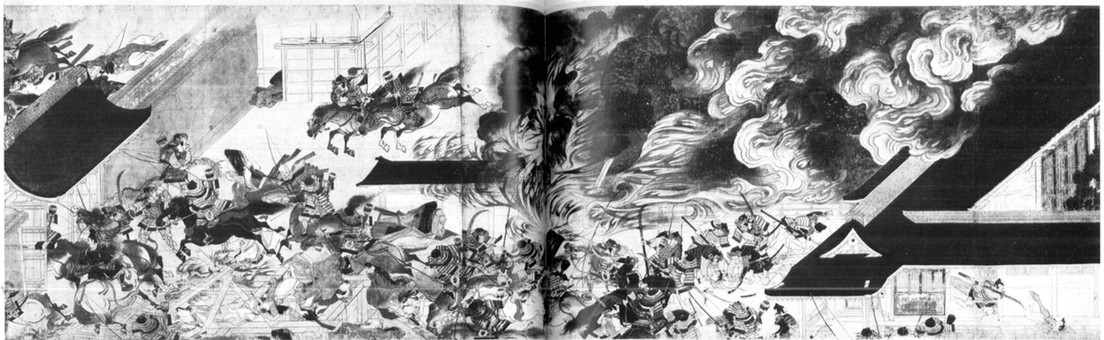
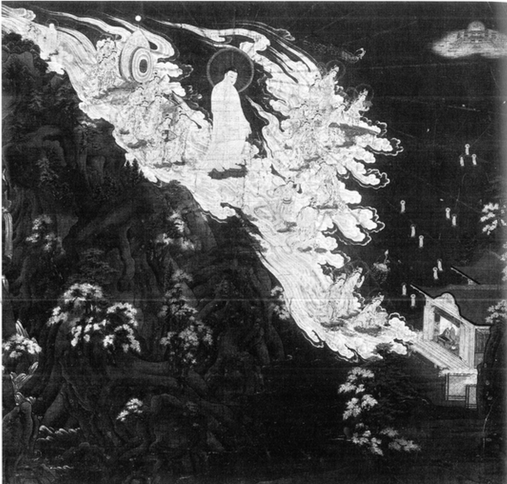
- 4—Descent of Amida and the 25 Bodhisattvas, haya rigo (13 c.)
- 5—- Pure Land Buddhism
- for monks to focus on death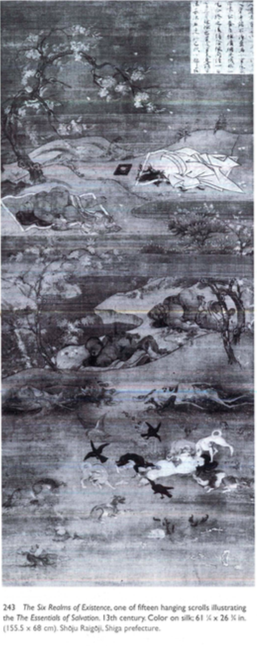
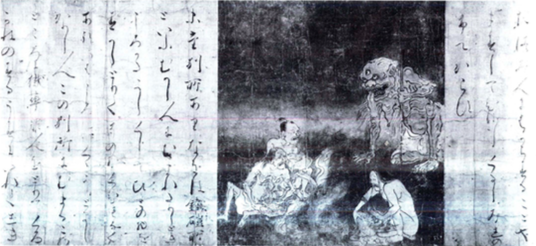
- 6—Hell of Measures (Fig. 245)- for those who cheated customers through using set up scales (have to repeatedly put hot charcoal in and out of a box)
- 7—Sanmon (Mountain Gate Exterior)
- Earliest extant example of a Sanmon gate
- *there are images in the gate which is unusual (hadn't been done before)
- Built between 1384-1425
- Enshrined in the room above the gate are 16 rakan (arhats) typical to have sculpture in sanmon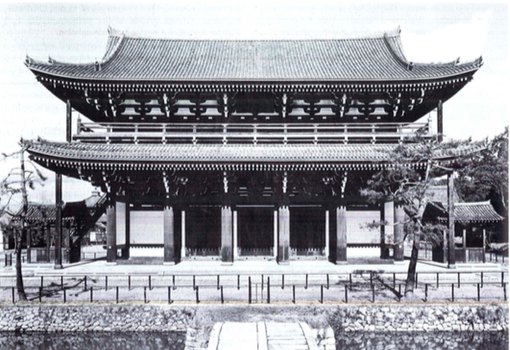
- 8—Sanmon (Mountain Gate Interior)
- Earliest extant example of a Sanmon gate
- Built between 1384-1425
- Enshrined in the room above the gate are 16 rakan (arhats) typical to have sculpture in sanmon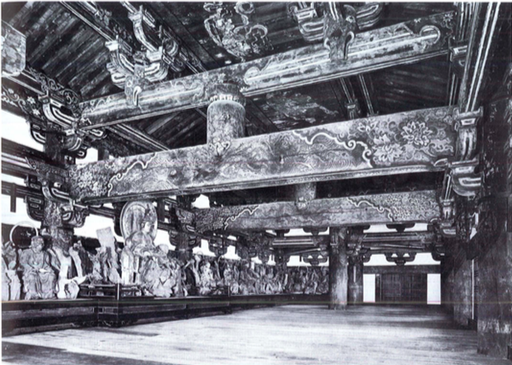
- 9—Ryoanj
- Most famous dry rock garden
- Considered the epitome of Zen tranquility
Designer unknown
- Small and made of many rocks, pebbles, moss, no flowers or bushes (would distract from meditation)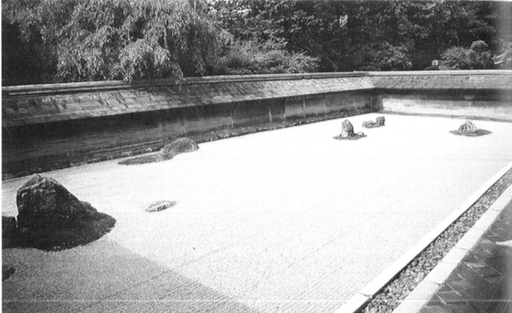
- 10—Hojo Garden at Daisenin (subtemple of Daitokuji)
- Founded in 1509 by an Abbot after retiring as an abbot from Daitokuji
- Organized around the motif of a river (not water but pebbles)
- Metaphor for one’s life
- Imagining a panorama of nature, helps free the mind of mundane concerns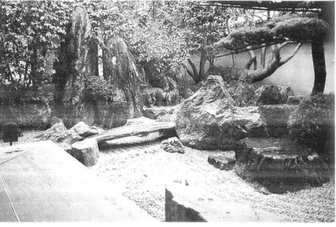
- 11—Shigajiku
- Poems on paintings on a hanging scroll
-Painting has no signature but has long been attributed to monk Mincho
- Depicts ideal Chinese study not actual hut- a simple room extending out over a small mountain stream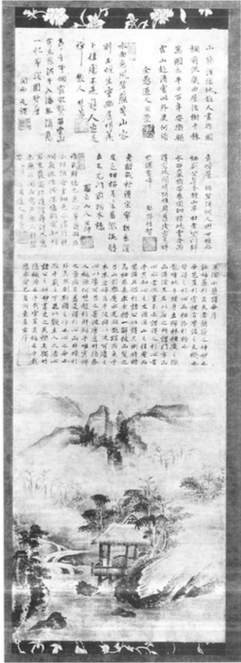
- 12—Catching a Catfish with a Gourd
- by monk Josetsu at Shokokuji a Zen temple in Kyoto
- depicts a koan (puzzle to aid in enlightenment)
- is a Shigajiku- poem, painting, on hanging scroll
-30 priests wrote poems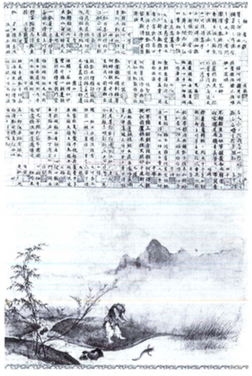
- 13—Kinkakuji (Temple of the Golden Pavilion)
- Created by Ashikaga Yoshimitsu (1358-1409)
- Retirement villa/temple for himself
- Modeled after Chinese Chan (Zen) temples
- Originally only ceiling of upper story was gilded in gold
- monk protesting, burned down bc commercialization of Buddhism after WWII, mass tourism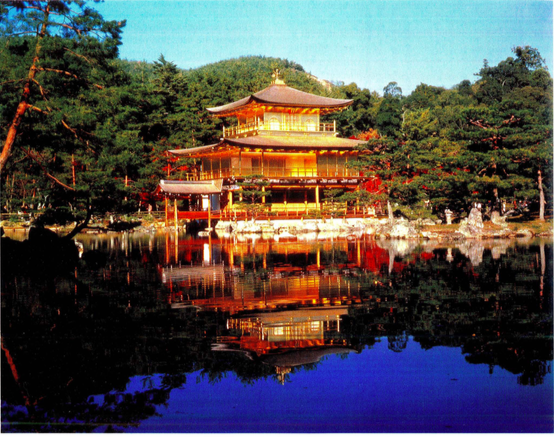
- 14—Ginkakuji (Temple of the Silver Pavilion)
- retirement villa built by Ashikaga Yoshimasa
- never covered in silver
- Built after a 10 year civil war (1467-77)
- Shogun Yoshimasa was very involved with Zen, favored aesthetics of restraint and understatement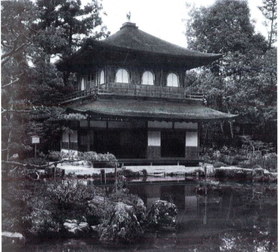
- 15—Togudo
- Amida chapel
- Pond originally had lotus flowers to suggest the Western Paradise
- One small room (4.5 mats) used for tea ceremony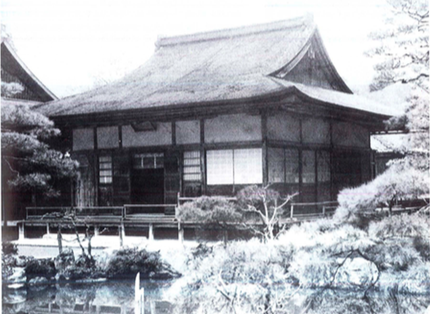
- 16—Dojinsai tea room
- One small room (4.5 mats) used for tea ceremony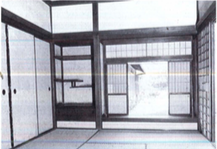
- 17World of HellsMeant to deter people from doing wrong
- 18World of the Hungry Ghosts- Hungry ghosts live in our world but cannot be seen
- Punishment for those who were greedy
Always hungry- permitted to eat only human excrement, decaying corpses, afterbirth (placenta), and offerings made to the Buddha - 19Zen Buddhism- Intro to Japan from China in the 12th c.
- connected to monk Bodhidharma
- self-discipline
- Fit the warrior lifestyle
- Zen’s main patrons were
warriors bc of discipline
- Key to Enlightenment (satori)
- Intense meditation (zazen = seated meditation) - 20Describe practices/purpose of Rinzai Zen- 1 of 2 sects (other is soto zen)
- Sudden enlightenment
- Used meditation, physical activity, and koans as teaching tools - 21What is a Koan?- Questions or exchanges with a master that cannot be understood or answered with rational thought
- Purpose is to break through rational thought patterns
- Enlightenment/satori = becoming one with nature - 22What is the zen concept of Wabi?- Developed out of zen aesthetics
- Pleasures taken in austerity and solitude
- Beauty perceived by simplicity
- Appreciation of objects weathered by time - 233 Zen Aesthetics1. Simplicity
2. Economy of means
3. Beauty in the natural world - 24Difference between Zen temples and earlier temples?Different names, spaces, activities
- 25New terms of Zen templesMountain gate (sanmon)
Buddha hall (butsuden)
Abbot’s Quarters (hojo) - 26The Zen Temple- Central complex for public ceremonies
- Series of private sub-temples for retired abbots (head priests of temples)
- Sub-temples generally included: space for daily life, a reception room, room for Zen study or meditation, a space devoted to the memory of the temple founder - 27What are Karesansui?Dry landscapes which aid in Zen meditation practices
- 28Zen paintings themes/focus- Focus on universal truth expressed in the moment
- Images abbreviated and quickly drawn
- Themes of Zen eccentrics and Nature/landscapes - 29Who was Mincho?Mincho (1352-1431)
- Monk painter lived in Tofukuji (Zen)
- created Zen paintings
- managed buildings and supplies - 30What is a Shigajiku?Poems on paintings on a scroll
- 31Ashikaga shoguns- Warrior family that wanted to appear imperial
- Controlled japan for 200 years (1392-1573)
- had reign of influence and culture (1392-1467): Built retirement villas, fostered arts, linked verse poetry, tea ceremony, and flower arranging - 32The Golden Pavilion- floor 1 = reception area/entrance
- floor 2 = Second floor = L-shaped monk’s study with a deep veranda along the lake for moon viewing
- floor 3 = small private Zen chapel - 33Types of gardens?Water and rock
- 34shoin styleresidential architecture used in the mansions of the military, temple guest halls, and Zen abbot's quarters
- 35Taima Mandaraicon of Pure Land Buddhism
- 36Swift RaigoAmida and bodhisattvas descend to earth
- 37Wabiworld view centered on the acceptance of transience and imperfection.
- 38dōshaku-gapaintings of eccentric figures from Zen Buddhism and Daoism
- 39shigajikuhanging scrolls depict poetic inscriptions at the top of the scroll and a painted image, usually a landscape scene, below
Informationen
- Beschreibung
- Warrior Art- Figs. 213, 201, 202 Changes in Pure Land Buddhism- Figs. 241, 243, 245 Zen Buddhism/Zen Gardens/Zen Painting-Figs. 247, 248, 250, 251, 254, 258 Gold (Kinkakuji) & Silver (Ginkakuji) Pavilions- Figs. 262, 263, 266, 268 Young 84-89
- Erstellt von
- Ami Fall
- Aufrufe
- 10
- Bewertung