Karteikarten
art history exam 2
Karten in diesem Stapel (17)
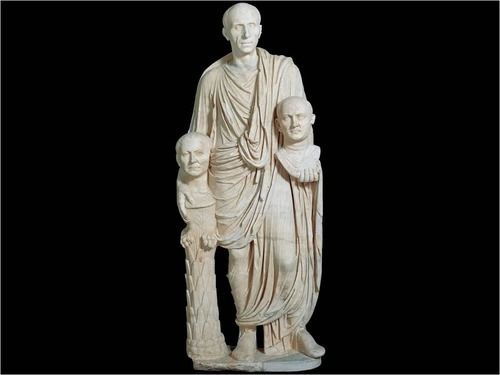
- 1—patrician carrying the busts of two ancestors
Barbarini Togatus, end of 1st century, palazo di conservatori rome
verism
the importance of elders
art is no longer just for rulers
not idealized
patrician = nobility
triangle structure golden ratio
drapery of fabric shows knowledge of greek art - 2—augustus of primaporta
early 1st century
had a lot of portraits of himself
baby= cupid, venus's son (family claimed to be descendants of venus)
military outfit, oratorical gesture
contraposto
not veristic, idealized but also shows a likeness
relief on armor = god is on his side, victory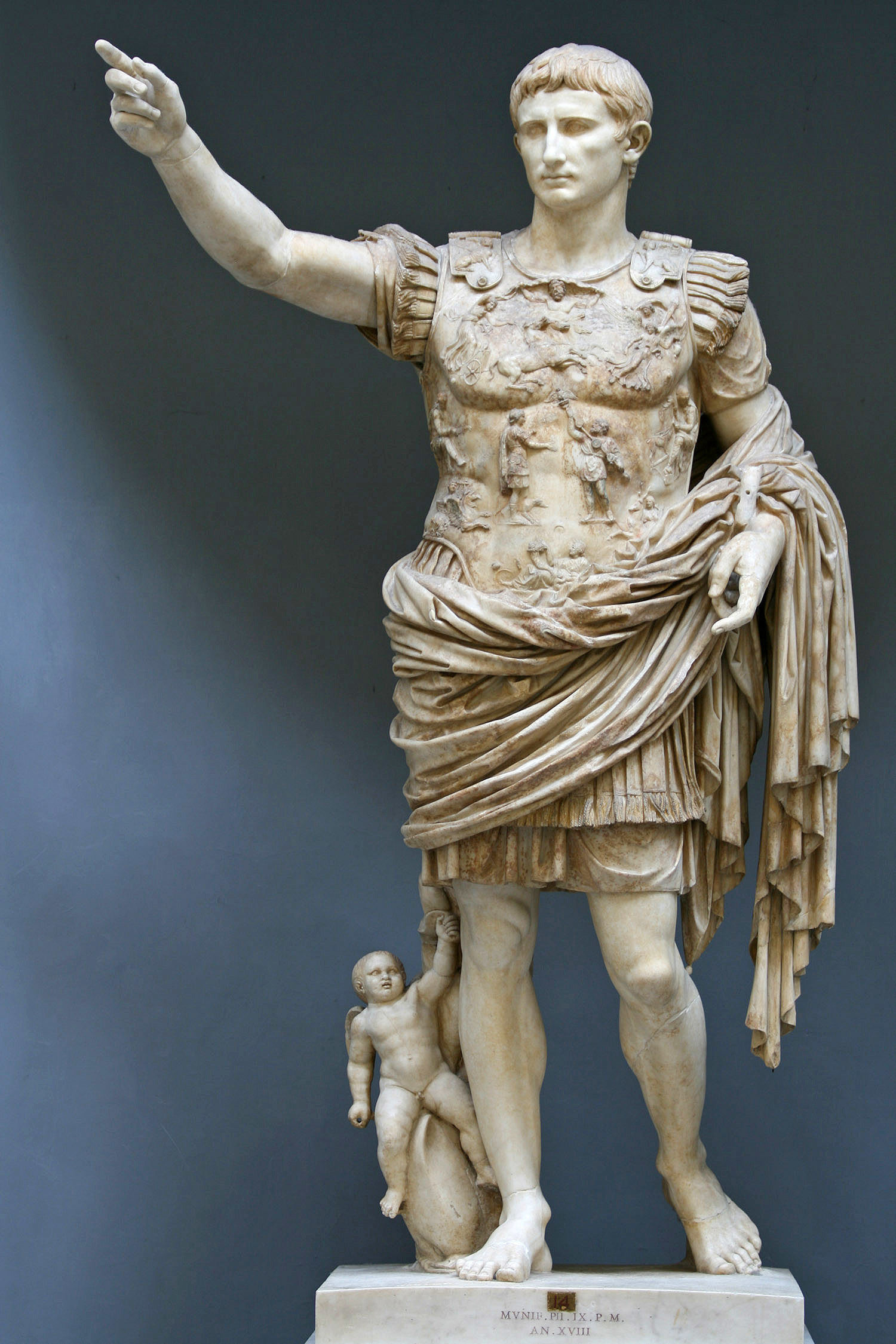
- 3—garden vista, villa of livia at primaporta
near rome, late 1st century
livia = augustus' wife
wall paintings popular because they lasted longer
atmospheric perspective, illusionistic, depth
SO many kinds of trees and fruits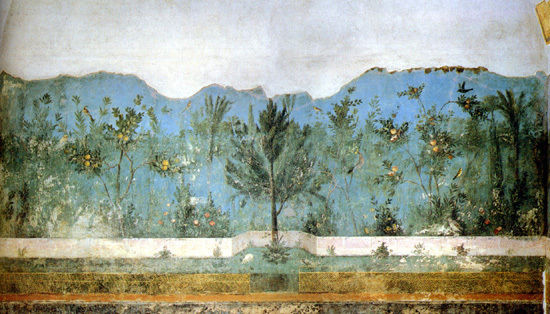
- 4—flavian ampitheatre
Rome 70-80 CE
Permanent theatre for fights to the death between people and animals
Paid for by the flavian family (provided jobs and entertainment)
Form of the colosseum follows greek amphitheaters
CONCRETE
True arch
Stress goes onto the ground rather than out to the sides so less likely to crumble
Had been previously used in egypt and mesopotamia
They were weaker because they were made of brick which is weaker and they were a corbelled arch
Roman vaulting (both seen in the colosseum)
Barrel vault
Two buttresses
Groin vault
Pier
Made of two intersecting barrel vaults
Exterior opening marked with numbers which suggests seating
Columns like greek buildings like the Parthenon in greece
Decorative and not load bearing though
Different order on each level
Bottom: tuscan columns
Second: ionic
Third: corinthian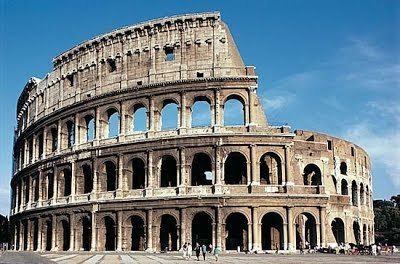
- 5—pantheon
Rome, c. 110-128 CE
former Roman temple, now a church, in Rome
commissioned by Marcus Agrippa during the reign of Augustus
The building is cylindrical with a portico of large granite Corinthian columns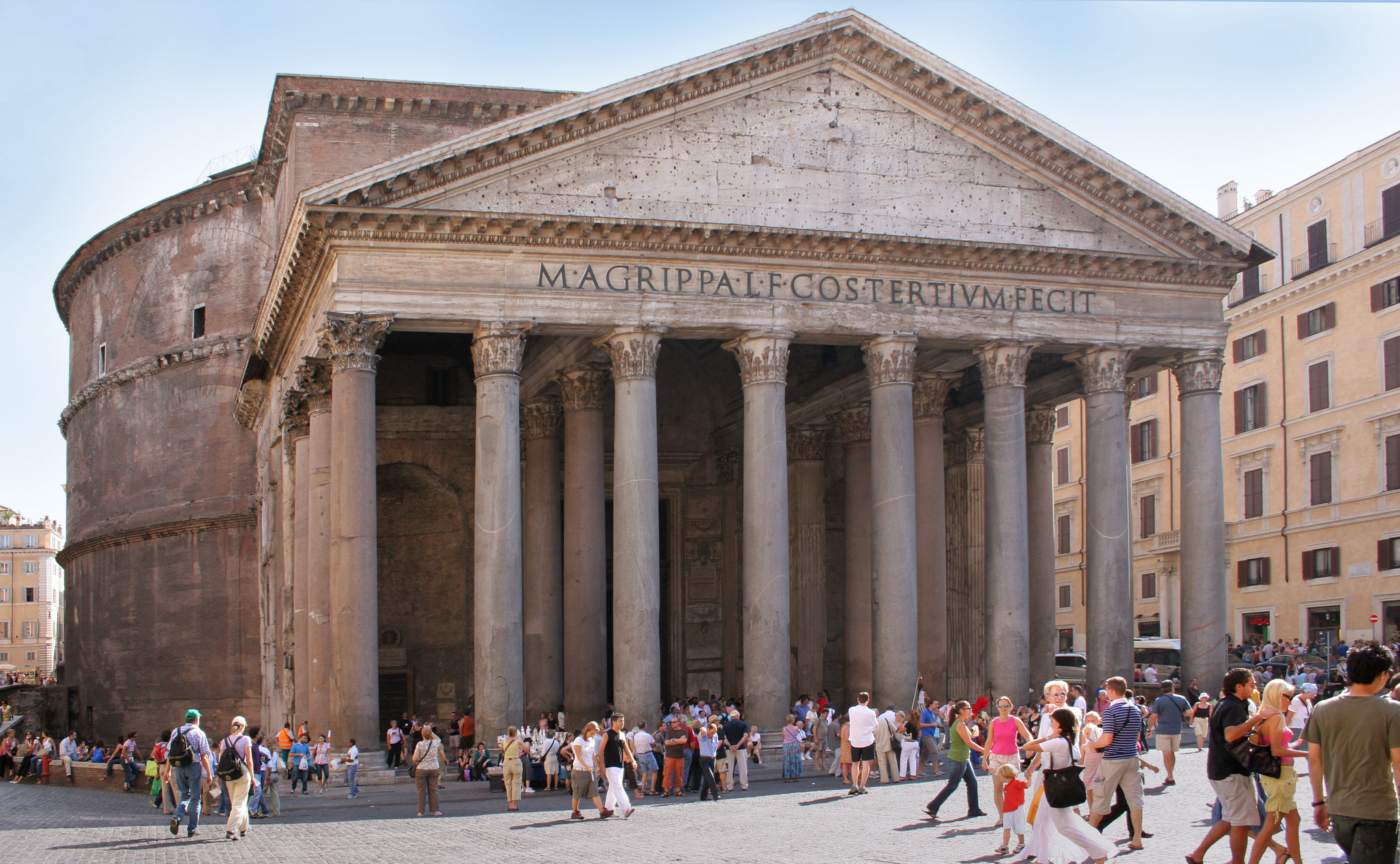
- 6—Constantine the Great, from the Basilica of Maxentius and Constantine,
om, 325-326 CE, marble, 8’6” high
was a huge acrolithic statue of the late Roman emperor Constantine the Great
hieratic emperor style
larger-than-life eyes which gaze toward eternity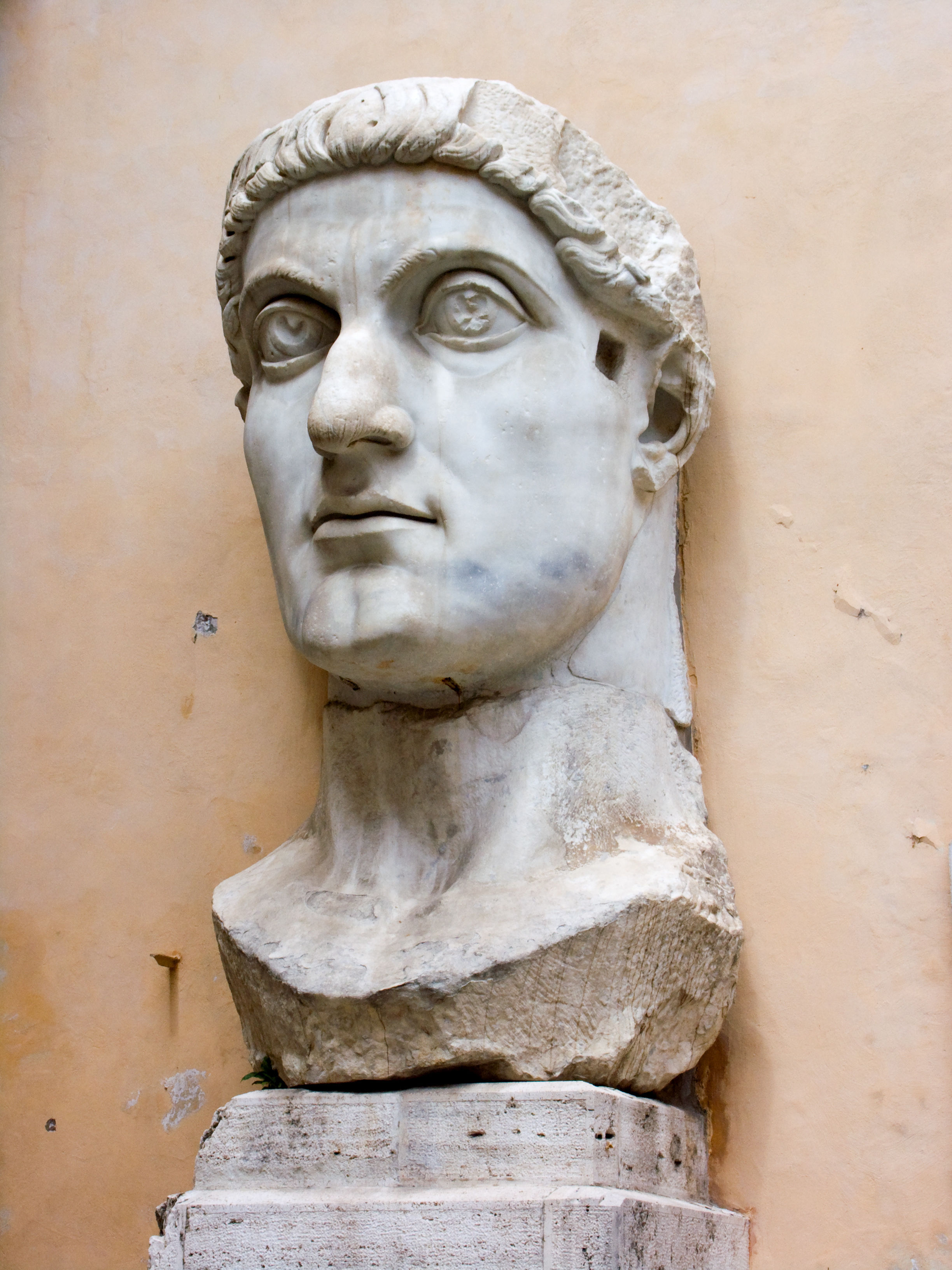
- 7—Wall with Torah Niche, from a house-synagogue, Dura-Europos,
Syria, 244-245 CE, tempera on plaster,
for gathering and studying jewish scriptures it was an assembly hall
niche for the torah scroll
archaologists thought before finding this that Jews did not have figurative artwork
58 scenes, togas hierarchic scale, etc.
roman style but with jewish subject
PAINTING SHOWING SPOILS OF JERUSALEM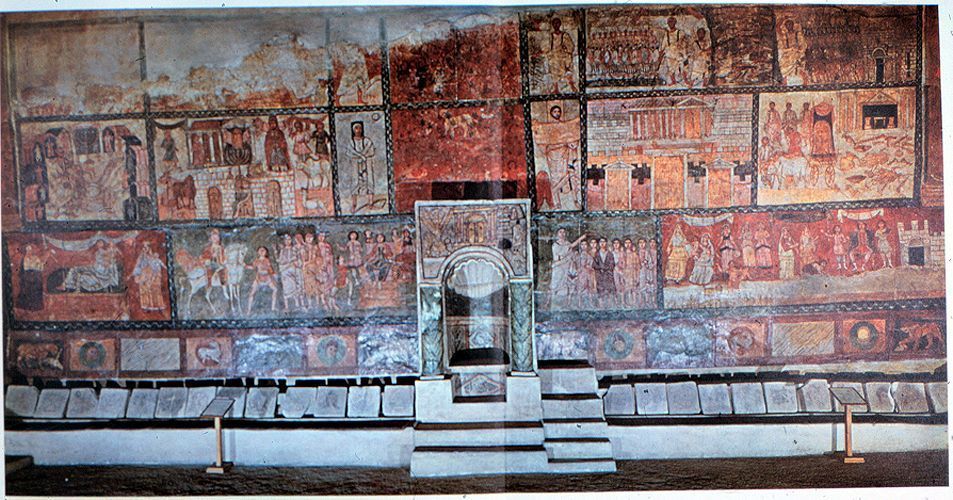
- 8—The Good Shepherd, Orants, and the Story of Jonah,
painted ceiling of the Catacomb of Saints Peter and Marcellinus,
Rome, late 3rd–early 4th century
domed ceiling with compartments with different scenes
different than other roman paintings
center = christ as the good shepherd (moschophorus, common to portray good things as a shepherd)
others = jonah swallowed by fish, praying figures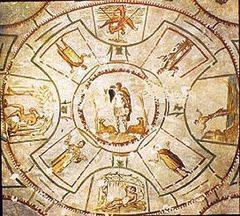
- 9—Sarcophagus of Junius Bassus
c. 359, marble, 4x8 feet
edict of milan = religious freedom so christianity was not illegal and they could spend more money on intricate art
draped toags, contraposto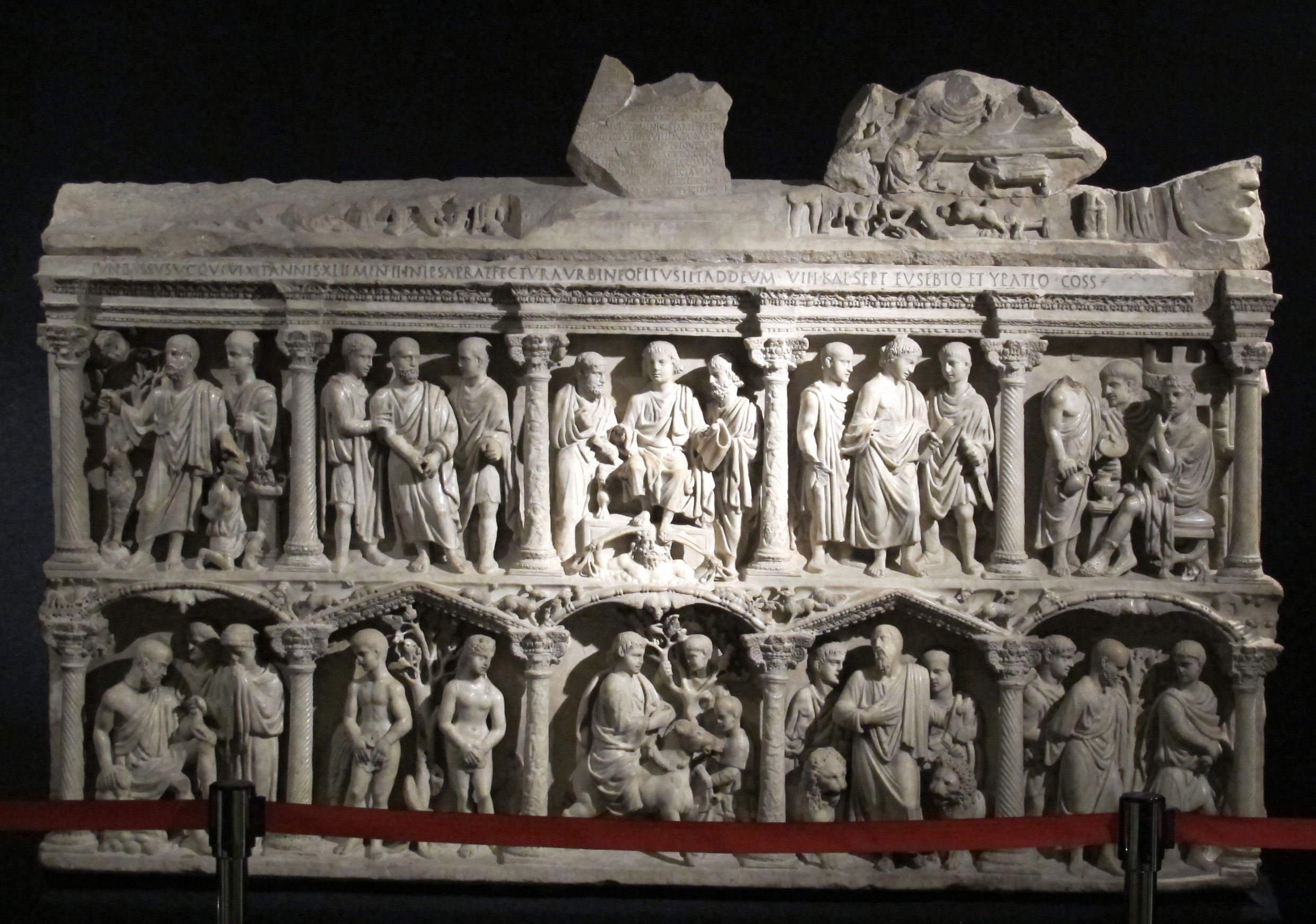
- 10—Virgin and Child with Saints and Angels, icon, second half of the 6th century, encaustic on wood
icons: to help people in meditation and prayer to feel connected to those they were praying to
iconoclasm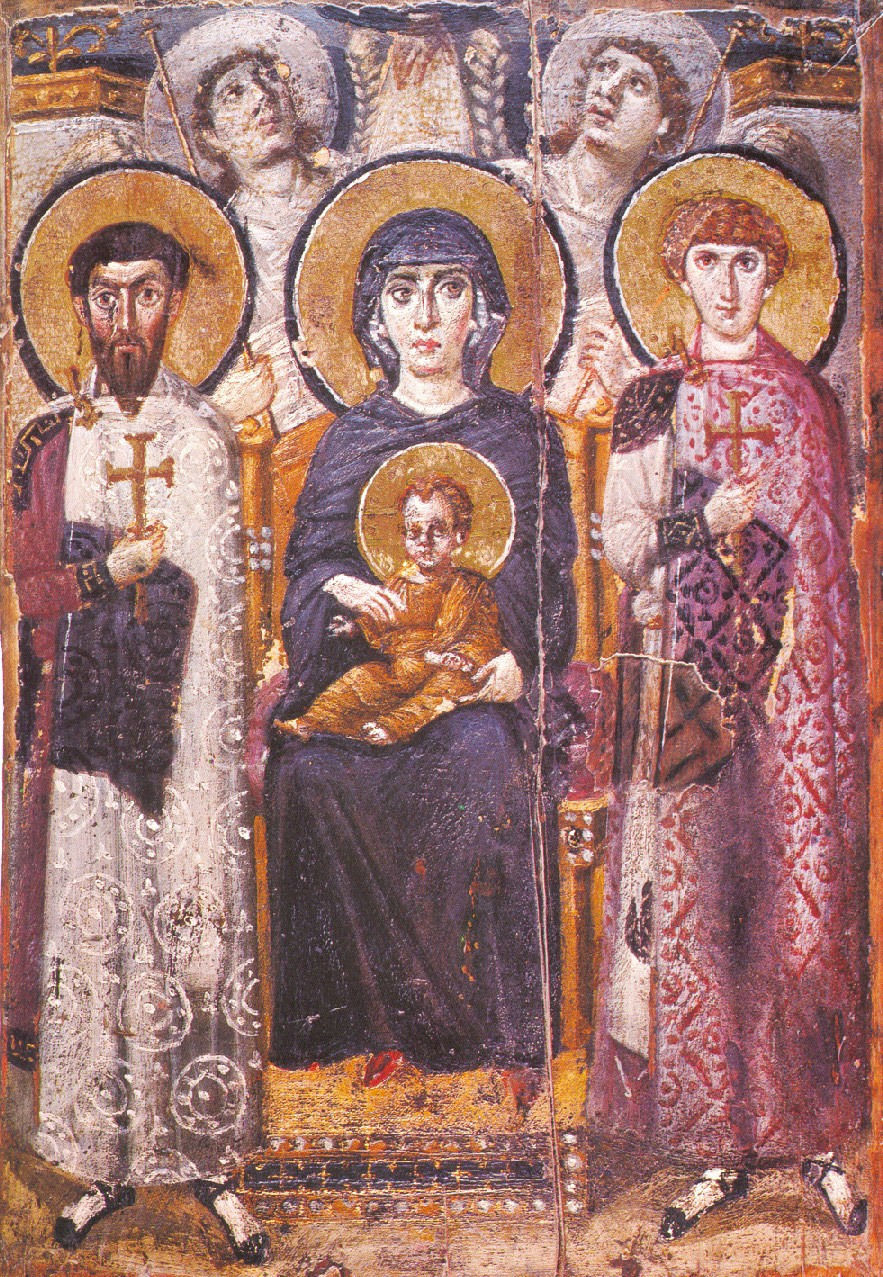
- 11—Crucifixion and Iconoclasts,
from the Chludov Psalter, mid 9th century, tempera on vellum
after iconoclasm was abolished
miniature showing a parallel between the people who crucified christ and people white washing icons
manuscripts and scrolls were hand written and time consuming to make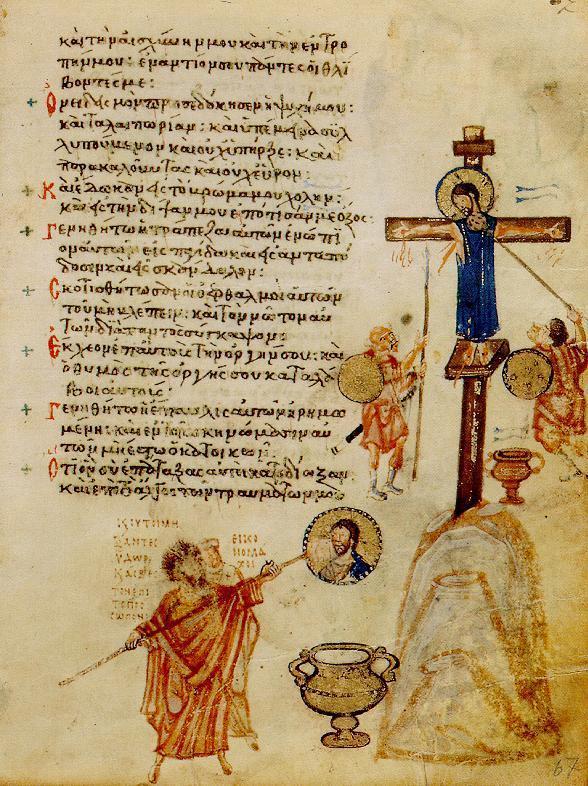
- 12—Virgin and Child,
apse of the Hagia Sophia, Constantinople, dedicated in 867, mosaic
looking to establish direct connection with the viewer
not a lot of detail and not naturalistic proportions and drapery
different from roman art because it is depicting what we can not see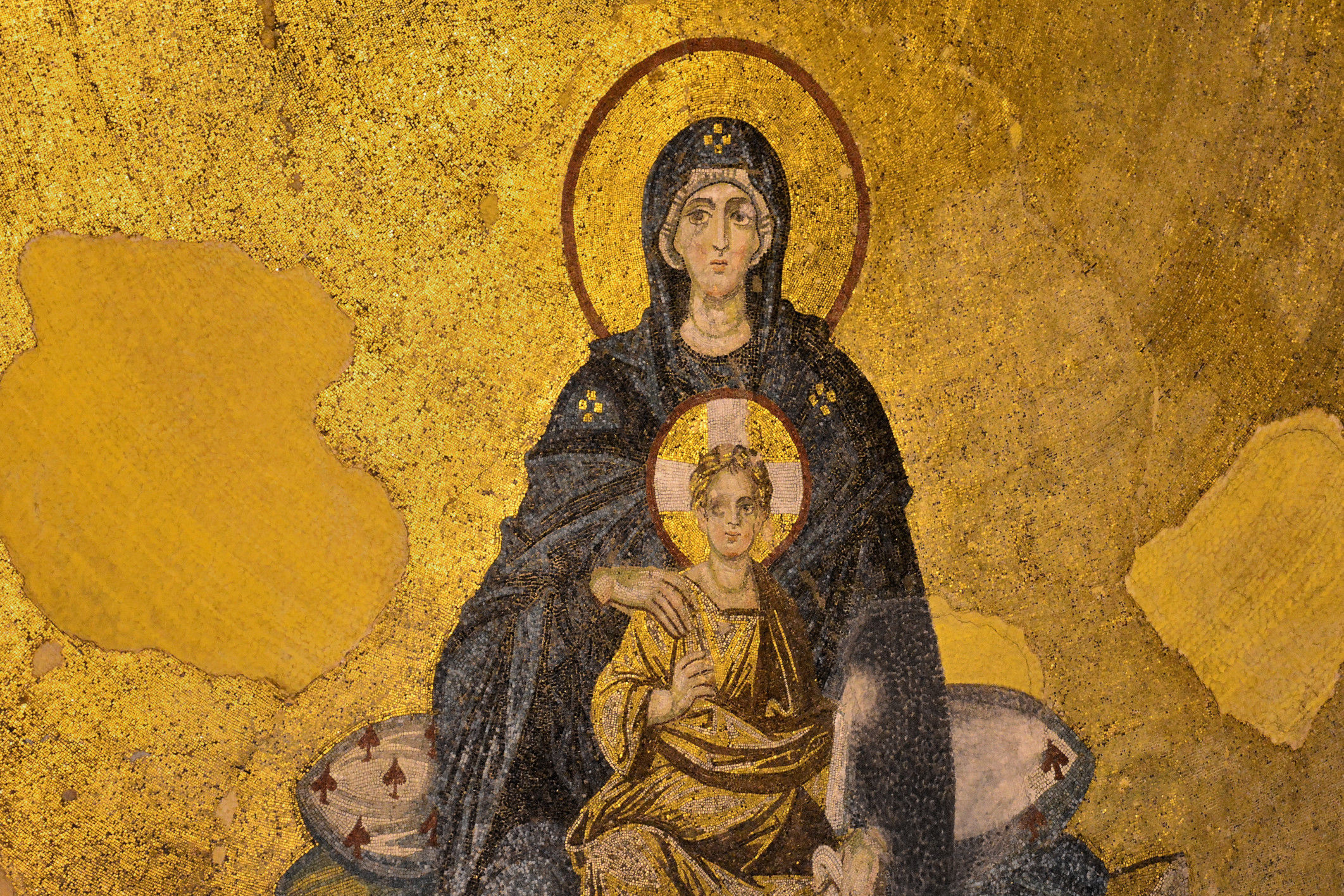
- 13—The Dome of the Rock,
Jerusalem, begun 691
shrine that functions as a triumph of islam
central plan with a dome
a holy site for jews and christians
ornamental and decorative
no direct portrayals of muhammads journey to heaven
motifs like plants representing the garden of paradise
passages of the quaran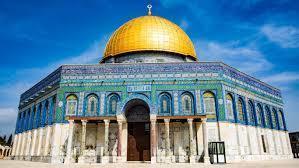
- 14—Prayer Hall, Great Mosque of Cordoba,
Spain, begun 785/786
white stone and red brick double arches
spollia (reusing architecture from what was previously there)
double columns with two capitals one decorative one not
horseshoe arch
niche in the wall tells you which way to face = MIHRAB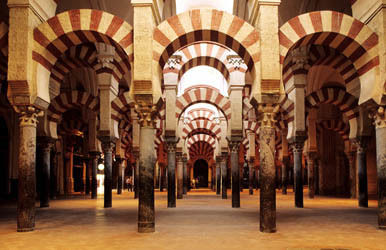
- 15—Page from the Qur’an,
Surah 2:286 and title of surah 3 in Kufic script,
Syria, 9th centry, black ink, pigments, and gold on vellum,
used a wide reed pen dipped in ink
right to left, five lines of text
gold ornament on bottom of the page that has the title
cilligraphers thought of VERY highly because writing it was a form of reverence to god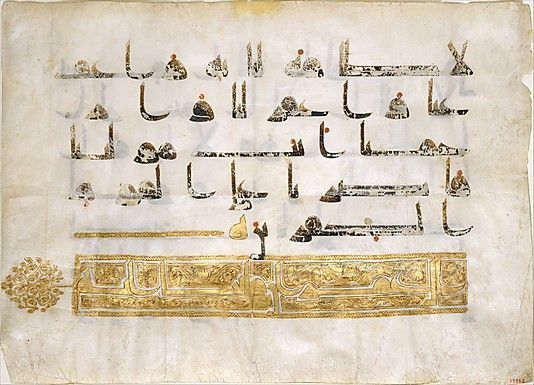
- 16—Tile Mosaic Mihrab,
from the Madrasa Imami, Isfahan, Iran, founded 1354, glazed and cut tiles
College center for learning, constructed during a time of political turmoil
niche in the wall direction of mecca/the kabba
person leading prayer (imam) sits inside
inscription on inside = five pillars of faith
outside = not kufic, more condensed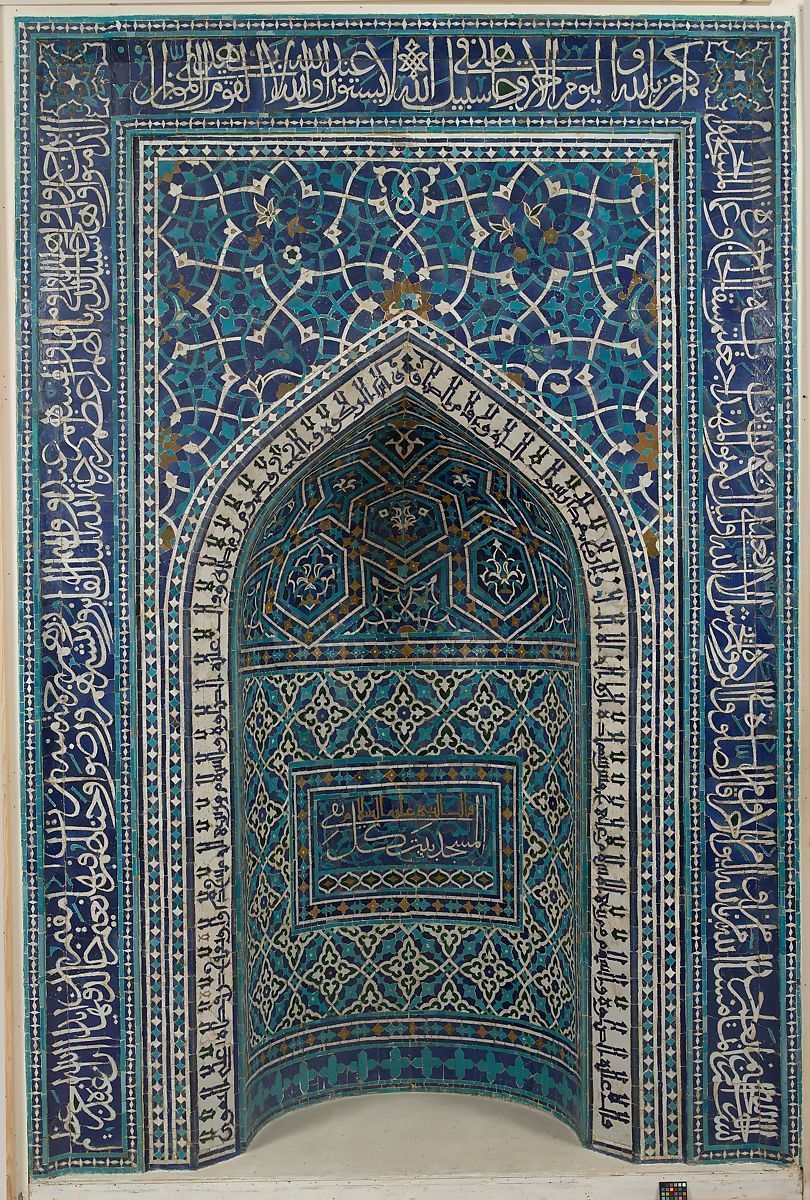
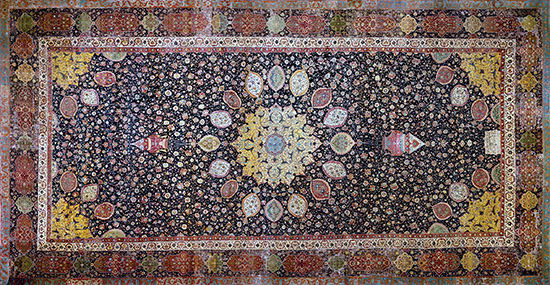
- 17—Ardabil Carpet,
produced in the Safavid royal workshops, Ardabil, Iran, 1539-1540, dyed wool pile, undyed silk warp and weft
one of the most well known crafts
very highly regarded
bought by europeans exotic
women passed on the trade to other generations